TL;DR

Get cleaning gear delivered free with Prime
- Fast, free delivery on millions of items
- Prime Video, Amazon Music and more included
- Member-only deals all year
Steam mops heat water and release steam through a pad to clean sealed hard floors, but ‘sealed’ doesn’t guarantee safety. Ceramic tile and some stone may tolerate steam, while hardwood, laminate, and vinyl often don’t. Always check the floor manufacturer’s care instructions first, use the lowest steam setting, keep the mop moving, and maintain clean pads to avoid damage.
You just bought a shiny new steam mop, ready to blast away grime from your kitchen tile. But before you fill that tank, here’s the hard truth: “sealed” does not mean “safe for steam.” Heat and moisture can damage some floors, even when the surface looks perfectly protected. The flooring manufacturer’s care instructions should always come first—not the mop’s packaging.
Steam mops are convenient because they use water instead of buckets of detergent, but that convenience comes with risk. In this article, you’ll learn which sealed hard floors can handle steam, which ones absolutely cannot, and how to use a steam mop conservatively if your floor is approved. We’ll also clear up the sanitizing hype and show you why pad maintenance matters more than you think.
Always check the floor manufacturer’s care instructions before using a steam mop—’sealed’ doesn’t mean steam-safe.
Ceramic and porcelain tile are generally safe; hardwood, laminate, and vinyl are often not.
Use the lowest steam setting, keep the mop moving, and never park it on one spot.
Steam mops don’t sanitize in normal use—don’t rely on them for disinfection.
Dirty pads and mineral buildup cause streaks and poor results; maintain your mop and pads regularly.
What ‘Sealed’ Actually Means for Your Floors
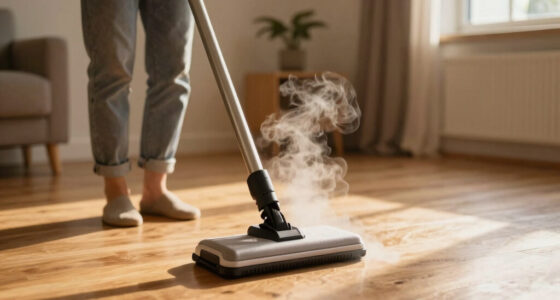
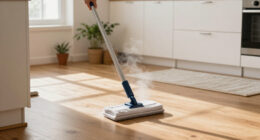
Steam mops for sealed hard floors work by heating water and releasing steam through a cleaning pad to loosen everyday dirt and grime [1]. The word “sealed” sounds reassuring—like a protective shield. But in reality, a sealant is a thin coating, not a waterproof barrier. Heat can soften finishes, and moisture can sneak through microscopic gaps around seams, edges, or worn spots.
Here’s a real example: a friend of mine steamed her sealed engineered wood hallway once. The surface looked fine for a week, then the edges of the planks started to curl slightly. The warranty claim was denied because the floor maker’s manual explicitly prohibited steam. That’s a $2,000 mistake.
The key point is that floor compatibility depends on the specific material and manufacturer, not just the presence of a seal. Ceramic tile and porcelain often tolerate steam, but many hardwood, laminate, and vinyl makers advise against it [1]. Always check the floor’s care guide and warranty before you even consider steaming.
Products Worth Considering

Roborock H60 Ultra-B Cordless Stick Vacuum Cleaner

Levoit Vital 100S-P Air Purifier with Washable Pre-Filter

Shark PowerDetect Corded Stick Vacuum with HEPA Filtration, Purple (HZ4001AMZ)
As an affiliate, we earn on qualifying purchases.
Which Floors Can Handle Steam (and Which Can’t)
Steam mops are generally intended for intact, sealed, heat-tolerant surfaces, but recommendations vary wildly by floor type [1]. Here’s a quick comparison table to help you sort it out:
| Floor Type | Steam Mop Safe? | Why / Why Not |
|---|---|---|
| Ceramic / porcelain tile | Usually yes | Heat-tolerant, but check grout condition and tile maker’s guidance. |
| Sealed natural stone | Depends | Stone and sealer types vary; check both manufacturers. |
| Sealed hardwood / engineered wood | Often no | Heat and moisture can damage finish or penetrate seams. |
| Laminate / vinyl / LVP | Usually no | Heat may affect layers, adhesives, joints, or surface finish. |
| Unsealed, cracked, or worn surfaces | Never | Moisture gets beneath the surface and causes swelling or mold. |
Notice the pattern? Tile is your best bet; wood and vinyl are risky. Even on tile, you need to ensure the grout is in good shape—damaged or unsealed grout can let moisture penetrate and lead to mold or deterioration.
If your floor isn’t on the “yes” list, don’t risk it. Use a spray mop or a floor-specific cleaner instead. The convenience of a steam mop isn’t worth voiding a warranty or ruining a floor.
How to Use a Steam Mop Safely on Approved Floors
If your floor manufacturer gives the green light, you still need to use the mop conservatively. Here’s a step-by-step process that minimizes moisture and heat exposure:
- Sweep or vacuum first. Loose grit acts like sandpaper when dragged across the floor. Steam mops are not a substitute for removing debris [1].
- Use the lowest effective steam setting. More steam isn’t better—it just leaves more moisture behind.
- Keep the mop moving constantly. Never park it on one spot to tackle a stubborn mark. Prolonged heat and moisture can damage even approved floors [1].
- Don’t over-wet the pad. If the pad is dripping, wring it out or switch to a dry one.
- Wash or replace pads as directed. A dirty pad redistributes grime and can scratch surfaces [1].
Here’s a scenario: you’re steaming a ceramic tile kitchen. You sweep, set the steam to low, and glide the mop in smooth passes. After each section, you check the floor—it dries within a minute. That’s the sweet spot. If you see pooling water or a lingering dampness, you’re using too much steam.
Also, never add cleaners, fragrances, or oils to the tank unless the manual explicitly allows them. Most manufacturers prohibit additives because they can clog the steam mechanism or leave residue [1].
Why Steam Mops Aren’t Sanitizers (Despite the Marketing)
Some steam mop ads claim sanitizing performance, but that’s only under specific test conditions [1]. Ordinary use does not guarantee disinfection. The temperature at the surface, pad condition, how slowly you move the mop, and contact time all affect whether bacteria actually die.
For example, a study might show a steam mop kills 99.9% of germs on a hard surface when the pad is held still for 10 seconds at maximum steam. But in real life, you’re gliding the mop across the floor, and the pad cools quickly. The result? You’re just cleaning, not sanitizing.
So, what should you do? Follow the product’s instructions and avoid broad germ-killing claims unless the manufacturer provides substantiation for your exact use [1]. If you genuinely need to sanitize a floor—say, after a pet accident—use a disinfectant approved for your floor type and follow the label’s contact time.
Steam mops are great for removing dirt and grime on suitable floors, but they’re not a magic wand for germs. Keep your expectations realistic.
The Real Costs of Steam Mopping: Pads, Maintenance, and Warranty Risks
Steam mops seem cost-effective—no buckets of cleaning solution—but there are hidden costs. Reusable microfiber pads need regular washing, and they wear out over time [1]. If you use a dirty pad, you’re just spreading grime around. Plus, mineral buildup from tap water can clog the steam nozzle, so many manuals recommend distilled or demineralized water [1].
Maintenance also includes descaling and proper storage. Ignore that, and your mop might stop steaming effectively or leave white mineral streaks on your floor. That’s a common cause of streaky results, along with detergent residue from previous cleanings [1].
The biggest cost, though, is warranty risk. Using a steam mop on a floor that prohibits it can void your flooring warranty. Manufacturers often state this explicitly in the care guide. If you steam a sealed hardwood floor and it warps, you’re out the cost of the floor—not just the mop.
Here’s the bottom line: weigh the convenience against the risk. If you have tile and follow the steps above, a steam mop is a solid tool. If you have wood or vinyl, skip it and use a spray mop designed for your floor type. Your floor—and your wallet—will thank you.
Frequently Asked Questions
Can I use a steam mop on my sealed hardwood floors?
Many hardwood manufacturers advise against steam, even when the finish is sealed. Heat and moisture can penetrate seams or damage the finish. Check your floor’s care guide and warranty; if steam isn’t explicitly permitted, use a wood-approved cleaner and method instead.Is it safe to steam laminate or vinyl flooring?
Often not recommended. Heat and moisture may affect joints, layers, adhesives, or the surface finish. Follow the flooring maker’s instructions—if they say no, don’t risk it.Does a steam mop actually sanitize floors?
Only under the product’s specified test conditions and when used exactly as directed. Ordinary use—gliding the mop across the floor—doesn’t guarantee disinfection. For true sanitizing, use a disinfectant approved for your floor type.What kind of water should I put in a steam mop?
Follow the manual. Some manufacturers recommend distilled or demineralized water to reduce mineral buildup, while others permit tap water. Never add cleaners, fragrances, or oils unless the manual explicitly allows them.Why is my floor streaky after steaming?
Common causes include a dirty pad, detergent residue from previous cleaning, mineral deposits from tap water, excessive moisture, or using the mop on a surface that isn’t suitable for steam. Wash or replace the pad, use distilled water, and ensure you’re not over-wetting the floor.Conclusion
The one thing to remember: confirm floor compatibility before you ever fill that steam mop tank. Read the floor manufacturer’s guide, not just the mop’s box. If your floor is approved, use the lowest steam setting, keep moving, and keep pads clean. If it’s not, use a floor-specific method—your floor’s warranty and appearance depend on it.
Steam mops are a convenience, not a universal solution. Treat them like a specialized tool, and they’ll serve you well on the right surfaces. When in doubt, a damp microfiber mop is always safer than steam.