TL;DR

Get cleaning gear delivered free with Prime
- Fast, free delivery on millions of items
- Prime Video, Amazon Music and more included
- Member-only deals all year
Shark and Bissell both sell steam mops with reusable microfiber pads, but features such as detachable handheld steamers, controls, tank size, and accessories vary by model. Compare the exact models against your floor maker’s care guidance, cleaning tasks, maintenance needs, and total cost; never assume steam is safe for a floor because of its material or brand name alone.
A steam mop can leave a tile floor feeling clean and warm, but the same hot moisture may damage a floor with vulnerable seams or an unsealed finish. That makes the Shark-versus-Bissell choice less about picking a winner and more about matching a particular mop to your home.
Both brands make popular steam mops, but they tend to emphasize different features. Shark often focuses on straightforward floor cleaning and washable pads; Bissell offers a broader range that can include detachable handheld steamers and extra tools. Those are general patterns, not promises about every model.
This guide shows you how to compare the details that shape everyday use: floor compatibility, attachments, controls, pads, tank handling, and ongoing costs. You’ll also get a practical checklist for narrowing the options without treating unverified claims or brand reputation as cleaning evidence.
Check the exact model number; handheld conversion, included tools, and steam controls vary within both brands.
Follow the flooring maker’s guidance before using steam, especially on unsealed wood, laminate, vinyl, and LVP.
Compare pad availability, washing instructions, tank handling, cord reach, weight, and storage for your rooms.
Include replacement pads and optional accessories when you compare total cost.
Treat cleaning results and sanitizing claims as separate questions that need model-specific evidence.
Buyer’s field guide · Home care
Shark vs Bissell Steam Mops: How They Really Differ
Both brands make reusable-pad steam mops, but the useful differences live in the exact model: floor compatibility, attachments, controls, tank handling, and upkeep. Choose for your rooms and routine, not the logo.
Five checks that matter more than brand reputation
Steam performance claims need model-specific evidence. Compare what you can verify before you buy.
Confirm the exact model number, included tools, controls, tank, pads, and warranty.
Follow the floor maker’s guidance, especially for unsealed wood, laminate, vinyl, and LVP.
Check cord reach, weight, swivel, refill access, standing stability, and storage.
Compare pad washing instructions, replacement availability, and accessory costs.
Treat cleaning results and sanitizing claims as separate questions requiring model-specific proof.
Compare the details that shape everyday use
These are questions to answer for each model, not promises about every Shark or Bissell mop.
| What to compare | Why it matters | Check on the exact model |
|---|---|---|
| Product design | Determines whether it handles floors only or supports above-floor tasks. | Does the model convert to a handheld steamer? Which tools are included? |
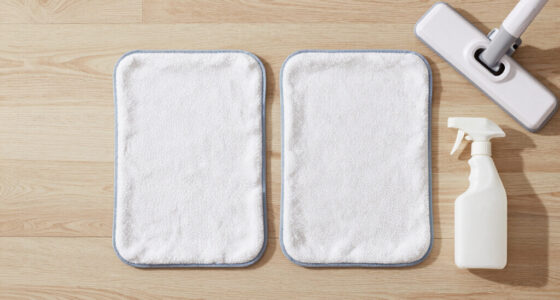
| Reusable pads | Shape and attachment affect corners, removal, washing, and replacements. | Can you remove the pad easily? Are replacements available at a reasonable cost? |
| Steam controls | Settings vary, and more steam is not automatically safer or more effective. | How is steam adjusted or released? What does the manual allow? |
| Handling | Weight, cord, swivel, refill access, and storage shape routine use. | Can you reach across the room and store the mop where you need it? |
| Ongoing cost | Replacement parts and optional consumables add to the purchase price. | What do compatible pads and any optional fragrance discs or accessories cost? |
| Price & warranty | Prices and coverage change by model, retailer, and region. | Compare current listings and read the written warranty terms. |
Shark often emphasizes straightforward floor cleaning and washable pads. Bissell’s range includes models with detachable handheld steamers, multiple tools, or fragrance discs. Lineups vary; verify the model page, manual, and box contents.
Five steps to a confident choice
Work from the surface outward. Convenience only matters after the mop is appropriate for the floor.
Confirm compatibility
Read the floor maker’s written care guidance and the mop manual.
Define the job
List the rooms and tasks you actually expect to clean.
Match the model
Check exact tools, controls, pads, tank, cord, weight, and warranty.
Check upkeep
Review pad washing, refill routine, replacement parts, and storage.
Compare total cost
Add replacement pads and optional accessories to the purchase price.
Your floor’s instructions decide whether steam belongs in the room
Price, brand, and the number of settings cannot establish floor compatibility.
Read both sets of guidance
Check the flooring manufacturer’s cleaning instructions, then the steam mop manual for approved surfaces and any limits on settings, pads, or how long the mop may rest in one spot.
Seams and finishes can be vulnerable
Steam and moisture may harm some unsealed wood, certain laminates, and floors with vulnerable finishes or seams. Vinyl and LVP vary by product and installation.
Buy tools for jobs you will actually do
A feature only earns its keep when the model includes the right approved tool for a recurring task.
Keep it simple
If you mainly clean a compatible hard floor, a dedicated mop may be easier to set up and store.
Check: standing stability, pad removal, swivel, and closet footprint.Verify the conversion
Some Bissell models offer a lift-off steamer or multiple tools; many Shark models focus on floor mopping. Confirm exact contents and permitted tasks.
Check: included attachment, manual approval, and setup effort.Match tool to surface
A dedicated attachment may help with a specific task, but it does not make every nearby material safe for steam.
Check: surface guidance, accessory cost, and storage needs.Specs predict fit; they do not prove cleaning superiority
There is no dependable current brand-wide result without checking current model listings and comparable testing.
A useful head-to-head also reports drying time, residue, maneuverability, refill frequency, and pad cleanup. Avoid claims such as “this brand cleans better” without comparable test evidence. Verify current model availability, specifications, warranty, pad supply, and prices before publishing or buying.
Compare the exact models before you compare the brands
Shark and Bissell steam mops differ most reliably at the model level: each brand sells several designs, and features can change across the range. Shark often focuses on a straightforward floor-mopping setup, while some Bissell models add a detachable handheld unit or accessory kit. A brand label alone does not tell you what a particular mop can do.
For example, imagine you mainly clean a sealed tile kitchen and want a mop that is easy to put away. A dedicated floor model may fit that job better than a bulkier setup with tools you rarely use. If you also want to clean grout or certain fixtures, a handheld conversion could be useful—but only if the manual lists the attachment and task you need.
Read the exact model number on the manufacturer’s product page and manual. Check its included tools, controls, tank, pad type, and warranty. Retail listings can use similar product names for different versions, so match the model number before comparing prices or specifications.
Think of the brand as the aisle sign and the model as the actual tool in the box. That small distinction prevents a common buying mistake: paying for an assumed feature that the model you chose does not have.
Products Worth Considering

Shark Navigator Lift-Away Upright Vacuum, NV360

Shark Rotator Lift-Away Upright Vacuum, White/Red (NV501)

Levoit Vital 100S-P Air Purifier with Washable Pre-Filter
As an affiliate, we earn on qualifying purchases.
Use this table to spot the differences that affect your routine
The useful Shark-versus-Bissell comparison is a checklist of model-specific details, not a blanket claim that one brand cleans better. Compare what each mop includes and how it fits the floors you can safely steam. For instance, a larger tank is useful if your kitchen and hallway take several passes, but it does not make steam suitable for a sensitive floor.
| What to compare | Why it matters | What to check |
|---|---|---|
| Product design | Determines whether the mop handles floors only or can convert for other tasks. | Does this exact model include a detachable steamer and the right tools? |
| Pads | Shape and attachment affect corners, washing, and replacement. | Can you remove the pad easily, and can you find replacements at a reasonable cost? |
| Steam controls | More settings do not make every setting safe for every floor. | How is steam adjusted or released, and what does the manual permit? |
| Handling | Weight, swivel, cord, refill access, and storage shape routine use. | Can you reach the far side of the room and store the mop where you need it? |
| Ongoing cost | Optional accessories and replacement parts add to purchase price. | What do compatible pads and any optional consumables cost? |
Picture a narrow apartment closet: a simple mop that stands securely may be easier to live with than a set of attachments stored in a separate bin. In a home where you plan to use approved tools on more than floors, the extra kit may earn its shelf space.
Specifications help you predict handling and upkeep, but they are not a head-to-head cleaning test. Unless both models have been tested on the same compatible floor, with similar soil and pad condition, avoid conclusions such as “this brand cleans better.”
Check floor safety before you shop for more steam
Your floor’s care instructions decide whether a steam mop belongs in the room; a mop’s brand, price, or number of settings cannot settle that question. Steam and moisture can harm some unsealed wood, certain laminates, and floors with vulnerable finishes or seams. Vinyl and luxury vinyl plank also vary by product and installation, so don’t assume they can tolerate steam.
Start with the flooring manufacturer’s written cleaning guidance, then check the mop manual for approved surfaces. If either manufacturer advises against steam, choose a compatible cleaning method. If the instructions permit steam but you still have questions, test a hidden area first and stop if you see a change in color, sheen, surface feel, or seam condition.
Consider a hallway with older laminate. A steam mop may feel like a quick way to lift footprints, but repeated moisture near an edge could threaten a seam. A microfiber mop used according to the floor maker’s instructions may be the safer everyday choice.
Steam-safe starts with the floor’s written care instructions. If you cannot confirm compatibility, do not use steam on that surface.
Pay attention to what the manual actually says, including any limits on steam settings, pad use, or how long the mop can rest in one spot. Floor compatibility comes before convenience; a tool is only useful if it suits the surface in front of you.
Choose attachments for jobs you will actually do
Attachments matter when they match a specific task you have; they add little value if you only plan to mop an approved hard floor. Some Bissell models offer a lift-off steamer or multiple tools, while many Shark models are dedicated floor mops. Since the lineup varies, check the exact box contents and manual before you count on either feature.
Suppose your kitchen has tile floors and you also want to clean grout lines. A model with an included tool specifically approved for that surface could save you from storing a second appliance. But a tool does not make every surface safe for steam: check guidance for grout, fixtures, and any nearby sealed or coated materials before using it.
A simpler mop can be the better fit if your only recurring job is cleaning sealed tile. Fewer parts can mean less setup and less to store. The tradeoff is clear: a floor-only design will not offer the flexibility of a supported handheld setup.
Make a short list of the places you expect to clean, then match each one to an attachment the model actually includes. If a task requires buying extra accessories, add their cost and storage needs to the comparison. You may find that the plain floor mop wins because you will use it often, while the extra kit would sit untouched.
Count the small details that make a mop easier to use
Weight, refill access, cord reach, swivel movement, and standing stability shape how a mop feels in your routine. Tank capacity can affect how often you stop to refill, while a swivel head may help you reach around table legs. Those features are model-specific, so compare measurements and design notes instead of assuming every mop in a brand range handles alike.
Picture cleaning a tiled kitchen after dinner. You might need to work around chair legs, pull the mop out to refill it, and carry it back to a closet. A unit that turns easily and stands securely could save frustration, even if another model advertises more settings. On the other hand, a lighter mop may be easier to lift onto a shelf but require more frequent refills.
Use the room you actually have as your guide: measure the closet shelf, note where outlets sit, and estimate how far the cord must reach. Check whether the tank is easy to fill and whether you can remove the pad without touching a hot surface. The mop’s manual should explain safe setup, operation, and cooling before storage.
These details can matter more than a small difference in advertised steam output. More steam is not automatically better, especially when the floor maker sets limits or the surface is not approved for steam at all.
Add pads and accessories to the real purchase price
The purchase price is only part of a steam mop’s ongoing cost. Both brands commonly use reusable microfiber pads, but the shape, attachment method, replacement availability, and price can vary by model. Some models may also support optional fragrance discs or other proprietary accessories.
For example, a low-cost mop can become less attractive if replacement pads are hard to find or a set of compatible pads costs more than you expected. A washable pad can be reused, but you still need to follow its care instructions and replace it when it no longer cleans well or fits securely. If you want fragrance discs, check whether they are optional, what they cost, and whether the manual requires them. Do not assume you need to add a floor-cleaning solution to the tank; follow the mop’s instructions.
Before buying, look up the cost and availability of replacement pads for the exact model. Check the written warranty and terms as well; coverage varies by model, retailer, and region, and retailer prices can change. Keep the warranty information with the manual so you can refer to the actual terms later.
A quick total-cost check can prevent a surprise: purchase price, a spare pad set if wanted, and any accessories you plan to use. Optional extras should remain optional in your calculation; you should not need to buy them just because a listing highlights them.
Follow these five steps to make a confident choice
You can narrow the choice in five steps: confirm floor compatibility, define the job, compare the exact model details, check upkeep, and review the total cost. This order matters because there is no point comparing a feature-packed mop if your flooring guidance rules out steam.
- Check the floor instructions. Find the flooring maker’s cleaning guidance for every surface you intend to mop.
- Name the main job. Decide whether you need routine floor cleaning or a supported above-floor task too.
- Compare exact models. Review controls, pad fit, tank access, cord, weight, and included tools.
- Check maintenance. Confirm how pads come off, how they should be washed, and whether replacements are available.
- Add the full cost. Include accessories you intend to use and read the written warranty.
For a real example, imagine you have approved sealed tile downstairs and laminate upstairs. Compare steam mops only for the tile, and use the laminate manufacturer’s approved cleaning method upstairs. If you need one tool for both areas, a steam mop may not meet that need safely.
If you still have two candidates, read both manuals side by side. That simple step can uncover a missing attachment, a different pad type, or a surface restriction before you spend money. Choose the model whose documented features suit your actual routine.
Treat cleaning and sanitizing claims as separate questions
A steam mop’s cleaning result does not by itself prove that it sanitizes a floor. Any sanitizing claim depends on the specific model, instructions, test conditions, surface, and required contact time. Do not treat heat alone as a guarantee or apply a claim from one model to another.
Say you are cleaning a sealed tile entryway after muddy shoes have left dark tracks. Removing visible grime is one task; reducing germs under specified conditions is another. Look for an explicit claim and directions for the exact model, including the surface and time requirements, before relying on it.
A fair brand comparison would test both mops under the same conditions: compatible flooring, similar soil, clean pads, matching passes, and the directions each manufacturer specifies. It would report details such as residue, drying time, maneuverability, and refill frequency alongside the cleaning result. Without that kind of comparable evidence, a broad claim that Shark or Bissell cleans better has no sound basis.
For everyday use, focus on the manufacturer’s recommended method for the floor and the job. A clean-looking result and a verified sanitizing result are not interchangeable. That distinction keeps product claims in their proper lane and helps you decide what outcome you actually need.
Frequently Asked Questions
Which brand cleans floors better, Shark or Bissell?
Brand name alone cannot tell you which mop cleans better. A fair comparison needs the exact models, the same compatible flooring, similar soil, comparable pad condition, and consistent passes. Without that evidence, choose by documented features and your cleaning routine.
Can I use a Shark or Bissell steam mop on laminate, vinyl, or LVP?
Check the flooring manufacturer’s care instructions and the exact mop manual first. Compatibility varies by floor product and model, and steam can harm some laminates, vinyl, and floors with vulnerable seams or finishes. If guidance does not clearly allow steam, use an approved alternative.
Can a steam mop clean unsealed wood?
Do not steam unsealed wood unless its manufacturer explicitly approves that method. Moisture and heat may damage the wood or its finish. Follow the floor maker’s care guidance instead.
Do all Bissell steam mops convert into handheld cleaners?
No; conversion features vary by model. Some Bissell models include a detachable handheld steamer or tools, but you should verify the exact model’s specifications and manual. Many Shark models are dedicated floor mops, though the lineup also varies.
Are Shark and Bissell steam mop pads washable?
Many models use reusable microfiber pads, but pad care and replacement details depend on the model. Check the manual for washing instructions and look up the price and availability of compatible replacements before buying. A pad that is easy to remove and replace can make routine cleanup simpler.
Do steam mops vacuum or pick up loose debris?
A steam mop should not be assumed to vacuum or collect loose debris. Check the exact model’s listed functions; many are designed to apply steam with a pad. Sweep or vacuum as directed before mopping so grit does not get dragged across the floor.
Conclusion
Choose by floor compatibility first, then by the tasks and upkeep you can document for the exact model. A simple Shark or Bissell mop may suit routine cleaning on an approved sealed floor; a model with a handheld steamer may suit you if its included tools match other approved jobs.
Before you buy, open the floor care guidance and mop manual side by side. That two-page check can save your floor from an expensive mistake—and leave you with a tool that earns its place in the closet.