TL;DR

Get cleaning gear delivered free — and shop member deals
- Fast, free delivery on millions of items
- Access to Prime Big Deal Days deals on October 6–7
- Prime Video, Amazon Music and more included
Damp basement floors need thorough cleaning and moisture control. Use proper drying, disinfecting, and sealing techniques while addressing the root causes to prevent recurring dampness.
Nothing feels more discouraging than stepping onto a damp, cold basement floor. That persistent moisture not only feels uncomfortable but can lead to mold, odors, and structural damage over time.
If your basement smells musty or you notice water stains, it’s time to take action. This guide walks you through practical steps for cleaning damp floors safely and effectively, while also tackling the root causes to keep your basement dry and healthy.
Identify whether your basement floor is truly damp or just dirty before cleaning.
Thorough drying after cleaning stops mold from returning, so never skip the dehumidification step.
Use appropriate, surface-safe cleaning agents—test first on hidden areas to avoid damage.
Address the root causes, like cracks and drainage issues, to prevent dampness from recurring.
Maintain humidity below 60% with ventilation and dehumidifiers for ongoing protection.
How to Spot if Your Basement Floor Is Truly Damp or Just Dirty
First, you need to tell the difference between surface dirt and actual dampness. Dampness often feels cool to the touch and may leave a lingering moisture smell.
Look for water stains, mold patches, or peeling paint—these are clear signs of persistent moisture. Use a moisture meter if you’re unsure; readings above 60% humidity indicate significant dampness.
For example, you might notice a musty smell that intensifies in humid weather or see water marks near foundation cracks—these clues point to genuine dampness rather than surface grime.
basement dehumidifier for damp floors
As an affiliate, we earn on qualifying purchases.
As an affiliate, we earn on qualifying purchases.
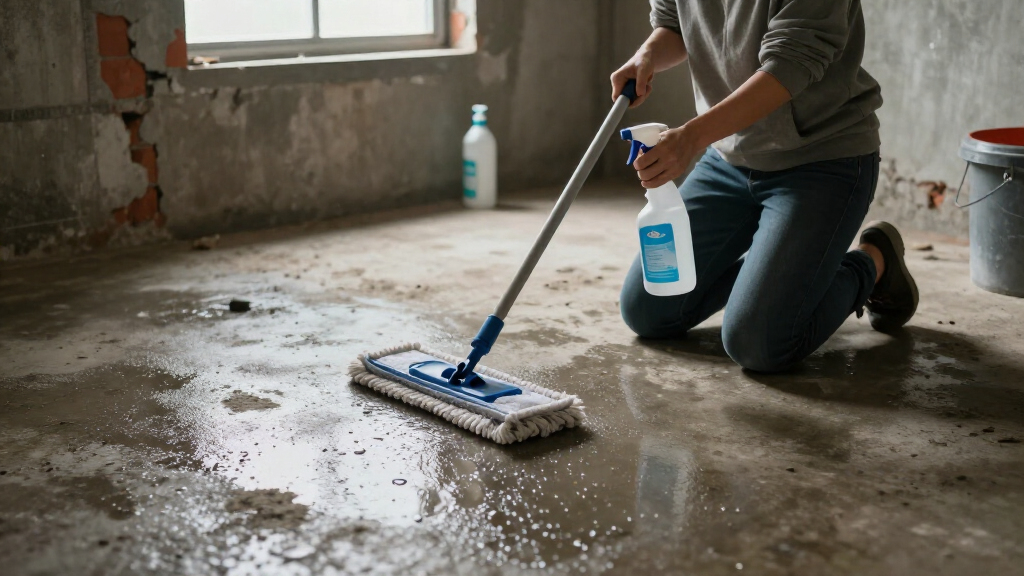
Quick Steps to Clean and Disinfect Your Damp Basement Floor
- Ventilate the space by opening windows and turning on fans to reduce moisture levels.
- Use a dehumidifier to draw out excess humidity—aim for below 60% relative humidity.
- Wear protective gear: gloves, mask, and goggles—especially if mold is present.
- Mix a cleaning solution: one part bleach to 10 parts water for non-porous surfaces, or use vinegar for a gentler approach.
- Scrub affected areas thoroughly with a stiff brush, paying attention to corners and cracks.
- Rinse with clean water and dry the area completely using towels or a wet/dry vacuum.
- Apply a mold-resistant sealant or paint if needed, following manufacturer instructions.
Proper cleaning and disinfection are crucial because they eliminate mold spores and bacteria that can cause health issues and structural decay. Neglecting this step allows mold to re-establish itself quickly, especially on porous surfaces where cleaning agents can’t penetrate deeply. Combining thorough cleaning with effective drying prevents spores from settling and proliferating, breaking the cycle of dampness and mold growth.
mold resistant basement floor sealant
As an affiliate, we earn on qualifying purchases.
As an affiliate, we earn on qualifying purchases.
Why Proper Drying Matters More Than Just Cleaning
Drying your basement floor thoroughly is the secret to halting mold growth. Even a small patch of lingering moisture—just 1-2% humidity—can lead to mold spores multiplying within 24 to 48 hours.
Using fans, dehumidifiers, and even a heat gun in tight spots accelerates drying. Imagine trying to clean a muddy shoe and then leaving it to air-dry—your efforts are wasted if moisture remains trapped.
For instance, in a humid summer, running a dehumidifier for 48 hours after cleaning can reduce moisture to safe levels, preventing mold from creeping back in.
Effective drying isn’t just about removing surface water; it’s about reducing internal moisture within materials. Porous surfaces like concrete and wood absorb moisture deep inside, creating an environment where mold can thrive unnoticed. Using dehumidifiers and heat sources helps pull this moisture out, but it requires patience and consistent effort. Skipping thorough drying can undermine all your cleaning efforts, making it a false economy—cleaned surfaces can quickly become damp again if residual moisture remains.
As an affiliate, we earn on qualifying purchases.
Best Tools and Products for Damp Basement Cleaning
Choosing the right tools makes all the difference. Here’s a quick comparison:
| Tool/Product | Purpose | Best For |
|---|---|---|
| Stiff-bristled brush | Scrubbing | Mold patches on concrete or vinyl |
| Wet/dry vacuum | Removing excess water | Drying floors quickly |
| Dehumidifier | Moisture control | Maintaining low humidity levels |
| Eco-friendly disinfectants (vinegar, baking soda) | Cleaning & disinfecting | Natural, surface-safe options |
Remember: always test cleaning agents on a small hidden area first. Some surfaces, like laminate or hardwood, can be sensitive to moisture and chemicals. Using the proper tools and products ensures effective cleaning without damaging your floors or creating new moisture problems. For example, a stiff brush combined with a dehumidifier can remove mold and moisture more efficiently than relying solely on chemical cleaners, especially on porous surfaces where moisture tends to hide.
As an affiliate, we earn on qualifying purchases.
Preventing Dampness from Coming Back — Easy Fixes You Can Do
Once your floor is clean and dry, focus on prevention. Here’s a quick checklist:
- Seal cracks in the foundation with waterproof sealant to prevent water intrusion that can reintroduce moisture.
- Improve drainage around the house—consider extending downspouts or adding gravel trenches to divert water away from the foundation, reducing hydrostatic pressure against basement walls.
- Install vapor barriers under the flooring if you’re finishing the basement. This creates a physical barrier that prevents ground moisture from rising into the space.
- Maintain ventilation—use exhaust fans and keep windows open when possible to promote air circulation and reduce humidity buildup.
- Control indoor humidity with dehumidifiers, keeping levels below 60%. Consistent humidity control discourages mold growth and dampness recurrence.
For example, sealing a large crack in the basement wall stopped water from seeping in during heavy rain, keeping the floor dry afterward. Addressing these issues proactively prevents the cycle of dampness, mold, and structural deterioration from repeating, saving you time and money in the long run.
What Not to Do When Cleaning a Damp Basement Floor
Some common mistakes can make things worse. Never use high-pressure washers on delicate surfaces like laminate or vinyl—they can cause damage or water intrusion.
Avoid mixing cleaning chemicals—bleach and ammonia, for example, create toxic fumes. Don’t ignore persistent dampness; it might signal bigger issues like leaks or structural problems.
For instance, using a strong bleach solution on porous concrete without sealing afterward can lead to rapid mold regrowth, as moisture seeps back in.
Frequently Asked Questions
How do I know if my basement floor is really damp or just dirty?
Feel for coolness and check for a musty smell or water stains. Using a moisture meter can give you a clear reading—above 60% humidity indicates genuine dampness that needs attention.
What’s the safest way to remove mold from a basement floor?
Mix one part bleach with ten parts water for non-porous surfaces, scrub thoroughly, and dry completely. Always wear protective gear and ventilate the area well during cleaning.
Can I use bleach on all basement floors?
Bleach works best on non-porous surfaces like vinyl or sealed concrete. Avoid using it on porous materials like untreated concrete or hardwood without proper sealing afterward, as it can cause damage or mold to reappear.
How long does it take to dry a damp basement floor?
It varies—usually several hours to a few days—depending on humidity, ventilation, and the extent of dampness. Using fans and dehumidifiers speeds up the process significantly.
What are the best ways to prevent dampness from coming back?
Seal cracks, improve drainage, install vapor barriers, and keep humidity below 60%. Regular inspections and maintaining proper ventilation are key to ongoing dryness.
Conclusion
Handling a damp basement floor isn’t just about cleaning—it’s about understanding moisture and taking control. The moment you identify the cause, clean thoroughly, dry completely, and seal gaps, you’re building a fortress against future dampness.
Imagine your basement staying dry, free of mold, and smelling fresh. That’s not just a dream—it’s achievable with practical steps, patience, and a bit of effort. Now, go check those corners and start drying!
Fall Picks
fall essentials
As an affiliate, we earn on qualifying purchases.