
TL;DR

Get cleaning gear delivered free with Prime
- Fast, free delivery on millions of items
- Prime Video, Amazon Music and more included
- Member-only deals all year
Cleaning floors in a multi-pet household works best as a simple cycle: sweep or vacuum fur and grit, promptly blot and treat wet messes with a surface-compatible cleaner, and damp mop only as the floor maker allows. Use mats to contain dirt, keep pets away while products are wet, and check manufacturer guidance before using steam or home remedies.
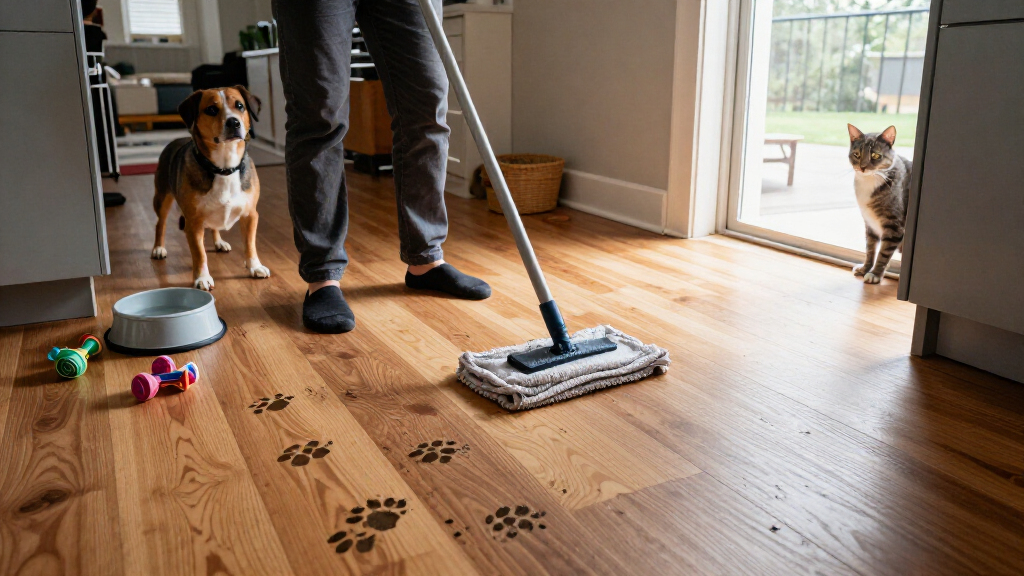
A muddy pawprint can dry into a crust before you’ve put the groceries away; meanwhile, a tumble of fur gathers along the baseboards like a small, pale tumbleweed. With several pets, the trick is not to chase every speck all day. It is to catch the messes that spread, choose a floor-safe method, and build a routine around the places your animals actually use.
This guide explains how to manage fur, grit, litter, spills, and occasional accidents without soaking floors or relying on vague “pet-safe” claims. You’ll learn what to clean first, how to handle common messes, and when a steam mop or home remedy may be a poor fit. Your floor manufacturer’s care instructions come first; when trying a suitable new product, test it on a hidden area and let it dry before deciding.
A good routine can be modest: a quick dry pickup in busy spots, prompt attention to wet messes, and a deeper clean at a frequency that suits your pets and flooring. The goal is a clean home your animals can comfortably walk through, not a floor that smells strongly of fragrance or stays wet while paws wander across it.
Sweep or vacuum fur, litter, crumbs, and grit before damp cleaning so wet hair and gritty debris do not spread.
Build your routine around high-traffic hotspots such as doors, feeding stations, litter areas, and pet beds.
Use products and moisture levels that the floor manufacturer allows; test a permitted new cleaner on a hidden area.
Blot accidents rather than rubbing, then use a surface-compatible cleaner according to its label.
Keep pets out while products are wet, avoid mixing cleaners, and use steam only if the flooring maker allows it.
Cleaning Floors in a Multi-Pet Household A safer daily cycle
Pick up dry debris first, treat wet messes promptly, and match every cleaning method to your floor’s care guidance.
Build a practical routine
Focus on the places your pets use most, then adjust cleaning frequency to what you see.
Sweep or vacuum fur, litter, crumbs, and grit before damp cleaning to limit spreading and scratches.
Blot spills and accidents, then use a cleaner labeled for the floor and type of mess.
Damp mop only with permitted products and moisture levels; let the surface dry before pets return.
Match care to the surface
Floor materials and finishes tolerate different cleaners and amounts of moisture.
| Surface | Care approach | Check first |
|---|---|---|
| Sealed hardwood | Compatible cleaner, minimal moisture | Finish and care instructions |
| Laminate or LVP | Approved method; avoid standing water | Seams and moisture limits |
| Tile or stone | Surface-compatible product | Grout, stone type, ingredients |
| Carpet | Blot; avoid soaking the backing | Carpet care and product label |
Contain everyday dirt
Small barriers make busy areas easier to manage.
Catch outdoor grit
Place washable mats by doors and keep a towel handy for wet paws.
Limit tracked litter
Use a litter-catching mat and pick up loose debris before it spreads.
Protect the floor
A washable tray beneath bowls can contain spills and splashes.
Use products with care
Labels and drying time matter more than broad “pet safe” or “natural” claims.
- Test a permitted new cleaner on a hidden area and let it dry.
- Keep pets away while products are wet; follow dilution and ventilation directions.
- Never mix cleaning products. Check with a veterinarian and flooring maker before using home remedies or essential oils.
Start with fur and grit before you reach for a mop
Cleaning floors in a multi-pet household starts with dry pickup: vacuum or sweep loose fur, litter, crumbs, and grit before adding water. Dry debris is easier to collect before it clings to a damp pad, and grit can scratch hard floors when a mop drags it across the surface. If you mop first, wet hair may spread into strings instead of lifting cleanly.
Think of the gritty bits as tiny sandpaper under your slippers. After a rainy walk, let mud dry enough to lift in clumps, then pick up the grit; wiping it straight away can smear it across a wider patch. For everyday fur, a vacuum with a floor setting and attachments suited to your surfaces can help, but check the floor maker’s instructions and use equipment gently. Empty and clean the vacuum or brush when hair gathers around the roller so the tool does not spread old debris.
Microfiber dust mops and washable pads can make quick pickups less wasteful, especially in hallways where fur forms visible drifts. Keep one near a favorite pet resting place, such as the sunny patch beside a living-room window. If fur is also collecting on furniture, regular grooming and washable covers can reduce what reaches the floor, though shedding and outdoor access will change how often you need to clean.
- Pick up dry debris first, especially litter and grit near doors.
- Use floor-appropriate vacuum settings and attachments.
- Wash reusable pads and maintain tools so they collect rather than redistribute hair.
Products Worth Considering

Roborock Q7 M5+ Robot Vacuum and Mop with Self-Emptying Dock

Dreame L40 Ultra Gen 2 Robot Vacuum and Mop

Dreame D30 Ultra CE Robot Vacuum and Mop
As an affiliate, we earn on qualifying purchases.
Set up a routine around the messiest spots
Cleaning floors in a multi-pet household becomes manageable when you focus on hotspots and adjust the schedule to what you see. Busy areas such as entryways, feeding stations, litter boxes, and favorite resting places often need more attention than a spare room your pets rarely enter. A household with two dogs coming in from a muddy garden may need daily dry pickup at the door; a home with indoor cats may need a different rhythm around the litter area.
There is no universal number of days between cleanings. Shedding season, foot traffic, outdoor access, and floor type all affect the pace. Start by noticing where fur and pawprints appear first for a week. If the hallway looks dusty by dinner, give it a quick sweep then rather than waiting until every room needs a full clean. Damp mop only when that surface’s care guidance permits it, and avoid leaving puddles behind.
A few small barriers can prevent a large cleanup. Put washable mats by the door, keep a towel within reach for wet paws, add a litter-catching mat where your cat exits the box, and use a washable tray beneath food and water bowls. For example, a water bowl that leaves a crescent of splashes on the floor may be easier to manage on a washable mat than with repeated whole-room mopping.
- Identify hotspots: watch doors, feeding areas, litter boxes, and pet beds.
- Pick up dry debris often: sweep or vacuum the places that show fur and grit.
- Clean wet spots promptly: treat spills and accidents without rubbing them in.
- Schedule deeper cleaning: match the method and moisture level to each floor.
Match the cleaner and moisture to your floor
Cleaning floors in a multi-pet household is safest when you choose a method for the actual floor material and finish. Sealed hardwood, laminate, vinyl, luxury vinyl plank, tile, stone, and carpet do not all tolerate the same cleaner or amount of water. A product that seems gentle can still be unsuitable for a coating, grout, seam, or finish, so check both the flooring maker’s care instructions and the cleaner label.
Too much moisture can reach joints or porous layers and contribute to damage; carpet can also hold moisture in its backing. Use only the amount of water the care instructions allow, and remove excess rather than leaving a shiny wet trail. If a new cleaner is permitted, test it first on a hidden spot, follow its dilution directions, and let the area dry so you can check for a change in color or finish.
For instance, one home may have tile in the kitchen, a sealed wood hallway, and vinyl in a laundry room. A single bucket and one “all-purpose” liquid may not be the right choice for all three. Keep products clearly labeled, and use a separate cloth if you move from a litter area to a food area. A short, specific cleaning note for each room can save guesswork when a spill happens.
| Surface | Practical approach | Check before cleaning |
|---|---|---|
| Sealed hardwood | Use a compatible cleaner and minimal moisture | Finish and flooring care instructions |
| Laminate or LVP | Clean with the floor maker’s approved method; avoid standing water | Cleaner label, seams, and moisture limits |
| Tile or stone | Use a surface-compatible product; pay attention to grout or porous stone | Stone type, grout guidance, and cleaner ingredients |
| Carpet | Blot spills and use a carpet-compatible cleaner without soaking the backing | Carpet care instructions and product label |
Treat urine and other accidents before the smell settles
Cleaning floors in a multi-pet household after an accident means blotting first, then treating the remaining residue with a cleaner labeled for the surface and the type of mess. Press a clean absorbent cloth onto a fresh puddle and lift; rubbing can push liquid into seams, grout, or carpet fibers. Once you have removed as much as possible, follow the product directions and keep pets away while the treated area is wet.
Enzyme-based cleaners can help break down organic residues, but the label still matters: check that the product suits the floor and stain, use the specified amount, and follow its instructions. Spraying a little fragrance over an odor may change the smell in the room, but it does not remove the residue beneath it. If the sharp urine smell returns after the surface dries, liquid may have reached a seam, carpet backing, or another porous layer.
Picture a cat that urinates beside a litter box on a floor with narrow joints. Wiping only the visible spot can leave residue along the seam, where odor may linger; a surface-compatible treatment applied as directed is more useful than scrubbing the whole room with an unrelated cleaner. Persistent odor or staining may call for targeted treatment or professional carpet cleaning. Avoid mixing cleaners, especially bleach with ammonia or acids, which can produce dangerous fumes.
Blot, treat, and dry: remove as much liquid as you can, use a cleaner suited to both the mess and floor, then keep pets away until the area is dry.
Use steam only when the floor maker allows it
Cleaning floors in a multi-pet household with a steam mop is suitable only when the flooring manufacturer permits steam for that specific surface and finish. Heat and moisture may damage some floors or finishes, and seams can provide a path for moisture. Do not assume that a floor is steam-safe because it looks sturdy or because a steam mop is advertised for hard floors.
Check the floor maker’s guidance before using steam on sealed hardwood, laminate, vinyl, or luxury vinyl plank. If the instructions are unclear or advise against it, choose an approved cleaning method instead. Even where steam is allowed, follow the appliance directions and test a hidden area first. A patch behind a cabinet can reveal a change in sheen or finish before you treat the center of a bright kitchen.
Steam also does not replace pickup and spot treatment. A tumble of dry fur, scattered litter, or a fresh accident still needs attention before any deeper cleaning. For example, steaming over gritty pawprints can push debris around, while applying heat and moisture to an untreated accident may be a poor substitute for a cleaner made for the residue. Use a method suited to the exact mess, remove loose debris first, and let cleaned floors dry before paws return.
- Check both the flooring instructions and steam-mop directions.
- Test a hidden area and inspect it after drying.
- Keep pets away from hot equipment and damp flooring.
- Use an approved alternative if the floor maker does not permit steam.
Choose pet cleaners by the label, not the marketing
Cleaning floors in a multi-pet household calls for a product that fits the floor, the mess, and the label directions; “natural” or “pet safe” on the front is not enough to decide. Product claims can vary, so read the intended-use directions, dilution instructions, and any warnings. If you are unsure whether a product is appropriate for a particular floor or animal, check with the flooring manufacturer or your veterinarian.
Keep animals out of the room while you clean, provide ventilation as directed, and wait until the floor is dry before letting paws back across it. A dog nosing a wet patch or a cat walking through a freshly mopped room can contact residue or track it elsewhere. Store products where pets cannot reach them, and do not combine cleaners in a bucket or on a cloth. Bleach mixed with ammonia or acids can produce hazardous fumes.
Home remedies deserve the same caution. Vinegar and baking soda may not suit every floor or remove the residue you are treating, while essential oils can be harmful to some animals. Ask a veterinarian about an ingredient concern and follow flooring care instructions before applying a remedy. In a home with a curious kitten, a scented mixture left in an open bowl is not a safe shortcut; use a labeled product as directed and put it away after cleaning.
- Read the full label, including surface, dilution, ventilation, and drying instructions.
- Keep pets away during cleaning and until the floor is dry.
- Never mix cleaning products or leave them accessible to animals.
- Check with a veterinarian or flooring maker when a remedy or ingredient raises a question.
Frequently Asked Questions
How often should I clean floors in a multi-pet home?
It depends on shedding, foot traffic, outdoor access, and the floor. Start by sweeping or vacuuming busy spots as often as visible fur and grit build up, and handle spills or accidents promptly. A muddy entryway may need attention every day, while a quiet room may need less.
What is the safest floor cleaner for pets?
There is no single cleaner that suits every animal, floor, and mess. Choose one labeled for your surface, follow the dilution and ventilation directions, and keep pets away until the floor is dry. Ask your flooring manufacturer or veterinarian if you are unsure about a product or ingredient.
Can I use vinegar, baking soda, or essential oils on pet messes?
Do not assume a home remedy is safe for every floor or pet. Vinegar and baking soda may be unsuitable for some finishes or fail to remove the residue, and essential oils can be harmful to some animals. Check with your flooring maker and veterinarian before using them.
How do I get pet urine odor out of the floor?
Blot up as much liquid as possible, then use a cleaner labeled for both the floor and the stain, following its directions. Enzyme-based cleaners can help with organic residue when used as labeled. If odor returns after drying, the liquid may have reached a seam or porous layer and may need targeted treatment.
Can I use a steam mop on floors with pets?
Only if the flooring manufacturer permits steam for that floor and finish. Heat and moisture can damage some surfaces, including some wood, laminate, and vinyl floors. Test a hidden area first, follow the appliance directions, and keep pets away from the hot mop and damp floor.
What is the best way to manage fur and tracked litter?
Vacuum or sweep regularly, especially around litter boxes and pet resting places, and remove gritty litter before using a damp mop. A litter-catching mat can reduce tracking, while washable pads and maintained vacuum tools help collect fur. Grooming pets where loose hair is easy to pick up can also cut down on floor buildup.
Conclusion
Keep the routine simple: dry pickup first, prompt spot treatment next, and only floor-approved damp cleaning after that. Mats and towels can catch much of the mess before it crosses the room, and a quick check of the floor instructions can spare you from using the wrong product or too much moisture.
When the hallway is clear and the floor is dry, the only tracks left should be the ones your pets make on their way to a sunny nap.