TL;DR

Get cleaning gear delivered free with Prime
- Fast, free delivery on millions of items
- Prime Video, Amazon Music and more included
- Member-only deals all year
Some hardy perennials and shrubs can stay outdoors in pots through winter, but they generally need to be rated at least two hardiness zones colder than the local zone. Tender plants may need storage or their tubers saved, and freezing can damage both roots and certain pot materials.
Some potted plants can stay outdoors through winter, but whether they survive depends on the plant’s cold hardiness, the local climate and the container, according to a gardening report by Veranda. The guidance matters because soil in pots freezes and thaws faster than soil in the ground, exposing roots—and some containers—to greater cold damage.
Veranda advises checking a plant’s hardiness rating against the local hardiness zone. As a general rule, a plant kept outside in a pot should be hardy to two zones colder than the gardener’s zone. For example, in zone 5, a plant rated hardy to zone 3 has a better chance of handling winter in a container. The same guidance applies to shrubs grown in pots. Plants rated only one zone colder may need a protected, unheated place such as a garage or basement.
Annuals will die after the first freeze, and tender perennials such as dahlias and canna lilies generally will not survive winter in pots in cold climates. To keep those plants, the report recommends waiting for the first frost, cutting back dead foliage and saving the tubers for replanting in spring. Another option is to move the entire pot into an unheated indoor space. In warmer climates, tender perennials may stay in pots, although the outcome depends on how severe the winter is.
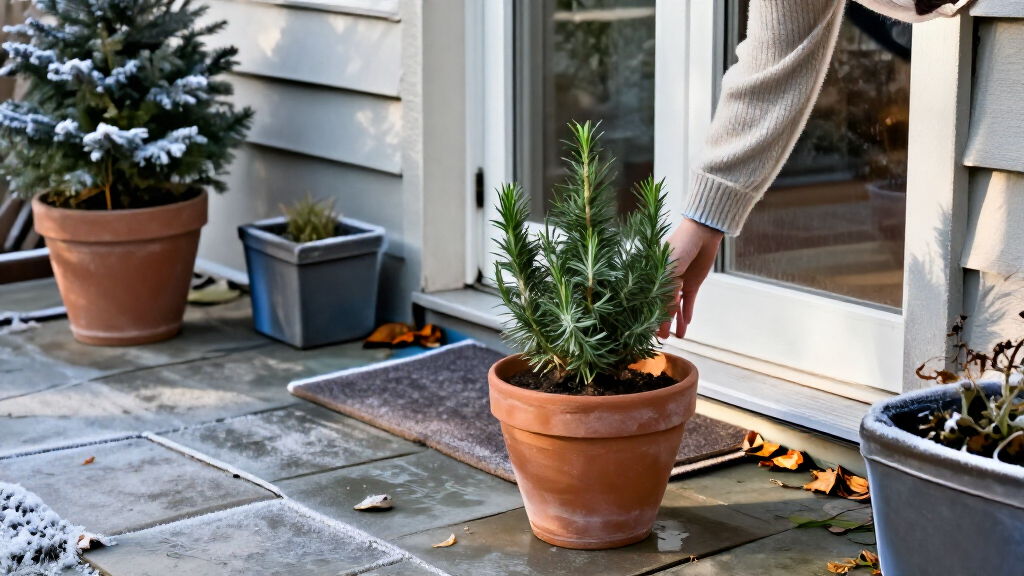
Container choice also affects the risk. Ceramic, terra-cotta and porcelain pots are more likely to crack or flake during freeze-thaw cycles and are not recommended for outdoor wintering in cold climates. Composite, wood, plastic and metal containers generally handle freezing better, although some plastic pots can split. Veranda also suggests burying a manageable pot to its rim, placing it against a south- or west-facing wall, or wrapping it in blankets or frost covers when indoor storage is not possible.
Cold Puts Roots and Pots at Risk
Container plants face a different winter environment from plants rooted in the ground. The soil around in-ground roots provides insulation, while potting soil can freeze and thaw more quickly and repeatedly. Those temperature swings can stress roots, even when a plant is considered hardy for the area when grown in the ground.
The advice offers several ways to reduce that risk, but it does not guarantee survival. Moving a pot to shelter, burying it or insulating it may help, while the right plant and pot material can make outdoor overwintering more practical. The choice also affects workload: gardeners who do not want to store plants can decide to replace them in spring rather than trying to preserve every perennial.
As an affiliate, we earn on qualifying purchases.
Why Pots Freeze Faster
Winter preparation varies by plant type and climate. The report notes that some plants treated as annuals in cold climates, including lantana and dusty miller, are perennials in warmer regions. That difference reflects how strongly local winter conditions shape whether a plant can survive outdoors; the label “perennial” alone does not establish that a potted plant will make it through the season.
For perennials and shrubs kept in pots, winter care continues after the container is moved or protected. Veranda says to stop fertilizing dormant plants but keep watering them if rain has not fallen for several weeks. This is particularly relevant to evergreens, which continue to lose moisture in winter. Watering should be moderate: soggy roots are also a risk, and pots should drain freely. Pot feet or a short stand can help prevent water from pooling underneath.
“In general, it’s recommended that only plants that are two hardiness zones colder than your zone be kept in pots over the winter.”
— Veranda gardening report
As an affiliate, we earn on qualifying purchases.
Survival Depends on Local Conditions
The guidance is a rule of thumb, not a guarantee that a particular plant will survive. Winter severity, local conditions and the plant’s hardiness all affect the outcome, and the report says warm-climate plants’ prospects depend on how harsh the winter proves to be. Even an insulating position or wrapping is described as imperfect protection.
The report does not provide survival rates for particular plant varieties or container materials, and it does not specify how much protection is enough for every climate. Gardeners should check plant-specific hardiness information and account for their local conditions rather than treating the two-zone recommendation as a promise.
As an affiliate, we earn on qualifying purchases.
Prepare Plants Before Frost
Before winter, gardeners can identify which plants are annuals, tender perennials or hardy perennials, check their hardiness ratings and decide which need to be moved or lifted. Tender perennials being saved for spring should be handled after the first frost, while plants staying outdoors need a suitable pot, good drainage and a protected position where possible.
During winter, check whether containers have dried out, particularly around evergreens, and water when needed without leaving roots waterlogged. Reassess after severe cold; the report’s advice cannot predict how an individual plant will fare in a specific winter.
As an affiliate, we earn on qualifying purchases.
Key Questions
Which potted plants can stay outside in winter?
Many hardy perennials and shrubs may remain outdoors if they are rated about two hardiness zones colder than the local zone. Survival still depends on winter conditions and the plant’s specific needs.
What should I do with potted dahlias or canna lilies?
In cold climates, these tender perennials generally will not survive winter in pots outdoors. After the first frost, cut back dead foliage and save the tubers, or move the whole pot into an unheated garage or basement.
Which pots are most likely to crack in freezing weather?
Ceramic, terra-cotta and porcelain pots are more vulnerable to cold-related cracking or flaking. Composite, wood, metal and many plastic pots generally tolerate freezes better, though some plastic containers can split.
Do outdoor potted plants need water in winter?
Yes, if they have not had rain for several weeks, but water moderately and allow excess to drain. Evergreens may need particular attention because they continue to lose moisture during winter.
Source: rss
Halloween Picks
halloween
As an affiliate, we earn on qualifying purchases.