TL;DR

Get cleaning gear delivered free with Prime
- Fast, free delivery on millions of items
- Prime Video, Amazon Music and more included
- Member-only deals all year
A House Beautiful report outlines four design changes that may help make staircases safer without giving up a considered look: add lighting, fit a runner securely, provide a continuous handrail and address widely spaced balusters. The recommendations come from designers, not a building-code authority; local rules and the needs of each household still matter.
House Beautiful has reported four staircase design approaches that designers say can improve safety without sacrificing style: add lighting, install a securely attached stair runner, provide a continuous handrail and use closely spaced balusters. The advice is aimed at households including older adults, young children and small pets, who may face added risks on stairs.
Lighting is one recommendation. Terri Fiori, founder of Fiori + Co. and a Certified Aging in Place specialist, told House Beautiful that she often recommends additional stairwell lighting. In one renovation, she combined recessed lights with touch-activated LEDs beneath the handrail. The arrangement was intended to reduce shadows and help people who cannot easily reach a wall switch. The report does not provide independent measurements of the lighting’s effect on falls.
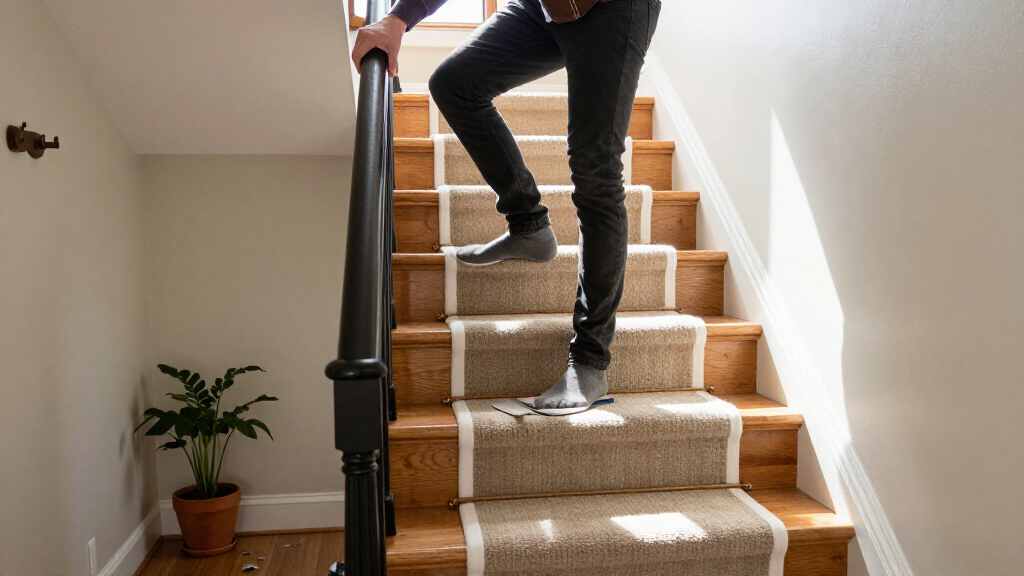
Runners can add traction and color, but their installation matters, the designers said. Caroline Aycock of Koukla Collective recommends runners for narrow, steep staircases, including those in historic homes. Fiori advises against a loose “waterfall” installation and instead describes a “Hollywood” wrap, in which the runner follows the stair’s contour and is secured beneath the nosing and to the riser. A patterned runner can also become a visual feature, Aycock said.
Handrails and balusters are the other two suggestions. Designer Prudence Bailey recommends adding a second continuous rail where a landing or turn creates a gap in the handrail. She said it can be treated as a design element through its finish or material. Designer Shannon Crain points to closely spaced vertical balusters as one option when existing gaps are too wide. The article notes that building-code requirements differ by location and describes four inches as a general rule of thumb, not a substitute for checking local requirements.
Design Choices That Can Reduce Stair Risks
Stair safety affects daily use, not just major renovations. Lighting can help make tread edges and changes in level easier to see; a firmly secured runner may reduce slipping and movement underfoot; and handrails provide support as people climb or descend. Closely spaced balusters can also address openings that may pose a concern for young children or pets.
The recommendations also show that safety measures need not look purely utilitarian. The designers cited finishes, patterns and materials as ways to integrate rails and runners into a home’s appearance. That can make improvements more acceptable to homeowners who might otherwise delay them for aesthetic reasons. Still, appearance alone does not establish that a staircase is safe: condition, installation, lighting levels and local requirements all matter.
These are design suggestions, not a safety certification. The source does not report controlled testing or statistics showing how much any one change reduces falls. Readers should treat the advice as a starting point for evaluating their own stairs, rather than as proof that a particular product or design will prevent an injury.
motion sensor LED stair lights rechargeable
As an affiliate, we earn on qualifying purchases.
As an affiliate, we earn on qualifying purchases.
Four Changes From the Designers
The report gathers advice from four design professionals with different perspectives on staircases. Fiori focuses on lighting and runner attachment; Aycock discusses runners in historic homes; Bailey addresses continuity and appearance of handrails; and Crain points to baluster spacing. Their recommendations are framed around modifications that can combine a practical purpose with a deliberate design choice.
The article connects the advice to household members who may be more vulnerable on stairs, including aging adults, young children and small pets. It describes reduced light reaching the retina with age as one reason dim stairways may be harder for some older adults to navigate. It does not cite medical research or quantify the risk, so that explanation should be understood as the article’s context rather than a new clinical finding.
One technical point is especially location-dependent. The article’s four-inch spacing figure is presented as a general rule of thumb, while explicitly recognizing that building codes vary. Stair dimensions, rail requirements and permissible gaps can depend on local rules and the type of property. A homeowner planning alterations should check the applicable code rather than rely on a magazine article’s general guidance.
““Recessed lighting plus handrail lighting ensured that shadows on the steps were eliminated and a trip to the ER avoided.””
— Terri Fiori, founder of Fiori + Co. and a Certified Aging in Place specialist, quoted by House Beautiful
non-slip stair runner rug with installation tape
As an affiliate, we earn on qualifying purchases.
As an affiliate, we earn on qualifying purchases.
Limits of the Safety Advice
The report does not quantify how much the four changes reduce falls or compare one intervention with another. Fiori’s account of a renovation and the designers’ recommendations are attributed professional views, not results from a published safety study cited in the article.
It is also not possible to determine from the report whether a specific staircase meets local code. The article gives no measurements for a reader’s home and says requirements vary by location. It does not assess the condition of existing rails, stairs or flooring, or specify which lighting level is adequate. Those questions depend on the staircase and relevant local standards.
continuous wall-mounted stair handrail kit
As an affiliate, we earn on qualifying purchases.
As an affiliate, we earn on qualifying purchases.
Check the Stairs Before Renovating
The source announces no follow-up study, product launch or regulatory change. For homeowners considering the suggestions, the practical next step is to inspect the staircase and identify the particular issue: poor visibility, a moving runner, a break in handrail coverage or large openings between balusters. The article does not say every home needs all four changes.
Before work begins, check local building rules and the requirements that apply to the property. For complex alterations or uncertainty about whether a rail, runner or baluster arrangement is secure, consult a qualified professional. Any final design decision should account for both the people using the stairs and the conditions of the staircase itself.
stair baluster spacing guard panels
As an affiliate, we earn on qualifying purchases.
As an affiliate, we earn on qualifying purchases.
Key Questions
What four changes do the designers recommend?
The report recommends additional stair lighting, a securely attached runner, a continuous handrail and closely spaced balusters. The designers present them as options to consider, not a one-size-fits-all checklist.
What is a Hollywood-style stair runner?
It is a runner fitted to follow the shape of each step and secured beneath the nosing and to the riser, according to Terri Fiori. She contrasts it with a waterfall installation, where the runner falls over the steps.
What spacing should stair balusters have?
House Beautiful gives four inches as a general rule of thumb and says building codes vary by location. Check local requirements before changing a railing; the article’s figure is not a universal code ruling.
Do these design tips prove that a staircase is safe?
No. The report presents designers’ recommendations but does not provide independent testing or fall-reduction measurements. Stair condition, installation quality and local code requirements also affect safety.
Source: rss
Halloween Picks
halloween
As an affiliate, we earn on qualifying purchases.