TL;DR

Get cleaning gear delivered free with Prime
- Fast, free delivery on millions of items
- Prime Video, Amazon Music and more included
- Member-only deals all year
Steam mops can sanitize floors but pose risks to hardwood if misused. Proper technique, manufacturer guidelines, and modern features matter. Use gentle cleaning methods for long-term floor health.
Always check your hardwood flooring’s finish and manufacturer recommendations before using a steam mop.
Use the lowest steam setting and test a hidden area first—don’t rely on the mop’s default power.
Traditional microfiber mops with minimal water are safer and still effective for daily cleaning.
Excess moisture from steam can cause warping or swelling, especially on unsealed or poorly sealed floors.
Limit steam cleaning to occasional use—consider it a deep-clean method rather than routine maintenance.
The Honest Truth About Steam Mops and Hardwood Floors
TL;DR: Steam mops can sanitize floors, but hardwood is a moisture-sensitive surface. The safest path is simple: verify the finish, use the lowest setting only when permitted, test first, and treat steam as an occasional deep-clean method rather than routine maintenance.
Clean shine can hide slow moisture damage.
Steam can seep through weak finishes and into wood fibers.
A barely damp mop gives more control with less exposure.
Why Hardwood Pushes Back
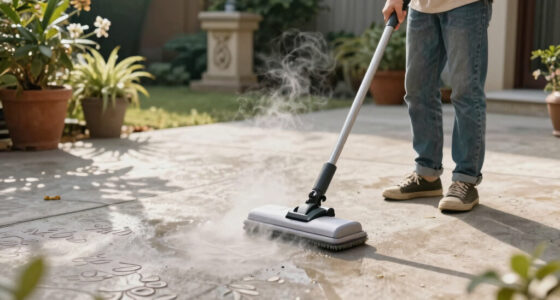
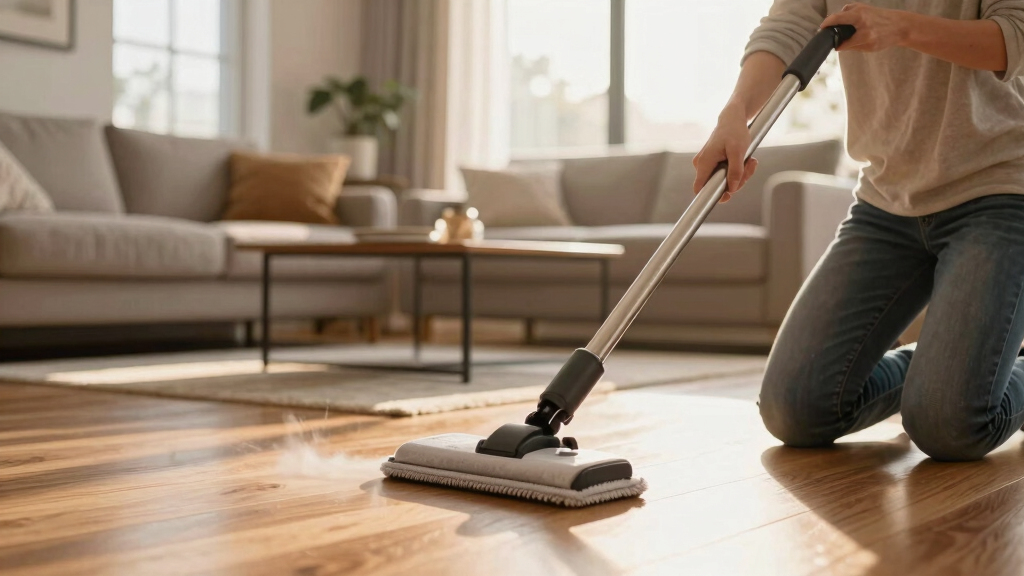
Steam mops loosen grime with heat and vapor. That same vapor is the problem: hardwood expands when moisture enters the finish, seams, or exposed fibers. Damage may appear as swelling, cupping, bubbles, cracks, or a dull surface.
Excess Moisture
Even “dry” steam carries water. If it slips past the finish, it can soften fibers and create visible distortion over time.
Finish Matters
Well-sealed floors are more resilient. Unsealed, worn, matte, or poorly sealed hardwood is much more vulnerable.
Movement Matters
Lingering in one spot, pressing hard, or using a dirty pad concentrates heat, water, and abrasion in the worst way.
Moisture Risk Index
Relative risk by method, assuming normal homeowner use on hardwood flooring.
Sanitizing vs. Surface Safety
Steam wins on heat-based sanitizing, but microfiber wins on control and finish protection.
Steam Mop vs. Microfiber Mop
The safer choice depends less on cleaning speed and more on how much moisture reaches the wood. For everyday hardwood care, low-water methods have the advantage.
| Feature | Steam Mop | Traditional Microfiber Mop | Hardwood Verdict |
|---|---|---|---|
| Water Usage | Hot steam; output varies by model and setting | Lightly damp cloth with very little water | ~ Microfiber is easier to control |
| Moisture Risk | Higher if finish is weak or user lingers | Lower for most sealed finishes | ✓ Microfiber is safer |
| Sanitizing Power | High heat can reduce germs without chemicals | Moderate; depends on cleaner and technique | ~ Steam has the sanitation edge |
| Surface Safety | Variable; depends on settings, finish, and frequency | Generally safe when used correctly | ✓ Lower risk wins for routine care |
| Best Use | Occasional, cautious deep clean on compatible floors | Daily or weekly maintenance cleaning | ✗ Do not make steam the default |
Safe Steam Decision Flow
Use this sequence before a steam mop ever touches your hardwood. The honest answer may still be “skip it,” especially if the finish is old, unclear, or not designed for moisture.
Check the Maker
Read the floor manufacturer’s care guidance. If steam is prohibited, stop there.
Inspect the Finish
Look for worn spots, open seams, cracks, dull patches, or unknown sealant.
Test Hidden Area
Use minimal steam for about 10 seconds, then wait and inspect carefully.
Use Lowest Steam
Keep the pad clean, move continuously, and avoid pressure or repeated passes.
Watch for Change
If you see swelling, warping, haze, or cracks, stop and switch methods.
The Practical Safety Zone
Modern steam mops with adjustable steam, better pads, and temperature controls reduce risk, but they do not erase wood’s basic weakness: prolonged moisture exposure.
Cleaning Intensity Spectrum
For hardwood, stay near the low-moisture side for normal upkeep.
Best-Practice Checklist
Use these guardrails when the floor maker allows steam and the finish appears sound.
- Use the lowest steam setting; never rely on the default power level.
- Test a hidden area and wait 24 hours before broader cleaning.
- Keep the mop moving and avoid pausing over seams or worn spots.
- Clean or replace pads often so grit does not scratch the finish.
- Limit steam cleaning to once every few months, if at all.
Better Everyday Alternatives
For long-term floor beauty, gentle maintenance beats dramatic cleaning. The goal is to remove grit and soil without soaking, overheating, or stripping the finish.
Vacuum Grit
Use a hard-floor attachment to remove particles that can scratch the finish underfoot.
Damp Microfiber
Use a barely damp pad with water or a hardwood-safe cleaner. The cloth should glide, not soak.
pH-Neutral Cleaner
For stubborn marks, use a small amount of gentle cleaner and wipe dry promptly.
Is steam ever safe?
Sometimes, on well-sealed compatible floors with low steam and careful technique. Manufacturer guidance comes first.
How often is too often?
Weekly steam is risky. Treat it as a rare deep clean, not a normal cleaning rhythm.
What warning signs matter?
Warping, swelling, cupping, haze, cracks, bubbles, or a newly dull finish all mean stop immediately.
What is the safest answer?
Vacuum regularly and clean with a lightly damp microfiber mop. It is less dramatic and much kinder to wood.
Trace the Damage Path
What Makes Steam Mops Risky for Hardwood Floors? Here’s the truth.
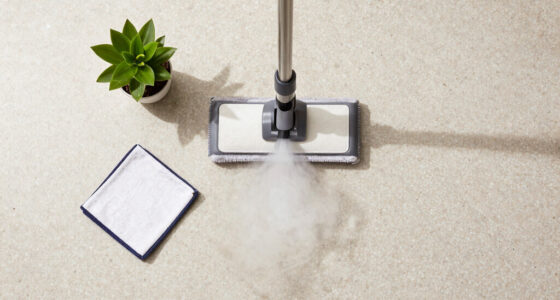
Steam mops use hot, pressurized steam to loosen dirt. But that same steam introduces moisture into your floor’s surface. Hardwood floors are sensitive to water. If moisture seeps into the wood or beneath the finish, it can cause swelling, warping, or even cupping.
Think of it like leaving a sponge on your wood. The water slowly seeps in, softening the fibers. Over time, this damage becomes visible—bubbles, cracks, or a dull appearance. According to an anonymous researcher, excessive moisture is the main driver behind hardwood damage from steam cleaning.
best microfiber mop for hardwood floors
As an affiliate, we earn on qualifying purchases.
As an affiliate, we earn on qualifying purchases.
How to Tell if Your Hardwood Floor Can Handle Steam Cleaning
Not all hardwood floors are created equal. The key is the finish and sealant. Floors with a high-quality, waterproof finish are more resistant. Check your manufacturer’s guidelines or look for a sealant labeled as ‘moisture-resistant.’
For example, a well-sealed oak floor might handle occasional light steam cleaning better than an unfinished maple. To be safe, test a small hidden area first—apply minimal steam for 10 seconds. If there’s no change after a few hours, you’re probably okay.
steam mop with adjustable steam settings
As an affiliate, we earn on qualifying purchases.
As an affiliate, we earn on qualifying purchases.
Comparing Steam Mops and Traditional Cleaning: Which Is Safer for Hardwood?
| Feature | Steam Mops | Traditional Microfiber Mop |
|---|---|---|
| Water Usage | Hot steam, minimal water | Lightly damp cloth, very little water |
| Moisture Risk | Higher, if used improperly | Lower, safer for all finishes |
| Sanitizing Power | High, kills germs with heat | Moderate, depends on cleaning products |
| Ease of Use | Quick, chemical-free | Gentle, more control |
| Surface Safety | Variable, depends on settings | Generally safe when used correctly |
For hardwood, traditional microfiber is safer—less risk, more control. Steam can be effective but demands careful handling.
As an affiliate, we earn on qualifying purchases.
Best Practices to Keep Your Hardwood Floors Safe When Using a Steam Mop
- Check your flooring’s manufacturer advice—if in doubt, skip steam.
- Use the lowest steam setting—less heat, less moisture.
- Always test a small hidden spot first—wait 24 hours to see if damage occurs.
- Keep the mop moving—don’t linger or press down hard.
- Replace or clean the pad often—dirt and debris can scratch the finish.
- Limit steam sessions—no more than once every few months, if at all.
For example, a homeowner used a steam mop weekly on sealed oak with no issues. But they followed all these tips—low steam, testing, and gentle movement. Remember, even with precautions, excessive or frequent steaming can still risk damage over time, especially if the finish is compromised or not designed to withstand moisture. The key is moderation and vigilant observation—if you notice any changes in your floor’s appearance, halt steam cleaning immediately and switch to gentler methods.
As an affiliate, we earn on qualifying purchases.
What Are the Real Alternatives to Steam Mops for Hardwood Floors?
If you want to keep your floors pristine without risking damage, stick to simple methods. Microfiber mop dampened with water or a gentle hardwood cleaner is usually best. Vacuum regularly to remove grit that can scratch the surface.
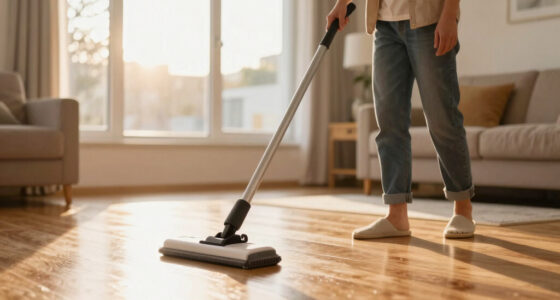
Imagine walking into a room with a soft, barely damp microfiber cloth gliding over a glossy maple floor—clean, shiny, and safe. For stubborn spots, a tiny amount of a pH-neutral cleaner is enough. Avoid harsh chemicals or soaking the floor. This approach minimizes moisture exposure, reduces the risk of long-term damage, and preserves the integrity of your finish, ensuring your floors maintain their beauty for years to come.
Frequently Asked Questions
Is it safe to use a steam mop on hardwood floors?
It depends on your floor’s finish and how you use the mop. Most experts recommend caution, especially with unsealed or poorly sealed floors. Always check your manufacturer’s advice and test first.How often can I safely steam clean my hardwood floors?
Rarely—consider it a deep-clean method. Once every few months or on special occasions is enough. More frequent use increases the risk of moisture damage.What signs indicate my hardwood floor is being damaged by steam cleaning?
Look for warping, swelling, or a dull, cracked finish. If you notice these after steaming, stop immediately and switch to gentler cleaning methods.Can I use steam mops on all hardwood floors?
No. Floors with sealed, waterproof finishes may handle light steaming, but unsealed or matte-finish floors are at higher risk. Always verify with your flooring manufacturer.What’s the best way to clean hardwood floors without risking damage?
Use a microfiber mop lightly dampened with water or a pH-neutral hardwood cleaner. Vacuum regularly, and avoid excessive water or harsh chemicals.Conclusion
Your hardwood floors shine best when treated gently. Steam mops can be tempting, but they carry risks if used improperly. Stick to the safest cleaning methods—your floors will thank you with years of beauty. Think of it like giving your wood the gentle hug it needs, not a splash of water that might swell it up.Halloween Picks
halloween
As an affiliate, we earn on qualifying purchases.