TL;DR

Get cleaning gear delivered free with Prime
- Fast, free delivery on millions of items
- Prime Video, Amazon Music and more included
- Member-only deals all year
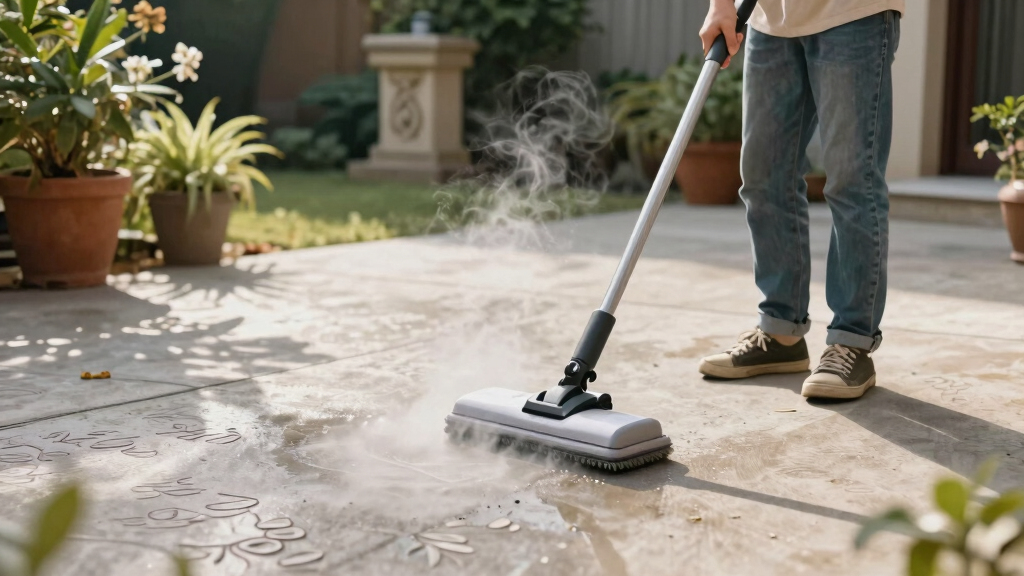
Steam mopping stamped concrete can be safe if the surface is well sealed and you use moderate heat, keep moving, and test first. Overuse or unsealed surfaces risk damage, so always follow manufacturer instructions.
Imagine a beautifully stamped concrete patio — textured, colorful, a real eye-catcher. You want it spotless without risking damage, so you consider a steam mop. But is that safe? Many homeowners wonder if using steam on decorative concrete is a good idea or if it could ruin their investment.
This guide walks through what you need to know about steaming stamped concrete. We’ll cover safety tips, recent tech improvements, and how to do it right—saving you time, money, and headaches.
Proper sealing is essential—well-sealed stamped concrete withstands steam cleaning better.
Use the lowest effective steam temperature and keep the mop moving to prevent damage.
Always test in a hidden spot before a full clean—this can prevent costly surprises.
Modern sealants and steam cleaners are safer, but caution remains vital for older or damaged surfaces.
Routine sweeping and rinsing often suffice; save steam cleaning for periodic deep cleans.
What Makes Stamped Concrete Different and Why It Matters
Stamped concrete isn’t just plain old concrete. It’s a decorative surface with added textures and colors, often sealed with a protective layer. This sealant gives it that beautiful, glossy look but also makes it sensitive to heat and moisture.
If you’ve ever seen a sealant peel or discolor after aggressive cleaning, that’s a sign how delicate these coatings can be. Proper sealing can withstand gentle cleaning, but aggressive methods like high heat or prolonged moisture can weaken or damage it.
For example, a homeowner in Florida used a steam mop on their stamped patio. The surface looked fine initially, but after a few months, they noticed dull spots and slight peeling—damage caused by excessive heat and moisture.
As an affiliate, we earn on qualifying purchases.
How Safe Is Steam Mopping Stamped Concrete? The Bottom Line
Steam mopping stamped concrete is generally safe **if** the surface is properly sealed and you follow the right steps. Modern sealants are more heat-resistant, and newer steam cleaners offer adjustable settings. But if the sealant is old or compromised, steam can cause damage.
Using a steam mop with moderate temperature, keeping it moving, and testing first can prevent problems. Remember, too much moisture or staying in one spot too long can weaken the sealant or cause discoloration.
For instance, a homeowner in California used a steam mop on their sealed stamped walkway once a year, following manufacturer advice. It stayed in excellent condition over several years, showing that cautious use can be safe.
As an affiliate, we earn on qualifying purchases.
Latest Tech and Sealants Making Steam Mopping Safer
Newer sealants are designed to withstand heat and moisture better. Some are explicitly labeled ‘steam-cleanable,’ giving you extra confidence. Meanwhile, advances in steam cleaner design now include adjustable steam levels and safer, softer pads for delicate surfaces.
For example, a recent study found that sealants with heat resistance up to 250°F significantly reduce damage risk. Modern steamers with variable controls allow you to dial down heat, making the process safer for your stamped concrete.
So, technology has caught up—if you’re careful, steam mopping can be a practical cleaning method for decorative surfaces today.
adjustable steam cleaner for delicate surfaces
As an affiliate, we earn on qualifying purchases.
As an affiliate, we earn on qualifying purchases.
Step-by-Step: How to Safely Steam Mop Your Stamped Concrete
- Check your sealant label—look for ‘steam-cleanable’ or contact the manufacturer for guidance.
- Test in a hidden corner—apply steam for 10 seconds and observe for any changes or damage.
- Set your steam mop to the lowest effective temperature—usually, the ‘low’ setting is enough.
- Keep the mop moving—don’t hold it in one spot longer than 3-4 seconds.
- Maintain a safe distance—about 2-3 inches from the surface to prevent excessive heat buildup.
- Limit frequency—use steam cleaning sparingly, maybe once or twice a year.
Imagine you’re cleaning your patio after a party. Follow these steps, and you’ll refresh your stamped concrete without risking damage or losing its luster.
best steam mop for sealed concrete
As an affiliate, we earn on qualifying purchases.
As an affiliate, we earn on qualifying purchases.
Compare: Steam Cleaning vs. Traditional Cleaning for Stamped Concrete
| Feature | Steam Cleaning | Traditional Cleaning |
|---|---|---|
| Effectiveness | Deep cleaning, kills germs, removes stains | Good for routine dust and dirt, less effective on heavy grime |
| Surface Safety | Safe if used correctly, but risk if sealant is compromised | Generally safe, especially with mild solutions |
| Moisture Level | Higher, requires caution | Lower, easier to control |
| Ease of Use | Requires proper technique and settings | Simple, quick for regular maintenance |
If your stamped concrete is sealed well, steam cleaning can give a deeper, more thorough clean. But for light weekly upkeep, traditional methods might be safer and easier.
What Risks Do You Face if You Skip the Testing Step?
Jumping straight into steam cleaning without testing can lead to unexpected damage. Sealants might peel, discolor, or develop dull patches. Once damage occurs, fixing it often involves resealing or replacing parts of the surface—costly and time-consuming.
For example, a homeowner in Texas used a high-temperature steam mop on an untested section. A small area turned cloudy and sticky, forcing them to reseal the entire patio.
Always test first—it’s a simple step that can save you from costly repairs later.
Routine Maintenance: When and How to Keep Your Stamped Concrete Looking Its Best
Regular sweeping and gentle rinsing with water often do the job. For deeper cleaning, occasional steam mopping is fine—if your sealant allows it. Otherwise, a simple solution of warm water and a mild detergent usually suffices.
Imagine a weekend morning, sweeping away leaves and dust, then giving the surface a quick rinse. No damage, no fuss. This routine keeps your stamped concrete vibrant and intact for years.
Remember, overcleaning or harsh scrubbing can wear down the sealant, so moderation is key.
Frequently Asked Questions
Can I steam mop stamped concrete if it’s not sealed?
No, unsealed stamped concrete is much more vulnerable. Moisture and heat can seep in, causing staining, cracking, or surface damage. It’s best to seal your concrete before attempting any steam cleaning.
How do I know if my sealant is safe for steam cleaning?
Check the sealant label or contact the manufacturer. Look for terms like ‘steam-cleanable’ or heat-resistant. When in doubt, perform a small test first—apply steam for 10 seconds and observe for any changes.
Is steam cleaning better than pressure washing for stamped concrete?
Steam cleaning offers a gentler, chemical-free option and can reach crevices better. Pressure washing is more aggressive and risks surface damage if not done carefully. Use pressure washing only if your surface and sealant can handle it.
How often should I steam mop my stamped concrete?
Once or twice a year is usually enough, unless the surface gets exceptionally dirty or the sealant is rated for frequent cleaning. Overdoing it can wear down the protective coating.
What do I do if I notice damage after steam cleaning?
Stop using steam immediately. Consult a professional to assess the sealant and surface. You may need to reseal or repair sections to restore your stamped concrete’s appearance and durability.
Conclusion
Steam mopping stamped concrete isn’t a gamble if you respect the surface’s limits. Proper sealing and cautious technique turn it into a safe, effective cleaning method that preserves your decorative surface’s beauty.
Think of it like giving your patio a gentle spa treatment—if you approach it carefully, it’ll stay vibrant and durable for years.
Halloween Picks
halloween
As an affiliate, we earn on qualifying purchases.