TL;DR

Get cleaning gear delivered free with Prime
- Fast, free delivery on millions of items
- Prime Video, Amazon Music and more included
- Member-only deals all year
Yes—steam can kill Salmonella and disease-causing E. coli when the contaminated food or surface gets hot enough for long enough. For food, check the thickest part with a thermometer because steam and appearance cannot tell you whether the center reached a safe temperature. Keep raw food and its juices away from ready-to-eat items, and do not treat a household steam cleaner as a validated food sanitizer.
Steam can kill Salmonella and disease-causing E. coli when heat reaches the contaminated spot for long enough.
Check the thickest part of food with a thermometer; no single steaming time works for every thickness, load, or setup.
Common U.S. targets include 165°F (74°C) for poultry, 160°F (71°C) for ground meat, and 145°F (63°C) for whole cuts of meat followed by a 3-minute rest.
Keep raw meat and juices away from cooked and ready-to-eat foods, and do not rinse raw poultry or meat.
Clean food-contact surfaces before using a food-safe sanitizer as directed; do not assume a household steam cleaner sanitizes them or is safe for every floor.
Does Steam Kill Salmonella and E. coli? Check the heat at the center
Steam can kill these bacteria when enough heat reaches the contaminated spot for long enough. A steaming surface does not prove the food’s center is safe.
What makes steam effective
The contaminated spot must get hot enough for long enough; steam alone is no guarantee.
Reach the center
Thick food can stay too cool inside while its surface steams. Check the thickest part with a thermometer.
Let steam circulate
Crowded food, folds, and crevices can heat unevenly. A looser layer can help steam reach more surfaces.
Use the clock as a guide
Thickness, starting temperature, quantity, and steamer setup change how quickly food heats.
Check food where it heats slowest
Use a clean food thermometer in the thickest part and follow local food-safety guidance.
| Food | Common U.S. target |
|---|---|
| Poultry | 165°F (74°C) |
| Ground meat | 160°F (71°C) |
| Fish | 145°F (63°C), or opaque and flakes easily |
| Egg dishes | 160°F (71°C) |
| Leftovers | 165°F (74°C) |
Keep bacteria from hitching a ride
Cooking does not protect ready-to-eat food from bacteria transferred afterward.
Keep raw meat, poultry, seafood, and their juices away from cooked and ready-to-eat foods.
Wash hands, utensils, and food-contact surfaces after they touch raw ingredients. Do not rinse raw poultry or meat.
Clean food-contact surfaces first, then use a food-safe sanitizer according to its label.
Steam kills these bacteria only when the heat reaches them
Yes, steam can kill Salmonella and disease-causing E. coli when the contaminated food or surface gets hot enough for long enough. The key is the temperature at the contaminated spot, not how much steam you see rising above the pot. A thin green bean and a thick chicken breast do not heat at the same speed, even if they share a steamer basket. Think of heat as a visitor that has to reach every room in a house. The outside of a roast gets the first knock; its center takes longer. If steam cannot reach a folded surface, a crowded patch of food, or a deep crevice, that spot may heat more slowly than its surroundings. That is why “steam itself is” not a safety guarantee. The food or surface must receive effective heat for enough time, and no one cooking time fits every size, shape, quantity, and steamer setup. A basket packed tightly with vegetables may cook unevenly; spreading them into a looser layer can help steam circulate, though a thermometer remains the meaningful check for foods with a temperature target. In practical terms, a cloud of steam tells you the water is hot. It does not tell you the center of a thick piece of food has reached a safe temperature. Treat the thermometer as your destination marker, and the steam as the road that may or may not get you there evenly.Products Worth Considering

Philips Hue Secure Starter Kit with Contact Sensors, Motion Sensor, Bridge, and Color Smart Bulbs

Ring Alarm 14-Piece Kit

Philips Hue White and Color Ambiance Smart Light Starter Kit, 2 A19 Bulbs with Hub
As an affiliate, we earn on qualifying purchases.
Check the center instead of trusting the clock
For food safety, use a thermometer in the thickest part of the food and compare the reading with the appropriate local guidance. Common U.S. targets include 165°F (74°C) for poultry, 160°F (71°C) for ground meat, and 145°F (63°C) for whole cuts of beef, pork, lamb, and veal followed by a 3-minute rest. A clock can suggest when to begin checking, but it cannot confirm the temperature inside. Picture two chicken breasts in the same steamer: one is thin at the edge, the other twice as thick near the middle. They may look equally pale and give off the same fragrant, savory steam, but the thicker piece can take longer to heat through. Put the thermometer probe into the thickest section without touching bone, and check more than one spot when the shape or thickness varies. Other common U.S. targets are 145°F (63°C) for fish, or cooking until it is opaque and flakes easily; 160°F (71°C) for egg dishes; and 165°F (74°C) for leftovers. Follow local food-safety guidance for foods not listed here. These figures are cooking targets, not a universal schedule for how many minutes to steam.- Check the relevant safe-temperature guidance for the food.
- Insert a clean food thermometer into the thickest part.
- Wait for a stable reading and check another thick spot if needed.
- Continue cooking if the reading has not reached the target.
Know why steaming times change from one meal to the next
There is no single reliable steaming time for every food because thickness, starting temperature, quantity, and steamer setup all change how quickly the center heats. This is why the same recipe can take longer when you start with chilled food, fill the basket, or cut larger pieces. A timer measures elapsed minutes; it does not measure the coldest spot in the food. Imagine steaming a small portion of broccoli for lunch, then loading the same pot with a mound of mixed vegetables for a family dinner. The larger load blocks some paths the steam used to take, and the cool vegetables lower the temperature inside the pot until it recovers. Stirring or rearranging food can help even out cooking, but the effect depends on the pieces and the equipment. Surface exposure matters too. Steam can reach the outside of a food more readily than its center, and it may miss areas pressed together or shielded under another piece. The outside can grow soft while a thick interior remains undercooked—a contrast you cannot always spot by looking. If your recipe gives a time, use it as a starting point and verify the final temperature where guidance calls for one. For fish, for example, the common U.S. target is 145°F (63°C), or the flesh should be opaque and flake easily. A thinner fillet may reach the target sooner than a thick one; check the thicker portion and avoid assuming both are ready just because the timer rang.Keep raw juices away from food that is ready to eat
Cooking can kill bacteria in food, but cross-contamination can move them back onto food you will eat without further cooking. Keep raw meat, poultry, seafood, and their juices away from cooked dishes and ready-to-eat foods such as salad or sliced fruit. Wash your hands, utensils, and food-contact surfaces after they touch raw ingredients. A familiar kitchen moment shows how easily the transfer happens: you set raw chicken on a cutting board, then slice tomatoes on the same board for a sandwich. The tomatoes may never go near the steamer, so cooking the chicken does nothing to make the tomato safe. A clean board and knife for the ready-to-eat ingredients close that gap. Rinsing raw poultry or meat does not reliably remove bacteria. Water can splash droplets around the sink and onto nearby counters, dish towels, or produce. If raw chicken goes straight from its package to the cooking pot, you can skip that splash and focus on heating it properly. Steam can cause severe burns, especially when you lift a lid over a pot or steamer basket. Open the lid away from your face and hands, and use oven mitts to lift hot equipment. A quick, careful motion protects you from the plume while preserving the food-safety habits that matter before and after cooking.Use steam mops for floors, not as food-safety equipment
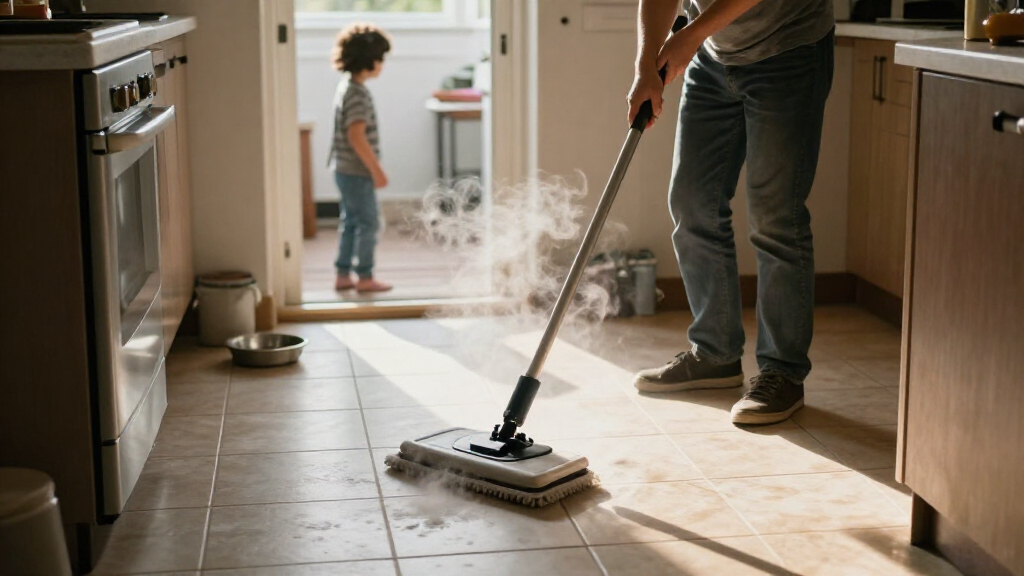
A household steam cleaner should not automatically be treated as equipment that sanitizes food-contact surfaces. Cooking steam and a steam mop serve different purposes: the cooking method heats food, while a household cleaner heats a surface according to its design and directions. Without validated equipment and a suitable process, visible vapor does not prove that every part of a counter or cutting board received a germ-killing treatment. If a raw-food spill lands on a counter, first remove food residue and clean the surface. Then follow the counter manufacturer’s instructions and, when needed, use a sanitizer labeled for that food-contact surface. A product label gives directions such as contact time and whether the surface must be rinsed; follow those rather than improvising with a floor steamer. Floors need their own caution. Heat and moisture can damage some hardwood, laminate, vinyl, or LVP surfaces, or affect seams and finishes. Check the floor manufacturer’s cleaning guidance before using a steam mop, and test a hidden area first if steam cleaning is allowed. A dull patch or swollen seam is a costly way to learn that a surface was incompatible. Think of cleaning and sanitizing as two separate jobs: cleaning removes soil, while sanitizing reduces germs under the conditions on the product label. A greasy counter needs cleaning before a sanitizer can work as directed. A steam cleaner may be useful for surfaces its manufacturer approves, but it does not replace food-safe handling or label-based sanitation.Treat leftovers, freezing, and spoilage as separate safety questions
Thorough reheating can kill many living bacteria, but it cannot reliably undo toxins that some bacteria may have produced while food sat or was stored improperly. Refrigerate perishable food promptly and follow local storage guidance; if food has been left out too long, reheating is not a dependable rescue. The oven or steamer can heat a meal, but it cannot reverse every problem that happened earlier. Leftovers should reach 165°F (74°C) under common U.S. guidance. When reheating soup, for instance, stir it so hot and cool pockets mix, then check the temperature with a food thermometer. A steaming surface can hide a cooler center, especially in a thick casserole or a crowded container. Freezing generally stops bacteria from multiplying while food remains frozen, but it does not reliably kill Salmonella or E. coli. A batch of chili thawed after a month still needs proper handling and reheating. Freezing preserves food; it is not a sterilizing step. Smell, color, and texture are also poor safety tests. Harmful bacteria can be present without making food smell sour or look unusual. If chicken seems normal, that does not prove it is safe; use storage history and temperature checks instead of taking a sniff and guessing.Use a few simple habits to make steaming safer
A safe steaming routine starts before the pot goes on the stove and ends when the cooked food reaches the table. Keep raw ingredients separate, handle hot lids carefully, and check temperatures where food-safety guidance sets a target. This routine takes little extra time and avoids relying on the sound of a boiling pot or the fog on a kitchen window. A weeknight example: you steam chicken and vegetables for dinner, then plan to pack leftovers. Keep the raw chicken board and knife away from the vegetables you will eat, wash your hands after handling the chicken, and use separate clean utensils for the cooked food. Check the chicken’s thickest part; then refrigerate leftovers promptly rather than letting the pot sit out while you clean the kitchen. Use these habits as a short kitchen checklist:- Separate: Keep raw meat and juices away from cooked food and ready-to-eat items.
- Check: Use a food thermometer at the thickest point rather than trusting time or appearance.
- Protect: Open lids away from your face and hands; use oven mitts around hot cookware.
- Clean: Wash hands, utensils, and food-contact surfaces after raw ingredients touch them.
- Follow directions: Use local food-safety advice and the manufacturer’s instructions for appliances, floors, and sanitizers.