TL;DR

Get cleaning gear delivered free with Prime
- Fast, free delivery on millions of items
- Prime Video, Amazon Music and more included
- Member-only deals all year
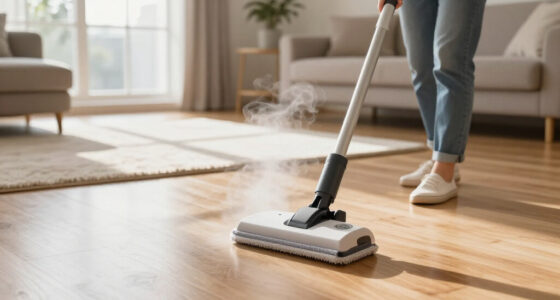
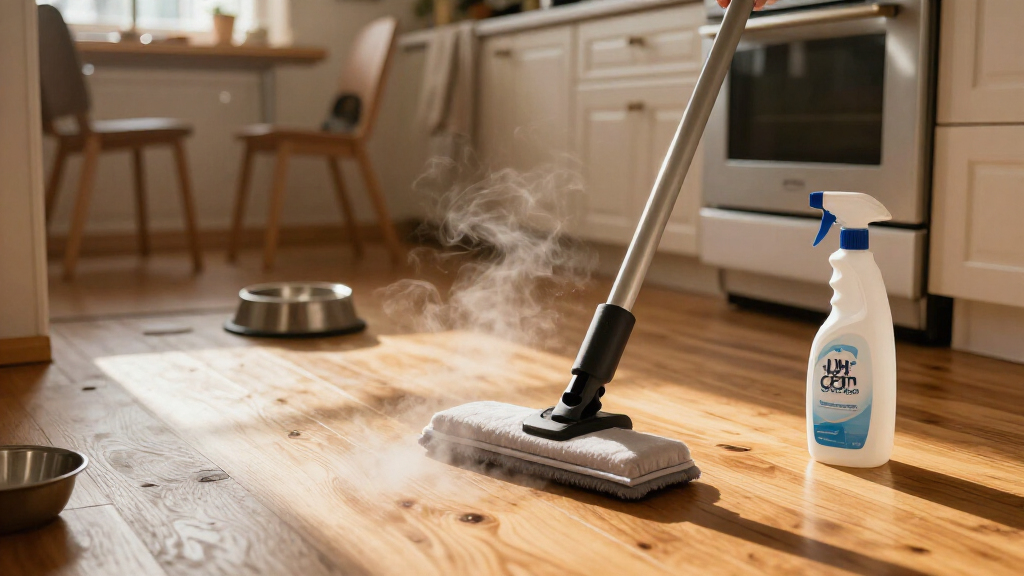
A steam mop uses heated water to loosen soil and may reduce some germs on compatible, sealed floors when used as directed. A disinfectant spray kills only the germs named on its label, and the surface must stay visibly wet for the full contact time. For routine messes, clean with a floor-compatible method; reserve disinfection for situations that call for it.
A floor can look spotless while still being the wrong place for a burst of steam or a quick disinfectant spray. Appearance does not tell you whether a treatment suits the floor, or whether it has been applied long enough to do its job.
A steam mop uses heated water vapor to loosen soil and may reduce some germs on suitable, sealed hard floors. A disinfectant spray is a registered chemical product intended to kill specified germs under its label directions. Those are different jobs, and neither method is a shortcut around floor compatibility or removing visible grime.
This guide explains how to choose, what the claims mean, and what to do in an ordinary kitchen versus after a contamination or illness. You’ll also see why a floor’s care instructions deserve a place beside the mop and spray bottle.
Use a steam mop only if the flooring instructions and machine manual allow it; test an approved method in a hidden area first.
Treat a disinfectant’s full wet contact time as part of its directions, not an optional wait.
Remove visible soil before disinfecting unless the label specifically permits cleaner-disinfectant use for that job.
For routine dust, crumbs, and spills, a floor-compatible cleaner is often enough.
Do not combine a spray and steam treatment unless both manufacturers explicitly approve the combination.
Floor care • A practical guide
Steam Mop vs Disinfectant Spray for Floors
Choose by the job, the floor, and the directions. Steam can loosen soil on compatible surfaces; disinfectant spray targets specified germs only under its label conditions.
01 / Choose by the job
Cleaning and disinfection are not the same
Cleaning removes dirt and residue. Sanitizing reduces germs to a specified level. Disinfecting kills specified microorganisms under the product’s labeled conditions. None of these terms means “kills everything,” and a clean-looking floor does not prove that it is compatible with heat or chemicals.
Clean the floor
For dust, crumbs, and ordinary spills, sweep or vacuum, then use a floor-compatible cleaner. Disinfection is often unnecessary for everyday household care.
Loosen soil with heat
Steam is mainly a cleaning tool. It may reduce some germs on suitable, sealed hard floors when the floor and machine instructions allow it.
Follow a specific germ claim
A registered product targets only the germs named on its label, on approved surfaces, when all application and wet-time directions are followed.
02 / Side-by-side
What determines the result?
Neither method wins every comparison. Match the tool to the need, then confirm the floor can tolerate it.
| Question | Steam mop | Disinfectant spray |
|---|---|---|
| Main purpose | Loosen soil on compatible hard floors | Kill specified germs under labeled conditions |
| Compatibility check | Flooring care instructions and machine manual | Product label plus flooring care guidance |
| What can undermine it? | Wrong floor, dirty pad, fast passes, unsupported germ claims | Soil, wrong surface, missed directions, drying too soon |
| Standout safety concern | Hot steam can burn or damage finishes, adhesives, and seams | Fumes or residue; follow precautions and re-entry directions |
| Best fit | Approved surface and compatible machine directions | A specific disinfection need when label conditions are workable |
03 / The contact-time test
Wet time is part of the directions
A disinfectant’s germ claim depends on using the right product on the right surface and maintaining the labeled wet contact time. A short spray-and-wipe can fall short.
Clean visible soil first
Sweep or vacuum. Before disinfecting, clean visible dirt and grime unless the label specifically permits the product as a cleaner-disinfectant for that use.
Keep claims specific
Results vary with coverage, surface conditions, and directions. Avoid broad claims such as “sterilizes floors” unless the specific method supports them.
04 / Check before treating
The floor’s care instructions come first
Heat and moisture can affect finishes, adhesives, seams, and layers beneath the surface. A “water-resistant” claim does not automatically approve repeated steaming or wet cleaning.
Delicate or unsealed floors
Be especially careful with unsealed wood, waxed surfaces, some laminates, and delicate resilient flooring. Avoid steam if the flooring maker prohibits it.
Floor and product guidance
Confirm the floor maker’s method and the steam-mop manual or spray label. Check approved surfaces, dilution, rinsing, food-contact restrictions, and safety directions.
Inspect after it dries
If instructions allow, test a hidden spot. Watch for dullness, clouding, swelling, discoloration, lifted edges, or tacky residue. A test cannot guarantee repeated use is harmless.
05 / A safer five-step routine
Start simple. Escalate only when needed.
For a dusty entry, sticky kitchen mark, illness, or contamination concern, follow the same decision path.
Read the care guide
Identify approved methods for the exact floor.
Remove loose soil
Sweep or vacuum grit, crumbs, and dust.
Match the job
Use a compatible cleaner for routine messes.
Disinfect if called for
Clean first, then follow the label’s full directions.
Protect people and pets
Ventilate and wait as the label instructs.
Trace the decision
From floor to method
Let the surface, the mess, and the written directions lead the choice.
Choose by the job: everyday cleaning and disinfection are different
A steam mop is mainly a cleaning tool; a disinfectant spray is for a labeled antimicrobial purpose. Cleaning removes dirt and residue, sanitizing reduces germs to a specified level, and disinfecting kills specified microorganisms under the product’s labeled conditions. Those distinctions matter because a cleaner floor and a lower germ count are related goals, but one does not prove the other. None of those words means “kills everything.”
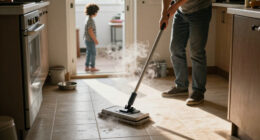
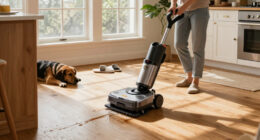
For everyday care, sweeping or vacuuming followed by a floor-compatible cleaner is often enough. Say your dog tracks dusty paw prints across a sealed tile entry: vacuuming the grit and wiping the marks may be all you need. Removing soil also makes later treatment more effective if it becomes necessary. Reaching for disinfectant every time adds product exposure and label steps without necessarily solving a problem that routine cleaning could not handle.
Disinfection can make sense after contamination, when someone in the home is ill, or when a workplace or public-health guideline calls for it. In that case, clean off visible soil first unless the label specifically identifies the product as a cleaner-disinfectant for that use. Soil can physically shield germs or react with the product, so applying disinfectant over a greasy kitchen spill may leave both a mess and an unreliable result. Cleaning first takes an extra step, but it gives the follow-up treatment a better chance to contact the surface as intended.
Think of cleaning as clearing the table and disinfection as carrying out a specific follow-up task. One does not automatically replace the other. If a toddler drops food on the floor, wipe up the food and clean the area; if there is a particular contamination concern, use a compatible product according to its directions. This distinction keeps routine chores simple while preserving a deliberate response for situations that call for more.
Products Worth Considering

Dyson W1 PencilWash Cordless Wet and Dry Floor Cleaner with Dock

Dreame H12 Pro Wet and Dry Vacuum Mop

Shark HydroVac MessMaster Cordless Wet Dry Vacuum and Mop Combo, AW261
As an affiliate, we earn on qualifying purchases.
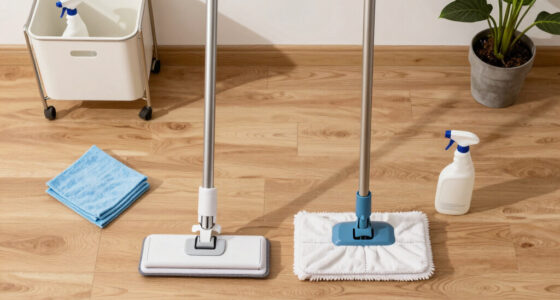
Steam mop vs disinfectant spray: compare what each method can do
Steam mop vs disinfectant spray comes down to floor compatibility, the task, and whether you can follow the method’s directions. A steam mop uses heated water vapor to loosen soil and may reduce germs on approved surfaces under suitable conditions. A disinfectant spray targets specified germs only when used on a labeled surface and kept wet for its full contact time. The first method depends on the heat and exposure that reach the floor; the second depends on applying the right product in the right conditions.
| Question | Steam mop | Disinfectant spray |
|---|---|---|
| What is it mainly for? | Loosening soil on compatible hard floors | Killing specified germs under labeled conditions |
| What determines compatibility? | Flooring and machine instructions | Product label and flooring-care guidance |
| What can undermine the result? | Wrong floor, dirty pad, fast passes, or unsupported germ claims | Soil, wrong surface, missed directions, or surface drying too soon |
| What safety issue stands out? | Hot steam can burn and may damage finishes or seams | Fumes or residues; follow label precautions and re-entry directions |
Take a sealed tile floor with sticky marks: a steam mop may be appropriate if both the tile guidance and machine manual allow it. On a wood-look laminate floor, heat and moisture may threaten joints or the core even when the surface looks sturdy. A spray labeled for hard, nonporous surfaces may still require a compatibility check and a full wet period. In each case, the visible surface alone does not tell you how the treatment will affect coatings, seams, or the layers below.
Neither option wins every comparison. The steam mop can leave no disinfectant spray residue, but that does not make it universally safe or a validated disinfectant. The spray can carry a specific germ claim, but that claim does not override floor-care instructions or a required contact time. A practical choice weighs the benefit you need against the extra exposure or material risk: if routine soil is the issue, a compatible cleaner may be the simpler tool; if disinfection is needed, the label’s conditions decide whether spray is workable.
Check the floor before you let heat or liquid touch it
Use steam or disinfectant on a floor only when both the relevant instructions allow it. Steam can damage or loosen finishes, adhesives, seams, and protective coatings. Sprays can stain, dull, or leave residue, even if the label mentions hard surfaces in general. The compatibility check matters because floor damage may begin beneath the visible surface, where moisture or heat can affect joints and layers before a stain appears.
Start with the flooring manufacturer’s care instructions, then check the steam-mop manual or disinfectant label. Be especially cautious with unsealed wood, waxed surfaces, some laminates, and delicate resilient flooring. A floor advertised as water-resistant is not automatically approved for repeated heat or wet cleaning; resistance to a spill is a different claim from permission to steam. Repeated exposure is the key tradeoff: a surface might tolerate one damp wipe yet gradually lose its finish or develop swollen edges after many treatments.
For example, a small splash of water on a vinyl plank may wipe away without trouble, while a hot, damp mop pressed over the seams can be a different exposure. If instructions allow the treatment, try it first in a hidden area and inspect the spot after it dries. Look for dullness, clouding, swelling, discoloration, lifted edges, or a tacky residue. A test can reveal an obvious reaction, though it cannot guarantee that a larger area or repeated use will be harmless.
If the guidance is unclear or the test patch changes, pause and use the floor maker’s recommended cleaning method. That might mean a lightly damp microfiber mop and a specific cleaner. A hidden-area test is a useful check, not permission to ignore a manufacturer’s warning. Following the approved method protects both the floor’s appearance and the investment in its finish.
Keep disinfectant wet for the label’s full contact time
A disinfectant must stay visibly wet for the full contact time printed on its label. That time varies by product and by the germ claim; there is no single number that applies to every bottle. The wet period is part of the conditions under which the claim was established, so a quick spray followed by an immediate wipe may fall short of the labeled directions even if the floor looks clean.
Imagine spraying a kitchen floor after raw chicken juice drips near the counter. If the product calls for the area to remain wet for a stated interval, the treatment means keeping it wet for that interval—not misting it once and watching it dry in a few minutes. Read the directions for application amount, dilution, rinsing, and whether the product is allowed on that floor. Some products also have food-contact restrictions. Applying extra product or changing the dilution is not a reliable way to compensate for a surface that dries too soon; it can instead leave more residue or create an exposure the label did not evaluate.
First remove visible soil unless the label says the product is a cleaner-disinfectant for the intended use. Then apply it as directed and keep children and pets off the floor until the instructions say it is safe. Open windows or ventilate as directed, especially if the product has a strong smell or calls for specific precautions. These steps can make the process slower than ordinary mopping, but they are what allow the product’s stated use and safety directions to apply.
Contact time is part of the method. If you cannot keep the compatible surface wet for the labeled period, that spray application does not match the directions for the stated disinfection claim.
For a small spot, following the instructions may be manageable. For a large room where the surface dries fast, check the label before you start rather than assuming a heavier spray or extra wiping will make it work better. If the label’s method is impractical for that floor, choose another approved approach or seek guidance for the specific contamination concern.
Use a steam mop carefully, and keep its germ claims in proportion
Steam performance depends on the heat that reaches the floor, exposure time, pad cleanliness, pace, and machine design. These factors explain why simply owning a steam mop does not guarantee a germ reduction: a pass that moves quickly over a cool or dirty surface may not match the conditions behind a particular manufacturer claim. Results from a controlled laboratory test also may not translate directly to a lived-in floor with grit, seams, and uneven coverage. The claim is useful only to the extent that the real-world method matches the tested conditions.
Before steaming, sweep or vacuum so grit does not grind across the floor or collect in the pad. Use the machine as its manual directs, and change or clean pads when they become soiled. In a hallway, slow, even passes may clean more consistently than a quick dash that leaves damp streaks and missed patches. A dirty pad can also move soil around instead of lifting it, which reduces the cleaning benefit even if the machine is producing steam.
Do not assume steam “sterilizes floors” or kills every virus, bacterium, or mold. Those claims depend on the organism, temperature reached at the surface, exposure time, and device validation. “Sterilizes” suggests a broader result than ordinary home cleaning can establish. If mold is the concern, address the moisture source and follow appropriate remediation guidance; a steam mop will not fix a leak behind a cabinet.
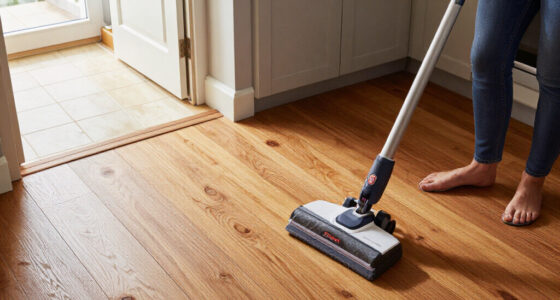
Steam avoids applying a chemical disinfectant, but it is not automatically harmless. Hot vapor can burn skin, and repeated heat or moisture may harm a finish or seam. Use it only where the floor maker and machine maker permit it, and keep hands and bare feet clear of the steam path. That tradeoff makes steam a useful option for compatible surfaces and routine soil, while its germ claims still need to be judged by the actual machine and conditions.
Follow this five-step routine for a safer, more useful clean
Start with the floor’s care instructions, remove loose soil, then match the method to the problem. This sequence helps you avoid treating every footprint as a disinfection emergency or damaging a finish with a tool the floor cannot tolerate. Each step narrows the choice: identify what the surface can handle, decide what result you need, then check whether you can carry out the chosen method correctly.
- Identify the floor. Check whether it is tile, sealed wood, laminate, vinyl, or another material, and find its care instructions.
- Decide what happened. Dust, footprints, and ordinary crumbs usually call for routine cleaning; contamination or illness may call for a specific disinfecting step. This avoids adding a germ-killing treatment when removing soil is the only job.
- Choose an approved method. Confirm that the flooring guidance and product or machine instructions allow the treatment.
- Clear away grit and visible grime. Sweep or vacuum first; if you plan to disinfect, clean the surface before applying the product unless its label says it is a cleaner-disinfectant for that use. This matters because a layer of dirt can interfere with the disinfectant reaching the surface.
- Follow directions and check the result. Maintain the spray’s full wet contact time or operate the steam mop as instructed. Test a hidden area first when the treatment is allowed, then check for residue or surface changes after drying.
For instance, if a guest spills a drink on a sealed tile floor, blot and clean the spill, then decide whether there is any actual reason to disinfect. If someone is sick and you want a labeled disinfectant, check the floor and label first, then time the wet period. If steam is not approved for that surface, do not try it as a backup; choose an approved cleaning method, since an unsuitable alternative can damage the floor without addressing the health concern.
Do not combine disinfectant spray and steam unless both manufacturers explicitly permit that combination. Heat may alter residues or increase exposure, and using two methods does not automatically improve the result. Matching one method to the need is usually easier to apply correctly and easier to assess afterward.
Skip routine disinfection when ordinary cleaning is enough
Most everyday household floor messes call for regular cleaning, not automatic disinfection. Removing dust, crumbs, muddy marks, and sticky spills keeps a room cleaner without exposing the floor to unnecessary heat, moisture, or chemical residue. Use disinfection when a real situation or relevant guidance calls for it. This is a practical tradeoff: routine cleaning handles the visible mess with fewer special steps, while disinfection adds value only when the germ reduction is needed and the product can be used as directed.
Consider the kitchen after breakfast: oat flakes crunch underfoot, and a small splash of juice dries near the table leg. Sweep the flakes, then use a floor-compatible cleaner on the sticky patch. Spraying the entire room with disinfectant would add label directions and a wet waiting period without changing the basic job of removing breakfast. If the floor is busy or dries quickly, that extra procedure can be difficult to do correctly over a large area.
On another day, a household member may be ill or a contaminated material may reach the floor. That changes the task. Follow current public-health advice and the product label, confirm compatibility, and keep others away as directed. For settings with specific hygiene requirements, use the applicable workplace or care guidance rather than improvising with a household steam mop. The reason for disinfection should guide the method, because a general household product or appliance may not meet a setting’s specific requirements.
A useful habit is to keep the right cleaner close and the disinfectant for the situations that call for it. That can reduce needless product use while protecting the floor from repeated treatments it was not designed to handle. Clean what is dirty; disinfect when the reason and directions are clear.
Frequently Asked Questions
Does a steam mop disinfect floors?
A steam mop may reduce certain germs on compatible floors when used under conditions supported by the manufacturer or testing. Do not assume every steam mop disinfects every floor or every microorganism; check the machine’s claims and the flooring instructions.
Is steam better than disinfectant spray?
Neither is universally better. Steam uses heated water to loosen soil and may reduce germs on suitable surfaces, while a disinfectant spray targets specified germs under its label conditions. The floor material and the task determine which, if either, is suitable.
Can I use a steam mop on hardwood or laminate?
Check the flooring manufacturer’s instructions before using steam. Many floor makers advise against it because heat and moisture can affect finishes, joints, or the floor core. If steam is allowed, test a hidden area first and follow the mop manual.
How long should disinfectant stay on the floor?
Keep the surface visibly wet for the full contact time stated on the product label. That time depends on the product and the germ claim, so a fast spray-and-wipe may not meet the directions.
Can I spray disinfectant and then steam-mop?
Do not combine the methods unless both the disinfectant maker and steam-mop maker explicitly permit it. Heat may alter residues or increase exposure, and the combination is not automatically more effective. Follow the instructions for each product and the flooring.
Are disinfectant sprays safe around children and pets?
Safety depends on the particular product and how you use it. Follow label directions for ventilation, application, rinsing, and when children or pets can return to the floor.
Conclusion
Choose by the floor and the job. For routine messes, remove grit and clean with a method your floor maker approves. When disinfection is called for, use a compatible labeled product and keep the surface wet for its full contact time; use steam only on floors approved for the heat and moisture.
A clean floor does not need the loudest claim on the bottle or the hottest pass from the mop. It needs the right care, applied patiently, with the finish still intact when the room dries.