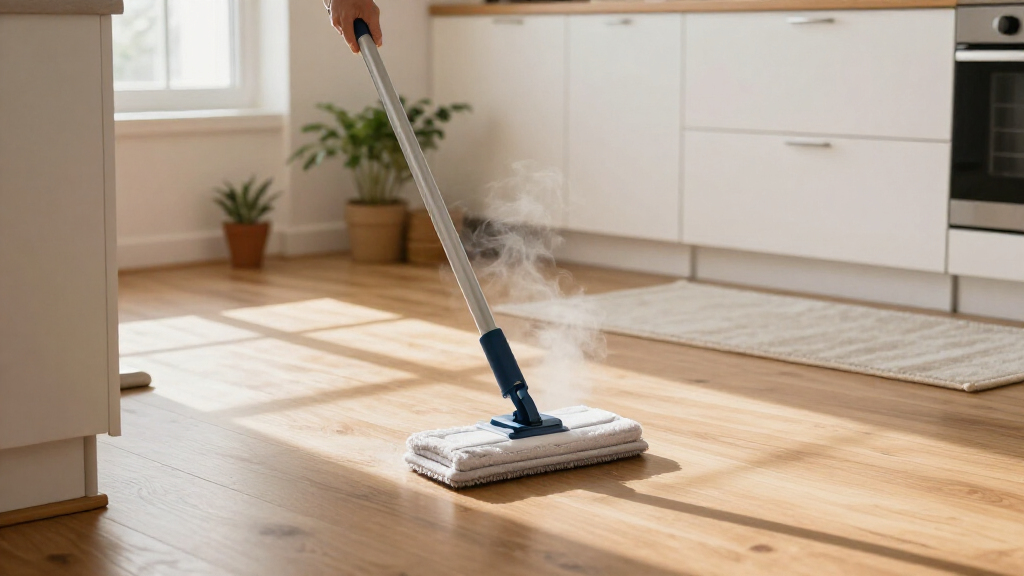
When choosing a mop for sealed hard floors, the real decision is whether you value steam-powered cleaning or a lighter, more flexible routine. A steam mop heats water and uses the resulting steam to loosen grime; a spray mop dispenses cleaning solution onto the floor or pad. That difference affects not only how each handles stuck-on messes, but also floor compatibility, setup, and ongoing cost.

Get cleaning gear delivered free with Prime
- Fast, free delivery on millions of items
- Prime Video, Amazon Music and more included
- Member-only deals all year

Shark S1000 Steam Mop for Sealed Hard Floors
- ✔ Weight: 4.6 pounds
- ✔ Wattage: 1050 watts
- ✔ Heat-up time: 30 seconds
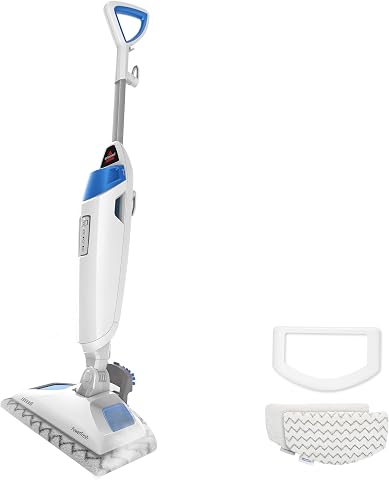
BISSELL PowerFresh 1940A Steam Mop
- ✔ Type: Corded steam mop
- ✔ Power: 1500 watts
- ✔ Steam settings: Three
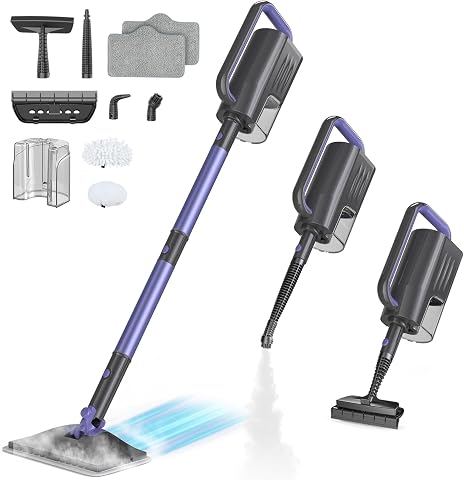
SQKMYSU 6-in-1 Steam Mop for Sealed Hard Floors
- ✔ Model: SC-06
- ✔ Wattage: Conflicting listing: 1200W in description; 1500W in specifications
- ✔ Heat-up time: 15 seconds
A steam mop can make sense for tile or other surfaces whose manufacturer permits steam, especially when you want to clean without a bottle of floor cleaner. But heat and moisture can damage some finishes, seams, and adhesives, even on floors described as sealed. A spray mop is usually the safer, simpler choice across mixed flooring and for quick cleanups, though it relies on solution and may need more effort on dried-on dirt. Check the flooring maker’s care instructions before using either type; a sealed surface is not automatically steam-safe.
At a Glance
| Criteria | Steam mop | Spray mop | Winner |
|---|---|---|---|
| Stuck-on grime | Steam helps loosen grime; results depend on the mop and mess. | Works well for ordinary dirt; dried-on messes may need pretreatment or extra passes. | A |
| Floor compatibility | Limited to floors explicitly approved for steam. | Generally more flexible, subject to floor and cleaner instructions. | B |
| Routine convenience | Requires filling and heating before use. | Ready quickly; spray as you mop. | B |
| Cleaning solution | Uses water; no added floor-cleaner solution is needed. | Uses a compatible cleaning solution, often in a refillable reservoir. | Depends |
| Moisture and heat exposure | Uses hot vapor and moisture; careful use matters. | No steam or high heat; avoid excess liquid and follow floor-care guidance. | B |
| Ongoing cost | May cost more upfront; washable pads reduce recurring expense. | Often lower upfront; solution and pad replacements can add cost. | Depends |
| Best fit | Deep cleaning compatible floors without bottled cleaner. | Fast everyday cleaning and homes with mixed floor types. | Depends |
Shark S1000 Steam Mop for Sealed Hard Floors
The Shark S1000 makes the strongest case for buyers who want a dedicated floor mop without a collection of extra tools. Its 30-second heat-up keeps routine cleaning approachable, while the 4.6-pound weight and swivel steering should help us guide it around furniture and through smaller rooms. Two machine-washable Dirt Grip pads mean we have a spare on hand while the other is in the wash.Compared with the BISSELL PowerFresh, the Shark is lighter and simpler, but it lacks the BISSELL’s three steam settings and flip-down scrubber for dried-on messes. It also has a shorter 18-foot cord than either competitor’s 23-foot cord. That makes the Shark a practical choice for ordinary maintenance when we value easy handling over extra reach or targeted scrubbing. Its stated surfaces include sealed hardwood, marble, tile, stone, laminate and vinyl, but the sealed-floor limitation matters: we should check the flooring maker’s care advice first. The removable tank is convenient to fill, though its listed 12.68-ounce capacity is smaller than the BISSELL’s 16 ounces. This is the focused, lightweight option; buyers who need one appliance for varied tasks should look to the SQKMYSU instead.
Pros:
- Heats up in 30 seconds for a short wait before routine cleaning.
- At 4.6 pounds, it is the lightest of these three listed models.
- Swivel steering supports maneuvering around furniture.
- Includes two machine-washable Dirt Grip pads.
Cons:
- The 18-foot cord is shorter than the 23-foot cords listed for the other two mops.
- It is designed for sealed hard floors and lacks the BISSELL’s scrubber or SQKMYSU’s extra attachments.
Best for: We want a lightweight, uncomplicated mop for regular cleaning of manufacturer-approved sealed floors, especially in rooms where an 18-foot cord is enough.
Not ideal for: We need a longer reach, selectable steam levels, a scrubber for stuck-on spots or attachments for cleaning surfaces beyond floors.
Bottom line: For straightforward upkeep on sealed floors, we’d choose the Shark for its light weight and simple setup, provided its shorter cord suits our rooms.
“For straightforward upkeep on sealed floors, we’d choose the Shark for its light weight and simple setup, provided its shorter cord suits our rooms.”
BISSELL PowerFresh 1940A Steam Mop
When a sealed floor needs more than a pass for everyday dust, the BISSELL PowerFresh 1940A brings useful controls to the comparison. Its three steam settings let us choose among different levels for cleaning needs, and a flip-down scrubber is designed to help with dried-on messes and grout. The removable 16-ounce tank is the largest capacity listed here, and the 23-foot cord matches the SQKMYSU’s reach while exceeding the Shark’s.Those floor-focused tools give the BISSELL a clearer job than the SQKMYSU’s broad accessory bundle: it is for people who want adjustable steam and targeted scrubbing, not a multipurpose appliance. The tradeoff is weight. At 6.2 pounds, it is 1.6 pounds heavier than the Shark, so frequent carrying or long cleaning sessions may make its handling less appealing. It heats in 30 seconds, the same listed time as the Shark but slower than the SQKMYSU’s stated 15 seconds. BISSELL says it eliminates 99.9% of germs when used as directed; we should read that as a manufacturer claim and follow the complete instructions. Its scrubber and steam choices matter most when spot treatment is a regular need; for basic upkeep, the Shark is lighter and less involved.
Pros:
- Three steam settings provide more control than the single-mode details listed for the Shark.
- A flip-down scrubber is designed for dried-on messes and grout.
- Removable 16-ounce tank is the largest listed among these picks.
- A 23-foot cord provides more reach than the Shark’s 18-foot cord.
Cons:
- At 6.2 pounds, it is the heaviest model in this comparison.
- Its 30-second heat-up is longer than the SQKMYSU’s stated 15 seconds.
- It is corded and intended for sealed hard floors, limiting where and how it can be used.
Best for: We clean manufacturer-approved sealed floors with dried-on spots or grout that benefit from a scrubber, and want to adjust steam between three settings.
Not ideal for: We prioritize the lightest mop, need off-floor attachments, or prefer the simplest possible floor-only setup.
Bottom line: The BISSELL is our choice for sealed-floor cleaning that calls for adjustable steam and a dedicated scrubber, if we can accept the heavier body.
“The BISSELL is our choice for sealed-floor cleaning that calls for adjustable steam and a dedicated scrubber, if we can accept the heavier body.”
SQKMYSU 6-in-1 Steam Mop for Sealed Hard Floors
The SQKMYSU 6-in-1 is the only option here positioned to do more than mop floors. Its listed accessory set includes tools for windows, kitchen surfaces and basic ironing, along with mop heads and spray nozzles. If we want one steam cleaner to cover several chores, that breadth distinguishes it from both the Shark’s floor-first design and the BISSELL’s focused scrubber. For floor cleaning, the removable 400 ml tank, two cleaning modes and 23-foot cord offer practical flexibility.The listing states up to 30 minutes of cleaning per fill and a 15-second heat-up, the quickest start time in this group. But the supplied wattage is inconsistent: the description says 1200W while the specifications say 1500W. Runtime and cleaning results can also vary by mode and surface, so we should avoid treating the maximum as a guaranteed session length. Compared with the BISSELL, the SQKMYSU offers more kinds of attachments but no specifically described flip-down scrubber; compared with the Shark, it has more reach and broader use, but more pieces to store and manage. Its range is the main reason to choose it, while specification uncertainty is the main reason to check the product details carefully before deciding.
Pros:
- Listed 15-second heat-up is the quickest among these three models.
- A 23-foot cord and removable 400 ml tank support longer cleaning sessions between outlet changes and refills.
- Includes attachments intended for windows, kitchen surfaces and basic ironing.
- Two cleaning modes offer a choice in how the mop operates.
Cons:
- Wattage is inconsistent in the supplied listing: 1200W in the description and 1500W in the specifications.
- The stated runtime is up to 30 minutes, but it may vary by mode and surface.
- Its multiple accessories require storage and setup beyond a basic floor mop.
Best for: We want a corded steam mop for suitable sealed floors plus attachments for occasional window, kitchen-surface or basic ironing tasks.
Not ideal for: We want a straightforward floor-only mop with unambiguous specifications, or we need a clearly described scrubber for stubborn floor spots.
Bottom line: We’d pick the SQKMYSU when its extra attachments justify the added complexity and we have verified the conflicting wattage details.
“We’d pick the SQKMYSU when its extra attachments justify the added complexity and we have verified the conflicting wattage details.”
As an Amazon Associate we earn from qualifying purchases.
Key Differences
The largest difference is the cleaning method and what it asks of the floor. Steam can loosen stubborn residue without a formulated cleaner, but it subjects the surface to heat and moisture. That is acceptable only when the flooring manufacturer allows it. Some laminate, engineered wood, vinyl, and sealed timber floors can be harmed by steam or water entering joints, even when the surface appears intact. A spray mop avoids high heat, but its solution and dampness still need to suit the floor’s care instructions.
For daily maintenance, the spray mop is the more adaptable tool: fill or attach the solution container, spray, and wipe. The steam mop has more preparation and needs time to heat, but may be more satisfying on compatible tile where grime has dried onto the surface. Neither method eliminates the need to sweep or vacuum loose debris first, and neither guarantees disinfection under ordinary household use. The better value depends on whether you will use steam on approved floors often enough to justify its higher purchase cost and more restricted use.
Detailed Comparison
Stuck-on grime (Steam mop wins — moderate)
Steam mop wins by a moderate margin on compatible floors when dirt has dried or adhered. Heat can soften residue as the pad moves over it, which may reduce scrubbing. A spray mop can handle everyday footprints and spills, but dried food or sticky marks may require a suitable pretreatment, dwell time, or several passes. Neither tool is a substitute for scraping up hardened debris carefully.
Floor compatibility (Spray mop wins — major)
Spray mop wins by a major margin for homes with multiple floor types. It avoids steam’s heat and can be paired with a cleaner approved for each surface. A steam mop should be used only where the floor maker explicitly permits it, and often not on wood, laminate, or vinyl. The word “sealed” alone is not approval.
Routine convenience (Spray mop wins — moderate)
Spray mop wins by a moderate margin for quick, frequent cleaning. It is generally ready as soon as its pad and solution are in place. A steam mop needs water, heating time, and a cord or battery charge depending on the model. If you clean a large compatible tile area in one session, that setup matters less; for a small spill, it can feel like extra work.
Need for floor-cleaner solution (minor difference)
Steam mop wins narrowly if your priority is avoiding bottled cleaner. It uses water to generate steam, though the pad still needs washing and the floor may require other care. A spray mop depends on a compatible cleaning solution, whether that is a manufacturer-approved product or another permitted formula. The spray approach gives more control over the product, but adds a supply to manage.
Heat and moisture exposure (Spray mop wins — major)
Spray mop wins by a major margin when minimizing heat exposure is the priority. It puts a small amount of solution on the cleaning surface and does not produce hot vapor, although excess liquid can still cause problems. Steam mops introduce heat and moisture at once, so correct use and explicit floor approval matter. Stop if a floor’s finish, seams, or edges show damage.
Ongoing cost (moderate difference)
This is a tie with different cost patterns. Steam mops often cost more to buy, but washable pads and tap water can keep routine supplies low if the model allows tap water. Spray mops can be cheaper upfront, while solution and replacement pads add expense over time. A refillable spray reservoir and washable pads help control costs; compare replacement-pad availability before buying.
Fit for a mixed-floor home (Spray mop wins — major)
Spray mop wins by a major margin. A single spray mop can often serve several approved surfaces if you use the right solution and keep the pad clean. Steam is a narrower tool: it suits only the surfaces and conditions approved by their makers. If much of your home is wood, laminate, or vinyl, versatility generally outweighs steam’s advantage on stubborn compatible-floor messes.
Steam mop: Pros and Cons
Pros:
- Can loosen some stuck-on grime on steam-approved floors.
- Cleans with water rather than a floor-cleaner solution.
- Washable pads can reduce recurring supply costs.
Cons:
- Heat and moisture can damage floors that are not explicitly steam-safe.
- Takes time to fill and heat before cleaning.
- Less useful in homes with several floor types.
Spray mop: Pros and Cons
Pros:
- Quick to use for everyday spills and footprints.
- Avoids steam and high heat.
- Works across more floor types when paired with approved cleaner.
Cons:
- Depends on cleaning solution and its ongoing supply.
- May need extra effort on dried-on residue.
- Excess spray or a dirty pad can leave floors wet or streaked.
Who Should Choose What
Choose Steam mop if:
- Your floors are explicitly approved for steam, especially tile with frequent stubborn messes.
- You prefer cleaning with water and are willing to handle heat, setup, and pad washing.
- You have a compatible area large enough to make heating the mop worthwhile.
Choose Spray mop if:
- You need one mop for mixed flooring or are uncertain whether your floors tolerate steam.
- You want a fast tool for routine spills and light cleaning.
- You prefer to choose a floor-approved cleaning solution and avoid high heat.
Skip both if: Your flooring maker advises against both approaches, or your floors need only dry sweeping and a damp cloth. Follow the floor’s care instructions and use the specified method.
Value for Money
A steam mop is worth paying more for when you have a substantial area of steam-approved flooring and regularly face dried-on grime. In that situation, the added purchase cost buys a useful cleaning method and can reduce reliance on bottled floor cleaner. It is poor value if most of your floors cannot safely be steamed, or if you mainly need to deal with light everyday dirt.
For most households, the spray mop is the better value because it is easier to use often and serves a wider range of compatible floors. Account for the cost of solution and replacement pads: refillable reservoirs and washable pads can keep ongoing costs down. Pay more for steam only when your flooring instructions allow it and its cleaning advantage addresses a real recurring problem.
Final Verdict
Choose a spray mop for most sealed hard-floor homes. Its quick setup and broader compatibility make it the sensible everyday option, particularly if your home combines different materials. A steam mop is the more capable choice for stuck-on grime only when the floor maker specifically permits steam; using it based on the word “sealed” is a poor risk. The deciding factor is floor approval first, then how often you face stubborn dirt. If steam is approved and that mess is common, pay more for steam. Otherwise, choose spray.
Frequently Asked Questions
Can I use a steam mop on any sealed floor?
No. Sealing does not automatically make a floor safe for steam. Check the flooring manufacturer’s care instructions for explicit approval, especially for wood, laminate, and vinyl. Heat or vapor can affect finishes, adhesives, and joints.
Which mop is better for tile?
A steam mop can be the better option for tile when its maker approves steam and you want help loosening stuck-on grime. A spray mop is still a practical choice for routine cleaning and avoids the heating step.
Does a steam mop disinfect floors?
Do not assume it disinfects. Results depend on the machine, how it is used, and whether the surface receives the required heat for the required time. Follow the mop’s instructions and any applicable claims for its use.
Is a spray mop safe for hardwood?
Use it only if your hardwood floor maker permits the method and chosen cleaner. Apply little liquid, keep the pad damp rather than wet, and avoid letting water pool or sit at seams.
Which mop costs less over time?
It depends on the model and supplies. Steam can have low running costs with washable pads, while spray mops require solution but may also use washable pads. Compare purchase price, replacement-pad availability, and the cost of approved cleaner.