TL;DR

Get cleaning gear delivered free with Prime
- Fast, free delivery on millions of items
- Prime Video, Amazon Music and more included
- Member-only deals all year
Scoop at least once daily, sweep or vacuum tracked litter, and wipe nearby surfaces with a mild, unscented cleaner labeled for the intended use. Match the method to the floor, keep cats away until surfaces dry, and follow floor and appliance makers’ guidance before using steam. Persistent odor or a sudden change in litter box habits calls for a closer look and, when needed, veterinary advice.
A single trip to the litter box can leave a trail of grit across the floor. By evening, those tiny grains may crunch under your socks, collect along the wall, and carry odor farther than you expect. A clean litter box area helps control tracked litter, dust, and smells while making the space more comfortable for both your cat and you.
This guide gives you a practical routine for daily upkeep and periodic deep cleaning, with steps for floors, mats, and nearby surfaces. You’ll also learn how to choose products cautiously, when to avoid steam, and what to do when a persistent smell or a change in your cat’s habits points beyond ordinary mess.
The safest plan starts with the surfaces and products in your home. Check the labels on cleaners, litter, and floor coverings; follow the floor manufacturer’s care instructions; and test any new cleaner in a hidden spot first. A small test patch is easier to fix than a damaged finish.
Scoop waste at least once daily, then sweep or vacuum loose litter before wiping the floor.
Follow the floor manufacturer’s care directions; some wood, laminate, and vinyl floors can be harmed by excess moisture or steam.
Use a mild, unscented cleaner labeled for the surface, avoid ammonia-based and phenol-containing products, and keep cats away until surfaces dry.
Wash the box and litter mat on schedules suited to their materials, and dry beneath the mat before putting it back.
Persistent odor or sudden litter box avoidance can signal a setup or health problem; contact a veterinarian if your cat’s habits change.
Clean Around the Litter Box Keep Floors and Cats Safe
A simple daily routine controls tracked litter and odor. Match cleaning methods to the floor, and keep cats away until surfaces dry.
A quick daily reset
Pick up loose grit before wiping so it does not scratch the floor.
Remove clumps and waste at least once a day.
Collect tracked litter around the box.
Use a suitable cleaner, then keep cats away until surfaces are dry.
Match the method to the floor
Check the flooring maker’s care directions and test new cleaners in a hidden spot.
| Surface | Starting method | Watch for |
|---|---|---|
| Glazed tile | Sweep, then damp wipe with a compatible cleaner | Grout residue or staining |
| Sealed wood or laminate | Follow floor directions; use minimal moisture if allowed | Water at seams or finish damage |
| Vinyl or LVP | Use the maker-approved cleaner and method | Heat or adhesive damage |
Choose cat-conscious cleaners
Follow product labels for dilution, ventilation, rinsing, and protective gear.
Mild and unscented
Use a cleaner labeled for the surface and intended use.
Ammonia and phenols
Ammonia can smell like urine to cats; phenol-containing cleaners can be toxic to them.
Steam suitability
Use steam only when both floor and appliance makers say it is suitable.
Keep mats and boxes fresh
Periodic cleaning handles grime that a quick floor sweep cannot.
- Wash the box and litter mat on schedules suited to their materials.
- Lift the mat, dry underneath, and replace it only when both surfaces are dry.
- Change litter or wash the box sooner if odor persists.
Build a Daily Routine That Stops Litter Before It Spreads
Clean around a litter box area each day by scooping waste, collecting loose granules, and wiping visible dust or splashes with a suitable mild cleaner. This short routine catches mess while it is still easy to remove, before litter gets ground into a floor’s texture or carried into the next room. For a home with multiple cats, check the boxes more often because shared use can add waste and scatter quickly.
- Scoop at least once a day. Remove clumps and waste, then seal the bag for disposal according to local rules.
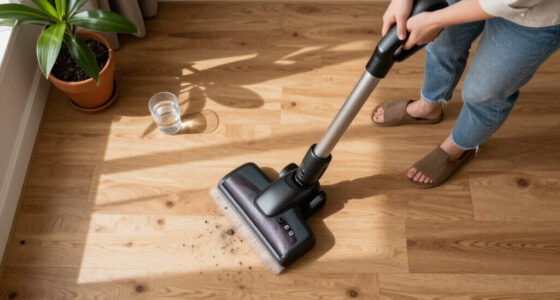
- Sweep or vacuum around the box. Pick up loose litter before wiping so grit does not scratch the floor.
- Wipe nearby surfaces as needed. Use a cleaner labeled for the surface and rinse if its directions call for it.
- Let everything dry. Keep your cat away from damp floors and mats until they are fully dry.
For example, if your cat kicks litter onto the tile beside the box overnight, a quick sweep in the morning can take less than a minute. Wiping first can drag those hard grains across the tile like sandpaper, so pick them up before you reach for a cloth. If you notice a urine splash, blot it promptly rather than rubbing it across a wider area.
Use gloves if you prefer, avoid touching your face while handling waste, and wash your hands afterward. Pregnant or immunocompromised people should ask a clinician what precautions fit their situation. An easy daily habit keeps the floor manageable; it does not replace washing the box and mat on a schedule suited to their materials and your household.
Products Worth Considering

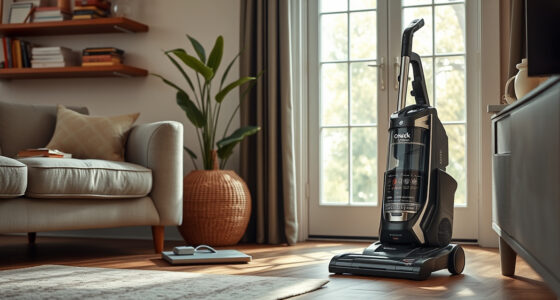
Shark AI Ultra Robot Vacuum with Matrix Clean Navigation, Self-Empty Base, HEPA Filtration, Pet Hair Friendly, Wi‑Fi, Dark Grey

Dyson Omni-Glide Cordless Stick Vacuum, Gold/Iron

Dyson V8 Cyclone Cordless Vacuum
As an affiliate, we earn on qualifying purchases.
Choose Floor-Safe Cleaning Methods for Tile, Wood, and Vinyl
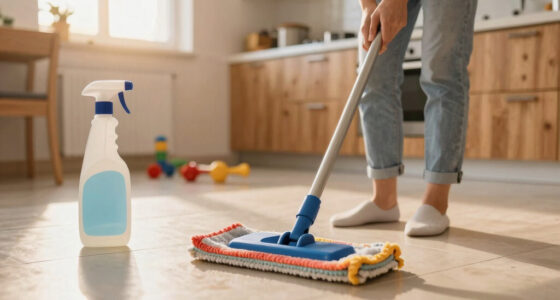
Cleaning around a litter box area means matching your method to the floor, because moisture, cleaner, and heat affect materials differently. Tile can often tolerate damp wiping, while some wood, laminate, and vinyl floors can be damaged by standing water or steam. Start with the flooring maker’s care directions, then test a hidden patch before using a new product across the room.
On glazed tile, sweep up loose litter and wipe with a damp cloth and a compatible cleaner. Grout can hold odor and residue in its pores, so use only a grout-safe method and do not assume a strong chemical or abrasive brush is harmless. On sealed wood or laminate, use a barely damp cloth if the manufacturer allows it, and dry the area promptly. Water that seeps into seams can swell or mark some floors.
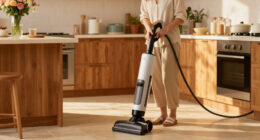
Vinyl and luxury vinyl plank need their own care instructions too. A product suitable for one vinyl floor may not suit another finish, and steam can damage some resilient flooring or weaken adhesive. A steam mop is not a universal shortcut: use one only if both the flooring manufacturer and the appliance instructions say it is suitable. Never use steam on a surface simply because it looks hard and smooth.
| Surface | Practical starting method | Watch for |
|---|---|---|
| Glazed tile | Sweep, then wipe with a compatible damp cloth | Grout staining and cleaner residue |
| Sealed wood or laminate | Follow floor directions; use minimal moisture if allowed | Water at seams, swelling, finish damage |
| Vinyl or LVP | Use the maker-approved cleaner and method | Heat, adhesive damage, finish changes |
Imagine a litter mat sitting on laminate in a corner. If it traps dampness underneath, the floor may stay wet long after the top looks dry. Lift the mat during cleaning, dry beneath it, and return it only when both surfaces are dry. That small check helps prevent the kind of hidden moisture problem a quick surface wipe cannot catch.
Use Cat-Conscious Cleaners Without Adding New Risks
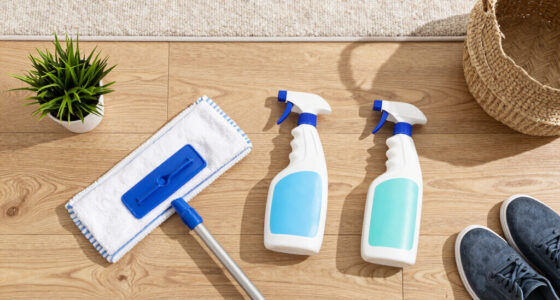
Choose a cleaner labeled for the surface and intended use, favor mild unscented options, and follow the label’s dilution and rinsing directions. “Natural,” “biodegradable,” or “pet-safe” on a package does not mean a liquid is safe to swallow or breathe in every situation. Keep your cat away while you clean, ventilate the room, and wait until the surface is dry before reopening the area.
Avoid ammonia-based products around urine because their smell can resemble urine to cats, and avoid phenol-containing cleaners because they can be toxic to cats. Do not mix cleaning products. If a label calls for gloves, ventilation, or rinsing, follow those instructions rather than judging safety by scent. A strong perfume may cover an odor for you without removing the residue that caused it.
For a small fresh mess on a compatible hard floor, blot first, then use a surface-appropriate cleaner according to its label. Enzymatic products are sold for some pet messes, but they are not suitable for every floor or finish; check both labels and test an inconspicuous area. Vinegar, bleach, baking soda, and essential oils are not universal solutions. Avoid improvising with them, especially around cats or on surfaces whose maker warns against acidic, abrasive, or oxidizing products.
Let the label and the floor decide. A cleaner that works on tile may harm wood finish, and a product described as natural can still irritate or harm a cat if mishandled.
For example, if the area smells strongly of fragrance after a wipe, your cat may still find it unpleasant even if the floor looks spotless. Rinse only when the product directions and flooring care instructions call for it, then dry the surface. A clean, unscented room is often a better target than one that smells like a bouquet.
Keep Mats, Boxes, and Nearby Surfaces From Trapping Odor
A litter mat can catch granules before they travel, but it needs cleaning too. Shake or empty it carefully, then wash it according to its material and the maker’s instructions. Dry it fully before putting it back. A damp mat under a box can hold odor against the floor, much like a wet towel left folded in a corner.
Wash the litter box on a schedule that suits the litter type and household, or sooner if odor persists. Empty it, clean it using a product compatible with the box material, rinse if directed, and dry it before adding fresh litter. Avoid abrasive tools that scratch plastic; scratches can make residue harder to remove. Replace a box if it remains difficult to clean or continues to smell after appropriate washing.
Nearby walls, baseboards, and shelves can collect a fine layer of dust. Wipe them with a surface-appropriate cloth and cleaner, and wash reusable cloths promptly. Keep litter and cleaning supplies away from food and water bowls. Place the box in a quiet, accessible location; a covered box may reduce scatter for some cats, but it can also hold odor or make an enclosed space uncomfortable.
Consider a cat that kicks litter from the entrance onto a washable mat. A mat with a texture that catches granules may reduce the trail, but the cat still needs an easy, comfortable way in and out. Keep litter at an appropriate depth for the product and your cat, and avoid sudden changes to the box or litter. A clean litter box area helps most when the setup works for the animal using it.
Cut Down on Scatter by Fixing the Setup
Reduce tracked litter by placing a suitable mat at the exit, choosing a box with an entry and sides that fit your cat, and keeping the box in a quiet, accessible place. The setup should make cleaning easier without making the toilet harder for your cat to use. A high-sided box may contain kicked litter for one cat but block an older cat with stiff joints, so fit matters more than appearance.
Many households use the guideline of one litter box per cat plus one extra. Space and individual needs can change the practical arrangement, but multiple boxes give cats options and can reduce crowding. Put boxes away from food and water, and avoid placing them beside noisy appliances or in a spot your cat cannot reach easily. If you need to move a box, make the change gradually when possible.
Low-dust and plant-based litters, stronger odor-control products, and robotic self-cleaning boxes are current options, but none removes the need for inspection and care. Follow device and litter directions, check that the unit is operating normally, and clean parts on the schedule the maker recommends. A self-cleaning cycle can remove waste while leaving residue, dust, or a dirty mat behind.
For instance, if a robot box sits near a laundry machine that thumps during the spin cycle, your cat may avoid it even though the floor looks tidy. Check the location and your cat’s comfort before buying another odor product. If you change litter or move the box, avoid changing several things at once; that makes it easier to see what helps and gives your cat time to adjust.
Know When Lingering Odor Needs More Than Another Wipe
If odor remains after cleaning, check for hidden residue, a dirty mat, dampness beneath the box, or litter and box components that need replacing. A lingering smell can point to an overdue wash, an unsuitable cleaner, or a urine spot that the first pass missed. Follow the product label and floor care instructions while tracing the area; do not escalate automatically to a harsher chemical or a hot steam pass.
On tile, inspect grout and the box’s underside. On wood, laminate, or vinyl, check seams and edges without soaking them. On carpet or a fabric mat, use a product labeled for that material and test it in a hidden spot; do not assume a hard-floor cleaner will work there. If urine has reached a layer beneath the visible surface, household wiping may not solve it, and you may need advice from a flooring or carpet professional.
Odor can also reflect a change in the cat’s habits rather than a cleaning failure. If your cat suddenly avoids the box, urinates outside it, or strains, contact a veterinarian. A medical issue can cause a behavior change, so cleaning the spot alone may leave the underlying problem untreated. Note when the change began and whether it happens near a specific box; those details can help the vet.
Suppose you clean the floor and mat, yet the same corner smells again the next morning. Look underneath and around the box, check whether the mat has trapped moisture, and make sure the box itself is clean and dry. If the smell keeps returning or your cat’s behavior has changed, treat it as information to investigate rather than a cue to add more fragrance.
Frequently Asked Questions
How often should I scoop and wash the litter box?
Scoop at least once a day, and check more often if several cats share the boxes. Wash the box and replace litter on a schedule suited to the litter type and your household; clean sooner if odor persists. For example, a busy shared box may need more frequent attention than a box used by one cat.
What cleaner is safe to use around cats?
Choose a mild, unscented cleaner labeled for the surface and the job, and follow its directions for dilution, rinsing, and ventilation. Avoid ammonia-based products and phenol-containing cleaners around cats. Keep your cat away until the cleaned area is dry, and test any new cleaner in a hidden spot first.
Can I use a steam mop around the litter box?
Only if the floor manufacturer and steam-mop instructions both say that the surface can tolerate steam. Some laminate, hardwood, vinyl, and luxury vinyl plank floors can be damaged by heat or moisture. Sweep up litter first, and test an inconspicuous area if the floor maker allows that method.
How can I stop litter from spreading around the room?
Sweep or vacuum around the box regularly, place a washable litter-trapping mat at its exit, and clean the mat according to its material instructions. Choose a box entry and sides that suit your cat, and keep the litter at an appropriate depth. A mat that catches granules is useful only if your cat can walk across it comfortably.
What should I do if the area still smells after cleaning?
Check the box, mat, underside of the box, grout, and nearby seams or edges for missed residue or trapped moisture. Use only a cleaner labeled for the affected material, and avoid covering the smell with fragrance. If odor keeps returning or your cat starts avoiding the box or urinating outside it, contact a veterinarian.
How many litter boxes should I provide, and where should they go?
A common guideline is one box per cat plus one extra. Place boxes in quiet, accessible spots away from food and water, and avoid noisy locations your cat may avoid. If you change the location or litter, do it gradually when possible so you can spot what your cat accepts.
Conclusion
Keep the routine simple: scoop daily, collect loose litter before wiping, and choose cleaners and floor methods your surfaces can tolerate. Wash the box and mat regularly, let everything dry, and give your cat a quiet, easy-to-reach setup.
If the smell returns or your cat suddenly avoids the box, look beyond the floor and ask your veterinarian for guidance. The best litter box area is the one that stays clean without making your cat think twice about using it.