TL;DR

Get cleaning gear delivered free with Prime
- Fast, free delivery on millions of items
- Prime Video, Amazon Music and more included
- Member-only deals all year
To keep entryway floors clean year-round, use a scraper mat outside and an absorbent washable mat inside, make shoe removal easy, and sweep or vacuum grit before mopping. Clean wet or salty messes promptly with a method approved for your flooring, and change mat care and cleaning frequency as weather and traffic change.
Use an outdoor scraper mat and an indoor washable absorbent mat, and clean both regularly.
Give shoes, wet boots, and pet paws a convenient place near the door.
Sweep or vacuum grit before mopping; use only methods approved for your flooring.
Blot spills promptly, and treat mud and winter salt with floor-safe methods.
Adjust cleaning frequency and mat care to weather, traffic, and household needs.
Keep Entryway Floors Clean Year-Round
Catch dirt and moisture at the door, clean messes promptly, and adapt your routine to the weather and household traffic.
Stop dirt at the door
Two mats handle different jobs: scrape coarse grit outside and absorb finer dirt and moisture inside.
Scrape coarse debris
Choose a sturdy mat with nonslip backing and enough length for people to wipe their shoes.
Absorb what remains
Use a washable absorbent mat. Clean it regularly and let it dry fully before putting it back.
Make the clean choice easy
Keep shoe and cleanup supplies close to the entrance, with the walking path clear.
A tray, rack, or bench makes it easier to leave wet or gritty footwear by the door.
Blot spills and wipe pet paws promptly; empty and dry boot trays after use.
Lift leaves and mud, then sweep or vacuum grit so it does not scratch or spread across the floor.
Match cleanup to the season
Weather changes what gets tracked inside, so adjust mat care and cleaning frequency.
| Season | Common mess | Useful response |
|---|---|---|
| Spring | Pollen, wet soil, rain | Clean mats more often; remove grit before it dries |
| Summer | Dust, sand, grass, muddy paws | Vacuum mats and sweep frequently |
| Autumn | Leaves and damp debris | Clear the approach and sweep more often |
| Winter | Snow, slush, road salt | Use a boot tray and promptly remove salt with a floor-safe method |
Use a floor-safe cleaning order
Follow your flooring and cleaner manufacturers’ instructions, and test any permitted new method in a hidden area.
- Pick up larger debris and sweep or vacuum loose grit.
- Blot wet spots instead of rubbing them across the surface.
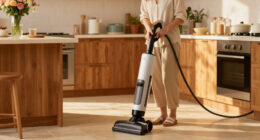
- Mop only when needed with a suitable cleaner and a well-wrung mop.
- Dry wet areas promptly; avoid excess water on floors that may be moisture-sensitive.
- Check manufacturer guidance before using a steam mop, vinegar, or other specific products.
Use Two Mats to Catch Dirt Before It Spreads
A two-mat system helps keep entryway floors clean by intercepting dirt in stages. A sturdy scraper mat just beyond the door loosens coarse soil and grit from shoe soles; an absorbent, washable mat inside catches the finer dirt and moisture left behind. That order matters: wet grit can smear across the floor, while dry grit can scratch it underfoot. After a wet dog walk, for example, the outdoor mat can catch clumps of soil before the indoor mat takes up damp paw prints. The two stages also make cleanup more manageable: the outdoor mat handles the messier particles, while the indoor mat absorbs moisture people might otherwise carry deeper into the house. Choose mats that sit flat and have nonslip backing suited to your floor. A curled corner can catch a toe, and a backing that shifts can create a slip hazard. Size matters, too: a tiny mat may miss the step where people actually wipe their shoes. A longer mat gives people room to take a couple of steps and turn, increasing the chance that it catches debris. In a narrow doorway, place the longest mat that leaves the door swing and walking path clear; a mat that blocks movement is more likely to be bypassed. There is a practical balance: a larger mat can capture more, but only if it stays in place and leaves enough room to enter safely. Mats only help when you remove what they collect. Shake or vacuum dry debris outdoors when practical, and wash an indoor mat according to its care label. Let it dry fully before putting it back. A damp mat can hold odors and keep moisture against the floor, so it may trade visible puddles for hidden dampness. Check the floor underneath during routine cleaning, especially after rain or snow. The aim is to intercept mess and remove it, not to store it under a rug. Regular care matters because a saturated or dirty mat can stop absorbing effectively and may release moisture and grit with each step.Products Worth Considering

Philips Hue Festavia Outdoor Globe String Lights, 8 Bulbs, 22 ft

LEVOIT Vital 200S-P Smart Air Purifier for Large Rooms up to 1875 ft², Quiet 27 dB Operation, AHAM VERIFIDE Certified, Air Quality Monitor,

Bose Lifestyle Ultra Wireless Home Speaker, White Smoke
As an affiliate, we earn on qualifying purchases.
Make Shoe Removal Easy, Even on Busy Mornings
A clear shoe area near the entrance makes it easier for household members and guests to leave outdoor footwear by the door. Set out a tray for wet boots, a low rack for everyday shoes, and a bench if people need a place to sit. For instance, a parent arriving with grocery bags can slip off muddy shoes quickly if the tray sits within one step of the doorway. Convenience is what makes the setup useful over time: when the landing spot is easy to reach, people are less likely to walk farther into the home before taking off wet or gritty shoes. Keep the setup small enough that it does not block the walking path or door swing. A crowded pile of shoes defeats the purpose: people step around it, often bringing dirt farther inside. A shallow tray can contain rain and slush, but empty standing water and dry the tray so dampness does not linger on the floor. In a shared home, a simple verbal request or friendly sign can make your shoe preference clear without turning the doorway into a rulebook. A tray is helpful for containment, but it is not a substitute for drying: water left in it can spill or keep nearby flooring damp. Household needs vary. Children may need a low basket, while visitors may appreciate a little clear floor space to remove shoes safely. If someone has limited mobility, prioritize a stable seat and an unobstructed route over a strict shoe-removal setup. Place a washable towel nearby for pet paws. These small choices make a clean entryway easier to maintain because they fit the way people actually arrive. The goal is a routine people can follow without rushing or losing balance; a setup that creates an obstacle can undermine both cleanliness and safety.Sweep Grit Before You Mop or Use Steam
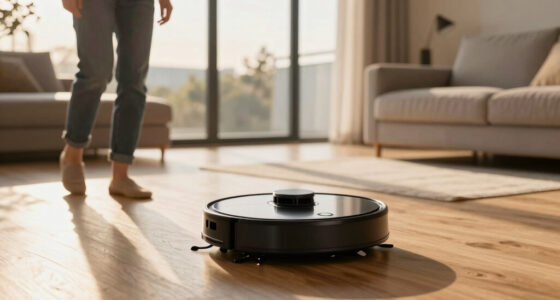
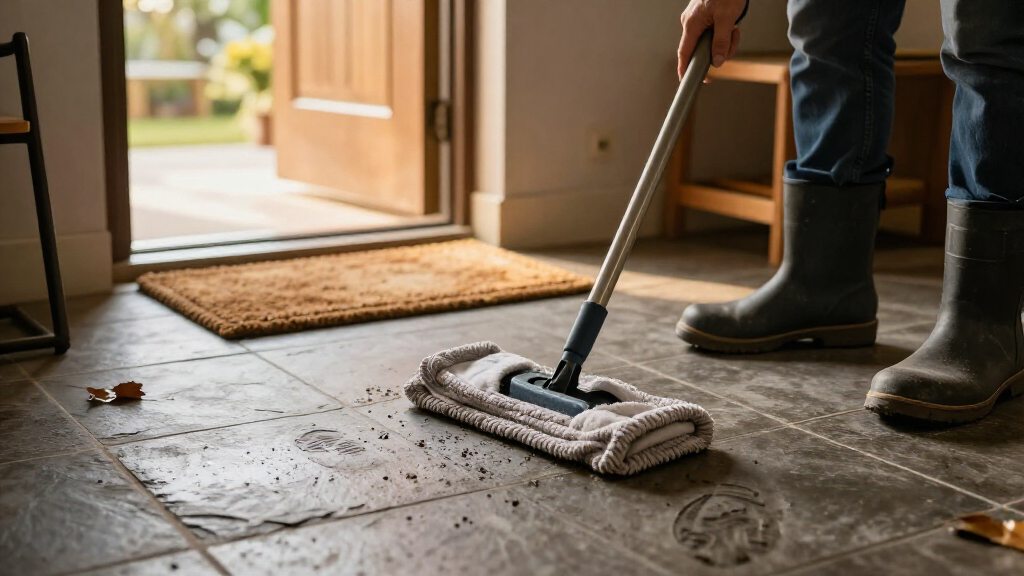
To clean entryway floors safely, remove loose grit first, then use a cleaning method approved for the floor. Sand and tiny stones act like rough particles under a mop pad; dragging them across a hard floor can leave scratches. Removing them first also keeps a wet mop from spreading grit and muddy residue into a wider film. After a windy beach day, for example, vacuuming the pale sand from an entry tile is a better first move than pushing it around with a wet mop. This order reduces the chance that a quick cleanup turns a small patch of dirt into widespread residue or surface wear.- Pick up larger debris. Lift leaves, stones, and clumps of mud by hand or with a small brush.
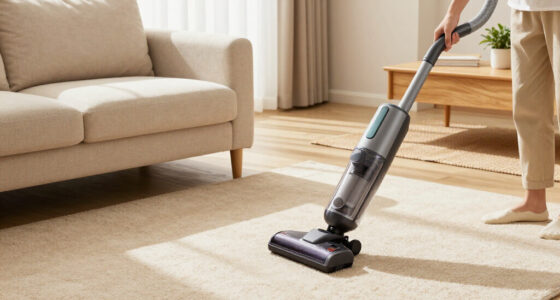
- Sweep or vacuum the area. Use a tool suitable for the flooring and reach along the threshold and mat edges.
- Check for sticky or wet spots. Blot spills with a clean cloth rather than rubbing them across the surface.
- Mop only when needed. Use a floor-appropriate cleaner and a well-wrung mop, following product and flooring instructions.
- Dry wet areas promptly. Keep the walking path clear until the floor is dry.
Match Spill Cleanup to Your Floor Type
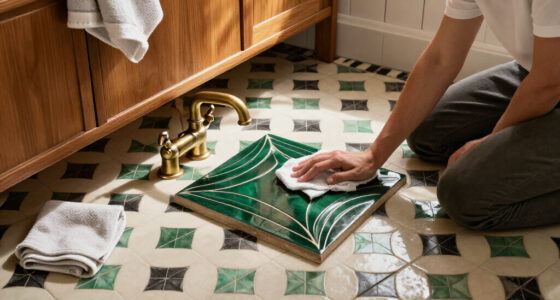
The safest entryway cleaner depends on the floor’s material, finish, and manufacturer instructions. A method that works on sealed tile may damage natural stone or leave moisture in seams on laminate. Knowing the surface changes how quickly you should act and how much moisture to use: for a puddle on a wood-look floor, blot promptly, then check the flooring guidance before reaching for a spray bottle. Matching the cleanup to the surface is a tradeoff between removing residue and avoiding a second problem such as a damaged finish, swollen seam, or slippery film.| Floor situation | Safer starting point | Watch for |
|---|---|---|
| Hard, sealed tile | Sweep first, then use a compatible cleaner as directed | Slippery residue and grout-specific care |
| Hardwood | Blot moisture quickly; use the maker-approved method | Standing water, excess dampness, and finish damage |
| Laminate or LVP | Remove grit, then use only approved products and moisture levels | Water entering seams or edges |
| Natural stone | Use a stone-compatible cleaner recommended for the surface | Acidic products and harsh chemicals |