TL;DR
An Ideal Home reporter compared kitchen foil with purpose-made radiator reflector panels in her home and found the panels appeared to reflect heat more effectively and were easier to fit. The account is a personal test, not a controlled study, and it does not establish typical energy-bill savings from either option.
An Ideal Home reporter says kitchen foil behind radiators did not perform as well as purpose-made reflector panels in a test at her home, where the wall behind the panels felt cooler than the wall behind the foil. The comparison suggests foil may be a less practical heat-reflecting option, but it was an informal household test and does not prove how much either product can reduce energy use or bills.

Get cleaning gear delivered free with Prime
- Fast, free delivery on millions of items
- Prime Video, Amazon Music and more included
- Member-only deals all year
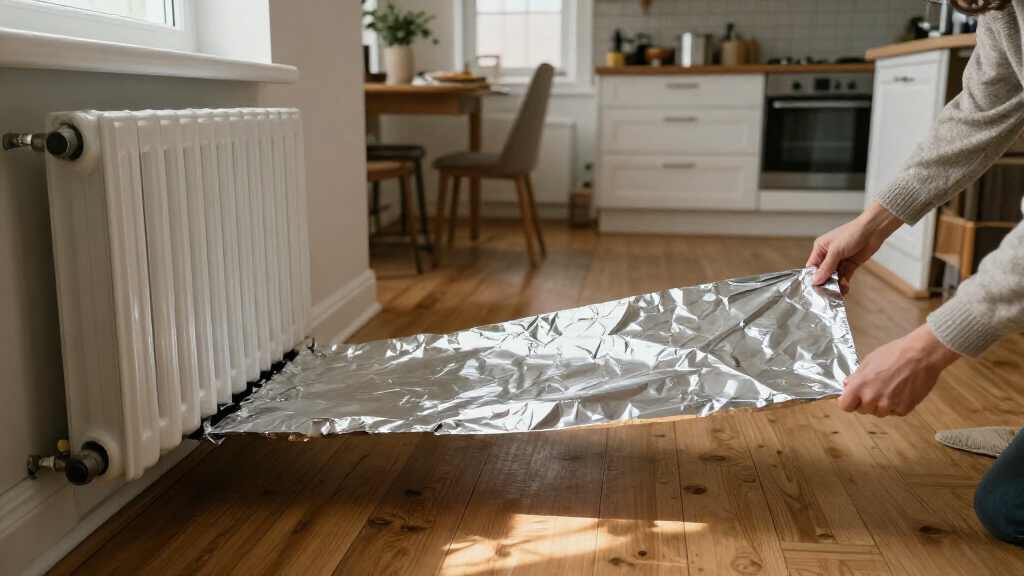
The reporter, Sarah Handley, tested kitchen foil against radiator reflector panels she had used for four years. After placing foil behind a radiator, she said the foil became hot and the wall behind it felt warm. By comparison, she reported that the wall behind the reflector panel felt noticeably cooler. She interpreted that difference as a sign that the panel was limiting heat passing into the wall more effectively.
The report attributes the apparent difference partly to the products’ construction: the foil was thinner and more fragile, while the reflector material was thicker and more rigid. In a separate informal demonstration, Handley held each material in the path of a hair dryer. She said the foil became uncomfortably hot within seconds, while the reflector did not. This demonstration was not a measurement of heating performance under controlled conditions.
Installation also differed. The panels came in sheets that could be cut to size and were supported with plastic strips; Handley said they were easier to position and less likely to tear. The foil she had at home required several pieces and tape to cover larger radiators, and she accidentally put a thumb through it while smoothing it out. She noted that tape or a homemade support could be used, but tape might damage a wall.
A Cheap Fix May Be Less Practical
For households trying to limit heating costs, the comparison matters because kitchen foil costs less upfront but may be harder to fit and, in this one home test, appeared less effective than dedicated panels. Handley said her foil cost £7 for a 20-metre roll, while she paid about £40 for five sheets of reflector material. Those are the prices she reported, not a current or universal price comparison.
The report also describes a possible longer-term benefit, but its figures should not be treated as proof of savings from reflectors. Handley said her energy bills were 20% lower in the first month after installing the panels than in the same period the previous year. She acknowledged that weather and other energy-saving measures could also have affected the bill. She also reported keeping her thermostat at an average of 18–19°C over the following four years, 2–3°C lower than before, while feeling just as comfortable. That account does not isolate the panels’ effect.
The Energy Saving Trust figure cited in the article concerns a different measure: it says lowering a thermostat by one degree from 22°C to 21°C could save around £120 on annual energy bills. It is not an estimate of savings from foil or radiator reflectors. For readers, the practical takeaway is that a low purchase price alone does not establish whether a measure will pay off; installation, performance and other changes to household heating all matter.
Products Worth Considering

Samsung S85H 48-Inch 4K OLED Smart TV (2026)

Shark PowerPro Reveal Plus Cordless Stick Vacuum, Charcoal (IZ376H)

Dyson Cyclone V10 Origin Cordless Vacuum
As an affiliate, we earn on qualifying purchases.
How the Home Test Was Done
The report was published against a backdrop of colder weather and news of energy price rises expected in January, when households were considering ways to stay warm and manage bills. It describes a comparison made by one writer in her own home, not a laboratory test, survey or independent evaluation of multiple products.
Handley had already used the radiator reflector panels for four years before comparing them with kitchen foil. She assessed how hot the materials felt, whether the wall behind them felt warm, and how easily each could be fitted. The article does not provide temperature readings, measurements of heat loss, the radiators’ output, or a controlled comparison of energy consumption.
That distinction matters when interpreting the results. The report offers a useful account of one person’s experience with particular products and materials, but it cannot show that all foil performs the same way or predict the savings another home might achieve. Its cited thermostat estimate is separate from the reporter’s comparison.
“For me, the kitchen foil doesn’t work anywhere near as well as the radiator reflectors I have.”
— Sarah Handley, Ideal Home reporter
What the Comparison Cannot Prove
The report does not establish how much heat either material reflects, whether the difference is consistent across homes, or how much money a household could save by installing reflector panels. No instrument readings, controlled conditions or energy-use data were provided for the foil-versus-panel test.
Handley’s bill comparison is also subject to other influences. She explicitly noted that milder weather or other energy-saving measures could explain some or all of the 20% year-on-year difference in the first month. Her lower thermostat setting over four years is a personal account and does not isolate the role of the panels. The report does not say whether the £7 and £40 prices remain available or apply to other sizes and products.
Check Fit and Heating Costs
The source describes a completed personal test and does not announce a follow-up study or new official guidance. Anyone considering the approach can compare the size and fitting method of available reflector products with the space behind their radiators, while treating individual savings claims cautiously.
For a clearer assessment of household impact, a controlled comparison would need consistent weather and heating settings, measured temperatures or energy use, and a stated period and baseline. Until evidence of that kind is available, the report supports a limited conclusion: in Handley’s home, purpose-made panels were easier to fit and appeared to reflect heat more effectively than the kitchen foil she tested.
Key Questions
Does kitchen foil behind a radiator work?
In the Ideal Home reporter’s informal test, foil became hot and the wall behind it felt warm. The report suggests it performed less well than her purpose-made reflector panels, but it does not measure heat loss or establish how foil performs in other homes.
Are radiator reflector panels proven to lower energy bills?
This report does not prove a typical bill reduction. Handley reported a 20% lower bill in the first month than in the same period the previous year, but said weather and other energy-saving measures may also have contributed.
Which option cost less in the report?
Handley said her kitchen foil cost £7 for a 20-metre roll and her five reflector sheets cost about £40. These are the prices she reported, and the article does not establish current prices or a universal cost comparison.
What did the report find hardest about using kitchen foil?
The foil was more fragile and harder to position behind larger radiators, according to Handley. She needed multiple pieces and tape, and accidentally tore it while smoothing it out; the reflector panels were more rigid and came with fitting strips.
Source: idealhome.co.uk