
TL;DR
Martin Lewis says there is no single answer to whether keeping heating on low all day costs less than using it when needed. A home’s ability to store heat and the type of heating system both affect which approach may use less energy; he suggests comparing the options in similar weather and checking a smart meter.
Martin Lewis has said the cost of keeping heating on low all day depends on how a home stores heat and which heating system it uses, rather than following one rule for every household. On The Martin Lewis Money Show, he discussed the issue with building-performance professor Richard Fitton and plumbing director James Lacey, who explained why some homes may suit steady heating while others may be cheaper to heat only when needed.

Get cleaning gear delivered free with Prime
- Fast, free delivery on millions of items
- Prime Video, Amazon Music and more included
- Member-only deals all year
Fitton, a professor of building performance at the University of Salford, said a home’s thermal mass affects how it responds to heating. A heavyweight building, such as a solid-brick Victorian terrace, can store heat and release it over time. A lighter timber-frame home, by contrast, may warm quickly but retain less heat. That difference can affect whether a steady, lower level of heating is practical.
Lewis summarized the distinction on the programme: “Heavy house, thermal mass, probably better constant. Losing energy, probably better just to have it on when you need it.” The wording is a guide, not a guarantee that one schedule will be cheaper for every property.
Lacey said the appliance matters as well. A modulating gas boiler or heat pump can adjust its output and may operate economically at a steady, lower level, he said. Oil boilers and electric heaters that are simply on or off may be better suited to scheduled heating during the hours occupants need warmth. The source does not provide measured savings or a universal recommended schedule for any of these systems.
Why Heating Schedules Vary by Home
Choosing the wrong schedule can mean paying to heat rooms or periods when warmth is not needed, while switching heating off completely may leave a home that loses heat quickly uncomfortable. Lewis’s discussion matters because it replaces a blanket tip with factors households can check: building construction, heat retention and appliance controls.
The advice also points readers toward measuring their own use instead of assuming that a popular rule applies. Energy costs vary by tariff, weather, household routine and system performance, so the programme’s comments do not establish that all-day heating is cheaper—or more expensive—in every case.
Products Worth Considering

Levoit Core 400S-P Smart Air Purifier for Large Rooms up to 1718 ft²

Google Nest Learning Thermostat Pro Edition (4th Gen, 2024) with Temperature Sensor, Polished Silver

Philips Hue Amarant Outdoor Smart Light Bar, Black
As an affiliate, we earn on qualifying purchases.
From Timer Advice to Home Differences
In an appearance on ITV’s This Morning in 2025, Lewis said that, as a general rule, heating should be used when needed rather than kept running constantly. He recommended using a timer and thermostat, which switches heating on and off to maintain the selected temperature. His qualification that this was true “in general” left room for differences between homes and systems.
The later discussion added those details. Fitton described how construction affects heat storage, while Lacey addressed the way different appliances deliver heat. The source report also notes an Ofgem price-cap increase of 26% in January 2027; it does not give the cap’s cash amount or explain how that figure changes the relative cost of different heating schedules.
““Heavy house, thermal mass, probably better constant. Losing energy, probably better just to have it on when you need it.””
— Martin Lewis, on The Martin Lewis Money Show
What the Advice Cannot Settle
The discussion does not establish which schedule will be cheaper for a particular household without details such as its insulation, heat loss, thermostat settings, tariff and daily routine. Nor does the source provide controlled test results, energy readings or a quantified saving for either approach. The descriptions of boiler and heat-pump operation are attributed to Lacey and should not be read as a guarantee for every make, installation or property.
The article recommends comparing two weeks of use, ideally in similar outdoor temperatures, but does not specify how to adjust for differences in occupancy or other energy use. A smart meter can show consumption, but the source does not set out a complete method for isolating heating costs.
How Households Can Compare Use
Lewis recommends trying each approach over two separate weeks when outside temperatures are broadly similar, then checking a smart meter to compare energy use. Keeping the thermostat settings and household routine as consistent as possible would make the comparison more useful, though the programme’s advice is not a formal test protocol.
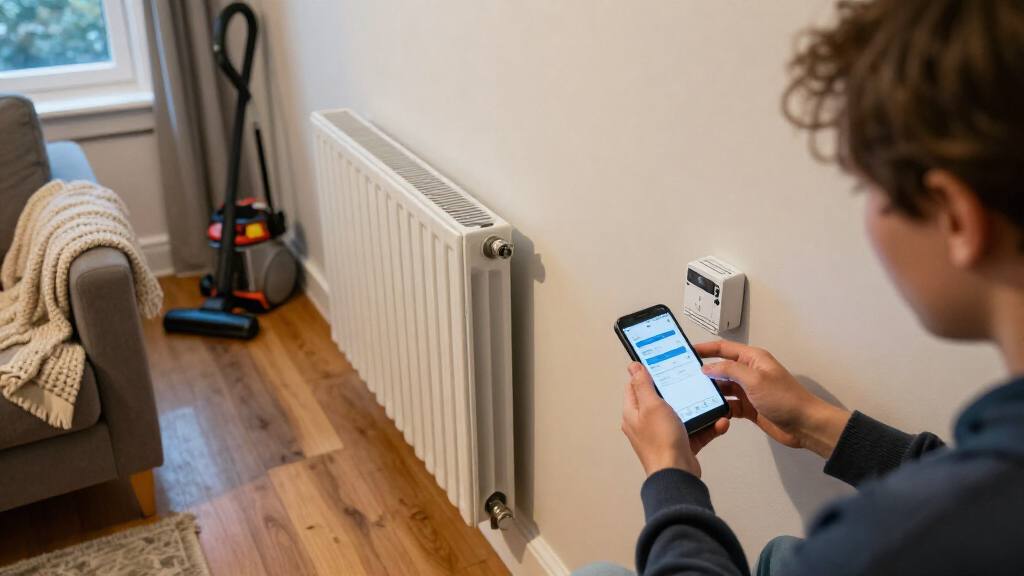
Room-by-room controls may also help households avoid heating little-used spaces as much as occupied rooms. Nick Duggan, director of The Radiator Centre, said thermostatic radiator valves can set different temperatures in individual rooms, while smart controls can provide schedules and app-based adjustments. The right setup depends on compatibility with the existing heating system; the source does not identify a single product as suitable for all homes.
Key Questions
Is it cheaper to leave the heating on low all day?
There is no universal answer in the advice reported. Cost can depend on how well the home stores heat, the heating appliance, the household’s routine and energy tariff.
What does Martin Lewis recommend?
In 2025, Lewis said heating should generally be used when needed, with a timer and thermostat. In a later programme discussion, he said a home’s construction and heating system can change which approach makes sense.
Which homes may retain heat for longer?
Professor Richard Fitton said heavyweight buildings, including solid-brick homes, can store heat because of their thermal mass. Lightweight homes can warm quickly but may not store heat as well.
How can I compare the two heating schedules?
Lewis suggested trying each approach for a week, preferably during periods with similar outdoor temperatures, and checking a smart meter. The source does not provide a standardized test or a guaranteed savings figure.
Source: idealhome.co.uk