TL;DR
Steam mopping can effectively clean basement floors but introduces moisture that can lead to mold, warping, or cracking if not managed properly. Knowing your floor type and following best practices helps prevent damage.
Imagine the rich, damp scent of a freshly cleaned basement. That clean feeling can come with a hidden danger — moisture. Steam mops are tempting because they promise quick, chemical-free cleaning, but in basements, moisture isn’t always your friend.
In this guide, you’ll learn how steam mopping impacts your basement floors, what surfaces can handle it, and how to avoid costly damage. Because while a clean basement feels great, a damp one can turn into a mold nightmare faster than you think.
Always check your floor’s material and manufacturer’s advice before steam mopping.
Use the lowest steam setting and keep the mop moving to minimize excess moisture.
Limit cleaning frequency to prevent moisture buildup and mold growth.
Dry floors thoroughly after each session with good ventilation or dehumidifiers.
Watch for signs of damage like warping or mold — act quickly if noticed.
Steam Mopping Basement Floors: The Moisture Risks Explained
Steam can lift dirt without harsh chemicals, but basement floors live in a moisture-sensitive environment. The deciding factors are surface type, sealing, steam exposure and drying speed.
Clean on top. Moisture underneath.
High-temperature vapor loosens dirt and bacteria. On a sealed, non-porous surface, that vapor can evaporate quickly. On porous concrete, open seams or poorly sealed flooring, it can travel below the visible surface and remain trapped.
Mold & mildew
Damp, dark basement conditions can support hidden growth, musty odors and poorer indoor air quality.
Warping & buckling
Laminate, engineered wood and loose vinyl may swell, lift or distort when vapor enters seams and the subfloor.
Cracking & spalling
Repeated moisture ingress into unsealed concrete can contribute to surface deterioration, flaking and costly repair.
Can your basement floor handle steam?
A floor’s finish matters as much as its material. “Usually safe” still means checking the manufacturer’s guidance, confirming the surface is intact and testing a small hidden area.
| Floor type | Steam suitability | Moisture pathway | Best practice |
|---|---|---|---|
| Sealed tile | ✓Generally safe | Damaged grout or sealant can admit vapor. | Use low steam and inspect grout first. |
| Vinyl | ✓Usually | Loose edges and seams may trap moisture. | Test first; avoid lifting or unsealed areas. |
| Laminate | ~Limited | Vapor can enter joints and swell the core. | Only proceed if sealed and explicitly approved. |
| Unsealed concrete | ✗Avoid | High porosity encourages absorption. | Use dry or minimally damp cleaning instead. |
Risk rises as porosity rises.
This qualitative comparison shows how floor condition and permeability affect moisture exposure. The figures are a visual risk index, not laboratory measurements.
How a quick clean becomes hidden damage
The danger is rarely the visible vapor alone. It is the chain that follows when moisture enters a vulnerable floor and cannot escape quickly.
Steam applied
Hot vapor contacts the floor.
Moisture enters
Seams or pores admit water.
Water is trapped
Subsurface drying slows.
Damage develops
Odor, swelling or spalling appears.
Repair risk rises
Delayed action increases cost.
Five controls that reduce exposure
Steam only when the material and manufacturer allow it. The safest session uses minimal vapor, continuous movement and immediate drying.
The safer zone is short, light and fast-drying.
Cleaning frequency, steam output and ventilation work together. If one control is weak, the others must compensate.
Choose minimum effective output.
Avoid concentrated heat and vapor.
Once every few weeks is often enough.
Move damp air out without delay.
Steam is not the only route to clean.
For unsealed, damaged or uncertain flooring, start with methods that introduce less water. Dry debris removal followed by targeted spot cleaning is often the safer basement strategy.
Remove grit and dust without adding moisture.
Capture fine particles across broad floor areas.
Target marks with tightly controlled moisture.
Use a floor-approved solution only where needed.
The first 24–48 hours matter.
If an area stays damp, dry it immediately and investigate the moisture source. Persistent symptoms warrant assessment by a flooring, moisture or mold professional.
Warping or bulging
Raised seams, curled edges and uneven boards suggest moisture has entered the flooring.
Discoloration
Darkening, cloudy patches or changing grout color may reveal retained dampness.
Persistent musty odor
A smell that remains after drying can indicate moisture or hidden biological growth.
Flaking concrete
Powdering, scaling or small surface fragments may signal deterioration or spalling.
What Happens When You Steam Clean Basement Floors?
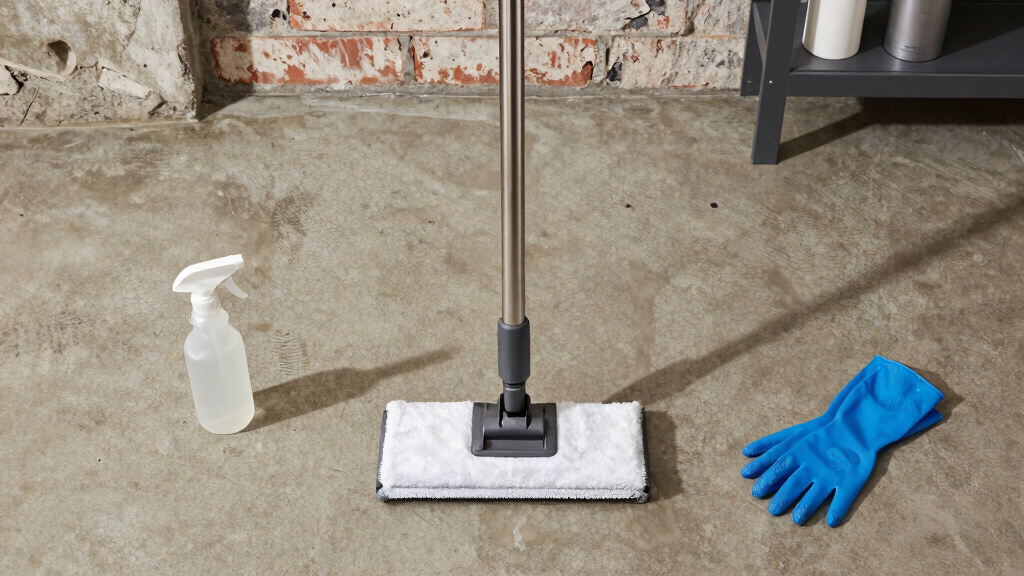
Steam mops use high-temperature vapor to lift dirt and bacteria. On sealed, non-porous surfaces like tile or vinyl, this usually isn’t a problem. But on porous concrete or unsealed laminate, moisture can seep in, trapping beneath the surface.
Picture pouring a warm cup of tea on a sponge. It soaks in, sometimes unseen until it causes issues later. That’s what moisture does to basement floors that aren’t sealed properly.
As an affiliate, we earn on qualifying purchases.
Why Moisture in Your Basement Can Be a Disaster
Moisture from steam can lead to mold, warped floors, and even cracks in concrete. Mold grows in damp, dark corners, causing health issues and foul odors. Warping or buckling laminate and hardwood floors can happen within weeks of excess moisture exposure. In unsealed concrete, moisture can cause spalling, leading to crumbling surfaces.
Beyond surface damage, excess moisture creates a hidden threat: it can compromise the structural integrity of your basement over time. Mold spores can spread unseen, impacting indoor air quality and posing health risks. Additionally, repeated moisture infiltration can weaken concrete, leading to cracks and deterioration that require costly repairs. The tradeoff here is between a quick clean and long-term damage—understanding this helps you weigh whether steam mopping is worth the risk for your specific floor type.
As an affiliate, we earn on qualifying purchases.
How to Safely Use a Steam Mop on Basement Floors
- Check your floor’s material and manufacturer’s recommendations. If unsure, test in a hidden spot.
- Use the lowest steam setting possible to limit excess moisture.
- Limit your cleaning sessions — once every few weeks is enough for most floors.
- Allow plenty of time for the floor to dry completely afterward. Open windows, run a fan, or use a dehumidifier.
- Always keep the mop moving; don’t linger in one spot too long.
For example, a homeowner with vinyl flooring tested a small area first. After confirming it tolerates steam, they set the steam level low and aired out the basement afterward. No issues so far.
As an affiliate, we earn on qualifying purchases.
Comparing Floor Types: Which Can Handle Steam?
| Floor Type | Suitability for Steam Mopping | Notes |
|---|---|---|
| Sealed Tile | Yes | Generally safe, but check manufacturer guidance. |
| Vinyl | Usually | Test first; avoid unsealed or loose vinyl. |
| Laminate | Limited | Risk of warping; only if sealed and manufacturer approves. |
| Unsealed Concrete | Not recommended | High porosity leads to moisture absorption and damage. |
As an affiliate, we earn on qualifying purchases.
Preventing Moisture Damage When Steam Cleaning
- Always test in a hidden area before full cleaning.
- Use the lowest effective steam setting.
- Clean in short bursts, not continuous steaming.
- Immediately ventilate and dry the floor after cleaning.
- Use dehumidifiers or fans to speed up drying time.
Imagine finishing a quick steam session and then opening every window. That rapid airflow pulls moisture out, keeping your basement dry and safe.
What to Do if You Suspect Moisture Damage
Look for signs like warping, discoloration, or a persistent musty smell. If detected early, dry the area thoroughly and consider professional assessment. Mold can develop within 24-48 hours in damp conditions, so quick action matters.
For example, a homeowner noticed a slight bulge in their laminate after steam cleaning. They dried the area immediately and consulted a flooring expert, avoiding costly repairs.
Frequently Asked Questions
Is steam mopping safe for all basement floor types?
No, it depends on the material and whether the floor is sealed. Always check manufacturer guidelines and test in a hidden spot first.How can I tell if my basement floor can handle steam cleaning?
Consult the manufacturer’s instructions or ask a flooring professional. Look for sealed, non-porous surfaces like tile or vinyl for safer options.How often should I steam mop my basement floors?
Once every few weeks is usually enough, depending on foot traffic and dirt levels. Avoid frequent steaming to prevent moisture buildup.What are signs of moisture damage after steam cleaning?
Look for warping, discoloration, a musty odor, or mold growth. Act quickly if you notice any of these signs.Are there safer ways to keep my basement floors clean?
Yes, regular dry mopping, vacuuming, or damp cloths with mild cleaners are safer options that limit moisture exposure.Conclusion
Steam mopping basement floors might seem like a quick fix for dirt and grime, but moisture is a hidden enemy. Being cautious about your floor type, controlling steam levels, and drying thoroughly protect your investment. A clean basement shouldn’t come at the cost of a damp, moldy mess.
Remember: a little extra care now saves costly repairs later. Keep your basement dry, safe, and spotless — with or without steam.