TL;DR

Get cleaning gear delivered free with Prime
- Fast, free delivery on millions of items
- Prime Video, Amazon Music and more included
- Member-only deals all year
Sanitizing reduces microorganisms to an acceptable level under a relevant standard; sterilizing is a validated process intended to eliminate all forms of microbial life, including bacterial spores. Cleaning removes soil first, while disinfection targets many disease-causing microbes but may not kill spores. At home, use the least intensive method that fits the risk, follow the label, and check a hidden area before treating a hard floor.
A surface can lose 99.9% of measured germs and still not be sterile. That gap matters when you are choosing how to clean a kitchen counter, reusable item, or medical instrument: the words on a product label describe different levels of control, and they do not guarantee the same result.
Cleaning removes soil and many microbes. Sanitizing reduces microorganisms to an acceptable level for a defined use. Disinfecting targets many disease-causing microbes, while sterilizing aims to eliminate all forms of microbial life, including bacterial spores. This guide explains what those distinctions mean in practice, why contact time and surface compatibility matter, and when routine home cleaning is enough.
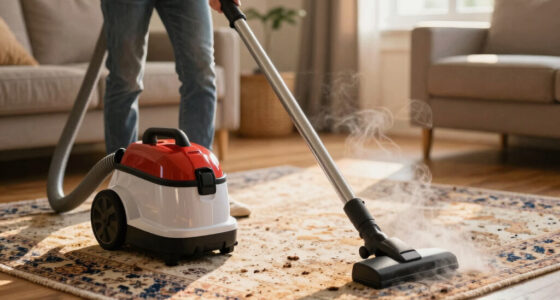
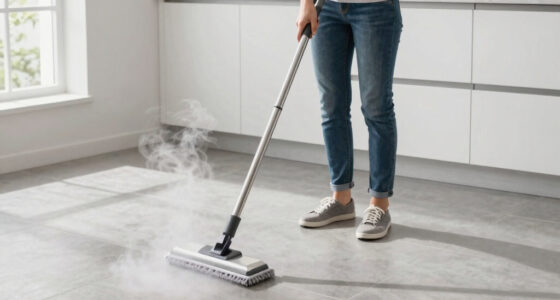
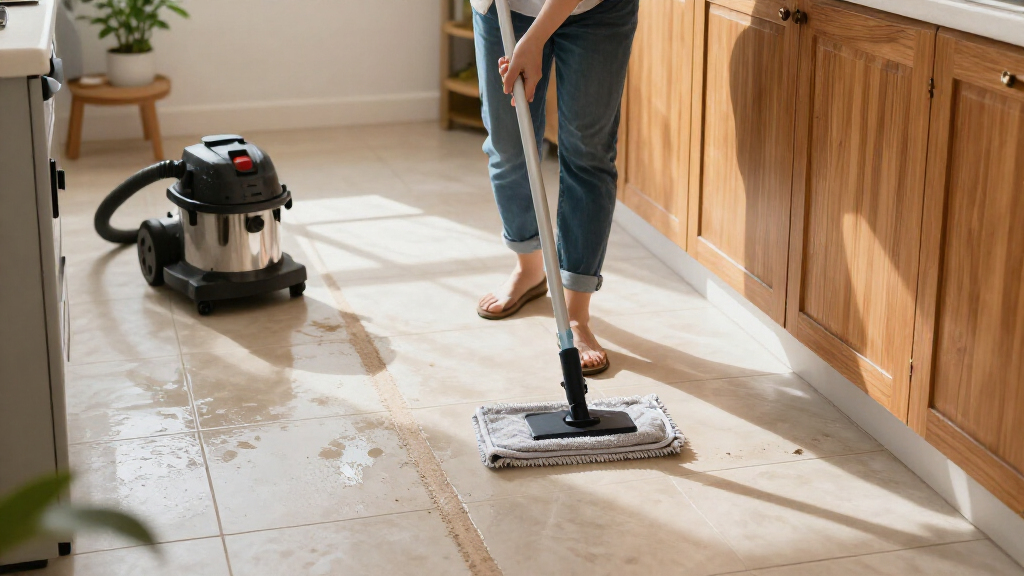
If you use a steam mop or another treatment on hard floors, check the flooring and appliance manufacturers’ instructions first. Heat and moisture can damage some laminate, hardwood, vinyl, and LVP floors. Test a hidden area when the instructions allow the treatment, and choose a cleaning method that fits the material and the actual risk.
Clean first: soil and organic residue can interfere with later sanitizing or disinfecting.
Sanitizing reduces microorganisms to an accepted level; it does not mean every pathogen or spore is gone.
A “99.9% effective” claim is a measured reduction under specified conditions, not proof of sterility.
Use disinfectants only for a suitable surface and purpose, and follow the label’s contact time and precautions.
For hard floors, follow the flooring and appliance manufacturers’ guidance; test a hidden area before an allowed new treatment.
Sanitizing is not sterilizing
These terms describe different levels of microbial control. Choose the method that fits the item’s purpose, risk, and material.
Four levels of control
Each method has a different purpose and limit.
Remove visible soil and many germs; residue can interfere with later treatment.
Reduce microorganisms to an acceptable level under a relevant standard.
Inactivate many disease-causing microbes covered by the product’s claims; some products do not kill spores.
Use a validated process intended to eliminate all forms of microbial life, including bacterial spores.
What a percentage leaves behind
A measured reduction can still leave viable organisms.
- Measured under specified test conditions
- May cover only particular organisms and uses
- In a simplified example, 1,000,000 becomes 1,000
- Requires a validated process
- Intended to address all microbial life, including spores
- Depends on the item and its intended use
Choose the right level
Start with the item’s purpose, then follow the guidance for that use.
Routine surfaces
Cleaning is often enough; sanitize or disinfect when the setting calls for it.
Clean first
Follow applicable food-safety rules and product directions for sanitizing.
Follow reprocessing guidance
Use device instructions and applicable clinical standards for the required level.
Use products as labeled
The label defines what a product has been tested and approved to do.
- Check the organisms covered and approved uses.
- Follow dilution, contact time, and safety precautions.
- Make sure the method suits the surface or item.
Know what each germ-control word promises
Cleaning removes visible soil and many germs; sanitizing lowers microorganisms to an acceptable level under a relevant standard. Disinfecting inactivates many disease-causing microbes covered by a product’s claims, while sterilizing is a validated process intended to eliminate all forms of microbial life, including bacterial spores.
Those terms describe different outcomes, not interchangeable marketing language. A kitchen counter wiped with detergent may look spotless because crumbs and grease are gone. That does not prove it was disinfected, and a sanitizer used on the counter does not make it sterile. The right step depends on what you need the surface or object to do next.
Think of the difference as a set of thresholds. Cleaning clears away the visible mess; sanitizing brings microbial levels down to an accepted target; disinfection aims at specified pathogens; sterilization meets a much higher, validated process standard. The exact organisms covered by a disinfectant depend on its label. Some disinfectants do not kill bacterial spores.
For instance, after preparing raw chicken, you would remove food residue, then use a product approved for the food-contact surface according to its label and applicable food-safety guidance. Calling the counter “sterile” would promise something that ordinary household cleaning does not establish. Start with the needed outcome, then choose a method the surface can safely tolerate.
Products Worth Considering

iRobot Roomba 105 Combo Robot Vacuum and Mop

Dyson Big Ball Multi Floor Canister Vacuum, Yellow

Shark Navigator Lift-Away Upright Vacuum Cleaner, White (NV356E)
As an affiliate, we earn on qualifying purchases.
Why “99.9% effective” does not mean sterile
Sanitizing isn’t the same as sterilizing because a percentage reduction does not show that every viable microorganism is gone. A “99.9% effective” claim describes a reduction measured under specified test conditions; a surviving fraction can remain, and the claim may cover only particular organisms, surfaces, and uses.
Imagine a test begins with 1,000,000 organisms. A 99.9% reduction would leave 1,000 under that simplified calculation. The number makes the gap easier to see, but it is not a prediction for your kitchen: actual results depend on the product, test method, starting conditions, soil, surface, and use instructions. A percentage alone does not tell you whether spores or a specific virus were included.
That is why the label matters more than the headline number. Look for the approved uses, organisms covered, dilution instructions, and required contact time. If a disinfectant label says the surface must stay visibly wet for a stated period, wiping it dry after a few seconds may not match the tested conditions. A quick pass over a sticky counter can leave both residue and uncertainty.
Use a claim for what it says. For example, a sanitizer used as directed may meet a food-service standard for a cleaned surface, but that does not make the surface sterile. Sanitizing reduces microorganisms; sterilization requires a process validated to meet a far higher standard.
Use this simple sequence to choose the right level
Choose the least intensive method that fits the risk: clean first, then sanitize or disinfect when the setting calls for it, and reserve sterilization for items and processes that require it. The sequence matters because dirt and organic material can interfere with later treatment.
- Remove soil. Use an appropriate cleaner and physical action to lift grease, crumbs, dust, or other residue. A cutting board with dried juice needs washing before a sanitizer can reach the surface as intended.
- Check the purpose. Decide whether the item is an everyday household surface, a food-contact surface, or a medical instrument used in a procedure. Each has a different risk and guidance.
- Read the directions. Confirm that a sanitizer or disinfectant is approved for the surface and purpose. Follow dilution, application, contact-time, ventilation, and safety instructions.
- Use the required process for specialized equipment. For medical devices, follow the manufacturer’s reprocessing instructions and applicable clinical standards. A household wipe is not a substitute for a validated sterilization cycle.
- Protect the result afterward. Let the treated surface dry or store the item as directed. A sterilized instrument can be contaminated again if its packaging is damaged or it is handled improperly.
Consider a child’s high chair after lunch: first wash off the dried oatmeal, then use a food-contact surface sanitizer if the product and local guidance call for it. That practical sequence avoids treating food residue as though it were a clean surface, and avoids using a more intensive process without a reason. The context sets the target, not the strongest product on the shelf.
See how cleaning, sanitizing, disinfection, and sterilization compare
Cleaning removes soil; sanitizing reduces microorganisms to an accepted level; disinfection targets many disease-causing organisms; sterilization aims to eliminate all microbial life. The distinction is easiest to use when you compare each method’s purpose and limits side by side.
| Method | What it does | Common use | What it does not promise |
|---|---|---|---|
| Cleaning | Removes visible soil and many germs with cleaner, water, and physical action | Routine household surfaces, floors, and dishes | It does not by itself establish sanitization or disinfection |
| Sanitizing | Reduces microorganisms to a level considered acceptable under a relevant standard | Some food-contact surfaces after cleaning | It does not necessarily eliminate every pathogen or spore |
| Disinfecting | Inactivates many or most disease-causing microorganisms covered by the product claim | Surfaces where the risk or public-health guidance calls for it | Some products do not kill bacterial spores |
| Sterilizing | Uses a controlled, validated process intended to destroy or remove all forms of microbial life | Medical instruments that must enter sterile tissue, among other specialized uses | It does not prevent later contamination from damaged packaging or handling |
Take a bathroom floor after an ordinary day. Removing hair and dried droplets with a suitable cleaner is usually a different job from disinfecting a surface after a specific contamination event. A medical instrument used in a procedure that enters sterile tissue faces a different standard again.
Use the table as a guide, not a substitute for regulations, local public-health guidance, or the equipment and product labels. The intended use determines the required level. A higher level can cost more, expose people and materials to harsher conditions, and still be wrong if the method is incompatible with the item.
Treat hard floors gently and follow the labels
Routine home floors usually need cleaning, not sterilization. Dust, tracked-in grit, and a splash of juice call for a floor-compatible cleaner and the method allowed by the flooring manufacturer; they do not automatically call for a disinfectant or a steam cycle.
That distinction matters for laminate, hardwood, vinyl, and LVP. Heat or excess moisture can harm some finishes, seams, or cores. A steam mop’s ability to produce hot vapor does not establish that a particular floor can tolerate it, and it does not by itself prove the floor is sanitized or sterile. Check both the flooring and appliance instructions before use.
For example, if a dog tracks muddy paw prints across a vinyl plank entryway, sweep up grit first so it does not scratch the finish, then clean with a method approved for that floor. If you plan to use a new solution or an approved treatment, test a hidden area first and watch for dulling, swelling, discoloration, or residue. Skip the treatment if the manufacturer advises against it.
Choose a disinfectant only when the situation calls for one, and confirm that the label permits use on the surface. Follow its stated contact time and never mix products unless the label explicitly instructs you to. Surface compatibility and correct use matter more than a dramatic claim; a damaged finish is not a safety improvement.
Understand why sterilization needs a validated process
Sterilization is a controlled process, not a synonym for a very thorough clean. A method must reliably reach the required conditions throughout the item or load and meet relevant validation and monitoring requirements. The appropriate method depends on the item’s material and intended use.
Common methods include moist heat under pressure, dry heat, certain chemical sterilants, and radiation in specialized settings. A reusable medical instrument may need a specific process because it enters sterile tissue, while a kitchen utensil does not automatically need that level. Heat, moisture, chemicals, and radiation can damage materials, so trained facilities follow the device manufacturer’s instructions.
Boiling illustrates the difference. It can kill many microbes, but it may not destroy bacterial spores and is not a validated sterilization process for every object. Boiling a household item for a chosen number of minutes does not prove that all parts received a suitable process or that the item remained sterile afterward.
Healthcare and manufacturing settings use process controls and appropriate indicators to support confidence that a cycle ran correctly. Afterward, packaging and storage help preserve the sterile state. A wrapped instrument stored in a dry, intact package has a different handling history from one dropped onto a counter. Sterility depends on processing and protection; contamination can return if packaging is damaged or handling goes wrong.
Avoid the common shortcuts that leave gaps
A fast wipe, a stronger chemical, or a hotter tool does not automatically deliver a safer result. The method has to match the organism, surface, and use. Applying a product incorrectly can miss its stated conditions, while using more treatment than needed can damage a surface or add unnecessary exposure.
- Do not skip cleaning. Grease, crumbs, and other organic material can interfere with later treatments. Wash the sticky spot before applying a product labeled for sanitizing or disinfecting.
- Do not ignore contact time. If a product needs a surface to remain visibly wet for a stated period, a quick wipe followed by immediate drying may not follow its directions.
- Do not assume alcohol or boiling sterilizes. These methods may reduce microbes but do not establish a validated sterilization process for every item.
- Do not treat every home surface as contaminated. Routine cleaning is often sufficient for everyday household surfaces; follow public-health guidance for illness or specific contamination risks.
- Do not mix cleaning products. Use them only as their labels direct, with the stated precautions.
Picture a busy kitchen where someone sprays disinfectant over a greasy counter and wipes it off right away. The stronger smell does not tell you whether the surface was clean or whether the required contact time passed. A better approach starts with washing, then uses a compatible product only if the use calls for it. Right method, right surface, right time is a safer rule than “more is better.”
Frequently Asked Questions
Does sanitizing kill all germs?
No. Sanitizing reduces microorganisms to a level considered acceptable under a relevant standard; it does not necessarily eliminate every pathogen or bacterial spore. The result depends on the method and whether you follow the directions.
Is disinfecting the same as sterilizing?
No. Disinfection targets many disease-causing microorganisms covered by a product’s claim, but some disinfectants do not kill bacterial spores. Sterilization is a validated process intended to eliminate all forms of microbial life.
Does “99.9% effective” mean a surface is sterile?
No. It describes a measured reduction under particular test conditions, not the elimination of every viable organism. Check the product label for the organisms covered, approved use, and contact time.
Do I need to disinfect every surface at home?
Usually not. Routine cleaning is often enough for everyday household surfaces. Follow current public-health guidance when someone is ill or a specific contamination risk calls for additional treatment.
Does boiling sterilize a household item?
Not reliably in every context. Boiling kills many microbes but may not destroy bacterial spores, and it does not count as a validated sterilization process for all items. Follow the item manufacturer’s instructions for the material and intended use.
Can a sterilized item become contaminated again?
Yes. A sterile item can become contaminated if its package is damaged, it is stored improperly, or someone handles it incorrectly. Processing and protected storage both matter.
Can I use a steam mop to sterilize or sanitize my floor?
Do not assume that steam makes a floor sterile or sanitized. Check the flooring and appliance manufacturers’ instructions first, since heat and moisture may damage laminate, hardwood, vinyl, or LVP. If a treatment is allowed, test a hidden area and follow all instructions.
Conclusion
Match the method to the risk. Clean away soil, sanitize or disinfect when the setting and guidance call for it, and leave sterilization to items and processes that require validated control. A percentage on a label, a quick wipe, or hot steam alone cannot stand in for that judgment.
At home, a clean floor should feel smooth underfoot and look free of grit; it does not need a medical-device processing cycle. Read the instructions, protect the surface, and use only the level of control the job calls for. Good cleaning is measured by the right result, not by how forceful the treatment sounds.