TL;DR

Get cleaning gear delivered free with Prime
- Fast, free delivery on millions of items
- Prime Video, Amazon Music and more included
- Member-only deals all year
Most steam mops disinfect with high-temperature steam that kills many germs and viruses without chemicals. They work well for routine cleaning, but some pathogens or sterilization needs may require chemical disinfectants for full effectiveness.
Imagine a cleaning tool that wipes out germs, leaves behind no chemical residue, and smells fresh every time. That’s the promise of a steam mop. But does high heat alone really do the job, or do you need to add chemicals for real disinfection? If you’ve ever wondered whether steam cleaning can replace traditional disinfectants, you’re not alone.
Today’s guide breaks down how steam mops work, their proven ability to sanitize, and when chemicals might still be part of the picture. You’ll learn the facts so you can clean smarter, safer, and more sustainably—no hype, just practical advice.
Steam at ≥158°F (70°C) for 30 seconds can significantly reduce common household germs.
Most household surfaces like tile, sealed hardwood, and vinyl are safe for steam cleaning, but test first on delicate materials.
For routine cleaning, steam mops often eliminate the need for chemicals, making cleaning safer and more eco-friendly.
Certain pathogens, spores, and heavily soiled areas may still require chemical disinfectants for full sterilization.
Always follow manufacturer guidance and test surfaces to avoid damage.
Do You Need Chemicals for a Steam Mop to Disinfect?
Usually, no. High-temperature steam can reduce many everyday bacteria, viruses, and fungi without leaving chemical residue. The catch: reliable disinfection depends on heat, contact time, surface type, and the pathogen involved.
Typical vapor temperature at the source
70°C surface exposure benchmark
A practical minimum for many germs
Often needed for routine household use
Steam attacks the structure germs need to survive.
Heat denatures microbial proteins and disrupts membranes. But the floor—not merely the steam leaving the mop—must remain hot enough for long enough. A fast pass may lift dirt without delivering consistent disinfection.
Water becomes vapor
The mop heats plain water into high-temperature steam, typically above 212°F / 100°C near the source.
Heat reaches the floor
Steam loosens soil and transfers heat to the surface. Dirt should be removed first because it can shield microbes.
Microbes lose viability
Sustained exposure can significantly reduce common household bacteria, viruses, and some fungi.
Important: output temperature does not guarantee the same temperature across the entire floor. Slow, overlapping passes improve heat delivery.
Steam and chemicals solve different cleaning problems.
For normal household floors, steam offers a low-residue, lower-chemical option. When a known resilient pathogen, serious contamination, or hospital-grade requirement is involved, an approved chemical disinfectant generally provides greater certainty.
| Feature | Steam cleaning | Chemical disinfectant | Best interpretation |
|---|---|---|---|
| Routine household germs | ✓ High | ✓ High | Steam is often sufficient when used correctly. |
| Resilient spores | ✗ Limited | ✓ Product-dependent | Use an approved product with the correct pathogen claim. |
| Chemical residue | ✓ None | ~ Possible | Steam suits homes with children, pets, or sensitivities. |
| Heavily soiled areas | ~ Pre-clean first | ~ Pre-clean first | Soil removal is essential before disinfection. |
| Hospital-grade need | ✗ Not assured | ✓ Preferred | Follow infection-control protocols, not household routines. |
| Environmental load | ✓ Lower | ~ Varies | Steam reduces chemical use and runoff. |
When steam alone may not be enough.
Steam is a strong sanitation tool, not a universal sterilizer. Risk rises when contamination is known, the surface is porous, or vulnerable people need a higher level of infection control.
Spores can survive
Bacterial spores—including those associated with Clostridioides difficile—are unusually resilient. Certain viruses, including norovirus, may also require a validated chemical protocol.
Soil blocks heat
Grease, debris, grout recesses, and porous materials can prevent even heat transfer. Pre-cleaning exposes microbes before the disinfection step.
A quick pass is not enough
Moving too quickly can leave cool zones. Use steady, overlapping passes and respect the device’s recommended contact time.
Certainty changes the choice
For immunocompromised households, outbreaks, bodily-fluid contamination, or clinical settings, use an approved disinfectant and formal guidance.
Tank safety: Never pour bleach, disinfectant, fragrance oil, or general floor cleaner into a steam mop unless the manufacturer specifically approves that product and method.
Use steam only where heat and moisture belong.
Sealing matters more than appearance. Water vapor can enter seams, lift finishes, soften adhesives, or swell absorbent materials. Test an inconspicuous spot and follow both the mop and flooring manufacturers’ instructions.
Generally suitable
When sealed and manufacturer-approved
- ✓ Glazed ceramic or porcelain tile
- ✓ Sealed hardwood
- ✓ Steam-compatible laminate
- ✓ Heat-safe vinyl flooring
- ✓ Sealed stone surfaces
Avoid or verify first
Moisture or heat may cause hidden damage
- ✗ Unsealed or waxed wood
- ✗ Unglazed ceramic tile
- ✗ Delicate painted surfaces
- ✗ Loose or damaged flooring seams
- ✗ Materials prohibited by the maker
Five moves for a more reliable result.
The best steam mop is only as effective as the process around it. Remove soil, choose a compatible setting, deliver enough heat, and let the floor dry before normal use.
Remove grit, spills, and organic soil.
Check the surface and device guidance.
Use the highest safe steam setting.
Move slowly for adequate contact time.
Let the floor dry before walking on it.
Most homes do not need both methods every time.
Choose steam for routine sanitation on compatible sealed floors. Choose a properly labeled chemical disinfectant for resilient pathogens, serious contamination, porous areas, or situations requiring validated high-level disinfection. Match the method to the risk.
How Do Steam Mops Kill Germs Without Chemicals?
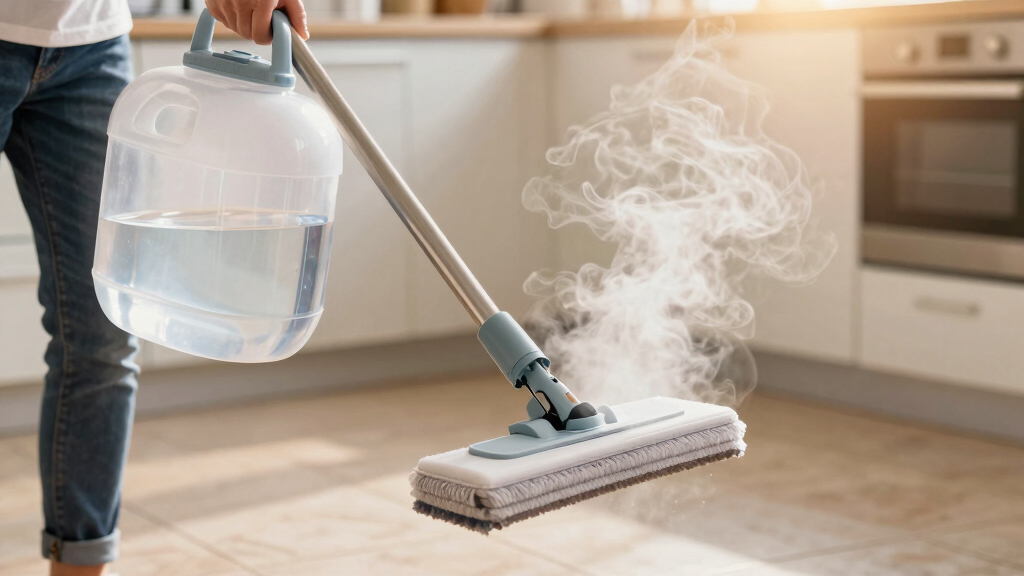
Steam mops heat water until it produces vapor exceeding 212°F (100°C). This hot steam penetrates surfaces, destroying bacteria, viruses, and some fungi on contact. Think of it as a fiery blast that melts away germs, much like a quick sauna for your floors.
For example, if you mop your kitchen tile with high-temperature steam, it can significantly reduce germs like Salmonella or E. coli. The key is the temperature and contact time—most household pathogens can’t survive prolonged exposure to 158°F (70°C) or higher.
This process isn’t just about cleaning dirt. It’s about sanitation—killing germs without the need for chemicals. According to studies, maintaining steam at these high temps for at least 30 seconds can effectively lower bacterial counts, making your home safer.
As an affiliate, we earn on qualifying purchases.
Can a Steam Mop Disinfect Without Chemicals? Yes, Usually
In most cases, yes. Modern steam mops are designed to sanitize surfaces using only heat. They can kill common household germs without additives, making them ideal for households with kids, pets, or sensitivities to chemicals. For routine cleaning, this is often enough.
Using a steam mop effectively means understanding why temperature and contact time matter. Higher temperatures cause proteins in bacteria and viruses to denature rapidly, effectively killing them. Longer contact ensures that even stubborn microbes are exposed to lethal heat levels. However, this process is a tradeoff—if the surface isn’t heated evenly or the steam isn’t hot enough, some germs might survive. Therefore, proper technique and equipment quality are crucial for reliable disinfection. For example, a quick pass over a surface may clean dirt but might not consistently deliver enough heat to kill all germs. When used correctly, steam can be a powerful disinfectant, but it’s essential to recognize its limits and ensure the device reaches and maintains the necessary temperature during cleaning.
However, remember that certain pathogens—like bacterial spores or some viruses—are more resilient. For those, chemical disinfectants still hold the edge for guaranteed sterilization.
As an affiliate, we earn on qualifying purchases.
When Do You Still Need Chemicals? The Limits of Steam
Steam alone isn’t magic for every germ or pathogen. Some bacteria produce spores that can survive high heat—these are tougher to eliminate without chemicals. Think of spores as the resilient survivors hiding in the corners of your home.
For example, Clostridium difficile spores are resistant to heat and require chemical disinfectants for complete removal. Similarly, certain viruses like norovirus may need more than just steam to be fully eradicated. The implication here is that relying solely on steam might give a false sense of security, especially in environments where sterilization is critical, such as hospitals or homes with immunocompromised individuals. The tradeoff is that while steam is excellent for daily sanitation, it cannot replace chemical sterilants for comprehensive disinfection. In addition, heavily soiled surfaces or porous materials, like unsealed wood or fabric, can trap dirt and microbes in crevices where steam penetration is limited. These areas may harbor microbes that survive the heat, emphasizing the need for chemical or manual cleaning as a prelude or supplement. Recognizing these limitations helps prevent complacency and ensures you choose the right method for your specific disinfection needs.
In essence, if you’re aiming for hospital-grade disinfection or dealing with specific pathogens, chemicals might still be your best bet.
As an affiliate, we earn on qualifying purchases.
What Surfaces Are Safe for Steam Cleaning — And Which Are Not?
Steam mops work best on sealed, hard surfaces. Think of shiny tile, sealed hardwood, vinyl, and laminate flooring—these can handle the heat without damage. The steam penetrates the surface, killing germs, and evaporates quickly.
For example, a sealed wood floor in your living room can be cleaned with a steam mop without worry. Just avoid unsealed wood or unglazed ceramics, which can absorb moisture or warp.
Delicate surfaces like unsealed wood, unglazed tiles, or painted drywall are not safe for steam cleaning. The moisture can cause swelling, discoloration, or damage. Always test in a hidden spot first, and defer to your manufacturer’s guidance.
Choosing the wrong surface can lead to damage that might not be immediately apparent but can compromise the integrity or appearance of your home. For instance, unsealed wood can swell or warp when exposed to steam, leading to costly repairs. Similarly, painted or delicate surfaces might discolor or peel. Therefore, understanding the material composition and manufacturer recommendations is essential to avoid unintended consequences. The tradeoff is that while steam is a quick and chemical-free method for many surfaces, it’s not universally safe. When in doubt, consult your flooring or surface manufacturer to ensure compatibility and prevent damage.
As an affiliate, we earn on qualifying purchases.
Quick Guide: How to Maximize Disinfection With Your Steam Mop
- Pre-clean the surface to remove loose dirt and debris. This step is crucial because dirt can insulate microbes, making heat less effective.
- Select the highest steam setting that your floor tolerates—check your manufacturer’s instructions. Using too much heat on delicate surfaces can cause damage, so understanding your equipment’s capabilities is key.
- Maintain steady contact with the surface for at least 30 seconds. Don’t rush—this ensures the heat penetrates and kills germs effectively.
- Allow the surface to dry completely before walking on it again. Damp surfaces can harbor new microbes or cause slips.
- Repeat regularly for consistent sanitation, especially during flu season or virus outbreaks. Consistency enhances the cumulative effect of heat exposure, reducing microbial load over time.
For example, if you’re disinfecting your kitchen counters or bathroom tiles, following these steps ensures the heat does its job effectively. The implication is that proper technique not only improves sanitation but also extends the life of your cleaning equipment and surfaces by reducing the need for harsh chemicals.
Comparing Steam and Chemicals: Which Is Better for Disinfection?
| Feature | Steam Cleaning | Chemical Disinfectants |
|---|---|---|
| Effectiveness against germs | High for bacteria, viruses, some fungi | Very high, including spores |
| Surface safety | Safe on sealed surfaces when used properly | Depends on chemical; some may damage surfaces |
| Environmental impact | Minimal, no chemicals involved | Potential chemical runoff, residues |
| Ease of use | Quick, no prep needed | Requires mixing, handling, and proper ventilation |
While steam is excellent for daily cleaning and reducing chemical exposure, it may fall short for sterilizing medical-grade environments. In those cases, chemical disinfectants are still the gold standard.
Key Tips for Safe and Effective Steam Disinfection
- Always test in a hidden area first to prevent damage.
- Use the highest safe steam setting for disinfecting.
- Keep the steam moving; don’t hold in one spot too long.
- Pre-clean surfaces to remove dirt—steam works best on clean surfaces.
- Follow manufacturer instructions for your specific device.
Frequently Asked Questions
Can a steam mop replace chemical disinfectants for all germs?
Not necessarily. While steam mops effectively reduce many bacteria and viruses, spores and certain resistant pathogens may require chemical disinfectants for complete sterilization. For everyday germs, steam often suffices.
Are steam mops effective against COVID-19?
Yes, high-temperature steam can inactivate the virus on surfaces if the steam reaches at least 158°F (70°C) and maintains contact for about 30 seconds. Proper technique is key for safety and effectiveness.
Do I need to add chemicals to my steam mop?
Most steam mops are designed to operate without any added chemicals. Adding solutions can damage the device and isn’t necessary for effective cleaning. Always follow the manufacturer’s instructions.
What surfaces are safe to clean with a steam mop?
Sealed, hard surfaces like tile, vinyl, sealed hardwood, and laminate are generally safe. Avoid unsealed wood, unglazed ceramics, or painted surfaces that can absorb moisture or warp.
How can I maximize disinfection with my steam mop?
Pre-clean surfaces, select the highest safe steam setting, hold the steam on each area for at least 30 seconds, and allow the surface to dry completely before use.
Conclusion
Steam mops are a powerful tool for everyday sanitation. When used correctly, they can often do the job of disinfectants without any chemicals—saving you money and reducing chemical exposure. But for the toughest germs or medical-grade sterilization, chemicals still have a role.
Think of steam cleaning as a fast, eco-friendly shortcut—when it’s enough. When in doubt, consider what level of disinfection your home needs. The right choice makes all the difference in keeping your space safe, clean, and green.
Fall Picks
fall essentials
As an affiliate, we earn on qualifying purchases.