TL;DR

Get cleaning gear delivered free with Prime
- Fast, free delivery on millions of items
- Prime Video, Amazon Music and more included
- Member-only deals all year
Steam mops are designed for quick, easy cleaning of hard floors, while steam cleaners offer broader versatility for various surfaces. Choose based on your cleaning routine and surfaces for better results.
Ever wondered if a steam mop or a steam cleaner is better for your home? Both promise chemical-free cleaning using steam, but they serve very different roles. Knowing their differences can help you avoid buying the wrong tool and actually make your cleaning faster and safer.
In this guide, you’ll see clear comparisons, real-world examples, and practical tips to choose the right device for your floors, surfaces, and cleaning style. Let’s cut through the hype and get straight to what works.
Steam mops are best for quick, routine cleaning of sealed floors and are usually more affordable.
Steam cleaners offer greater versatility, capable of deep cleaning and sanitizing multiple surfaces with attachments.
Always test surfaces first and follow manufacturer instructions to prevent damage, especially on delicate or unsealed floors.
Both tools can kill germs effectively and are chemical-free, making them safe for homes with children and pets.
Regular maintenance, including descaling and proper storage, extends the lifespan and safety of your device.
Quick floor refresh or whole-home steam power?
TL;DR: Steam mops are built for fast, easy cleaning of sealed hard floors. Steam cleaners are broader tools with attachments for grout, upholstery, appliances, fixtures, and deeper sanitizing jobs.
The key insight
Both use hot vapor to loosen dirt and reduce germs, but steam cleaners usually add higher pressure, more accessories, and more surface range. That makes them more versatile, but also slower to set up and usually more expensive.
Basic Difference
A steam mop is a lightweight floor tool with a pad and handle. A steam cleaner is a multi-surface system with nozzles, brushes, hoses, and attachments for more targeted cleaning.
Steam mop
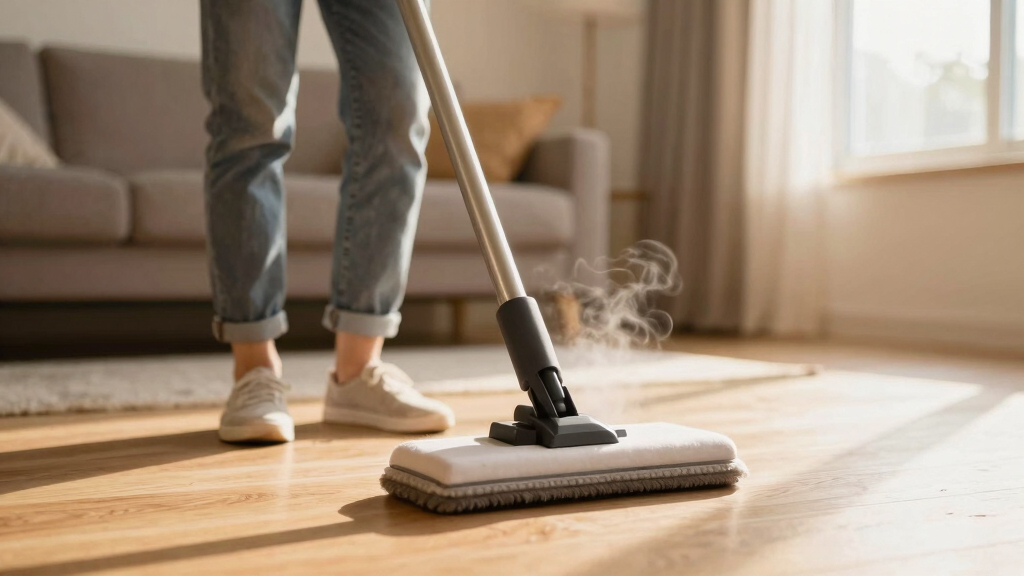
Use it for: sealed tile, vinyl, laminate, and sealed hardwood when you want quick daily or weekly upkeep. It glides like a standard mop, while the microfiber pad lifts loosened dirt and moisture.
Steam cleaner
Use it for: floors, grout, upholstery, appliances, bathroom fixtures, car interiors, and spot treatments. Attachments let the steam reach edges, seams, corners, and textured surfaces.
Side-by-Side Decision Table
Choose by surface, cleaning depth, and how much setup you will realistically tolerate on a busy day.
| Feature | Steam Mop | Steam Cleaner | Best Choice |
|---|---|---|---|
| Sealed hard floors | ✓Fast and simple | ✓Works with floor head | Steam mop for routine speed |
| Grout and bathroom detail | ✗Pad cannot reach deeply | ✓Brushes and nozzles help | Steam cleaner |
| Upholstery and car interiors | ✗Not designed for fabric | ~Use correct attachment and test first | Steam cleaner with caution |
| Daily convenience | ✓Lightweight and quick | ~More setup and storage | Steam mop |
| Deep sanitizing sessions | ~Good on suitable floors | ✓More targeted steam delivery | Steam cleaner |
How They Clean Differently
Think of the mop as a fast surface refresher and the cleaner as a detail tool. The right choice depends less on hype and more on the mess in front of you.
Heat
Water heats into vapor for chemical-free cleaning.
Contact
Mops spread steam through a pad across flat floors.
Pressure
Cleaners focus steam through nozzles and brushes.
Lift
Pads absorb light soil; attachments loosen embedded grime.
Finish
Dry, test, descale, and store the device properly.
Capability Scorecard
Steam mops win on grab-and-go floor maintenance. Steam cleaners win when the job expands beyond flat sealed flooring.
Surface Risk Spectrum
Cost and Maintenance
A cheaper device is only a bargain if it fits your routine. Match price to frequency, surface variety, storage space, and your tolerance for setup.
Steam mop
$30-$150Best for households that mostly need sealed floors refreshed quickly without hauling out a larger system.
- Change washable pads regularly.
- Descale every few months or as directed.
- Avoid unsealed wood and delicate finishes.
Steam cleaner
$50-$300+Best for larger homes, grout lines, upholstery spot work, fixtures, appliances, and periodic deep sanitizing sessions.
- Clean tanks, filters, brushes, and nozzles.
- Use distilled water when mineral buildup is an issue.
- Test fabrics and delicate surfaces before steaming.
What’s Trending
Recent steam devices are leaning toward higher pressure, cordless mobility, smaller multi-attachment bodies, vacuum-steam combinations, and eco-minded features that reduce water and chemical use.
Hotter, stronger steam
Higher pressure can help steam penetrate grime more effectively, especially for grout, fixtures, and sticky kitchen residue.
Cordless convenience
Cordless models are gaining traction for quick cleanups, especially where outlets and tangled cords slow the routine down.
Steam plus vacuum
Combination devices pick up loose debris while steaming, making them attractive for households that want fewer cleaning passes.
What’s the Basic Difference Between a Steam Mop and a Steam Cleaner?
At their core, a steam mop is a lightweight device with a mop head, designed mainly for quick, daily cleaning of sealed floors. Think of it as your go-to for mopping up spills or dirt on tile, laminate, or vinyl.
By contrast, a steam cleaner is more like a Swiss Army knife. It can clean floors, but also upholstery, grout, kitchen appliances, and even car interiors. Its wide range of attachments turns it into a multi-purpose cleaning tool, often used for deep, sanitizing jobs.
Understanding this fundamental difference is crucial because it impacts how often you’ll use each device, what surfaces they are suited for, and the level of cleaning power you need. A steam mop is ideal for quick, regular maintenance, whereas a steam cleaner is better for comprehensive, deep cleaning tasks that require versatility and more power. Choosing the right one depends on your cleaning priorities and how much time and effort you want to invest.
As an affiliate, we earn on qualifying purchases.
How Do They Actually Clean Surfaces Differently?
| Feature | Steam Mop |
|---|---|
| Surface Focus | Primarily floors — tile, laminate, vinyl, sealed hardwood |
| Cleaning Type | Routine, quick cleaning with a microfiber pad that absorbs dirt and moisture efficiently, ideal for daily upkeep |
| Limitations | Less effective on upholstery, grout, or deep stains; may struggle with sticky or greasy residues that require more aggressive cleaning |
Imagine a busy mom running her steam mop to quickly wipe down her kitchen tiles after breakfast. It’s fast and effective for light daily messes, but it might not be enough for stubborn stains or deep grime embedded in grout lines. The microfiber pad is designed for surface-level dirt, meaning it’s excellent for quick refreshes but not for intensive cleaning.
| Feature | Steam Cleaner |
|---|---|
| Surface Focus | Multiple surfaces — floors, upholstery, kitchen appliances, grout, bathroom fixtures |
| Cleaning Type | Deep cleaning, sanitizing, spot treatments with various attachments that can target specific issues like stubborn stains, mold, or embedded dirt |
| Limitations | Requires setup, switching attachments, and more space to operate; longer cleaning time, which might be inconvenient for quick daily chores |
Think of someone tackling a bathroom grout stain or deep-cleaning a sofa with a steam cleaner, switching nozzles for each task. This versatility allows for a more thorough clean, reaching areas that a steam mop simply can’t. However, the increased complexity and time mean it’s less suitable for quick touch-ups, making it more appropriate for periodic deep cleans rather than daily maintenance.
In essence, understanding these differences helps you match the cleaning method to the task—quick and light versus deep and comprehensive—saving you time, effort, and possibly preventing surface damage from inappropriate cleaning tools.
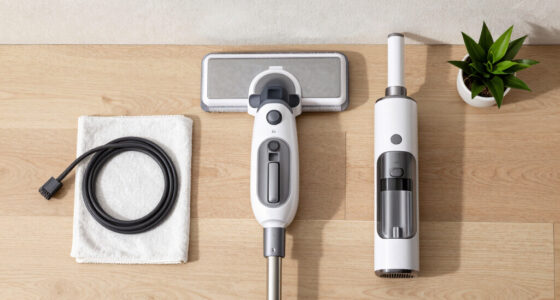
versatile steam cleaner with attachments
As an affiliate, we earn on qualifying purchases.
As an affiliate, we earn on qualifying purchases.
Which Is Easier to Use and Maintain?
A steam mop is designed for simplicity. Its lightweight build and straightforward operation make it easy for almost anyone to handle—think of gliding across your floor like a dance. Maintenance involves regular descaling to prevent mineral buildup from hard water and changing pads when they become worn or dirty. This low-maintenance approach means you can keep it ready for quick use without much hassle, making it ideal for busy households.
Meanwhile, a steam cleaner can feel more complex, especially with multiple attachments, adjustable settings, and larger water tanks. It might require more storage space and routine cleaning of filters or tanks to prevent mold or mineral deposits. While it demands a bit more effort, this extra care ensures optimal performance and longevity. The tradeoff is that, with proper maintenance, a steam cleaner offers superior versatility and power, making it a worthwhile investment for those who prioritize deep cleaning and sanitizing over convenience.
Ultimately, your choice depends on how much time you’re willing to spend maintaining your equipment versus how much versatility you need. For most casual users, the simplicity of a steam mop is appealing, whereas cleaning enthusiasts or larger households may find the extra effort of a steam cleaner justified by its capabilities.
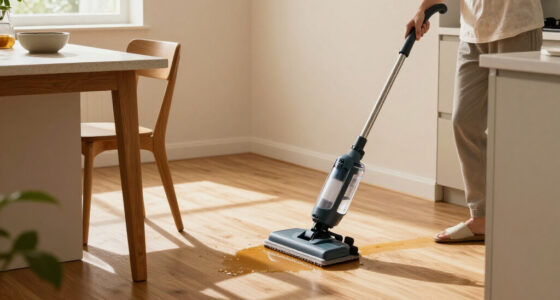
chemical-free steam cleaning device
As an affiliate, we earn on qualifying purchases.
As an affiliate, we earn on qualifying purchases.
What About Cost? Are They Worth the Price?
Steam mops are generally budget-friendly, costing between $30 to $150. They’re perfect for quick, regular floor cleaning without breaking the bank. Think of it as buying a reliable pair of sneakers for daily walks. Their affordability makes them accessible for most households, and they often come with basic features sufficient for everyday use.
Steam cleaners, however, can range from $50 to over $300. They’re an investment for those who want a multi-tool that can handle deep cleaning, grout scrubbing, upholstery, and more. The higher initial cost reflects their advanced features, multiple attachments, and greater durability. It’s like owning a Swiss Army knife versus a single-purpose tool—more versatile, but also more expensive. Considering the long-term savings on cleaning products and chemicals, a steam cleaner can be cost-effective over time for households with extensive cleaning needs.
Deciding whether the investment is worth it depends on your cleaning habits, surfaces, and budget. If you only need to keep your floors tidy, a steam mop might suffice. But if you want comprehensive cleaning power and surface versatility, spending more on a steam cleaner could save you money and effort in the long run.
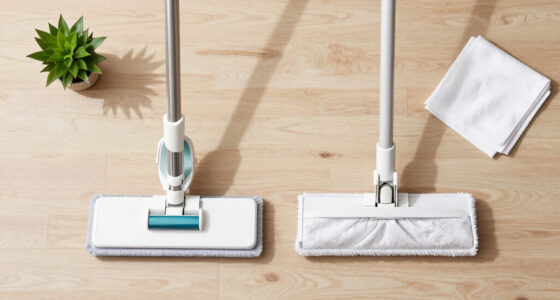
steam mop vs steam cleaner comparison
As an affiliate, we earn on qualifying purchases.
As an affiliate, we earn on qualifying purchases.
What’s New and Trending in Steam Devices?
Recent models focus on higher pressure and temperature for better cleaning efficacy. Higher pressure means steam can penetrate deeper into grime and kill germs more effectively, which is particularly important for stubborn stains or sanitizing sensitive surfaces. Cordless options are gaining popularity, offering more mobility without tangled cords, making quick cleanups more convenient. Some devices combine steam with vacuum functions, allowing you to pick up dirt and debris while sanitizing, which streamlines cleaning routines and saves time. Eco-friendly features like energy-saving modes and lower water consumption are also trending, aligning with growing environmental awareness.
For example, a cordless steam mop that lasts 30 minutes on a single charge can make quick cleanups easier, especially in larger spaces or for those who dislike cords. Meanwhile, multi-attachment steam cleaners are becoming more compact and easier to store, appealing to homeowners with limited storage space. These innovations are designed to enhance user experience, improve cleaning results, and reduce environmental impact, making modern steam devices more efficient and user-friendly than ever before.
Staying informed about these trends helps you select a device that not only meets your current needs but also adapts to future cleaning challenges, ensuring your investment remains valuable over time.
Can Both Kill Germs and Bacteria?
Yes. Both steam mops and steam cleaners can sanitize surfaces by reaching temperatures above 212°F (100°C). This high temperature is capable of destroying up to 99.9% of germs and bacteria, according to numerous cleaning experts and studies. This makes steam cleaning a natural, chemical-free disinfectant that’s safe for homes with children, pets, or sensitivities. The heat penetrates deep into surfaces, ensuring thorough sanitation without the use of harsh chemicals, which is especially important in kitchens and bathrooms.
For instance, a steam mop used regularly on sealed hardwood floors can effectively sanitize daily spills and prevent the spread of germs, while a steam cleaner with specialized attachments can target bathroom grout, kitchen counters, and upholstery for a more comprehensive sterilization. This dual capability offers peace of mind for maintaining a hygienic environment, especially during cold and flu seasons or in homes with vulnerable family members. The ability to kill germs naturally without chemicals is a significant advantage, making steam devices an essential part of a healthy home cleaning routine.
Are They Safe for All Floors and Surfaces?
Steam mops are safe on sealed, hard surfaces like tile, vinyl, and sealed hardwood. However, they should be avoided on unsealed wood or delicate surfaces, as excess moisture can cause damage such as warping, swelling, or staining. The key is understanding your floor’s sealing and moisture tolerance because improper use can lead to costly repairs or surface deterioration.
Steam cleaners, with their adjustable pressure settings and various attachments, can be safer for a wider range of surfaces when used correctly. For example, low-pressure steam can be safe for some unsealed or delicate surfaces if used carefully, but always test a small, hidden area first to ensure no damage occurs. Following manufacturer instructions is crucial to prevent surface damage and ensure safe use.
For example, testing on a small corner of your hardwood floor before full use can prevent unintended damage, and adjusting the steam output accordingly can help avoid overexposure to moisture. When used properly, both devices can be safe, but understanding your surfaces and operating within recommended guidelines is essential for long-term preservation.
How Often Should You Use and Maintain These Devices?
For both devices, regular maintenance is essential to ensure optimal performance and longevity. Descale every 3-6 months if you use hard water, or more frequently if recommended by the manufacturer, to prevent mineral buildup that can clog or damage internal components. Always empty water tanks after use to prevent mold, bacteria, and mineral deposits from forming inside. Proper storage, such as keeping devices in a dry, cool place, also extends their lifespan.
Use a steam mop weekly or whenever your floors need a quick refresh to prevent dirt accumulation and maintain hygiene. A steam cleaner, used monthly for deep cleaning, can help eliminate germs and dirt from various surfaces, keeping your home hygienic and safe. Additionally, inspecting and replacing worn pads or filters as needed ensures consistent cleaning power.
Remember, proper maintenance isn’t just about prolonging the device’s life — it’s about ensuring safety, preventing damage, and maintaining cleaning effectiveness over time. A well-maintained steam device is a reliable partner in your household cleaning routine.
Which Should You Choose? Quick Guide
- For daily floor cleaning: Go with a steam mop. It’s quick, simple, and budget-friendly, making it perfect for routine maintenance and quick touch-ups.
- For versatile, deep cleaning across various surfaces: A steam cleaner wins. Its attachments and higher power allow for thorough sanitization of grout, upholstery, appliances, and more, saving time and effort in the long run.
- On a budget: Start with a basic steam mop. It covers essential needs without a large upfront investment, and you can upgrade to a steam cleaner later if your cleaning demands increase.
- Want eco-friendly cleaning? Both devices are chemical-free, but steam cleaning offers broader surface safety and sanitization, making it a more eco-conscious choice for comprehensive cleaning routines.
Frequently Asked Questions
Can I use a steam mop on my hardwood floors?
Yes, if your hardwood is sealed and water-resistant. Always test a small, hidden area first to ensure no damage occurs. Follow manufacturer guidelines for best results.
Are steam cleaners safe for upholstery?
Steam cleaners with the right attachments can be safe for upholstery, but avoid using high pressure directly on delicate fabrics. Always check the fabric’s care instructions and test first.
How do I prevent mineral buildup in my steam device?
Use distilled water if possible, and descale your device as recommended, usually every 3-6 months. Regularly empty and dry the water tank after use to prevent mold and mineral deposits.
Is steam cleaning environmentally friendly?
Yes. Steam cleaning reduces or eliminates the need for chemical cleaners, making it a safer and more eco-friendly option for home hygiene.
Can I use a steam mop on unsealed wood floors?
No. Moisture can damage unsealed wood, so avoid using steam mops on such surfaces. Always check your floor’s sealing and follow manufacturer advice.
Conclusion
Choosing between a steam mop and a steam cleaner boils down to your cleaning style and surfaces. If floors are your main concern, a steam mop is a quick, budget-friendly choice. For a multi-purpose tool that tackles deep cleaning and sanitizing, a steam cleaner is worth the investment.
Remember, the best device is the one that fits your home and routine. Keep surfaces safe, clean, and germ-free — steam is a powerful ally in that effort. Your floors and surfaces will thank you.
Columbus Day / Indigenous Peoples' Day Picks
long weekend sales
As an affiliate, we earn on qualifying purchases.