TL;DR
Listen free for 30 days with Audible
Thousands of audiobooks and originals — cancel anytime.
Start your free trialAs an affiliate, we earn on qualifying purchases.
Most luxury vinyl planks warn against steam mopping due to heat and moisture risks. Modern formulations may tolerate occasional steam, but checking manufacturer advice and opting for gentler cleaning methods keeps your floors safe and looking new.
Imagine this: you’re tired after a long week, and a quick steam mop session promises spotless floors and a sanitized home. But is that safe for your luxury vinyl plank? Many homeowners wonder if their trusty steam mop can handle their stylish, durable floors. The answer isn’t black and white. This guide dives into what you need to know before steaming your LVP, so you can clean confidently without risking costly damage.
Whether you’re considering a quick refresh or already have a steam mop in hand, understanding the risks and alternatives helps you make smarter choices. Let’s explore what makes LVP vulnerable and how to keep it pristine—safely.
Always check your flooring manufacturer’s cleaning guidelines before using a steam mop on LVP.
Most brands advise avoiding steam mops due to risks of warping and delamination.
Modern LVP with better water resistance may tolerate occasional steam cleaning, but caution is essential.
Gentle, damp microfiber mops with vinyl-specific cleaners are safer and effective for routine cleaning.
Look for signs like warping or bubbling to spot early damage from heat or moisture exposure.
Is It Actually Safe to Steam Mop Luxury Vinyl Plank?
Most luxury vinyl planks warn against steam mopping because heat and moisture can work into seams, soften vinyl layers, and trigger warping or delamination. Newer water-resistant LVP may tolerate rare, careful steam exposure, but the safest routine is still a damp microfiber mop and a vinyl-safe cleaner.
Steam is convenient. LVP warranties are less forgiving.
Microfiber mopping is safer than high-heat steam.
PVC-rich vinyl can soften, expand, or distort.
Moisture can enter plank edges and adhesive areas.
Manufacturer cleaning guidance comes first.
The floor is tough, not invincible.
Luxury vinyl plank is a layered product: wear layer, printed visual layer, vinyl core, and backing. That structure gives it realistic wood looks and everyday durability, but it also creates multiple places where heat, moisture, and adhesives can be stressed.
Wear layer
The transparent top layer resists scuffs and daily grime. Repeated steam exposure may dull, haze, or weaken this protective surface.
Vinyl core
The PVC-based core is water-resistant, but high heat can make vinyl expand, soften, or lose shape at vulnerable edges.
Backing and bond
Moisture plus heat can challenge adhesives, underlayment contact, and the plank’s layered construction over time.
The cleaning power is the same reason it is risky.
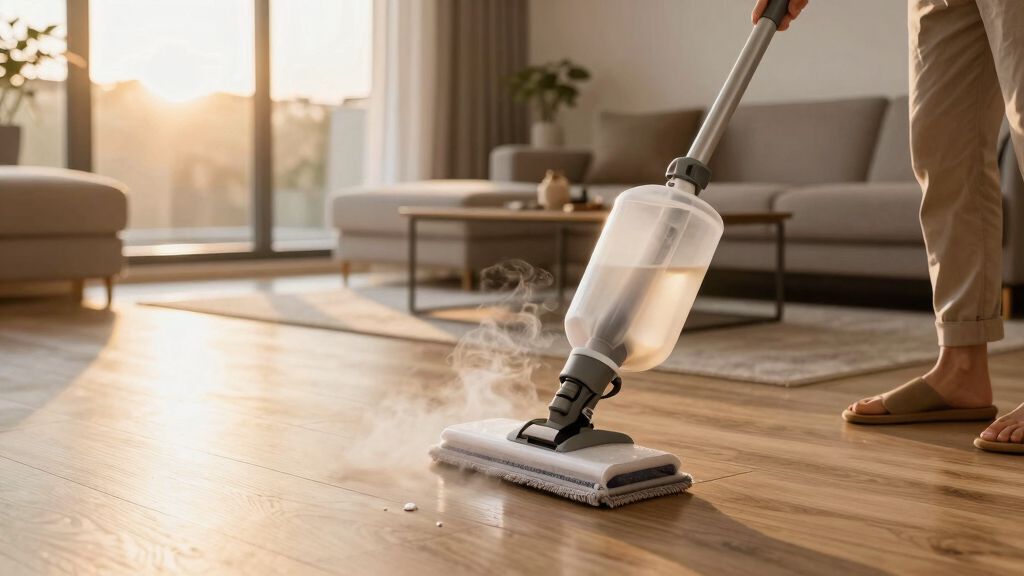
Steam mops heat water into vapor, then push that heat and moisture through a pad. On tile, that can be useful. On LVP, the combination can penetrate seams and create thermal cycling the plank was not designed to repeat.
What can go wrong?
Damage is usually cumulative: one rushed cleaning session may look fine, while repeated exposure creates edge curl, bubbles, plank separation, or delamination.
Safer shine beats risky speed.
Routine LVP care should remove grit, protect the finish, and avoid standing water. Steam ranks well for convenience, but poorly for manufacturer approval and long-term floor safety.
| Method | Routine safety | Manufacturer fit | Moisture risk | Best use case |
|---|---|---|---|---|
| Damp microfiber mop | ✓ Low risk | ✓ Commonly recommended | ✓ Controlled | Weekly cleaning with vinyl-safe solution. |
| Sweeping or vacuuming | ✓ Very low risk | ✓ Recommended | ✓ None | Daily grit removal before scratches happen. |
| Occasional low steam | ~ Product-specific | ~ Check warranty | ~ Moderate | Only if manufacturer guidance allows it. |
| Frequent steam mopping | ✗ High risk | ✗ Often prohibited | ✗ Elevated | Not advised for most LVP floors. |
Before steam touches the floor, run the chain.
The safest answer is not universal. It depends on your exact plank, installation, warranty language, steam settings, and whether you can keep heat and moisture minimal.
Find the brand
Locate the product name, installation type, and cleaning guide.
Read warranty
Look for steam, heat, moisture, and approved cleaner language.
Inspect seams
Loose edges, gaps, or glue-down issues raise the risk level.
Test hidden area
If allowed, use the lowest setting and watch for surface changes.
Default gentle
When unsure, skip steam and use damp microfiber cleaning.
How to keep LVP clean without gambling on steam.
Think low water, low heat, and low residue. The goal is to remove grit and film without forcing moisture into plank edges or stressing the finish.
Dry debris first
Sweep or vacuum regularly so grit does not scrape the wear layer during mopping.
- Use a soft broom or hard-floor vacuum setting.
- Clean high-traffic areas more often.
- Avoid abrasive scrub pads.
Damp, never soaked
Use a microfiber mop with a vinyl-specific cleaner or mild manufacturer-approved solution.
- Wring the mop until it is only damp.
- Dry visible moisture with a clean cloth.
- Test new cleaners in a hidden spot.
If you still want to try steam, keep the margin tiny.
Some modern LVP products with improved cores and wear layers may tolerate rare, careful steam cleaning. That is not the same as permission for routine steam mopping.
Only proceed if all three are true.
The manufacturer allows steam, the mop has adjustable low output, and a hidden test area shows no dulling, lifting, swelling, or edge movement after drying.
Watch for early damage.
Bubbling, curling edges, cloudy finish, plank movement, adhesive odor, or seams that catch dirt can signal heat or moisture stress. Stop steam use immediately and return to gentle cleaning.
From convenience to consequence.
The core risk is not that LVP cannot handle any moisture. It is that pressurized heat and vapor can reach the floor’s weakest points faster than ordinary damp cleaning.
Steam
High heat plus vapor.
Seams
Edges become entry points.
Core
Vinyl expands or softens.
Bond
Layers and adhesive weaken.
Surface
Bubbles or warping appear.
Repair
Replacement may be needed.
What Is Luxury Vinyl Plank Anyway? And Why It Matters
Luxury vinyl plank (LVP) is a layered flooring material designed to mimic hardwood, but with added durability and water resistance. It’s made of a vinyl core topped with a wear layer, then printed with realistic wood grain textures. Think of it as a tough, flexible plastic with a beautiful surface.
But that plastic isn’t invincible. The vinyl contains PVC—polyvinyl chloride—which is sensitive to high heat and moisture. When exposed to intense steam, the material can warp, buckle, or peel apart—like a plastic container left in the sun too long.
Understanding this vulnerability is crucial because it highlights the importance of choosing cleaning methods that do not expose your floors to damaging levels of heat or water. The implications are significant: damage from improper cleaning can be costly to repair, sometimes requiring replacement of planks or professional refinishing. Knowing the material’s limits helps you weigh the tradeoffs between convenience and longevity, ensuring you don’t compromise your investment for short-term cleanliness.
As an affiliate, we earn on qualifying purchases.
How Does a Steam Mop Work and Why Is It a Risk?
A steam mop heats water until it turns into high-temperature steam—often exceeding 200°F (93°C). This steam is released through a nozzle, designed to loosen dirt and sanitize surfaces. The intense heat can dissolve grime effectively, which makes steam mops popular for deep cleaning.
However, the very features that make steam effective also pose risks for LVP. The high-temperature steam penetrates the wear layer and vinyl core, causing expansion and contraction that the material isn’t designed to handle repeatedly. This thermal stress can weaken the vinyl’s structure, leading to warping, bubbling, or delamination—where layers peel apart. The moisture can also seep into seams or edges, exacerbating these issues over time.
Think of it like a plastic bag exposed to a heat source: the plastic can soften, stretch, or distort. For vinyl flooring, this isn’t just a cosmetic concern; it can compromise the floor’s integrity, causing uneven surfaces, trapped dirt, or even structural failure. The tradeoff is clear: while steam cleaning offers convenience, it risks irreparably damaging your floors if misused or overused.

BPAWA Microfiber Mops for Floor Cleaning: Flat Mop for Hardwood Tile Wood
- Adjustable Long Handle: Extendable from 32 to 59 inches
- Lightweight and Sturdy: Flexible design suitable for all users
- Reusable Washable Pads: Includes 4 durable, absorbent pads
As an affiliate, we earn on qualifying purchases.
As an affiliate, we earn on qualifying purchases.
What Do Manufacturers Say About Steam Mopping LVP?
Many flooring brands advise against using steam mops on their luxury vinyl plank products. This isn’t just a precaution; it’s rooted in the understanding that high heat and moisture can fundamentally alter the material’s structure. When manufacturers issue warnings, they’re protecting consumers from costly repairs and safeguarding their warranty policies. For example, a popular LVP brand explicitly states that steam can cause warping, bubbling, and delamination, which are often irreversible damages.
Some brands acknowledge that certain newer, water-resistant formulations might handle occasional light steam cleaning—if done carefully. But even then, they emphasize that this isn’t a green light for routine cleaning. It’s a cautious nod that, with proper testing and minimal use, some floors could tolerate limited exposure. The key takeaway is that ignoring these guidelines increases the risk of damage, which can be costly and inconvenient. The implication is that understanding and respecting manufacturer recommendations is essential to maintaining the floor’s appearance and longevity, avoiding the tradeoff of warranty nullification or repair expenses.
vinyl-safe floor cleaning solution
As an affiliate, we earn on qualifying purchases.
As an affiliate, we earn on qualifying purchases.
What Are the Real Risks of Using a Steam Mop on LVP?
Using a steam mop improperly or too often exposes your LVP to serious risks. Excessive heat causes the vinyl to soften and expand, which can lead to warping at the edges and buckling of the entire plank. The moisture can seep into seams, causing delamination—a process where layers peel apart—resulting in uneven surfaces that trap dirt and debris, making maintenance more difficult. Over time, repeated thermal cycling weakens the adhesive and structural integrity, leading to cracks or even separation of planks.
Picture a vinyl plank warping at the edges or bubbling in the middle—these issues aren’t just aesthetic; they compromise the floor’s stability. The bubbling and warping can also create uneven surfaces that pose tripping hazards or trap dirt, reducing the floor’s lifespan and aesthetic appeal. The potential for damage isn’t limited to cosmetic issues; it can lead to expensive repairs or replacement of entire sections. The tradeoff here is clear: while steam cleaning may seem quick and effective, the long-term implications for your floor’s durability and appearance are significant if proper precautions aren’t taken.
As an affiliate, we earn on qualifying purchases.
How to Safely Clean Your LVP Without Steaming
The safest way to keep your LVP looking fresh is with non-steam, gentle cleaning methods. Think of it as giving your floors a spa treatment—soothing but effective.
- Sweep or vacuum regularly to remove loose debris and grit, preventing scratches and dirt accumulation that could require harsher cleaning.
- Damp mop with a microfiber cloth and a gentle cleaner formulated for vinyl flooring. This prevents water damage and preserves the floor’s finish.
- Avoid soaking the mop or leaving excess water behind, as standing water can seep into seams and cause swelling or delamination over time.
- Test any cleaning solution on a hidden area first, to check for discoloration or damage, ensuring compatibility with your specific flooring.
- Wipe with a clean, dry cloth afterward to remove any residual moisture and prevent water from settling into seams or edges.
This routine helps preserve your floors’ shine and structural integrity without exposing them to unnecessary heat or moisture. It’s a tradeoff that favors longevity over convenience, ensuring your floors remain beautiful and functional for years to come.
Is There a Middle Ground? Can You Use a Steam Mop Safely?
Some newer LVP products are designed to be more moisture-resistant, and in rare cases, a carefully controlled steam mop might be okay. But this isn’t a green light—just a cautious possibility rooted in the idea of minimal risk.
If you decide to try, use a steam mop with adjustable settings, minimal steam output, and always test on a small, hidden section first. Keep the steam moving, don’t hold it in one spot, and use the lowest heat setting. This approach reduces the risk of localized heat buildup that can damage the vinyl.
Remember: even with newer floors, moderation is key. Think of steam cleaning as an occasional treat, not a routine practice. Weigh the potential benefits against the risks, and always prioritize manufacturer guidelines and your own observations about your flooring’s response.
How Can You Tell If Your LVP Has Been Damaged?
Look for signs like warping, bubbling, cracking, or edges that lift. Sometimes damage appears as a slight wavy distortion, especially near edges or seams. Recognizing early signs of damage can save you from costly repairs down the line.
Additionally, check for discoloration or a loss of the floor’s original sheen—these subtle cues can indicate underlying damage from heat or moisture exposure. If you notice any of these signs, it’s best to consult a flooring professional to assess the extent of the damage and determine whether repairs are feasible.
Prevention is better than repair—so keep an eye on your floors after any cleaning method involving heat or moisture. Regular inspections and prompt action can extend the life of your LVP and maintain its appearance.
Frequently Asked Questions
Is it safe to use a steam mop on luxury vinyl plank flooring?
Most manufacturers recommend avoiding steam mops on LVP because high heat and moisture can cause warping, bubbling, or delamination. Some newer, water-resistant floors might tolerate occasional use, but it’s safest to follow your flooring’s care instructions.
Will steam cleaning damage my LVP?
If used improperly or too frequently, yes. Excessive heat and moisture can weaken the vinyl layers, leading to warping or peeling. Always test and use minimal steam if you choose to try.
Can I use a steam mop on all types of vinyl flooring?
No. Many vinyl floors, especially older or traditional types, are not designed to withstand steam. Always check the manufacturer’s recommendations before proceeding.
What are safer alternatives to steam mopping for my LVP?
Use a damp microfiber mop with a vinyl-safe cleaner, sweep regularly, and avoid soaking the floor. These methods are gentler and keep your floors looking their best without risking damage.
Are there specific steam mops recommended for vinyl floors?
Not typically. Most brands advise against steam mops on LVP. If you decide to try, choose one with adjustable steam settings and test on a hidden area first.
Conclusion
While the allure of quick, sanitized floors is tempting, safety comes first. For most luxury vinyl planks, sticking to gentle cleaning methods protects your investment and keeps floors looking flawless. When in doubt, treat steam mops as a risky shortcut—your floors will thank you for the extra care.
Imagine your floor shining, free of warps or bubbles—clean, safe, and beautiful. That’s worth a little extra effort.
College move-in / dorm season Picks
dorm essentials
As an affiliate, we earn on qualifying purchases.