TL;DR
An Ideal Home contributor says she installed radiator reflectors behind most radiators on external walls in November 2022 and has used them for four winters. She reports being comfortable at a lower thermostat setting, but provided no measured energy-bill comparison, and says the benefit may vary with a home’s insulation and radiator placement.
An Ideal Home contributor says radiator reflectors installed behind most of her radiators on external walls have remained part of her energy-saving routine for four years, and she now finds her home comfortable with the thermostat at 18–19°C rather than 21°C. Her account is a personal experience, not a measured trial: she gives no before-and-after energy bills, so the amount of any savings attributable to the reflectors is unclear.

Get cleaning gear delivered free with Prime
- Fast, free delivery on millions of items
- Prime Video, Amazon Music and more included
- Member-only deals all year
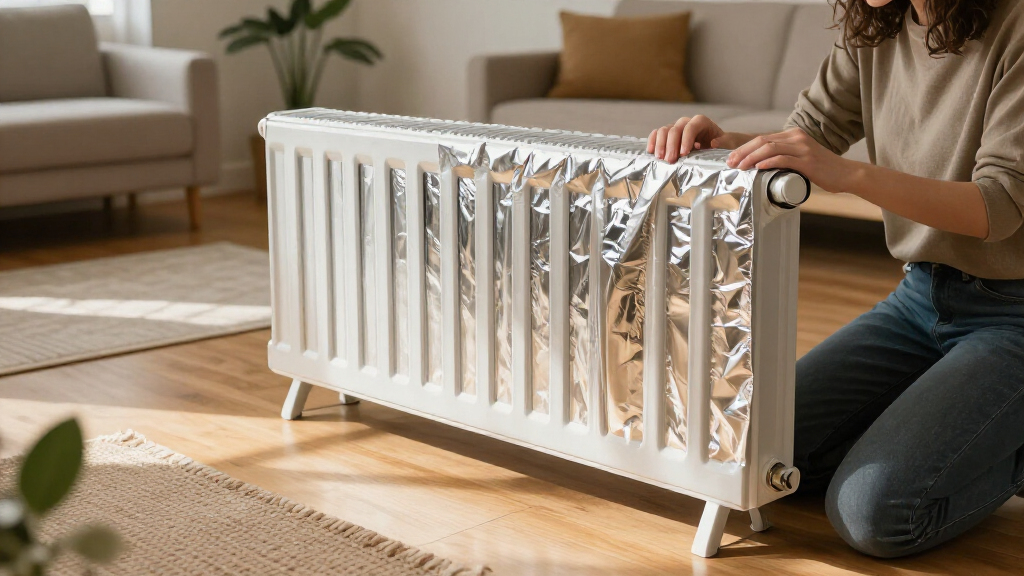
The contributor says she fitted Radflek reflectors in November 2022 behind most radiators attached to external walls in her roughly 60-year-old home. She left them off a bathroom towel rail and a ground-floor designer radiator because the panels would have been too visible. She also says there is little reason to put them behind radiators on internal walls, while a radiator against a wall shared with an unheated space such as an attached garage may be a more relevant case.
Her main reported change was lowering the thermostat from 21°C to 18–19°C while remaining comfortable during the winters since installation. She says the wall behind a reflector feels cold when checked by hand, which she takes as a sign that less heat is reaching the wall. That observation does not quantify the heat retained or establish how much her energy use changed.
The report advises keeping radiators in working order, including bleeding them in autumn, checking for cold patches and removing dust. It also cautions against substituting ordinary kitchen foil: the contributor says it is thinner, more prone to tearing and lacks the same insulating properties as purpose-made products, citing the Energy Saving Trust for the latter point.
Savings Depend on the Home
The account matters to households weighing low-cost ways to manage heating because it offers a practical reminder: a reflector’s usefulness depends on where the radiator sits and how much heat the wall behind it might otherwise absorb. The contributor says her home is not as well insulated as a newer build, and she expects people in better-insulated homes to see a smaller effect.
Her thermostat experience also shows why readers should separate a reported comfort change from verified bill savings. The article cites British Gas as saying a one-degree thermostat reduction can cut an energy bill by 10%, but that is a general claim in the source, not a measured result from this home. The contributor says she tried several energy-saving measures at the same time, making it difficult to assign any change in comfort or costs to reflectors alone.
For readers, the practical takeaway is not that reflectors guarantee a particular reduction in bills. It is that they may be worth considering behind radiators on external walls, particularly where insulation is limited, while householders should assess the product cost against their own home and avoid treating one person’s experience as a controlled comparison.
Products Worth Considering

Philips Hue Bridge Pro Starter Kit with 4 A19 E26 Color Smart Bulbs

TCL 75-Inch Class 4-Series 4K UHD HDR Smart Google TV (75S446, 2022)

Dyson V8 Cyclone Cordless Vacuum
As an affiliate, we earn on qualifying purchases.
Installation and Four Winters
The contributor describes the reflectors as one part of a broader effort to reduce household energy use. She says she has also changed appliance habits, replaced a conservatory roof with an insulated alternative, draught-proofed, avoided leaving windows open longer than needed and used other methods to retain warmth. These measures make her experience useful as a record of a household routine, but complicate any attempt to isolate the reflectors’ effect.
The source article frames the advice against a forecast energy-price change. It says the UK energy price cap is set to rise by 26% on January 1, 2027, describing it as the steepest increase in four years. That is presented as a future projection in the supplied material, not as a confirmed outcome already reflected in bills. The article’s central evidence remains the contributor’s account of installation in 2022 and her subsequent thermostat settings.
Radiator reflectors are intended to sit between a radiator and the wall, redirecting some radiant heat back into the room. The report distinguishes purpose-made panels from ordinary foil and notes that products use different fitting methods, including adhesive pads or clips. It does not provide comparative testing of brands or installation methods.
“Each winter since I installed the reflectors, I was comfortable with the thermostat set at 18-19°C.”
— The Ideal Home contributor
No Bill Comparison Provided
The report does not provide energy bills, meter readings or a measured heat-loss comparison from before and after installation. It is not clear whether the household’s total energy use fell, by how much, or how much of any change came from reflectors rather than other improvements and behavior changes.
The source also does not identify the home’s wall construction, the area covered by reflectors, exact product costs or the length of time needed to recover that cost. Its discussion of a projected price-cap increase is not evidence of what the cap ultimately will be. The cited 10% bill reduction from lowering a thermostat is a general claim attributed to British Gas, not an outcome verified for this contributor’s home.
Check the Home Before Buying
The report gives no announced follow-up study or further measurement. For now, the contributor’s account remains a four-year personal assessment, with no new bill data or independent test attached.
Householders considering reflectors can use the report’s distinctions as a starting point: check whether radiators are on external walls, consider how well those walls are insulated, and maintain radiators so they heat evenly. Any decision about likely savings should account for the product’s cost and the home’s conditions rather than assume the reported thermostat change will apply. The next concrete evidence that could clarify the benefit would be a like-for-like comparison of energy use and comfort before and after installation.
Key Questions
Did the contributor prove radiator reflectors lowered her energy bills?
No. She reports using a lower thermostat setting while remaining comfortable, but the article provides no before-and-after bills or meter readings to show a reduction or attribute one to the reflectors.
Where did she install the reflectors?
She says she fitted them behind most radiators on external walls in November 2022. She did not fit them behind a bathroom towel rail or a designer radiator where they would have been visible.
Will radiator reflectors help every home equally?
The report says results may differ. Its contributor expects a smaller effect in a well-insulated newer home than in a less insulated property with radiators on external walls.
Can kitchen foil be used instead?
The contributor recommends purpose-made reflectors, saying ordinary foil is thinner, tears more easily and does not have the same insulating properties. The report attributes the insulation point to the Energy Saving Trust.
Source: idealhome.co.uk