TL;DR

Get cleaning gear delivered free — and shop member deals
- Fast, free delivery on millions of items
- Access to Prime Big Deal Days deals on October 6–7
- Prime Video, Amazon Music and more included
Steam cleaning stairs can be highly effective and chemical-free, but safety and surface care matter. Use the right tools, test first, and follow proper techniques to keep your stairs pristine and undamaged.
Always test a small, hidden area before full steam cleaning to prevent damage.
Use a lightweight, adjustable steam cleaner with a narrow nozzle for precision.
Keep the area well-ventilated and dry the stairs thoroughly after cleaning.
Avoid over-saturating surfaces—less water means less risk of warping or swelling.
Regular steam cleaning can keep your stairs clean and extend their lifespan.
Start with the right tools and prep to avoid disaster
Steam cleaning stairs begins with choosing the right equipment. A handheld or lightweight steam cleaner with adjustable settings makes the job easier and safer. Make sure it has a narrow nozzle or extension for precision. Before you start, clear all objects, rugs, and debris from your stairs. Then, test a small, hidden area—like a corner or behind a riser—using a lower steam setting. This prevents surprises like warped wood or peeling finish.
For example, if you have hardwood stairs, a quick test on a hidden spot can reveal if steam causes any discoloration or warping. Always follow manufacturer instructions to avoid damage and ensure safety.
As an affiliate, we earn on qualifying purchases.
Choose the safest and most effective equipment for your stairs
Not all steam cleaners are created equal. For stairs, a handheld model with adjustable steam levels and a narrow nozzle works best. These features allow you to control the amount of moisture applied, which is crucial because different surfaces react differently to moisture. For example, hardwood and laminate floors are sensitive to excess water, which can cause warping, swelling, or peeling if over-saturated. Conversely, tile and sealed surfaces tolerate steam better, but even then, excess moisture can lead to grout issues or mold growth if not dried properly.
Using a model with built-in brushes or pads can help loosen dirt and grime effectively, reducing the need for aggressive scrubbing. HEPA filters are advantageous if you want to trap allergens and dust, especially in homes with allergy sufferers. When selecting a steam cleaner, consider your specific flooring types and foot traffic. A lightweight, adjustable unit with a narrow attachment offers the precision needed to clean effectively without risking damage or excess moisture.
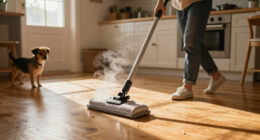
adjustable steam cleaner with narrow nozzle
As an affiliate, we earn on qualifying purchases.
As an affiliate, we earn on qualifying purchases.
Safety first: How to avoid slips, water damage, and hazards
Steam cleaning stairs is generally safe, but understanding the potential hazards is essential for avoiding accidents and damage. Wet surfaces can be extremely slippery, especially on smooth wood or laminate, increasing the risk of falls. Wearing non-slip shoes helps maintain stability, and always use gloves to protect your skin from hot steam. Keeping children and pets out of the area during cleaning minimizes the risk of burns or accidental slips.
Water damage is another concern—excessive moisture can cause swelling, warping, or mold growth, especially on unsealed wood or particleboard stairs. To mitigate this, use minimal steam, focusing on quick passes rather than holding the nozzle in one spot. Proper ventilation is crucial; opening windows or turning on fans speeds up drying, preventing mold and musty odors. When dealing with delicate finishes, it’s important to weigh the benefits of steam cleaning against potential risks, and always dry surfaces thoroughly afterward.
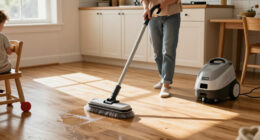
steam cleaner with brushes for stairs
As an affiliate, we earn on qualifying purchases.
As an affiliate, we earn on qualifying purchases.
Step-by-step: How to steam clean stairs without damage
- Clear the stairs of all objects, rugs, and debris.
- Test your steam cleaner on a small, hidden spot for 10 seconds to observe how the surface reacts. This step is crucial because different materials respond differently—what works on tile might damage wood. A quick test helps you gauge whether the steam could cause warping, discoloration, or other damage, allowing you to adjust your technique accordingly. Skipping this step increases the risk of accidental damage, which can be costly and time-consuming to repair.
- Set the steam cleaner to a low or medium setting—higher settings may produce excessive moisture that can harm sensitive surfaces.
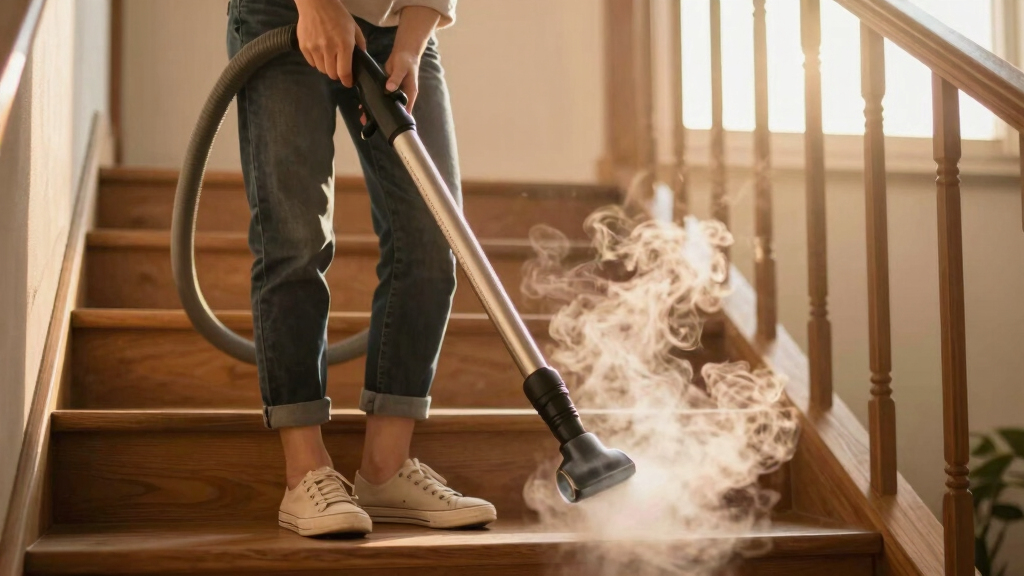
- Start at the top of the stairs, working downward to avoid re-soiling cleaned areas.
- Use slow, deliberate passes with the nozzle, allowing the steam to loosen dirt without over-saturating the surface. Moving steadily ensures even cleaning and reduces the risk of water pooling. This technique helps balance effective dirt removal with surface preservation.
- Don’t hold the steam in one spot for too long—constant movement prevents localized damage and helps control moisture levels.
- Focus on corners and high-traffic areas where dirt and grime tend to accumulate, but be cautious with the amount of steam applied. Applying too much steam in one spot can lead to water seeping into joints or seams, especially in wooden stairs, causing swelling or warping over time.
- Wipe away residual moisture with a dry cloth if needed, especially on wood or laminate surfaces. This step is vital because residual moisture can seep into materials, leading to long-term damage or mold growth.
- Allow the stairs to dry completely before use. Ventilate the area with open windows or fans to speed up drying and reduce humidity, which can cause mold or odors. Proper drying is the final safeguard against damage and safety hazards.
For example, on wood stairs, a gentle pass with a damp cloth afterward can help remove residual moisture. Regularly doing this keeps your stairs clean and prolongs their lifespan, as excessive moisture can lead to warping or damage over time. Understanding the importance of controlled moisture application helps balance effective cleaning with surface preservation.
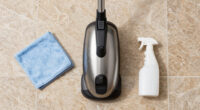
eco-friendly steam cleaning device
As an affiliate, we earn on qualifying purchases.
As an affiliate, we earn on qualifying purchases.
Post-cleaning tips to keep your stairs in top shape
After cleaning, ensure your stairs are completely dry before foot traffic resumes. This prevents water from seeping into wood or laminate, which can cause swelling, warping, or mold growth. Opening windows or turning on fans accelerates the drying process, especially in humid environments. Regularly inspecting your stairs for signs of water damage—such as discoloration, warping, or softness—is important for early intervention.
Routine maintenance extends the lifespan of your stairs. Steam cleaning every 1-3 months is generally sufficient for most households, but high-traffic areas may need more frequent attention. Consistent cleaning prevents dirt buildup and protects the integrity of the surface. Remember, over-wetting can be detrimental; always use the minimal amount of steam necessary to achieve cleanliness.
Proper storage of your steam cleaner is also key—empty the water tank after each use, clean the attachments, and store it in a dry place. This maintenance ensures your equipment remains effective and safe for future use.
Frequently Asked Questions
Is steam cleaning safe for all types of stairs?
Not quite. Tile and laminate stairs usually handle steam well, but unsealed wood or delicate finishes can warp or peel if overexposed. Always check your surface’s manufacturer guidelines and test first.Can I use a steam cleaner on carpeted stairs?
Yes, if your steam cleaner is designed for upholstery and carpets. Use the appropriate attachment, and follow the instructions for best results and safety.How often should I steam clean my stairs?
Typically, once every 1-3 months works for most households. Heavily trafficked stairs might need more frequent cleaning, especially if you notice dirt buildup.Will steam cleaning remove stains and odors?
It can help with surface stains and bacteria, improving smell and cleanliness. However, deep or stubborn stains may need additional treatment or specialized cleaning.What’s the biggest mistake to avoid during steam cleaning stairs?
Over-saturating the surface is the number one mistake. Too much water can cause warping or damage, especially on wood or laminate. Always use minimal steam and dry thoroughly afterward.Conclusion
Steam cleaning stairs is a safe, effective way to keep your home fresh without harsh chemicals. Just remember: choose the right tools, test first, and go slow. A little caution now means beautiful, durable stairs for years to come. Step onto that clean surface with confidence—your home will thank you for it.Fall Picks
fall essentials
As an affiliate, we earn on qualifying purchases.