TL;DR
Steam mops are generally not recommended for hardwood floors, including many sealed and engineered floors. Heat and moisture can enter seams or damaged finish, leading to swelling, warping, discoloration, or finish damage. Check your flooring manufacturer’s care instructions and warranty; for routine cleaning, use a hard-floor vacuum and a lightly damp microfiber mop with an approved cleaner.
A steam mop can leave a floor looking dry while heat and moisture have already found a path between the boards. That hidden risk makes hardwood a poor place to trust a mop’s broad “multi-surface” label.

Get cleaning gear delivered free with Prime
- Fast, free delivery on millions of items
- Prime Video, Amazon Music and more included
- Member-only deals all year
This guide explains why steam mops are generally not recommended for hardwood, what sealed and engineered floors change (and what they do not), and how to clean wood with less risk. You’ll also get a practical way to check your floor’s instructions before you bring a hot mop near it.
Picture a busy kitchen after breakfast: crumbs by the island, a splash of juice near the sink, and a tempting quick pass with steam. The safer routine is simple, but it depends on the floor you actually have—not just the words on a mop’s box.
Steam mops are generally not recommended for hardwood, including many sealed floors.
Engineered layers and a surface finish do not make a floor automatically steam-safe.
Check the flooring maker’s care guide and warranty before relying on a mop’s compatibility label.
For routine cleaning, remove grit first, then use a lightly damp microfiber mop and an approved cleaner.
After accidental steam use, stop, dry surface moisture, and watch for swelling, cupping, discoloration, or finish changes.
Why steam can harm hardwood even when it looks dry
Steam mops for hardwood floors are generally a poor match because they deliver heat and moisture together, and wood can take damage when either reaches vulnerable areas. Steam or condensed water may enter joints, scratches, gaps, or weak spots in the finish, where boards can swell, warp, cup, discolor, or lose their coating.
The floor may look dry right after you clean it, much like a wet sleeve can feel dry on the outside while its cuff stays damp. That quick surface drying does not show whether moisture entered a seam. Repeated exposure may also lead to damage that appears later, so one apparently successful pass does not establish that the method is safe.
For example, imagine a hallway where a dog’s nails have left fine scratches near the doorway. A steam mop glides across the boards and leaves no puddles, yet the scratches can offer moisture a route into the finish. That is why a clean-looking result can hide a risk.
Quick drying is not proof of safe drying. If moisture reaches a gap or damaged finish, a dry surface cannot tell you what happened underneath.
Care instructions vary by floor, but many flooring and finish makers advise against steam. Start with the guidance for your own floor, especially floors that are scratched, separated at the seams, or have worn finish.
Products Worth Considering

Dyson V8 Cyclone Cordless Vacuum

LG OLED evo C4 55-Inch 4K Smart OLED TV (OLED55C4PUA) with 144Hz Refresh Rate, HDMI Cable, 24-Month Protection Plan, and Streaming Bundle

Ring Alarm 5-Piece Home Security Kit
As an affiliate, we earn on qualifying purchases.
How sealed, solid, and engineered floors change the risk
Sealed hardwood is not waterproof, and engineered construction does not automatically make a floor safe to steam. A sound finish may slow water absorption, but heat and moisture can still reach vulnerable edges or seams. The floor maker’s instructions are the best guide for the exact product and finish.
Solid hardwood consists of wood boards, while engineered flooring uses layers bonded together. Those layers can affect how a floor responds to changes in moisture, but they do not remove the risk of damage from steam. Both types can suffer if water reaches the board edges or the finish has gaps.
| Floor condition or type | What it means for steam | Safer next step |
|---|---|---|
| Unfinished, waxed, or unsealed wood | Moisture has fewer barriers; steam is generally not recommended. | Use the maker’s approved dry or lightly damp method. |
| Sealed solid hardwood | A finish offers some protection, not a guarantee against steam. | Check the specific care guide and warranty. |
| Engineered hardwood | Layered construction does not make seams or the surface steam-proof. | Follow the flooring maker’s instructions for that model. |
| Scratched, gapped, or worn floor | Weak spots can let moisture reach the wood. | Avoid steam and address spills promptly. |
Consider a living room with engineered planks and a few tiny gaps beside the patio door. The layered core may sound reassuring, but those gaps still create entry points. If your documentation does not explicitly allow steam, do not treat “engineered” or “sealed” as permission.
Check these three things before using a steam mop
Before using steam, verify the flooring maker’s guidance, the mop’s instructions, and the floor’s condition. You need both product makers’ approval for the specific floor, and you should test a hidden area first if the instructions permit the method. A mop label alone cannot tell you what finish is on your floor.
- Find the floor care guide. Check installation records, packaging, or the manufacturer’s website for the exact product. Look for explicit language about steam cleaning, not just a broad label such as “hardwood-safe.”
- Check the mop manual. Confirm which surfaces it allows and how its steam settings work. Adjustable steam or a quick-drying pad may change how you use the mop, but does not override floor-specific instructions.
- Look for weak spots. Note scratches, open seams, lifting edges, worn patches, and discolored areas. If you cannot confirm that steam is allowed, choose another method.
For instance, if you moved into a home and do not know whether the den is waxed, sealed, or unfinished, appearance alone may not give you the answer. Ask the flooring maker or a flooring professional rather than testing a hot mop on a visible patch.
Manufacturer directions also matter for warranty coverage. Steam cleaning may conflict with care requirements, so read the terms before use and keep the product documentation handy. If the manufacturer permits steam, test a hidden area first and stop if you see a change in sheen, color, or texture.
Use this gentler routine for everyday hardwood cleaning
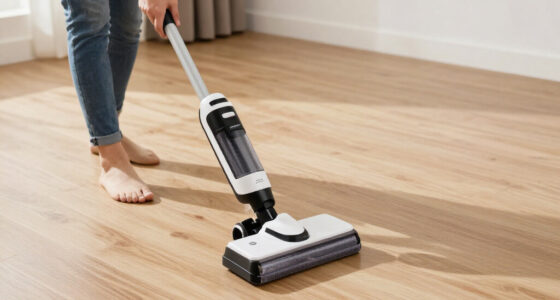
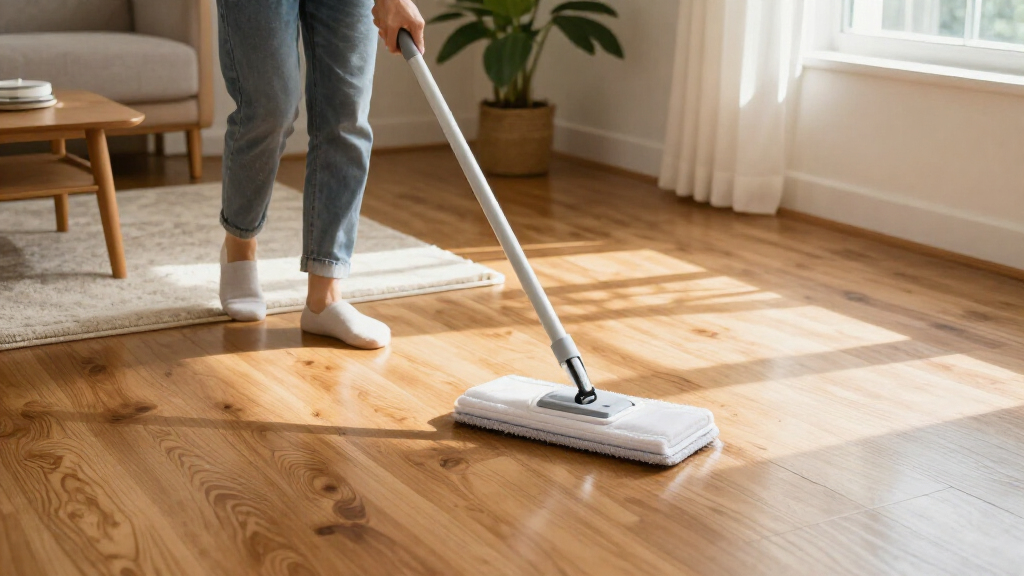
A hard-floor vacuum and a lightly damp microfiber mop are a practical routine for many hardwood floors, when the flooring maker approves them. Remove grit first, then use only the cleaner recommended for your floor. The goal is to lift dirt without leaving standing water behind.
- Sweep or vacuum with a hard-floor setting so grit does not scratch the finish.
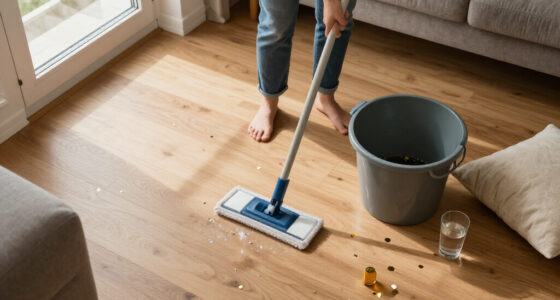
- Dampen a microfiber pad lightly; it should not drip or leave a wet trail.
- Apply only a cleaner approved for the floor, following its label and the floor maker’s directions.
- Work in manageable areas, then dry any lingering moisture and wipe spills as they happen.
Think of muddy footprints on a rainy afternoon. Vacuuming first removes the gritty particles that could scrape the finish; a barely damp pad then picks up the remaining marks. A soaking mop can push water into seams, while a dry microfiber pad may simply move fine dust around.
Skip homemade mixtures unless your floor maker approves them. A cleaner that works on tile may leave residue or affect a wood finish. For a juice spill near the table, blot it promptly with a soft cloth, then follow the approved spot-cleaning instructions. Small, quick cleanups beat soaking the whole floor.
Treat “hardwood-safe” claims as a prompt to check the details
A “hardwood-safe” label is not universal approval for every wood floor. Steam-mop makers may highlight adjustable output, quick-drying pads, or compatibility with multiple surfaces, but those features do not remove heat or moisture. Your flooring manufacturer’s guidance takes priority for the particular product you own.
That distinction matters because “hardwood” covers floors with different finishes, ages, installation details, and conditions. A new, intact floor and an older floor with worn finish do not face the same exposure. Even a product designed for one manufacturer’s approved floor may not match the care rules for another.
Suppose an online listing says a mop works on sealed hardwood. Your floor’s paperwork says to avoid steam. Follow the floor instructions; the listing cannot identify your finish or repair a gap between boards. If the instructions are unclear, contact the floor maker with the product name or installation details.
Steam mops may be suitable for some hard, sealed tile when both tile and mop manufacturers permit it. That does not make them suitable for hardwood, laminate, or vinyl. Some makers warn against steam on laminate and vinyl too, especially floors that are scratched, separated, or have worn protective layers. Check each surface’s care guide separately.
If you already steamed the floor, watch for these changes
Stop using steam on the floor, dry any surface moisture, and watch for changes. Look for swelling, cupping, discoloration, lifting edges, or a finish that turns cloudy or rough. A single pass may leave no visible sign, but that is not proof the method is safe to repeat.
For example, if a kitchen board begins to rise slightly along one edge a day after cleaning, take a photo and note where the change appeared. Keep the area dry and contact the flooring manufacturer or a flooring professional for advice. Do not try to flatten the board with more heat or water.
If the floor looks unchanged, return to the maker-approved cleaning routine and check the care guide before doing anything else. Document the mop model and floor product if you need to ask about warranty coverage. The useful question is not only “Does it look okay right now?” but also whether the manufacturer allows steam for that exact floor.
Small spills are easier to manage than repeated full-floor exposure. Keep a soft cloth near the sink and blot splashes promptly. That simple habit takes seconds and avoids sending more water across a surface that may not tolerate it.
Frequently Asked Questions
Can you use a steam mop on hardwood floors?
Usually, it is best to avoid steam on hardwood unless the flooring manufacturer explicitly approves it for your specific floor. Check the care instructions and warranty before relying on a mop label.
Is a steam mop safe for sealed hardwood?
Sealing can reduce moisture absorption, but it does not make wood waterproof or guarantee protection from steam. Follow the floor maker’s guidance, even if the finish looks intact.
Are steam mops safe for engineered hardwood?
Not automatically. Engineered floors still have surfaces and seams that may be affected by heat or moisture, so check the product’s care instructions.
Can steam damage hardwood if the floor dries quickly?
Yes. Quick visible drying does not show whether moisture entered gaps, joints, or damaged finish. Avoid repeating the method unless the flooring manufacturer approves it.
What mop should I use on hardwood instead?
Use a hard-floor vacuum or sweep to remove grit, then a microfiber mop that is only lightly damp. Pair it with a cleaner approved for your floor, and wipe up spills promptly.
What should I do after I accidentally steam-mopped hardwood?
Stop using steam and dry any remaining surface moisture. Watch for swelling, cupping, discoloration, or finish changes; contact the floor maker or a flooring professional if you notice damage.
Conclusion
Remember one rule: follow your flooring maker’s instructions before using steam. A sealed surface can still have seams, scratches, or worn finish that let heat and moisture reach the wood, and a floor that looks dry may not tell the whole story.
For most hardwood, sweep or vacuum first, then clean with a lightly damp microfiber mop and an approved product. Keep the floor’s care guide close by; it is a better compass than a bold claim on a box.