TL;DR

Get cleaning gear delivered free with Prime
- Fast, free delivery on millions of items
- Prime Video, Amazon Music and more included
- Member-only deals all year
A Hunker report describes using curtain rods and S-shaped hooks to move kitchen utensils and other items off crowded countertops. The idea can create more space for cooking, but rod capacity, secure mounting and safe placement matter.
A Hunker report describes repurposing curtain rods and S-shaped hooks as kitchen storage, moving utensils and other hangable items off countertops. The practical appeal is extra room for meal preparation, particularly in smaller kitchens, though the report cautions that rod capacity and placement need attention.
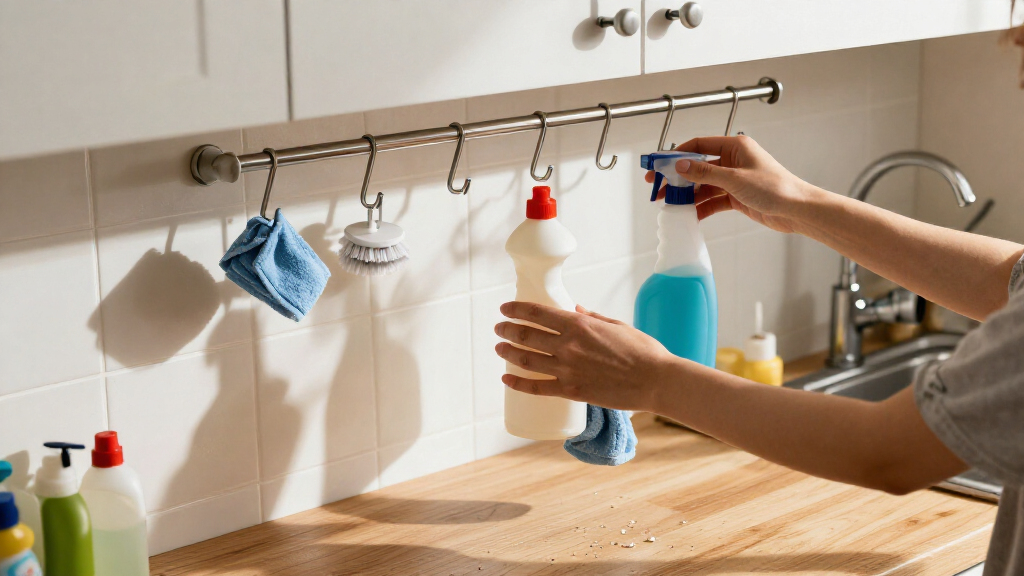
The setup uses a rod mounted in a suitable open area, such as between or beneath cabinets or along a backsplash. Hooks slide along the rod, letting a household hang cooking utensils; the report also names mugs, cutting boards and measuring cups as possible items to relocate. A basket suspended from two hooks can hold smaller items such as spice jars.
Placement should account for access and kitchen hazards. Hunker advises measuring the available space before selecting a rod and setting it at a height that is easy to reach. It recommends avoiding the area above the stove, where grease may soil stored items and heat or flames could pose a risk, particularly for wooden or plastic utensils.
Mounting options depend on the location and the intended load. The report says conventional rods typically use screws for security, while a tension rod between cabinets may suit renters seeking a removable arrangement. It gives a typical curtain-rod capacity range of 20 to 50 pounds, but that figure is not a rating for every product or installation; users should check the rod and mounting hardware specifications and avoid overloading them.
More Room for Everyday Cooking
For households with limited counter area, moving frequently used tools to a wall can create more clear space for chopping, mixing and meal preparation. The approach also makes stored items visible and accessible, rather than leaving them in a countertop container or drawer. That can help organize a compact kitchen, although the amount of space gained depends on what is moved and how much wall area is available.
The idea repurposes a familiar household product rather than requiring dedicated kitchen organizers. Still, it is not a substitute for checking the wall, rod, brackets and fasteners. A rod that is poorly secured or carrying more weight than its maker permits could fall, while items hung near cooking surfaces may be exposed to heat or grease.
Products Worth Considering

Levoit Vital 100S-P Air Purifier with Washable Pre-Filter

Philips Hue Festavia 130-Foot Indoor/Outdoor Smart String Lights, 500 LEDs

LEVOIT Vital 200S-P Smart Air Purifier for Large Rooms
As an affiliate, we earn on qualifying purchases.
How the Rod Storage Setup Works
The Hunker article presents the rod as a small DIY storage project: measure an open span, choose a rod and mounting method, attach S-hooks, and arrange suitable items. The hooks can be moved along the rod, allowing the layout to change as storage needs shift. The article also suggests cabinet knobs as decorative anchors, though the supplied report does not explain their load performance or installation details.
Its examples are recommendations from the report, not evidence from a product test or a measured study of how much counter space users recover. The article mentions that some S-hooks may cost less than $10, but that price refers to an example product and does not establish current prices across retailers.
““Every inch of counter space is crucial for meal prep and organization, especially if you live in an apartment or home with a smaller kitchen.””
— Hunker report
Capacity Depends on the Installation
The report does not identify a specific rod model, bracket system, wall material or tested load, so its 20-to-50-pound range should not be treated as a guarantee for a particular setup. It also does not quantify how much countertop space the method typically frees or provide independent testing of the suggested arrangement. The appropriate safe load depends on the manufacturer’s specifications and how the rod is mounted.
It is also unclear whether a tension rod will work reliably in every cabinet opening or with heavier items. Renters and homeowners should check product instructions and avoid hanging objects that could fall or create hazards. The report offers general household guidance, not a site-specific assessment.
Measure, Mount and Check the Load
Anyone considering the setup can begin by measuring the intended span and deciding which items are suitable to hang. Before installation, check the rod’s stated capacity, the instructions for its brackets or tension mechanism, and whether the mounting surface can support the planned load. Keep the arrangement clear of stove heat and splatter, and position it within comfortable reach.
The source material announces no product launch, test results or follow-up study. The next step is therefore practical rather than a pending news event: homeowners or renters can compare rod options and verify installation requirements for their own kitchens before adding items.
Key Questions
What can be hung from a kitchen curtain rod?
The Hunker report suggests utensils, mugs, cutting boards and measuring cups using S-hooks. It also describes hanging a small basket from two hooks for items such as spice jars. Check the rod’s capacity and the item’s weight before use.
Where should a kitchen storage rod go?
The report suggests open space between or under cabinets or along a backsplash. It advises against placing the rod above the stove because of grease and fire risks, particularly for wooden or plastic utensils.
Can a tension rod be used without drilling?
The report says a tension rod between cabinets can be a renter-friendly option. Whether it is suitable depends on the opening, product instructions and load; do not assume it can support the same weight as a securely mounted rod.
How much weight can a curtain rod hold?
Hunker gives a typical range of 20 to 50 pounds, but capacity varies by product and installation. Follow the manufacturer’s rating for the specific rod and hardware, and do not use the general range as a guarantee.
Source: hunker.com