TL;DR
Listen free for 30 days with Audible
Thousands of audiobooks and originals — cancel anytime.
Start your free trialAs an affiliate, we earn on qualifying purchases.
Steam cleaning may leave floors damp, but moisture alone doesn’t determine sanitation. Effective disinfecting depends on reaching and maintaining the right surface temperature and proper cleaning methods.
It’s easy to assume that a damp floor isn’t truly sanitized. But in reality, moisture is just one piece of the puzzle. Many people worry that steaming leaves floors too wet to kill germs, yet the real factor is whether the heat reaches and sustains a high enough temperature to destroy pathogens.
This guide uncovers how moisture, heat, and technique influence the effectiveness of steam cleaning. You’ll learn what to look for, what pitfalls to avoid, and how to tell if your floor truly gets sanitized.
Moisture alone doesn’t determine if a floor is sanitized; heat and contact time are critical.
Ensure your floor and machine are compatible before steaming to prevent damage.
Maintain a thin vapor layer that evaporates quickly, avoiding puddles.
Effective sanitization relies on sustained high surface temperature, not just steam output.
Always follow manufacturer instructions and test a hidden area first.
Can Steam Cleaning Leave Floors Too Wet to Sanitize?
Yes, steam cleaning can leave a floor wetter than intended—but visible dampness does not reveal whether germs were destroyed. Effective sanitation depends on surface temperature, contact time, precleaning, and technique.
Approximately 71°C at the surface—not merely inside the boiler.
Sustained heat matters more than one brief temperature spike.
Vapor should evaporate promptly rather than collect in seams.
Wetness is evidence of water—not pathogen destruction.
Steam may leave the nozzle extremely hot, then cool rapidly on contact. The floor itself must receive enough heat for enough time after visible soil has been removed.
Measure the destination
Boiler and nozzle claims do not prove that the flooring reached the target temperature. Material, distance, movement, and moisture all influence heat transfer.
Hold the useful heat
A rapid pass may create visible moisture while delivering too little treatment. Deliberate movement or approved repeat passes sustain useful heat.
Clear the barrier first
Dirt, grease, and organic matter can shield microorganisms. Sweep or vacuum, then remove visible soil before applying steam.
A hotter flash is not always a better treatment.
These conceptual charts show why sustained surface heat carries more sanitation value than a fast pass that briefly peaks and immediately cools.
Relative sanitation potential
Illustrative comparison based on the combined effect of temperature and contact time.
Surface-temperature checkpoint
The relevant temperature is the heat retained by the target surface.
“Sealed” does not automatically mean “steam-safe.”
Approval must come from both the flooring manufacturer and the steam-cleaner manufacturer. Test a hidden area before treating the full floor.
| Floor type | Typical compatibility | Main moisture risk | Best decision |
|---|---|---|---|
| Sealed ceramic or porcelain tile | ✓Often compatible | Cracked tile, grout, and failed seals can admit water. | Inspect joints and use a controlled vapor setting. |
| Sheet vinyl or sealed resilient flooring | ~Varies by product | Heat may soften adhesive or affect seams. | Use only when the flooring maker explicitly approves steam. |
| Luxury vinyl tile or plank | ✗Frequently discouraged | Heat and moisture can enter joints or weaken adhesive. | Choose the manufacturer’s recommended damp-cleaning method. |
| Hardwood or engineered wood | ✗Usually unsuitable | Swelling, cupping, warping, and finish damage. | Steam only with explicit written approval. |
| Laminate flooring | ✗High risk | Moisture can penetrate edges and swell the core. | Avoid steam unless specifically permitted. |
| Natural stone or unsealed surfaces | ~Material-dependent | Absorption, staining, cracking, or sealant damage. | Confirm stone, finish, and sealant compatibility first. |
✓ commonly suitable when approved ✗ commonly unsuitable ~ verify the exact product
Know when damp becomes too wet.
Once residual water cools, it is only moisture. It does not continue sanitizing and may create new hygiene, safety, or flooring problems.
Why puddles work against you
Excess liquid can move contamination instead of collecting it, enter vulnerable seams, dilute a later chemical treatment, and prolong slip hazards.
Build sanitation through the whole process.
Each stage supports the next. Skipping precleaning, rushing the heat step, or reusing a contaminated pad can compromise the outcome.
Check floor and machine instructions.
Remove debris, grease, and visible soil.
Wait for consistent vapor without drips.
Move steadily at the approved pace.
Replace dirty or saturated pads.
Ventilate and keep traffic away.
More output may add water without improving heat delivery.
This reduces the chance of redistributing contamination.
Never add bleach or disinfectant unless the machine maker permits it.
Ordinary floor steaming should not be described as sterilization.
Watch for finish changes, swelling, softening, or discoloration.
Check the setting, pad condition, pace, maintenance, and machine operation.
Why a Wet Floor Doesn’t Mean No Germ Kill
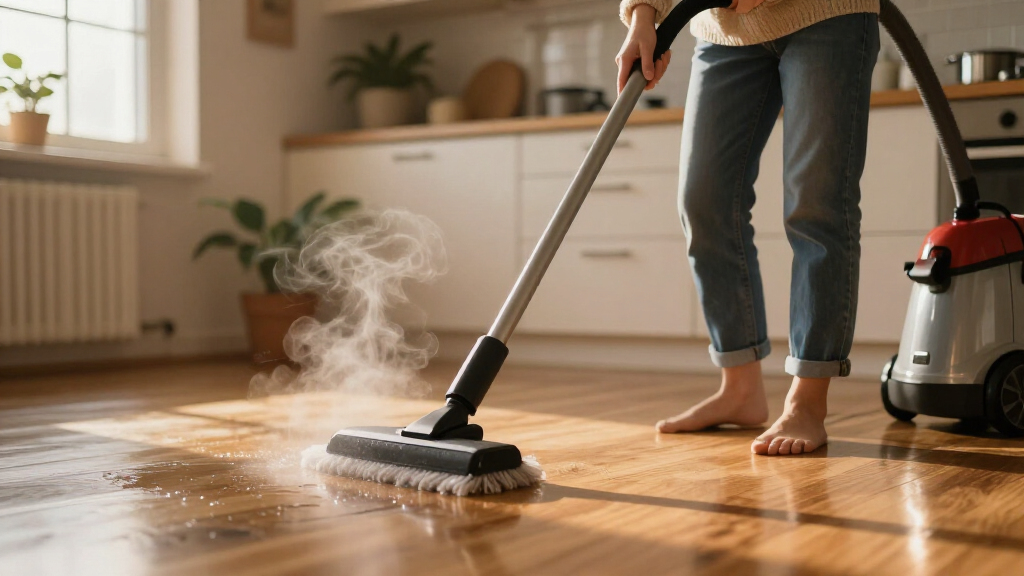
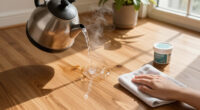
Steam cleaning’s power lies in heat, not just water. When a steam mop heats water into vapor, it can kill many bacteria and viruses if the surface reaches the right temperature for long enough. But if the floor remains wet, it doesn’t automatically mean sanitization failed.
For example, a floor might be soaked after a malfunctioning machine, yet if the vapor never hit 160°F (71°C) and held for at least 30 seconds, germs could survive. Conversely, a nearly dry floor that’s been heated properly can be sanitized effectively.
Remember: moisture is a sign of water use, not an indicator of pathogen destruction. The focus should be on temperature and contact time, not just how wet the floor looks.
As an affiliate, we earn on qualifying purchases.
How Steam Temperature and Contact Time Actually Kill Germs
Steam’s ability to sanitize depends on two main factors: how hot it gets and how long the surface stays at that temperature. Typically, pathogens are inactivated at around 160°F (71°C). But reaching that temperature isn’t enough; it must be maintained.
Imagine you quickly pass a steam mop over a kitchen floor. The surface might briefly touch 180°F (82°C), but if you move too fast, the heat won’t stay long enough to kill germs. For effective sanitization, you need a consistent, deliberate pace and enough passes.
Studies show that maintaining high surface temperature for at least 30 seconds significantly reduces microbial load. So, the key isn’t just heat at a point — it’s sustained heat over the necessary contact time.
Understanding this tradeoff helps you optimize your cleaning method. Moving too quickly might make the floor look clean, but it could leave germs alive because the heat didn’t have enough time to kill them. Conversely, lingering in one spot or making multiple passes ensures the heat penetrates and maintains the required temperature, leading to effective disinfection.
steam mop with adjustable temperature
As an affiliate, we earn on qualifying purchases.
As an affiliate, we earn on qualifying purchases.
The Real Impact of Excess Moisture on Floor Hygiene
Excessive moisture isn’t just a minor inconvenience; it can actively undermine your sanitation efforts. When water pools or saturates the floor, it creates an environment where bacteria, mold, and other pathogens can thrive, especially in hidden areas like grout lines or cracks. These microenvironments are difficult to disinfect and can become reservoirs for contamination, negating the benefits of steam cleaning.
Moreover, prolonged dampness can hinder the drying process, giving germs more time to survive and multiply. This is particularly problematic in environments requiring strict hygiene standards, such as kitchens or healthcare facilities. The presence of standing water or persistent damp patches can also lead to structural damage — warping, delamination, or mold growth — which compromises the integrity of the flooring and complicates future cleaning efforts.
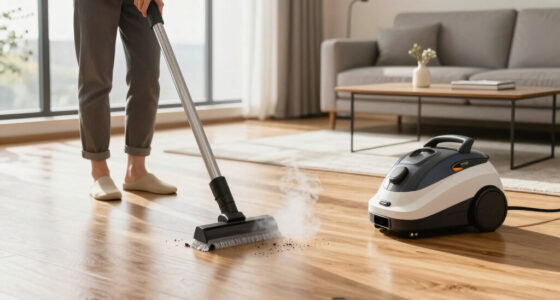
Therefore, controlling moisture isn’t just about aesthetic appeal; it’s a critical factor in ensuring that the cleaning process actually results in a hygienic environment. The goal is to produce a thin vapor that evaporates quickly, which indicates that heat has done its job without leaving behind puddles that can harbor germs or damage the floor.
professional steam cleaning machine
As an affiliate, we earn on qualifying purchases.
As an affiliate, we earn on qualifying purchases.
Matching Your Floor Type with Steam Cleaning Safety
Not all floors tolerate steam equally. Some surfaces handle heat and moisture better than others. Knowing your floor’s material and sealant is crucial before steaming.
Sealed ceramic or porcelain tiles usually handle steam well, but grout lines and cracked tiles might admit moisture. Vinyl floors can soften or peel if too much heat is applied, especially if joints aren’t well-sealed. Hardwood and engineered wood often swell or warp if exposed to steam, making them unsuitable unless explicitly approved.
For example, a homeowner steaming their sealed tile bathroom floor might see good results, but the same approach on a laminate living room could cause damage. Always check with the manufacturer’s guidelines and test a small, hidden area first.
Remember: “sealed” doesn’t always mean “steam-safe.”
disinfectant steam cleaner for floors
As an affiliate, we earn on qualifying purchases.
As an affiliate, we earn on qualifying purchases.
How to Keep Floors Just Damp Enough for Sanitization
- Follow the manufacturer’s instructions for your steam cleaner and floor type.
- Vacuum or sweep first to remove loose dirt and debris.
- Use the lowest effective steam setting; higher isn’t always better.
- Preheat the machine fully until it produces consistent vapor, not spits or drips.
- Move steadily at the recommended speed — too slow can oversaturate, too fast might not disinfect.
- Replace or clean pads regularly to avoid spreading dirt or bacteria.
- Work from clean areas toward dirtier zones to prevent cross-contamination.
- Limit passes unless necessary, and avoid dwelling in one spot.
- Improve ventilation and keep people off the floor until it dries.
- If water pools or the floor shows changes in texture or color, stop and address the issue.
Following these steps helps you produce a thin vapor that evaporates quickly, avoiding puddles while still sanitizing effectively.
For example, a homeowner steaming a hardwood entryway might notice puddles if they press too long or use too high a setting. Adjusting techniques keeps the floor safe and dry.
What You Need to Know About Floor and Machine Compatibility
Steam isn’t safe for every surface. Always check manufacturer guidelines for both your flooring and your steam cleaner. Some floors, like natural stone or unsealed wood, are high-risk, while sealed tile usually handles steam well.
For example, a sealed ceramic tile bathroom floor is generally fine, but unsealed limestone might absorb moisture and crack. Similarly, luxury vinyl or laminate floors often warn against steam because heat can soften adhesives or cause swelling.
Always test in a hidden spot first, and if unsure, skip steam cleaning or consult a professional. Ignoring these guidelines can void warranties or damage your floors.
Final Tips for Truly Sanitized, Dry Floors
- Always preclean to remove soil, grease, and organic matter.
- Use the lowest effective steam setting and work quickly.
- Ensure the machine heats fully before use.
- Move steadily, not rushing or lingering in one spot.
- Change pads often and discard contaminated ones.
- Improve airflow and ventilation to speed drying.
- Stop immediately if you see pooling or floor damage.
- Follow manufacturer instructions for cleaning and maintenance.
These practices help you produce a sanitized, dry floor without risking damage or lingering germs.
For example, a busy kitchen floor cleaned this way stays dry, safe, and germ-free—ready for traffic and food prep again.
Frequently Asked Questions
Does a floor need to stay wet for steam to sanitize it?
No. Steam relies on high heat to inactivate germs. The surface must reach and maintain a temperature of around 160°F (71°C) for at least 30 seconds, regardless of how wet it appears afterward.Why is my steam mop leaving puddles?
Common causes include setting the steam too high, moving too slowly, a saturated pad, or machine malfunctions. Always check your manual and stop using it if leaks or pooling occur.Can too much water spread germs?
Yes. Excessive moisture can redistribute bacteria if dirt and contaminated water are spread around. Regular pad changes and correct technique help prevent this.How can I tell whether my steam cleaner actually sanitizes?
Check the manufacturer’s validated claims, instructions, and recommended settings. Sanitation depends on reaching specific temperatures and maintaining them long enough—not just on appearance.Should I dry the floor after steaming?
If only a light film remains, good ventilation may suffice. If water pools, absorb it immediately to prevent slips and damage. Proper technique ensures quick drying and effective cleaning.Conclusion
Steam cleaning can effectively sanitize floors when used correctly. The key is managing moisture, maintaining proper heat exposure, and respecting surface limits. Focus on achieving consistent, high enough temperatures for the right amount of time.
Remember: a floor isn’t truly clean just because it’s wet. It’s the heat that kills germs—moisture is just a sign of how water is used, not how well it disinfects. Keep your technique simple, your settings appropriate, and your floors safe.
Next time you steam, watch for a thin, evaporating film, not puddles. Your floors—and your health—will thank you.
NFL season / tailgating Picks
team gear
As an affiliate, we earn on qualifying purchases.