
TL;DR
Interior designers interviewed by House Beautiful describe a soft return of honey oak, a warm wood finish common in homes from the late 1980s through the early 2000s. They say clients are gravitating toward natural wood tones, often using honey oak selectively and balancing it with cooler colors and contrasting materials.
Interior designers are reporting a renewed, measured interest in honey oak, the orange-toned wood finish widely used in homes from the late 1980s to the early 2000s. In a report for House Beautiful, designers described clients’ broader interest in warmer interiors and said honey oak is appearing in selected features such as cabinetry, furniture and bathroom vanities—not necessarily as an all-over finish.

Get cleaning gear delivered free with Prime
- Fast, free delivery on millions of items
- Prime Video, Amazon Music and more included
- Member-only deals all year
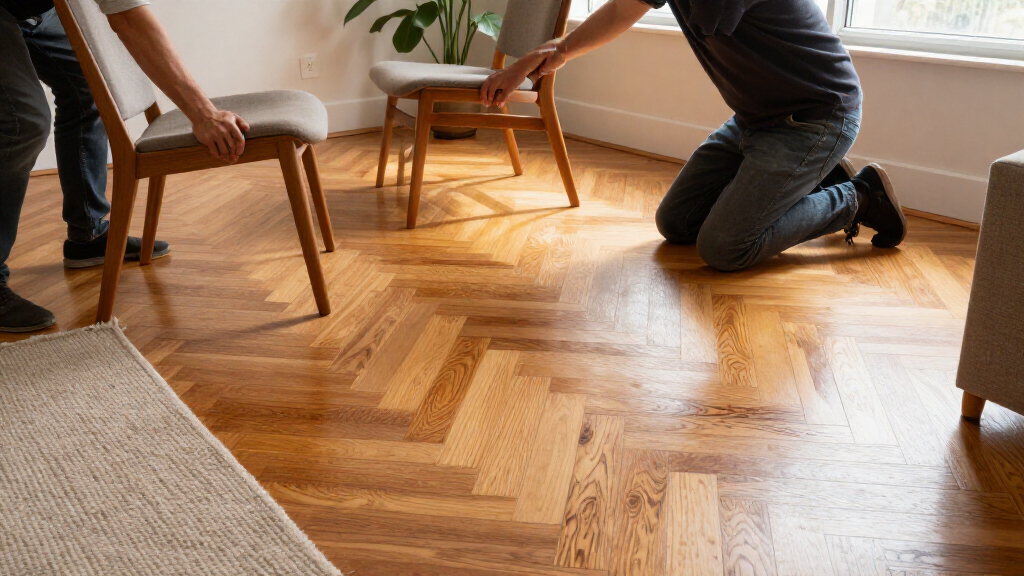
Honey oak was once common on kitchen cabinets, bathroom vanities, trim, stair railings and floors. Cathleen Gruver of Gruver Cooley told House Beautiful that it was a go-to wood tone for builders and homeowners before cooler, more neutral interiors gained favor in the early 2000s. She now sees a soft return, especially in cabinetry, millwork details and furniture, while cautioning that clients do not always request the finish by name.
Elizabeth Bennett and Mallory Robins, founders of Kobel + Co, linked the renewed interest to warmer tones in interiors and nostalgia among homeowners who grew up in the 1980s and 1990s. Bennett said the era’s styles are resurfacing in both homes and fashion. The designers’ observations are qualitative; the report does not provide sales figures, survey results or other data quantifying how widespread the shift is.
The designers featured in the report generally recommend using honey oak selectively and giving it a contrasting setting. Adina Hall described pairing existing honey oak with whitewashed French oak floors, taupe-toned ash cabinetry, crisp whites and accents such as sage green and indigo blue. Nancy Dow said clean lines, matte black details, natural stone and modern lighting can help the wood sit within a fresher-looking room.
How Designers Are Reworking Honey Oak
The reported shift offers homeowners an alternative to replacing original woodwork simply because its finish was once associated with dated interiors. Designers quoted by House Beautiful suggest that the surrounding palette and amount of wood matter: cooler or muted colors, varied materials and contemporary lighting can change how honey oak reads in a room.
That advice does not mean the finish is right for every home or that a broad market comeback has been established. It does show how design preferences can move from rejecting a once-common material to using it more selectively. For people renovating, the distinction may affect whether they keep an existing vanity, cabinet or piece of furniture rather than stripping or replacing it.
Robins said homeowners are showing more restraint than the extensive use of one wood tone seen in some earlier interiors. In her description, honey oak may appear as a single kitchen island or a standalone furniture piece rather than across floors, trim and cabinetry throughout a house. That selective approach is central to the designers’ case for making the finish feel intentional.
Products Worth Considering

Levoit Vital 200S-P Smart Air Purifier for Large Rooms (Up to 1875 sq ft)

Philips Hue Play Floor Lamp, RGBWWIC LED, 53 Inch, Black

Dyson V15 Detect Cordless Stick Vacuum
As an affiliate, we earn on qualifying purchases.
From Ubiquitous Finish to Accent
The report places honey oak’s peak popularity between the late 1980s and early 2000s, when it appeared throughout many homes. Gruver recalled seeing it on cabinetry, trim, railings and floors. As homeowners and designers moved toward cooler, more neutral interiors in the early 2000s, the orange-toned finish fell out of favor.
The current interest is presented alongside a wider preference for warmer, more lived-in interiors and renewed attention to styles associated with the 1980s and 1990s. Bennett described nostalgia for a pre-digital era as one influence. The article also shows examples of designers retaining or adding honey oak while combining it with blue tile, gray paint, white surfaces, muted greens or other wood tones.
Those examples are design projects and professional observations, not evidence of a measured change across the housing or remodeling market. The report’s framing is deliberately qualified: Gruver calls the trend a soft return, not a full-scale revival.
“It’s not necessarily a full-blown comeback, but I’ve definitely noticed a soft return—particularly in cabinetry, millwork details, and furniture.”
— Cathleen Gruver, Gruver Cooley, to House Beautiful
How Broad Is the Return?
The report does not establish how common the renewed interest is among homeowners, designers or buyers. It includes comments from a handful of interior designers and examples of individual projects, but no polling, sales data, search data or market-wide measurements. The size and pace of any trend therefore remain unclear.
It is also not clear whether clients are specifically asking for “honey oak” or simply choosing natural, warm-toned wood. Gruver said clients are often drawn to natural wood tones without using that label. The report also does not suggest every existing honey oak finish will suit every room; its recommendations depend on the surrounding colors, materials and degree of use.
Watch for More Project Examples
The source report offers designers’ current observations and styling suggestions, but it names no scheduled announcement, industry data release or next milestone. Further evidence of a broader shift would require additional reporting, such as market measurements or a larger set of project and client trends.
For now, readers considering a renovation can compare the designers’ examples with their own space: identify which honey oak features are worth keeping, then consider whether cooler paint, tile, stone, lighting or a contrasting wood tone would balance them. The designers’ comments support treating the finish as one option—not assuming it is either universally outdated or newly essential.
Key Questions
Is honey oak fully back in style?
Designers quoted by House Beautiful describe a soft return, not a full-blown comeback. They report renewed interest in warm wood tones and selective uses of honey oak.
Where are designers using honey oak?
The report cites cabinetry, millwork, furniture, bathroom vanities and kitchen islands. Designers also recommend using it as an accent rather than covering a whole home in one wood tone.
What colors work with honey oak?
Designers cited in the report suggest muted greens, warm whites, greige, taupe and light blue, along with cooler accents such as indigo. White surfaces, gray paint, natural stone and matte black details are also shown or recommended.
Should homeowners replace existing honey oak cabinets?
The report does not recommend replacing them as a rule. Its designers describe ways to work with existing honey oak by adding contrasting colors, materials and finishes; whether that suits a particular home depends on the space and the homeowner’s preferences.
Source: housebeautiful.com