
TL;DR
Ideal Home’s report sets out practical ways to prepare a kitchen for a family games night: clear a central table, provide good lighting and keep games easy to access and put away. Designers also suggest using a coffee table for casual play and setting aside a basket for phones.
Ideal Home has published guidance on preparing a kitchen for family games night, recommending a ready-set table, sufficient light and storage for games and devices. The advice matters to households looking to make a shared evening easier to host, though it is design guidance rather than a report of a new product launch or independently tested method.

Get cleaning gear delivered free with Prime
- Fast, free delivery on millions of items
- Prime Video, Amazon Music and more included
- Member-only deals all year
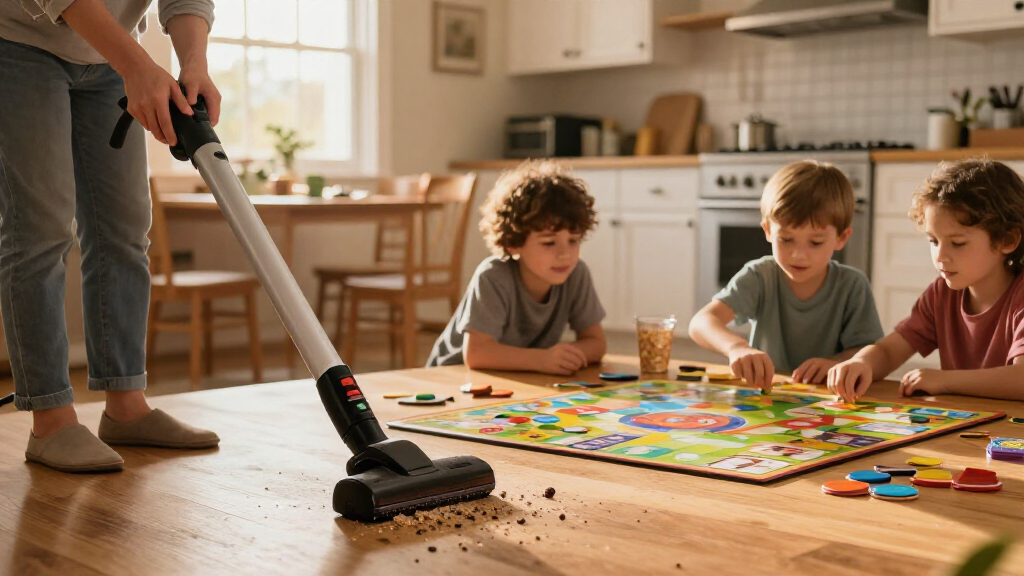
The report says hosts should set up the table before guests arrive and make it the focal point of the room. A dedicated games table is not necessary: a standard kitchen dining table can work if it has enough room for the board, pieces and players. Clearing food and unrelated items beforehand can help keep the playing area usable.
Lighting is another practical consideration. David and Sarah Ross, co-founders of Addison Ross, recommend cordless lamps around the room and enough light directly over the board for players to see their moves. Their suggestion combines atmosphere with visibility; the report does not specify lighting levels or recommend a particular lamp.
For kitchens with a living area, Neptune design director Fred Horlock suggests an ottoman or coffee table for informal games that do not need a full dining-table setup. A tray can hold drinks, while a candle and small cordless lamp can help define the area. Horlock also suggests a basket where guests can put devices out of sight during the evening.
After play, the report recommends giving games a dedicated storage place. Becca Stern, co-founder and creative director of Mustard Made, says a locker can make use of a smaller kitchen space, with baskets inside to keep cards, dice and other small pieces together. These are suggestions from design professionals quoted by Ideal Home, not requirements for hosting.
The recommendations address the practical parts of hosting that can determine whether a game is easy to start: enough table space, visible playing pieces and an organised place for components. Setting the room up in advance may also reduce interruptions once guests arrive. The source does not provide research showing that these steps improve family connection, so that benefit remains the rationale for the advice rather than a measured outcome.
For households with limited space, the report’s distinction between formal and informal play offers flexibility. A dining table suits games that need a flat surface, while a coffee table or ottoman may work for simpler activities. Using the kitchen’s existing furniture means a host need not buy a specialist table to try the idea.
Keeping phones in a basket is presented as one way to encourage an analogue evening, not as a rule. Families can decide whether devices are put away, kept nearby for practical needs or used as part of the games. The core takeaway is to make the play area comfortable and accessible rather than to follow a particular style.
Products Worth Considering

eufy Security Video Doorbell E340 Kit with Chime

Roborock Q7 L5 Robot Vacuum and Mop Combo, 8,000 Pa Suction

Philips Hue Play Gradient Light Tube, Large, Black
As an affiliate, we earn on qualifying purchases.
Traditional Games, Updated Styling
Ideal Home places its advice within a wider interest in traditional games presented as decorative objects. The report says stylish versions of backgammon, mahjong and chess have appeared, including sets with patterned trays and colourful finishes. These examples are offered as a design trend; no sales data or market measurement is provided.
The article also frames games night as a seasonal opportunity for families to spend time together, particularly around Christmas. It notes that board and card games have long histories, but the practical guidance does not depend on buying new or fashionable sets. Existing games can be used; the suggestions focus on how to arrange a kitchen and keep the pieces organised.
“Let the games themselves lead the styling.”
— David and Sarah Ross, co-founders of Addison Ross
Advice, Not Tested Findings
The report is practical design advice, not a controlled assessment of what makes a games night successful. It does not compare different layouts, lighting arrangements or device policies, and it gives no measurements for the space or brightness needed for particular games.
It is also unclear how widely the cited games styling trend has spread: the article offers examples but no sales figures, survey results or other data. The suggestions may need adjustment for household size, accessibility needs, the game being played and whether food will be served at the table.
Plan the Room Before Guests Arrive
The report does not announce a scheduled follow-up or a formal next step. For anyone acting on the advice, the immediate task is to choose the game and playing surface, then clear enough room for all players and pieces. Add a lamp where the board is difficult to see, and decide whether drinks and devices will be kept nearby or placed elsewhere.
Once the evening is over, return cards, boards and small pieces to a consistent storage spot. A box, cupboard or basket can serve the same purpose as the locker suggested in the article. No purchase is necessary: the report’s recommendations can be adapted to furniture and storage a household already has.
Key Questions
Do I need a special table for a kitchen games night?
No. The report says a standard dining table can work if it has room for the game and players. A coffee table or ottoman is another option for informal games that need less space.
How should I light the playing area?
David and Sarah Ross recommend cordless lamps around the room and enough light over the board for players to see. The article does not specify a required brightness or lamp type.
Should guests put their phones away?
That is optional. Neptune’s Fred Horlock suggests a basket for devices as a way to create an analogue evening, but the source presents it as an idea rather than a rule.
What is a simple way to store games afterward?
Use a dedicated cupboard, box, locker or basket, and keep small pieces such as cards and dice together. The report recommends baskets inside storage to make loose components easier to find.
Source: idealhome.co.uk