TL;DR

Get cleaning gear delivered free — and shop member deals
- Fast, free delivery on millions of items
- Access to Prime Big Deal Days deals on October 6–7
- Prime Video, Amazon Music and more included
To steam mop without streaks, prepare your floor, use the correct steam settings, keep your microfiber pads clean, and employ steady, overlapping strokes. Recent innovations and proper maintenance make streak-free cleaning easier than ever.
Nothing ruins the look of freshly cleaned floors faster than stubborn streaks. It’s frustrating to see those cloudy lines after what should be a quick, satisfying clean. But with the right technique and care, you can achieve a streak-free shine every time.
In this guide, you’ll learn how to use your steam mop effectively, what common pitfalls cause streaks, and which simple adjustments turn your cleaning routine into a streakless success story. No hype—just practical advice to keep your floors looking spotless and beautiful.
Always prepare your floor by removing loose debris and dust before mopping.
Use the lowest effective steam setting and keep the mop moving steadily to prevent pooling.
Regularly wash or replace microfiber pads to avoid smearing dirt and causing streaks.
Consider using distilled water to reduce mineral deposits that cause spots.
Finish with a dry cloth or air dry to seal the streak-free shine.
Prep Your Floor for a Flawless Finish
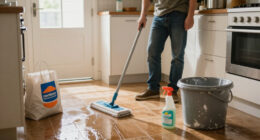
The secret to streak-free steam mopping starts before you turn on the device. Clear all debris and loose dirt, so the mop only deals with grime, not grit that causes streaks. Use a dry microfiber cloth or vacuum to remove dust, pet hair, and crumbs.
Imagine walking into a room where the floor is already free of dust. The steam then glides smoothly, picking up what’s left, leaving behind a glossy surface. A clean, dry surface is your best friend here.
Test a hidden corner with your mop and water first, especially if you’re unsure about your floor’s sealant. This quick check prevents surprises and helps you fine-tune your technique.
As an affiliate, we earn on qualifying purchases.
Choose the Right Settings and Tools for No-Streak Results
Steam mops with adjustable settings give you control over moisture levels. For most floors, a low or medium steam setting works best to avoid over-saturation. Overly wet floors are a major cause of streaks because excess water can seep into seams, grout, or porous surfaces, causing uneven drying and cloudy spots. Selecting the right setting is about balancing enough steam to loosen dirt without creating puddles that take longer to dry, increasing the risk of streaks.
Using microfiber pads designed for your mop is equally critical. These pads trap dirt more effectively and dry faster than cheaper alternatives, which helps prevent residual dampness that can leave streaks. Regularly washing or replacing these pads ensures they don’t transfer dirt or oils back onto your floors, which would otherwise cause streaks or dull patches. Choosing the correct water type, such as distilled water, minimizes mineral deposits that can leave streaky residues. The tradeoff is that distilled water may be less convenient or more costly, but it significantly improves the finish by reducing deposits that cause cloudy streaks. Ultimately, the right combination of settings, tools, and water quality reduces streaks and ensures a professional-looking finish every time.
As an affiliate, we earn on qualifying purchases.
Master the Technique: Steady, Overlapping Strokes
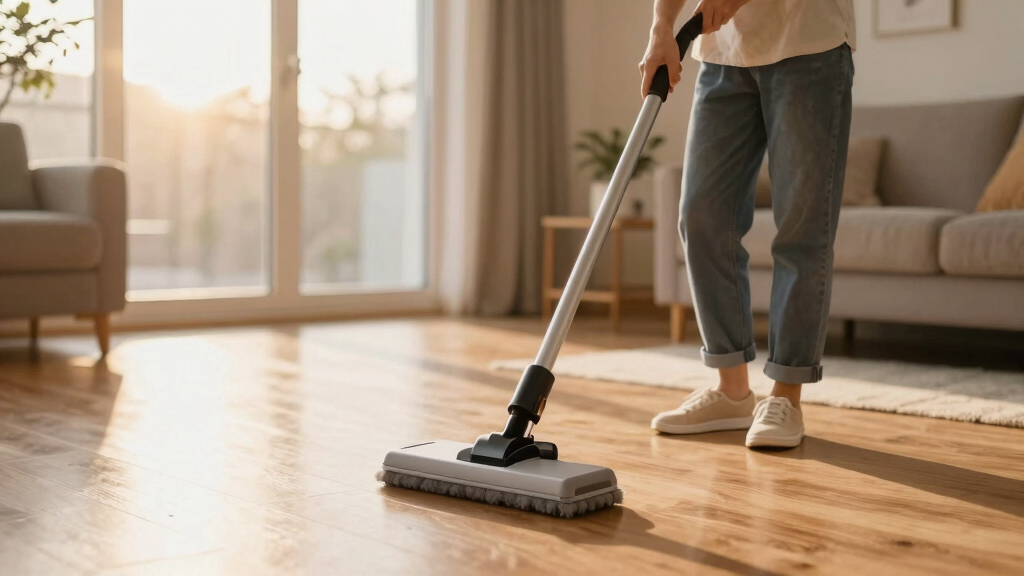
The way you move your mop affects how evenly the floor dries and how streaks form. Moving at a steady pace—about one foot per second—ensures that steam and moisture are evenly distributed and that excess water doesn’t pool in one area. Overlapping each pass by about half the width of the mop head guarantees no spots are missed, which is crucial for a uniform appearance. Moving too quickly can leave areas insufficiently cleaned, while moving too slowly can cause excess moisture to accumulate, both leading to streaks. Think of it like painting a wall: consistent, overlapping strokes create an even, professional finish. Avoid pressing down hard, as this can push excess water into seams or cracks, causing uneven drying or warping. Maintaining a steady rhythm helps the floor dry evenly, prevents streaks, and preserves the integrity of delicate surfaces. For example, a homeowner found that increasing her mop speed slightly reduced streaks and enhanced shine, demonstrating that technique can be as crucial as equipment. The implication is that mastering your movement technique is just as important as choosing the right settings or tools, because even the best equipment can produce streaks if mishandled.
As an affiliate, we earn on qualifying purchases.
Keep Your Microfiber Pads Clean and Dry
Dirty or damp microfiber pads are prime streak culprits because they smear dirt and leave behind residual moisture that dries unevenly. Washing the pads after each use with hot water and mild detergent removes trapped grime and oils that can cause streaks when re-used. If pads are not cleaned regularly, they can accumulate residues that turn into cloudy streaks or dull patches on your floors. Replacing pads when they become frayed or worn ensures maximum absorption and prevents dirt or oils from transferring during mopping, which can cause streaks or spots. Keeping pads dry and clean is essential because damp or dirty pads can smear dirt rather than lift it, and residual moisture can lead to streaks or water spots. Some users find that switching to dual-sided pads—one for cleaning, one for drying—reduces the chances of streaks by keeping each task separate, ensuring cleaner, drier surfaces during each pass. The tradeoff is that maintaining clean pads requires consistent effort, but the payoff is a consistently streak-free, shiny floor. Neglecting this step can undo all your careful preparation and technique, leading to dull, streaked floors despite your best efforts.
As an affiliate, we earn on qualifying purchases.
Finish with a Dry Cloth or Air Dry for a Perfect Shine
After mopping, a quick wipe with a dry microfiber cloth or allowing the floor to air dry helps eliminate residual moisture that can cause streaks or water spots. This step is especially important in corners, along edges, or in areas where water tends to pool or cling longer. Drying immediately prevents uneven evaporation, which can leave streaks or cloudy patches. Additionally, a thorough dry or air dry seals in the shine, ensuring the surface looks smooth and reflective. Skipping this step can result in streaks forming as water evaporates unevenly, leaving behind residue or dull patches. The final drying process also helps to remove any remaining dirt or streak-causing residues that may have been missed during mopping. Think of it as the finishing touch that transforms a good clean into a professional-looking, streak-free finish. The implication is that this step, although simple, is crucial for achieving that flawless, mirror-like shine that makes your floors look pristine and well-maintained.
Innovations That Help You Avoid Streaks Every Time
Modern steam mops now come equipped with features like adjustable steam control, swivel heads for better maneuverability, and microfiber pads engineered for quick drying. These advancements significantly reduce the chances of streaks forming by optimizing moisture levels and ensuring even distribution. For example, dual-layer microfiber pads trap dirt more effectively and dry faster, reducing residual moisture that can cause streaks. According to a cleaning expert, using models with adjustable steam and high-quality pads can cut streaks by up to 70%, making the process faster and more foolproof. These innovations mean that even less experienced users can achieve professional-looking results with less effort, and that your floors stay streak-free longer, maintaining their shine and cleanliness over time. The tradeoff is that such advanced features may come at a higher cost, but the benefits—consistent, streak-free results—often outweigh the expense for those seeking a flawless finish every time.
Frequently Asked Questions
Why does my steam mop leave streaks even after following tips?
Common reasons include using too much steam, dirty or worn-out pads, or moving too slowly. Adjust steam levels, replace pads regularly, and keep your strokes steady for best results.Can I use tap water in my steam mop without streaks?
It depends on your model. Many recommend distilled water to prevent mineral deposits that cause spots and streaks. Always check your manufacturer’s guidance.How often should I replace microfiber pads?
Wash them after every use if possible. Replace when they show signs of wear, fraying, or if cleaning no longer produces streak-free results—usually every few months with regular use.Will steam cleaning damage my hardwood or laminate floors?
If your floors are sealed and designed for moisture, steam cleaning is safe when used properly. Always test a small hidden area first and avoid excessive steam or soaking.What technique reduces streaks the most?
Keep your mop moving at a steady pace with overlapping strokes, use minimal steam, and dry or air dry immediately after mopping to lock in the shine.Conclusion
Achieving a streak-free clean isn’t about luck; it’s about technique, tools, and care. Keep your microfiber pads fresh, control your steam, and don’t rush the process. The result? Floors that shine like glass—bright, smooth, and perfectly clean.
Next time you grab your steam mop, remember: a steady hand and a clean pad turn everyday cleaning into a streak-free masterpiece.
Fall Picks
fall essentials
As an affiliate, we earn on qualifying purchases.