TL;DR

Get cleaning gear delivered free with Prime
- Fast, free delivery on millions of items
- Prime Video, Amazon Music and more included
- Member-only deals all year
Steam mopping bamboo floors isn’t automatically a disaster, but it’s risky. Always check your flooring’s manufacturer guidelines, use minimal steam, and prefer gentle cleaning methods. Proper care avoids costly damage.
Always check your bamboo flooring’s manufacturer care instructions before using a steam mop.
Sealed bamboo floors may tolerate occasional light steam cleaning, but regular use risks damage.
Routine cleaning with a dry or damp microfiber mop is safer and more sustainable.
Use minimal moisture and never hold the steam mop in one spot to prevent swelling.
Test in a hidden area first if you plan to use a steam mop, and always follow your floor’s specific guidelines.
Can You Steam Mop Bamboo Flooring Without Regret?
Short answer: not automatically a disaster, but risky enough to treat steam as a rare exception. Bamboo’s warm, polished look depends on keeping heat and moisture under control, checking the manufacturer’s care guide, and making gentle cleaning your default.
“Minimal steam, constant movement, and a sealed surface are the difference between convenience and damage.”
Industry guidance, summarizedMicrofiber sweeping or vacuuming protects the finish before grit can scratch.
Occasional light steam may be tolerated only when the floor is well sealed.
Manufacturer instructions override every cleaning hack.
Water can enter seams and trigger swelling or buckling.
Steam may weaken coatings or expose tiny cracks.
Use a lightly damp pad, never a wet mop.
Test hidden areas before any steam session.
The floor looks tough, but its weak point is water.
Bamboo is a natural flooring material with strong everyday durability, yet it can absorb moisture faster than many owners expect when the seal is worn, scratched, or imperfect. Steam adds both moisture and heat, which makes the cleaning shortcut more complicated.
Seams and edges invite swelling.
Steam can condense into liquid water and slip into joints. Once fibers expand, the surface may cup, ripple, or buckle.
Finishes can soften or crack.
High temperature may weaken protective coatings, especially if the mop pauses in one spot or the floor already has wear marks.
Engineered planks can delaminate.
Moisture and heat together may stress adhesives between layers, creating separation that is difficult to reverse.
Relative risk by cleaning method
Damage pattern to watch
Steam is a maybe, not a maintenance plan.
The safest choice depends on seal quality, care instructions, steam control, and how often you clean. The more uncertainty you have, the more the answer shifts toward dry or lightly damp cleaning.
| Condition | Dry Microfiber | Damp Microfiber | Light Steam | Weekly Steam | Verdict |
|---|---|---|---|---|---|
| Manufacturer forbids steam | ✓ Best fit | ~ Use sparingly | ✗ Avoid | ✗ Avoid | Follow warranty guidance |
| Floor is sealed and newer | ✓ Safe routine | ✓ Safe routine | ~ Rare only | ✗ Too much exposure | Use minimal moisture |
| Unknown seal condition | ✓ Safe routine | ~ Test first | ✗ Risky | ✗ Risky | Assume vulnerable |
| Scratches, gaps, or edge wear | ✓ Preferred | ~ Very light | ✗ Avoid | ✗ Avoid | Protect exposed fibers |
| Need quick sanitation | ~ Removes grit | ✓ With gentle cleaner | ~ Only if approved | ✗ Not worth it | Choose controlled cleaning |
The no-regret protocol is strict.
Steam can only be considered when the floor is approved for it, properly sealed, and cleaned with the lowest effective output. The mop should keep moving, the pad should stay fresh, and the surface should dry quickly.
Read
Confirm the care guide and warranty language before plugging anything in.
Test
Try a hidden spot first and inspect after the floor fully dries.
Lower
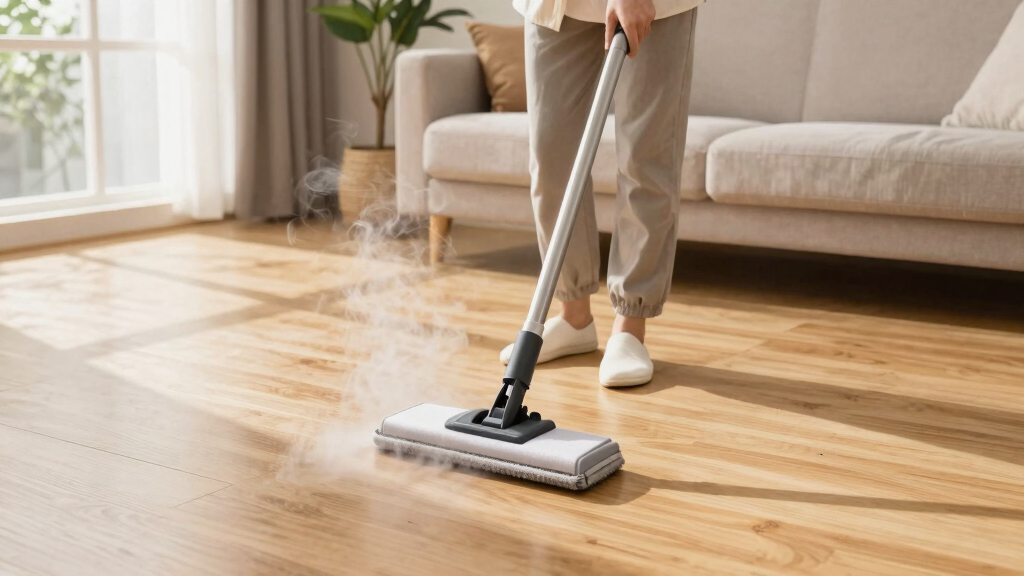
Use the lowest steam setting and a clean microfiber pad.
Move
Never hold the mop in one place or let moisture pool.
Dry
Buff any remaining haze or dampness immediately.
Steam sits near the risky end of the care spectrum.
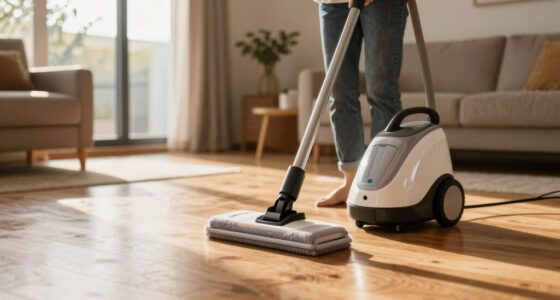
Modern steam mops with adjustable output and microfiber pads can reduce exposure, but they do not remove the core issue: bamboo dislikes repeated heat and moisture.
Three cleaning tricks protect the glow.
If the goal is a shiny, damage-free bamboo floor, the winning routine is boring in the best way: remove grit often, use very little liquid, and choose cleaners that do not attack the finish.
Dry microfiber mop.
Why it works: dust and grit leave before they can scratch the protective finish. This is the safest routine for high-traffic rooms.
Lightly damp pad.
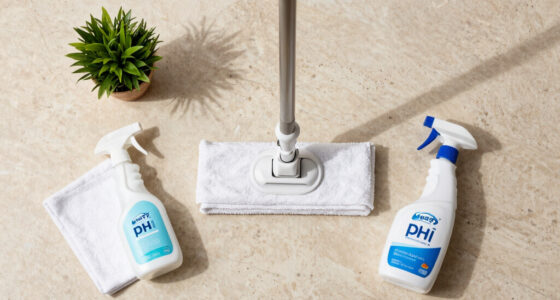
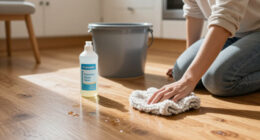
Why it works: a pH-neutral cleaner in warm water removes buildup without flooding seams or stressing the surface.
Soft-brush vacuum.
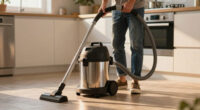
Why it works: a non-abrasive attachment pulls debris from corners and plank lines without grinding particles into the finish.
Is a steam mop ever safe?
Sometimes, but only when the floor is sealed, the manufacturer allows it, and steam is used lightly and infrequently.
What causes the regret?
Too much steam, repeated heat, and lingering moisture can lead to swelling, cracking, discoloration, or delamination.
What is the safest cleaner?
A gentle pH-neutral cleaner designed for bamboo or hardwood, applied with a barely damp microfiber mop.
What should happen first?
Check the care label, confirm warranty rules, and test any new tool or cleaner in a hidden area.
The no-regret chain
What Makes Bamboo Flooring Sensitive to Moisture and Heat?
Bamboo is a natural material that’s more delicate than traditional hardwood when it comes to moisture. Unlike sealed hardwood, bamboo can absorb water, causing swelling and warping. Heat from steam can weaken the finish or even cause tiny cracks to form. If your bamboo floor isn’t properly sealed, steam can turn into a hidden threat, leading to long-term damage. Think of bamboo as a sponge — it absorbs moisture faster than you think, especially if the seal is compromised.
For example, a homeowner in Oregon noticed slight warping after using a steam mop weekly. The finish looked shiny at first, but over months, small cracks appeared along the edges. That’s a common scenario when moisture and heat aren’t managed carefully. The implications are significant: once the bamboo begins to swell or crack, it can lead to costly repairs or replacement. The tradeoff is clear — moisture and heat provide effective cleaning but can compromise the integrity of your bamboo flooring if not carefully controlled. Recognizing the material’s sensitivity underscores the importance of following manufacturer guidelines and avoiding aggressive cleaning techniques that could weaken the surface or cause irreversible damage.
microfiber floor mop for bamboo floors
As an affiliate, we earn on qualifying purchases.
As an affiliate, we earn on qualifying purchases.
How Safe Is Your Bamboo Floor for Steam Mopping? What the Experts Say
Can you steam mop bamboo flooring without regret? It depends. Many flooring brands include specific cleaning instructions because of the delicate nature of bamboo. Some warn against steam entirely, citing risks of swelling or delamination — where layers of the bamboo separate. Others suggest that a gentle, infrequent steam clean might be acceptable if the floor is well sealed and the steam output is carefully controlled. The implications are critical: improper use can accelerate wear, cause swelling, or create unsightly cracks, diminishing your floor’s beauty and durability over time.
According to an anonymous researcher from the flooring industry, ‘The key is to use minimal steam and avoid holding the mop in one spot.’ This advice highlights the tradeoff between convenience and caution. While steam mops can save time, they can also introduce risks if not used judiciously. Think of it like seasoning a delicate dish — a little goes a long way. Overuse of heat and moisture can spoil the surface, leading to long-term damage. Therefore, always prioritize your manufacturer’s guidelines and err on the side of caution. Proper understanding of these recommendations can mean the difference between a pristine floor and expensive repairs.
steam mop safe for bamboo flooring
As an affiliate, we earn on qualifying purchases.
As an affiliate, we earn on qualifying purchases.
Is There a Better Way? Top 3 Cleaning Tricks for Bamboo Floors
If your goal is a shiny, damage-free floor, skip the steam mop most of the time. Instead, try these proven methods that prioritize safety and longevity:
- Use a dry microfiber mop daily to pick up dust and debris. This prevents scratches and keeps dirt from settling into the surface, which can cause long-term wear.
- Mix a few drops of pH-neutral cleaner in warm water for occasional damp mopping. This gentle solution cleans effectively without introducing excess moisture that could seep into seams or cracks.
- Vacuum regularly with a soft brush attachment to remove grit that scratches surfaces. Removing abrasive particles is crucial because they can accelerate wear and tear.
Imagine gently sweeping away dirt, like a soft breeze rather than a storm. This approach preserves the bamboo’s natural integrity, preventing unnecessary stress and damage. Consistent, gentle cleaning can extend the lifespan of your bamboo floors, maintaining their beauty and structural soundness for years. The tradeoff here is between convenience and preservation: while steam mops offer quick results, they risk compromising the delicate balance of bamboo’s natural properties. Emphasizing these safer methods helps you make informed decisions that protect your investment.
As an affiliate, we earn on qualifying purchases.
Frequently Asked Questions
Is it safe to use a steam mop on bamboo flooring?
It depends on your floor’s seal and manufacturer instructions. Many experts advise caution because excess moisture and heat can cause swelling or warping. Always check your flooring’s care label first.Can steam mopping damage my bamboo floors?
Yes, especially if you use too much steam or hold the mop in one spot. Over time, moisture can lead to swelling, cracking, or delamination of bamboo surfaces.What cleaning method is best for bamboo floors?
Regular dry sweeping or vacuuming combined with a lightly damp microfiber mop using a gentle cleaner is safest. It removes dirt without risking moisture damage.Are there steam mops suitable for bamboo floors?
Some models with adjustable steam and sealed systems may be safer, but always verify compatibility and follow manufacturer guidance to avoid damage.How can I keep my bamboo floors looking great without risking damage?
Stick to routine cleaning with dry or lightly damp cloths, avoid excessive moisture, and always test new cleaning tools on a hidden spot first.sealed bamboo floor cleaning tools
As an affiliate, we earn on qualifying purchases.
As an affiliate, we earn on qualifying purchases.
Conclusion
Your bamboo floors shine brightest with gentle care. Steam mops might seem tempting, but a little caution saves you from costly regrets. Think of your floors as living art — treat them with respect, and they’ll reward you with lasting beauty. When in doubt, stick with tried-and-true cleaning methods, and your bamboo will thank you for years to come.Halloween Picks
halloween
As an affiliate, we earn on qualifying purchases.