TL;DR

Get cleaning gear delivered free with Prime
- Fast, free delivery on millions of items
- Prime Video, Amazon Music and more included
- Member-only deals all year
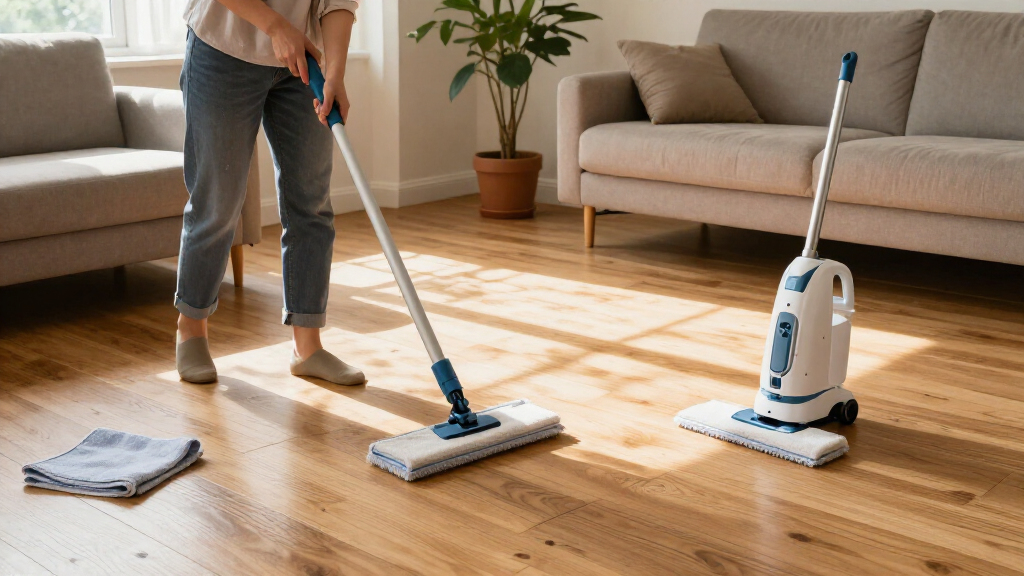
A steam mop heats water and releases steam to loosen grime, usually with a reusable pad and without floor-cleaning chemicals. An electric spin mop uses rotating pads to scrub, often with water or an approved cleaner. Check both your flooring and mop manuals before choosing: steam can harm some sealed, waxed, laminate, vinyl, or hardwood floors, while a spin mop still needs clean pads and careful moisture control.
A mop can leave a floor looking clean and still be the wrong tool for it. Steam mops use heat; electric spin mops use powered scrubbing, and that difference matters when you have wood, laminate, or vinyl underfoot.
This guide explains how each mop works, what to check before using one, and which routine may suit common household messes. You’ll also see why a quick steam pass isn’t automatically sanitizing, and why removing grit before mopping protects the floor whichever tool you choose.
Start with your flooring manufacturer’s care instructions, then compare the mop’s manual. If either one leaves compatibility unclear, use a low-moisture method approved for your floor and test a hidden spot first.
Steam mops loosen grime with heat; electric spin mops scrub with rotating pads.
Check the flooring manufacturer’s care instructions and the mop manual before using either method.
Sweep or vacuum first so grit and loose hair don’t get pushed across the floor.
A steam mop’s sanitizing result depends on its specific instructions and conditions; a quick pass is not proof of disinfection.
Wash and fully dry reusable pads, and clean tanks as the mop manufacturer directs.
Floor care field guide · Buyer’s comparison
Steam Mop vs Electric Spin Mop
Heat loosens. Rotating pads scrub. Both can help with everyday messes, but your floor’s care instructions should decide which method is safe to use.
A floor can look clean and still have been cleaned with the wrong tool.
Check the flooring guide and mop manual before you fill the tank.At a glance: two different cleaning methods
Steam relies on heat to loosen grime before a pad wipes it up. An electric spin mop uses powered pad movement to scrub and absorb dirt. Features and results vary by model.
| Feature | Steam mop | Electric spin mop |
|---|---|---|
| Cleaning action | Hot steam loosens soil; the pad wipes it up. | Rotating pads scrub dirt and absorb it. |
| Liquid | Usually water only; follow the mop manual. | Water or an approved floor cleaner, depending on the model. |
| Best fit | Sticky grime on sealed, heat-tolerant hard floors. | Routine scrubbing and users who want powered pad movement. |
| Main trade-off | Can be quick and chemical-free on compatible floors, but heat is not safe for every surface. | Uses less heat, but moisture still needs control and pads need care. |
| After use | Wash the reusable pad and follow care directions. | Wash pads; empty and clean the tank as directed. |
Before either mop: sweep or vacuum grit, crumbs, and loose hair. Debris can be pushed across the floor and scratch its finish.
Check your floor before choosing
Floor appearance alone does not reveal whether steam is safe. Products sold as hardwood, laminate, vinyl, or LVP can have different finishes, seams, warranties, and care rules.
- Read the flooring manufacturer’s care guide and warranty.
- Check the mop manual for approved surfaces and required technique.
- Be cautious with unsealed, waxed, oil-finished, or heat- and moisture-sensitive floors.
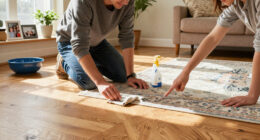
- If steam is explicitly allowed, test a hidden area and inspect it after it dries.
- If guidance is unclear, use the floor maker’s approved low-moisture method.
A quick steam pass is not proof of disinfection.
Any sanitizing result depends on the model, surface, temperature, contact time, and stated procedure. Follow the manufacturer’s directions, and keep children and pets away from hot steam.
Match the mop to the mess
Choose based on the messes you clean most and the routine you can maintain. Neither mop replaces dry debris removal.
Consider steam with care
Heat may loosen certain stuck-on grime, but only use it when both the exact floor and mop instructions allow steam.
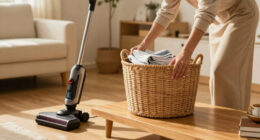
Powered pad movement
Rotating pads offer mechanical scrubbing. Keep water flow and pad wetness under control to avoid leaving the floor too damp.
Start with a vacuum
Pick up loose debris first, whichever mop you use. For delicate or uncertain floors, follow the maker’s low-moisture care method.
A practical buying and cleaning sequence
Ease of use depends on the model and your home—not the mop category alone.
Read the floor guide
Rule out methods the flooring maker does not permit.
Check the mop manual
Confirm surfaces, water or cleaner rules, and safety directions.
Compare handling
Check weight, cord or battery, warm-up, tank size, and maneuverability.
Care for the pads
Remove, wash, and fully dry reusable pads; clean tanks as directed.
Model features are not category promises
Adjustable steam, swivel heads, cordless operation, LED lights, self-cleaning, and combined vacuuming appear on some models. Check the specific product rather than assuming a feature is standard.
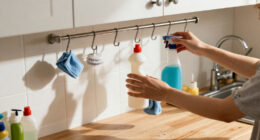
Water and washable pad
Many models are designed for water alone. Add vinegar, detergent, or oils only if the manufacturer explicitly allows them.
Solution rules vary
Use only water or floor cleaner approved in the manual. Wash or replace pads, empty the tank, and avoid storing damp pads in the machine.
The short answer
There is no universal winner. Steam can suit compatible, heat-tolerant floors when you want a water-and-pad routine. A spin mop can suit routine scrubbing when you want powered pad movement and controlled liquid use. Let the floor’s care rules—and the mess you clean most—make the choice.
See how steam and spinning pads remove dirt
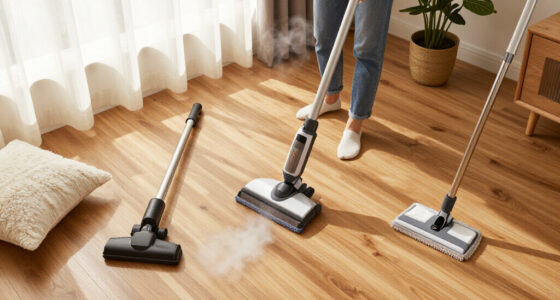
A steam mop heats water and releases steam to loosen grime, which a pad then wipes up. An electric spin mop powers rotating pads that scrub and absorb dirt, generally using water or an approved floor cleaner. The first relies on heat; the second relies on movement.
That distinction feels practical in a kitchen. A dried splash beside the stove may soften under steam on a floor approved for it, while spinning pads can scrub a wider area without relying on heat. Neither tool picks up loose crumbs and grit like a vacuum or broom. Sweep first so the pad doesn’t push sandy particles around and scratch the finish.
| Feature | Steam mop | Electric spin mop |
|---|---|---|
| Cleaning action | Heat loosens soil; pad wipes it | Rotating pads scrub and absorb |
| Liquid | Usually water only | Water or an approved cleaner, depending on model |
| Key check | Floor’s heat and moisture tolerance | Solution rules and moisture control |
| Care after use | Wash the pad and follow care instructions | Wash pads, empty and clean the tank as directed |
Models vary. A steam mop may offer adjustable output; a spin mop may be cordless or have a small solution tank. Treat those as model features, not promises shared by every mop.
Products Worth Considering

Shark PowerDetect Corded Stick Vacuum, Self-Cleaning (Eggplant, HZ4002)

Levoit Vital 100S-P Air Purifier with Washable Pre-Filter

LEVOIT Vital 200S-P Smart Air Purifier for Large Rooms
As an affiliate, we earn on qualifying purchases.
Check your floor before you let steam near it
Steam mops are suitable only for floors whose manufacturers allow steam cleaning. Heat and moisture may affect some unsealed, waxed, oil-finished, or otherwise sensitive floors, and products sold as laminate, hardwood, vinyl, or LVP do not all share the same care rules.
For example, two kitchens can both have plank-style floors, yet one product’s instructions may permit a particular steam method while another’s warranty forbids it. Appearance alone cannot tell you which case you have. Check the flooring care guide and warranty, then read the steam mop manual for restrictions and required technique.
If the guidance permits steam, test a hidden area first, such as behind a door, and inspect it after it dries. Use the settings and movement speed in the manual. A long pause over one seam or a puddle left behind deserves caution; seams and finishes can respond differently from the center of a plank.
When floor guidance is unclear, don’t guess with heat. Choose a low-moisture cleaning method approved by the flooring maker, or ask the manufacturer for care instructions.
This check can feel slower than filling the tank and starting, but it prevents a cleaning shortcut from becoming a floor repair. For rented homes or recently installed floors, keep the care instructions handy before choosing any powered mop.
Match the mop to the mess you clean most
Steam can help loosen certain stuck-on grime on floors approved for heat, while rotating pads provide mechanical scrubbing without relying on steam. Your usual mess matters more than a dramatic feature list. A dried drip near the kettle, muddy paw marks in the entry, and a whole open-plan room each call for a slightly different routine.
Say your sealed tile kitchen has a sticky patch near the counter. After sweeping and checking both manuals, a steam mop might soften the residue as its pad passes over it. For a broad hallway with everyday footprints, an electric spin mop may suit someone who prefers powered pad movement and wants to use a floor cleaner the mop maker permits.
- For sticky spots: Consider steam only if the exact floor and mop instructions allow it.
- For routine scrubbing: A spin mop offers rotating pads; keep the floor from becoming overly wet.
- For pet hair or crumbs: Vacuum or sweep before either mop.
- For delicate or uncertain flooring: Follow the floor maker’s low-moisture care method.
There is no universal winner. A steam mop can be simple when you want water and a washable pad; a spin mop can feel more adaptable when you need to control liquid or avoid heat. In both cases, “more power” does not mean better care for every surface.
Choose the mop that fits your weekly routine
Ease of use depends on the model and your home, not just the mop category. Steam models may need warm-up time and a cord; electric spin mops may need charging, tank cleaning, or a specific solution. Weight, head swivel, pad removal, and where you’ll store the machine can matter more than a headline feature.
Imagine cleaning a small bathroom after work. If the steam mop is light, warms quickly, and the tile is approved for steam, a simple water-and-pad routine may feel convenient. In a larger home, a cordless spin mop could be easier to move between rooms, but its runtime and tank capacity determine how often you pause.
- Read the floor care guide and rule out methods the maker does not permit.
- Check the mop manual for approved surfaces, water or cleaner rules, and safety directions.
- Compare handling details: weight, cord or battery, warm-up time, tank size, and maneuverability.
- Check pad care: confirm that pads are easy to remove, wash, and replace.
- Test a hidden area using the manual’s method, then inspect the dry floor.
Feature labels need a close read. Adjustable steam, LED lights, self-cleaning, and combined vacuuming appear on some models, but aren’t standard across either type. Choose features that solve a real problem in your rooms.
Keep moisture and cleaning claims in check
A steam mop is not automatically a sanitizer. Any sanitizing result depends on the specific model, surface, temperature, contact time, and the manufacturer’s stated procedure. A quick glide across a floor should not be treated as proof that germs have been killed.
For instance, if you’re cleaning after a pet accident, first remove the mess and follow the floor’s care instructions. Do not assume that a fast steam pass disinfects the area. Read the mop’s claim and procedure, and use only on a compatible floor; keep children and pets away while hot steam is in use because it can burn.
Moisture also deserves attention with a spin mop. Water flow, pad wetness, and how quickly you move determine how damp the floor gets. If a plank floor’s instructions call for minimal moisture, a powered scrubber is not automatically safe just because it doesn’t use steam. Use the approved method, avoid leaving puddles, and follow any drying guidance.
Never add vinegar, detergent, or essential oils to a steam mop unless its maker explicitly allows them. Many models are designed for water alone, and additives may damage the machine or leave residue. For a spin mop, use only the liquid its manual approves; a cleaner that works elsewhere may not suit its tank or your floor.
Give pads and tanks a simple after-clean routine
Clean pads help keep yesterday’s soil off today’s floor. After mopping, remove reusable pads and wash or replace them as their instructions direct. A gray pad that smells musty or feels stiff can spread residue and make the next pass less effective.
After cleaning a muddy entry, don’t leave the damp pad sitting on the mop overnight. Wash it, let it dry fully, and empty or clean the spin mop tank as directed. Steam mop users should also follow the maker’s directions for cooling, storage, and any water tank care. Details differ by model, so the manual is the reliable reference.
- Wash or replace pads at the interval the manufacturer recommends.
- Let pads dry fully before storing them on the machine or in a closed bin.
- Empty and clean tanks as directed, especially after using an approved solution.
- Check pad condition: worn fibers may clean less effectively.
Reusable pads can reduce disposable waste, but only if you maintain them. Keep a spare clean pad available if you mop a large area; swapping it mid-clean is more practical than dragging one saturated pad from the kitchen into the hall.
Frequently Asked Questions
Which is better for hardwood floors?
It depends on the exact floor and finish. Many hardwood makers advise against steam, so use a low-moisture method unless your flooring manufacturer explicitly permits it. Check the care guide before using either mop.
Can I use a steam mop on laminate or vinyl?
Check the specific product’s care instructions and warranty. Heat and moisture can affect some flooring products or seams, and labels such as laminate, vinyl, or LVP do not establish steam compatibility. Test a hidden area only if the manufacturer permits steam.
Does a steam mop clean better than an electric spin mop?
They clean in different ways. Steam can loosen some stuck-on grime on compatible floors, while spinning pads scrub through mechanical movement. The better fit depends on your floor, typical mess, and the method its maker allows.
Can a steam mop kill germs?
Only rely on a sanitizing claim when the particular model gives a procedure for your surface. Results depend on conditions such as temperature and contact time. An ordinary quick pass should not be assumed to disinfect.
Can I put vinegar or floor cleaner in a steam mop?
Only if the manufacturer explicitly allows it. Many steam mops are designed for water alone, and additives may harm the mop or leave residue. Follow the manual for an electric spin mop too, since solution rules vary by model.
What should I do before using either mop?
Sweep or vacuum first to pick up grit, crumbs, and loose hair. Then check the flooring and mop instructions, use the approved cleaning method, and test a hidden area if permitted. Clean and dry reusable pads after use.
Conclusion
Choose by floor compatibility first, then by cleaning style. If your floor maker approves steam and you want heat-assisted cleaning with little or no cleaner, a steam mop may fit. If you prefer powered scrubbing, want to manage the solution, or need to avoid steam, consider an electric spin mop whose instructions suit your floor.
Either way, sweep first, follow both manuals, and test a hidden spot. Let the floor’s own care guide have the last word; a clean room should still feel solid beneath your feet.