TL;DR

Get cleaning gear delivered free with Prime
- Fast, free delivery on millions of items
- Prime Video, Amazon Music and more included
- Member-only deals all year
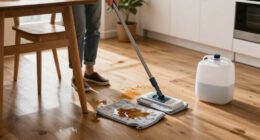
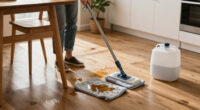
Steam cleaning can reduce some dust, pet dander, and pollen on hard floors approved for steam when a clean microfiber pad lifts and removes loosened debris. Heat alone does not remove allergen residue, and steam can damage some wood, laminate, vinyl, or coated floors, so check both manuals and test a hidden spot first.
A steam mop can leave a sealed tile floor looking spotless, while a thin film of loosened dust still rides on a dirty pad. That difference matters if you are cleaning for dust, pet dander, or pollen: heat is only part of the job.
This guide explains what steam cleaning can remove from floors, why a clean pad matters, and how steam compares with vacuuming and damp wiping. You’ll also learn how to check whether your floor and machine allow steam, since a quick pass can harm vulnerable seams or finishes.
The practical rule is simple: follow the floor maker’s care instructions, test a hidden area, and treat steam as one tool in a broader cleaning routine. It may reduce some floor debris; it does not make a room allergen-free or treat allergies.
Steam can reduce some dust, pollen, and pet-dander debris on hard floors approved for steam when a clean pad captures it.
Heat may affect dust mites, but allergenic residue still needs to be physically removed.
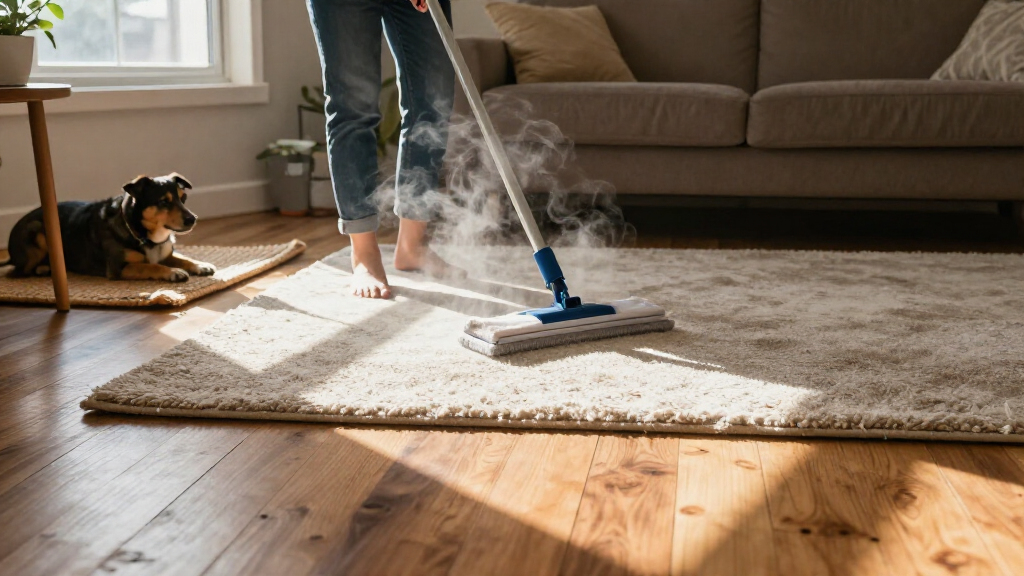
Steam mops are not general-purpose carpet cleaners; use tools designed for rugs and carpets.
Check both floor and machine instructions, then test a hidden spot before steaming.
A clean floor is one part of allergy-conscious housekeeping, not a guarantee of allergy relief.
Does Steam Cleaning Remove Allergens From Floors? What the pad picks up matters
Steam can loosen some dust, pet dander, and pollen on approved hard floors. A clean pad must capture the residue; heat alone does not make a floor allergen-free.
What steam can remove
Results depend on the floor, machine, and cleaning technique.
Loosen, then lift
On a floor approved for steam, a clean microfiber pad can collect some dust, pollen, and pet dander.
Heat is not removal
Heat may affect mites, but allergenic residue can remain in dust and debris. It still needs to be removed.
One floor pass is limited
A steam mop will not clean nearby carpets, rugs, upholstery, or bedding.
Match the tool to the surface
Steam mops, vacuums, and carpet machines do different jobs.
| Tool | Best fit | What to watch |
|---|---|---|
| Steam mop | Hard floors approved for steam | Heat, moisture, seams, and pad cleanliness |
| Filtered vacuum | Dry debris on rugs, carpet, and floors | Use a machine and filter suited to the surface |
| Damp microfiber mop | Routine wiping where care instructions permit | Avoid excess water and unsuitable cleaners |
Check before steaming
The floor maker’s guidance and the machine manual both matter.
Check that both the floor and machine instructions allow steam on that surface.
Watch for dull patches, raised edges, or a tacky feel. A test does not override a manufacturer warning.
Remove dry grit first, follow the recommended settings, and change or wash pads as directed.
Keep the routine broader
Floor cleaning is one part of allergy-conscious housekeeping.
- Loosen debris on approved hard floors
- Collect some residue with a clean pad
- Vacuum carpets and rugs with a suitable filter
- Reduce dust sources and wash bedding as directed
What steam cleaning can lift from a suitable floor
Does steam cleaning remove allergens from floors? It can reduce some allergen-bearing debris on a hard floor approved for steam, especially when the mop loosens dust and a clean pad carries it away. That can include settled pollen, pet dander, and dust, though the amount removed depends on the surface, device, and technique.
Think of steam as softening a stuck-on layer, like warm water helping loosen dried mud from a boot. The pad still has to pick up what comes loose. If you mop a kitchen entry where a dog has tracked in spring pollen, a fresh microfiber pad may collect some of that fine debris; one pass cannot clean the dog’s bed, sofa, or carpet nearby.
Steam cleaning can reduce some allergens on suitable hard floors by loosening and lifting material, but it cannot guarantee complete removal. A dirty pad can smear residue from one patch to another, and a brief pass may miss corners and grout lines. Change or wash pads according to the machine instructions, and don’t treat a glossy floor as proof that every particle is gone.
The floor’s condition matters as much as the debris. A sealed tile surface may be a reasonable candidate when its maker and the mop manual permit steam. Unsealed wood, waxed floors, some coatings, and floors with vulnerable joints may not be. Check both sets of instructions before you begin.
Products Worth Considering

Levoit Eleva 300X Air Purifier with Sealed HEPA Filtration

Dreame G10 Pro Wet and Dry Vacuum Mop

Dyson Big Ball Multi Floor Canister Vacuum, Yellow
As an affiliate, we earn on qualifying purchases.
Why killing dust mites does not remove their allergen
Steam may kill dust mites if they receive enough heat for long enough, but dead mites and mite allergen are not the same thing. Allergenic material can remain in dust and debris after the mites die, so it still needs to be physically removed from the floor.
That distinction is easy to miss. Imagine a dusty strip along a bedroom baseboard: heat may affect some organisms in the strip, but the fine material does not vanish into the air or disappear into the floor. A clean pad or suitable vacuum still has to collect the particles. A dirty pad can simply move them toward the doorway.
Household steam mops also heat surfaces unevenly. The mop head moves, floor temperature changes, and a quick pass may not expose every part of the floor to the same heat for the same time. So don’t assume that a single pass kills every mite or removes all mite-related residue.
Use careful language about results: steam may help reduce some debris on an approved surface; it does not establish that the floor is allergen-free. For a bedroom with dust concerns, wash bedding as directed, reduce dust sources, and use an appropriate vacuum where needed. Floor cleaning is one piece of the routine, not the whole plan.
Choose the right tool for tile, carpet, and delicate floors
Steam mops, carpet cleaners, and vacuums do different jobs, so one tool’s claims do not automatically apply to another. Steam mops use heated vapor and pads; some carpet machines inject hot water and extract it; vacuums remove dry debris. Match the method to the material and the care instructions.
For example, a family may use a filtered vacuum to pick up dry crumbs and pet hair from a rug, then use a permitted steam mop on sealed tile in the entry. The rug and tile need separate methods. A steam mop is generally not suitable for carpets or rugs; use equipment designed for that material and follow the carpet maker’s instructions.
Here’s a quick comparison to keep the jobs straight:
| Tool | Best fit | What to watch |
|---|---|---|
| Steam mop | Hard floors whose maker allows steam | Heat, moisture, pad cleanliness, and seams |
| Filtered vacuum | Dry debris on rugs, carpet, and floors | Use a machine and filter suited to the surface |
| Damp microfiber mop | Routine wiping where the floor instructions permit | Avoid excess water and unsuitable cleaners |
Vacuuming and steam cleaning are not a simple “better or worse” pair. A suitable vacuum is often the more appropriate choice for carpet, while a steam mop may suit approved sealed tile. If your laminate or vinyl instructions prohibit steam, use the recommended method instead of risking swelling, lifted edges, or finish damage.
Check your floor before you switch on the steam
Steam is appropriate only when both the flooring maker and machine manual allow it. Heat and moisture can reach seams, weaken adhesives, or harm finishes and floor cores, even if the surface looks sturdy. A short test in a hidden spot can reveal an obvious problem, but it does not override a manufacturer’s warning.
Consider a home with click-lock laminate: the top may look smooth and sealed, while the joints remain vulnerable to moisture. A slow pass or repeated steaming in one place can leave water where you cannot see it. Hardwood, vinyl, and luxury vinyl plank (LVP) also vary by construction and finish, so the material name alone cannot tell you whether steam is safe.
Before cleaning, check the exact floor care guidance and the mop’s approved-surface list. If both permit steam, follow the specified setting, use the recommended pad, and keep the mop moving. Don’t add fragrance, detergent, or other cleaners unless the machine maker says to; additives can leave residue or affect the device.
Floor safety comes first: If the maker forbids steam or the guidance is unclear, choose its recommended cleaning method. A hidden-area test is a useful check, not permission to ignore the instructions.
Be alert for changes such as dull patches, raised edges, or a tacky feel after a test. Stop if you see them. For instance, if an older wood floor has gaps in its finish, a damp microfiber method recommended by the floor maker is a more cautious choice than directing hot vapor into those gaps.
Use a careful routine that removes loosened residue
A careful routine helps a steam mop pick up loosened debris instead of spreading it. Start only after confirming the floor permits steam, and use a clean pad. For a tile kitchen with visible crumbs, remove dry grit first so the mop is not dragging coarse particles across the surface.
- Read both manuals. Confirm the floor type is approved and note the machine’s settings and pad instructions.
- Test a hidden area. Follow the approved method in a tucked-away spot, then check for a change in color, texture, or finish.
- Remove loose dry debris. Use a suitable vacuum or the method the floor maker recommends.
- Steam in moving passes. Use the directed setting and do not park a hot mop head on one spot.
- Change the pad when needed. If it looks dirty, stop and replace or clean it as the manual directs.
- Let the floor dry. Keep people and pets off it until it is dry, and ventilate the room if heat or dampness bothers you.
Picture a muddy paw trail across a permitted tile entry. Dry grit comes up first; then the steam mop makes a controlled pass with a fresh pad. If the pad turns gray, swap it rather than dragging that soil down the hallway.
Don’t overdo it. Frequent steaming is not automatically better, and repeated moisture or heat can add wear. Clean according to visible soil, household traffic, and the maker’s schedule. If someone is sensitive to heat, dampness, or cleaning residue, ventilate and avoid unapproved scented products.
Build an allergy-conscious routine beyond the floor
Steam cleaning addresses some debris on the floor, but allergen sources also live elsewhere. A clean tile strip cannot remove pollen from curtains or dander from a sofa. If you want to reduce exposure, combine suitable floor care with steps aimed at the materials and rooms where particles collect.
For example, during pollen season, you might wipe an approved hard entry floor after outdoor shoes come inside, while washing bedding and using an appropriate filtered vacuum on rugs. If a cat naps on the living-room chair, floor steaming will not remove dander woven into the upholstery. Each surface needs a method suited to it.
Routine damp wiping can help pick up settled particles on compatible floors without the same heat, if the floor maker recommends it. Vacuuming can remove dry debris from rugs and carpets; use a machine with filtration suited to your needs. Reducing sources—such as keeping outdoor shoes near the door and washing bedding regularly—can matter as much as mopping.
There is no universal steam-cleaning schedule that fits every household. A quiet home with sealed tile and little foot traffic differs from a busy home with pets and muddy entryways. Let visible soil and manufacturer guidance shape your routine, and don’t use steam as a substitute for broader cleaning or as a promise to prevent or treat allergies.
Frequently Asked Questions
Does steam cleaning remove pet dander from floors?
Steam may help loosen pet dander on a hard floor approved for steam, and a clean pad can pick up some of it. It will not remove dander from upholstery, bedding, or carpet, which need methods suited to those materials.
Does steam kill dust mites?
Heat can kill mites when they receive enough heat for long enough, but a household mop may not heat every part of the floor evenly. Mite allergen can remain in dust afterward, so physical cleanup still matters.
Is steam cleaning better than vacuuming?
They serve different purposes. A suitable vacuum removes dry debris and is often the better fit for rugs and carpet; a steam mop is for hard floors whose maker allows it.
Can I steam-clean hardwood, laminate, or LVP?
Only if the specific flooring manufacturer permits steam. These materials and finishes vary, and heat or moisture can damage seams, coatings, or the floor core; test a hidden area after checking the instructions.
Does steam cleaning disinfect floors?
Not automatically. Some devices may make specific tested claims under stated conditions, but a quick pass does not guarantee disinfection. Allergen removal, mite control, and disinfection are separate outcomes.
How often should I steam-clean?
There is no universal schedule. Follow the floor and machine guidance, and base cleaning on visible soil and household traffic; frequent steaming can add unnecessary heat and moisture exposure.
Conclusion
Remember the order: check the floor, loosen the debris, then capture it with a clean pad. Steam may help on an approved hard surface, but it cannot replace the right tool for carpet or protect a floor whose maker says no.
Follow the care instructions, keep the mop moving, and stop if the finish changes. The best cleaning routine leaves the floor clean and the seams, grain, and finish intact.