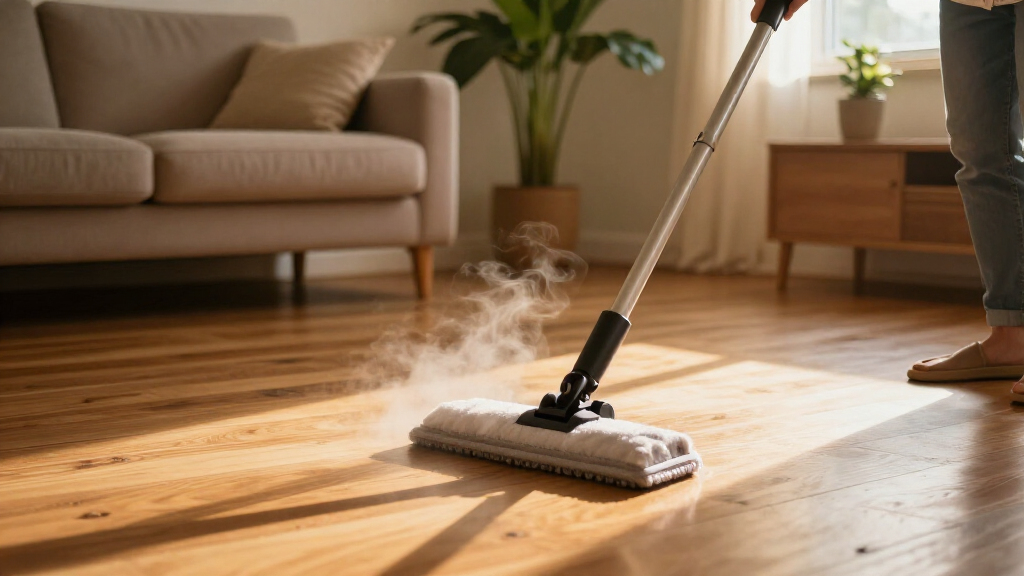
This guide explains how to decide whether a hardwood floor can be cleaned with a steam mop and how to clean it while limiting moisture exposure. It is for homeowners and renters who have a steam mop and want a practical cleaning routine. The task is beginner-friendly and usually takes 20-45 minutes, depending on the floor area.

Get cleaning gear delivered free with Prime
- Fast, free delivery on millions of items
- Prime Video, Amazon Music and more included
- Member-only deals all year

Shark S1000 Steam Mop for Sealed Hard Floors with 2 Dirt Grip Pads
- ✔ Model: S1000
- ✔ Weight: 4.6 lb
- ✔ Power: 1050 watts

Shark Steam & Scrub Hard Floor Steam Mop, Teal, S8002BRN
- ✔ Model: S8002BRN
- ✔ Weight: 6.9 lb
- ✔ Wattage: 1120 watts

Shark Steam & Scrub Steam Mop, S8001
- ✔ Model: S8001
- ✔ Weight: 6.9 lb
- ✔ Wattage: 1120 watts
Steam can damage some wood finishes, loosen adhesives, or push moisture into seams. Start by checking the flooring and mop instructions. If either manufacturer advises against steam, use a hardwood-safe method instead.
Difficulty: Beginner | Time: 20-45 minutes
What You’ll Need
Tools & Materials:
- Steam mop with its user manual
- Clean microfiber mop pad approved for the model
- Broom or vacuum suitable for hardwood floors
- Clean water specified by the mop manufacturer
- Soft, dry cloth for wiping moisture
Knowledge:
- Basic operation of the steam mop
- Whether the floor is solid hardwood, engineered wood, laminate, or another surface
Check the flooring warranty, care instructions, and steam mop manual before cleaning. Many wood-floor makers advise against steam, and some mop makers exclude wood surfaces. If the floor type or finish is unknown, do not use steam until you confirm that it is permitted.
Shark S1000 Steam Mop for Sealed Hard Floors with 2 Dirt Grip Pads
For regular upkeep on sealed hardwood, we rank the Shark S1000 first because it keeps the job simple and is the lightest mop here at 4.6 pounds. Its steam-and-microfiber-pad setup avoids chemical cleaners, while the removable 12.68-ounce tank is marginally larger than the 11.83-ounce tanks on both rotating-pad models. That combination makes it a practical choice for routine passes across several rooms.Compared with the S8002BRN and S8001, the S1000 does not add rotating scrubbing pads for stuck-on messes or selectable steam modes. That is a meaningful tradeoff: the simpler design suits basic floor maintenance, but tougher spots may need extra attention. Its 30-second heat-up and 18-foot cord help make short cleaning sessions convenient, though we still need an outlet and room to manage the cord. As with every mop here, use it only if the hardwood is sealed and its care guidance permits steam.
Pros:
- Lightest model in this comparison at 4.6 pounds
- Removable 12.68-ounce tank is slightly larger than the tanks on the rotating-pad models
- Heats up in 30 seconds and has an 18-foot power cord
- Two machine-washable Dirt Grip pads are included
Cons:
- Does not have rotating pads for added scrubbing on stuck-on messes
- Corded operation requires access to an outlet
- Suitable only for sealed floors that can tolerate steam
Best for: People who want a lightweight, simple steam mop for routine cleaning of sealed hardwood and other compatible sealed floors.
Not ideal for: Shoppers who want powered pad scrubbing, multiple steam settings, or a cordless mop.
Bottom line: We recommend the S1000 for everyday sealed-floor cleaning when low weight and a straightforward setup matter more than extra scrubbing power.
“We recommend the S1000 for everyday sealed-floor cleaning when low weight and a straightforward setup matter more than extra scrubbing power.”
Shark Steam & Scrub Hard Floor Steam Mop, Teal, S8002BRN
When a sealed hardwood floor needs more than a light maintenance pass, the S8002BRN’s rotating pads give it a clear role in this lineup. They scrub at over 150 movements per minute while steam loosens dirt, and two settings—Light and Normal—let us choose between gentler and regular cleaning. The S1000 is lighter and has a slightly larger tank, but it lacks this powered scrubbing action.The extra action comes with practical compromises. At 6.9 pounds, this mop weighs 2.3 pounds more than the S1000, and its 11.83-ounce tank is the smallest listed capacity in the comparison. We may need to refill during a longer session, especially when cleaning beyond one room. The removable tank, washable pads, and swivel steering make the routine easier, but this is still a corded mop and should be used on hardwood only when the finish is sealed and the floor maker allows steam. Buyers who want finer steam control should compare it with the S8001, which adds a Deep setting and includes four pads.
Pros:
- Rotating pads provide over 150 scrubbing movements per minute
- Two steam modes offer Light and Normal settings
- Removable tank and swivel steering support easier handling
- Two Dirt Grip Soft Scrub pads are machine washable
Cons:
- Weighs 6.9 pounds, substantially more than the S1000
- 11.83-ounce tank may require refills during longer cleaning sessions
- Designed for sealed hard floors and remains tethered to a power cord
Best for: Households with sealed hardwood and other compatible floors where dried-on spots make rotating pad scrubbing more useful than the lightest possible mop.
Not ideal for: Anyone prioritizing lower weight, longer sessions between refills, or three selectable steam modes.
Bottom line: We choose the S8002BRN when rotating-pad scrubbing matters more than lighter handling or a larger tank.
“We choose the S8002BRN when rotating-pad scrubbing matters more than lighter handling or a larger tank.”
Shark Steam & Scrub Steam Mop, S8001
The Shark S8001 builds on the rotating-pad approach of the S8002BRN with an extra steam level: Light, Normal, and Deep. That gives us more room to match the setting to a quick cleanup, regular floor care, or a stubborn mess. It also arrives with four washable pads, twice the included count of either competitor, which can be useful when we prefer to finish a session before laundering pads.Those additions distinguish it from the S8002BRN, but the underlying tradeoffs remain similar: it weighs 6.9 pounds and its 11.83-ounce tank may need replenishing during extended cleaning. The S1000 is lighter and holds more water, so it remains the easier pick for simple upkeep. The S8001 makes more sense when we want both rotating-pad action and an added steam option; the supplied details also list LED headlights, which can help illuminate debris near cabinets or in dim areas. As with the other models, its use on hardwood depends on a sealed, steam-compatible finish.
Pros:
- Three steam modes: Light, Normal, and Deep
- Rotating pads scrub at over 150 movements per minute
- Four Dirt Grip pads are included
- LED headlights can help reveal debris in dim areas
Cons:
- At 6.9 pounds, it is heavier than the S1000
- 11.83-ounce tank may need refilling in longer sessions
- Steam use is limited to sealed floors approved for this cleaning method
Best for: Buyers who want rotating scrub pads, a choice of three steam modes, and extra washable pads for recurring cleaning.
Not ideal for: People seeking the lightest mop, a larger tank, or a model with a simple low-cost feature set.
Bottom line: We favor the S8001 over the S8002BRN when a third steam mode and four included pads justify choosing a heavier, smaller-tank mop.
“We favor the S8001 over the S8002BRN when a third steam mode and four included pads justify choosing a heavier, smaller-tank mop.”
As an Amazon Associate we earn from qualifying purchases.
Before You Start
Remove rugs and small objects, and keep children and pets away from the work area while the mop is hot. Do not use steam on unsealed, waxed, damaged, or visibly worn flooring unless the flooring manufacturer specifically approves it. Never leave a hot mop resting in one place: concentrated heat and moisture can mark the finish.
Use only water and any mop-approved accessories. Do not add vinegar, oils, floor cleaner, or fragrance to the tank unless the mop manual explicitly permits the product. Additives can damage the machine or floor finish.
Step-by-Step Instructions
Step 1: Confirm that steam cleaning is allowed
Read the floor care instructions and the steam mop manual. Confirm that both allow steam on your specific floor type and finish. If you cannot verify this, choose a hardwood-safe cleaner recommended by the flooring maker instead.
Tip: A floor that looks sealed may still have worn spots or vulnerable seams. Check high-traffic areas and edges for exposed wood or lifting finish.
Check: The flooring guidance and mop manual both permit steam use on the surface you have.
Step 2: Test an inconspicuous area
Set the mop to the lowest steam setting approved for the floor. Use a clean pad to make one brief pass in a hidden spot, such as behind a door or under a removable piece of furniture. Let the area dry fully, then inspect it in good light before cleaning the rest of the floor.
Tip: Stop if the test area becomes cloudy, discolored, rough, swollen, or separated at a seam.
Check: After drying, the test spot looks and feels unchanged.
Step 3: Clear and dry-clean the floor
Move rugs, chairs, and loose objects out of the way. Sweep or vacuum the floor with a hardwood-safe attachment to remove grit, dust, and crumbs. Pick up sticky debris with a wood-safe method rather than dragging the steam pad across it.
Tip: Grit under a damp pad can scratch the finish. Turn off a vacuum’s rotating brush if its manual recommends that for hardwood.
Check: The floor is clear of debris that could scratch or catch under the pad.
Step 4: Prepare the mop and pad
Fit a clean microfiber pad securely. Fill the tank with the water type specified in the mop manual, and do not exceed its fill line. Choose the lowest approved steam setting, plug the mop into a suitable outlet, and wait for its ready indicator or the time listed in the manual.
Tip: A spare clean pad helps if the first pad becomes dirty. A saturated or soiled pad can spread residue and leave excess moisture.
Check: The pad is attached, the tank is within its marked capacity, and the mop signals that it is ready.
Step 5: Clean in short, steady passes
Start in a corner farthest from the exit. Move the mop continuously in short, overlapping passes, following the wood plank direction when practical. Use only enough steam to lightly dampen the pad; do not pause in place, scrub aggressively, or make repeated passes over one spot.
Tip: If you see water beads or a wet trail, stop steaming and let the floor dry. Reduce the setting or speed up your passes if the manufacturer permits continuing.
Check: The cleaned area has no puddles, standing water, or wet lines behind the mop.
Step 6: Check the pad and floor as you work
Pause periodically to inspect the pad and the cleaned area. Replace or rinse the pad according to the mop instructions when it looks dirty, and let the machine cool as directed before handling a hot pad. Wipe any visible moisture from the floor promptly with a soft, dry cloth.
Tip: A dark pad is not automatically a sign of damage; inspect the floor itself for finish changes, raised edges, or moisture at the seams.
Check: The pad is clean enough to pick up soil, and the floor remains free of pooled moisture or visible changes.
Step 7: Finish, dry, and store the mop
Turn off and unplug the mop when the floor is clean. Follow the manual’s cooling instructions, then remove and launder or discard the pad as directed. Empty the tank if required by the manufacturer. Keep foot traffic off the floor until it is fully dry.
Tip: Do not wind the power cord around a hot mop or store the unit with a wet pad attached.
Check: The floor is dry to the touch, and the mop is cool and stored according to its manual.
Common Mistakes to Avoid
- Using steam without confirming that the floor and mop makers allow it. — Check both sets of care instructions first; skip steam if guidance is unavailable or says not to use it.
- Holding the mop still or repeatedly steaming the same area. — Keep the mop moving and use brief, even passes at the lowest approved setting.
- Cleaning before removing grit and dust. — Sweep or vacuum with a hardwood-safe attachment before using the damp pad.
- Adding a household cleaner to the water tank. — Use only what the mop manual permits; most tanks are intended for water alone.
Troubleshooting
Problem: The floor looks cloudy or feels rough after a pass.
Solution: Stop steaming and let the area dry. Do not apply more heat or polish to hide the change. Check the flooring care instructions and contact the floor maker or a flooring professional if the appearance remains altered.
Problem: Water beads, gathers at seams, or leaves wet tracks.
Solution: Stop the mop, wipe up moisture, and allow the floor to dry. Confirm the setting and pad fit, then consult the manuals before deciding whether steam use can continue. Do not continue if moisture keeps collecting.
Problem: The mop leaves streaks or spreads dirt.
Solution: Turn it off and let it cool as directed. Fit a clean pad, check that the floor was swept, and verify that the tank contains only approved water. Test a small area again before proceeding.
Problem: The mop produces little or no steam.
Solution: Turn it off and unplug it. Check the water level, pad installation, and ready time in the manual. Allow the unit to cool before refilling or clearing any blockage, and do not operate it if it leaks or appears damaged.
What Success Looks Like
The floor is free of loose dirt and surface marks, is dry to the touch, and shows no cloudiness, discoloration, raised seams, or finish changes. The mop has been switched off, cooled, and stored as its manual directs. If the floor shows any change during cleaning, stop and follow the flooring maker’s care advice.
Next Steps
Let the floor dry completely before replacing rugs or moving furniture back. Wash the microfiber pad according to its care label, and check the mop manual for tank and maintenance instructions. For routine care, remove grit regularly and use the flooring maker’s recommended cleaning method. Revisit the steam instructions before cleaning a different floor type or finish.
Frequently Asked Questions
Can I use a steam mop on any hardwood floor?
No. Some manufacturers prohibit steam because heat and moisture may damage the finish, wood, seams, or adhesives. Use steam only when both the flooring guidance and mop manual allow it for your surface.
Can I put vinegar or floor cleaner in the steam mop?
Only if the mop manual specifically approves that additive. Otherwise, use the water type listed in the manual; cleaners and vinegar may harm the machine or floor finish.
How wet should the floor look while I mop?
The pad should leave no puddles or standing water. If you see beads or wet tracks, stop, wipe them up, and check the setting and instructions before continuing.
What should I do if the floor changes color after steaming?
Stop using the mop, let the area dry, and avoid adding more heat, water, or polish. Contact the flooring maker or a qualified flooring professional if the change remains.