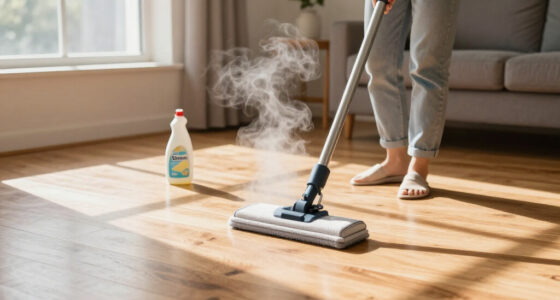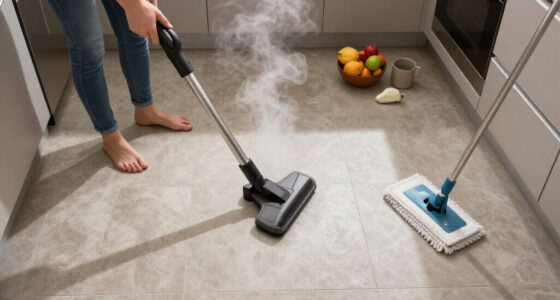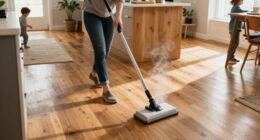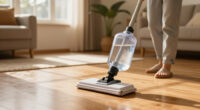
When people search for a steam mop for hardwood floors, the real question is not simply which model cleans best: it is whether steam is suitable for their particular floor at all. A steam mop can loosen everyday grime without a bucket of cleaning solution, but heat and moisture may damage wood finishes or seep between boards. A hardwood-safe damp mop works more slowly and may require a compatible cleaner, yet gives you better control over how much water reaches the floor.

Get cleaning gear delivered free — and shop member deals
- Fast, free delivery on millions of items
- Access to Prime Big Deal Days deals on October 6–7
- Prime Video, Amazon Music and more included

Shark Steam & Scrub Steam Mop – All-in-One Hard Floor Cleaner (Grey, S8001)
- ✔ Model: S8001
- ✔ Steam modes: Light, Normal, Deep
- ✔ Pad action: Rotating microfiber pads
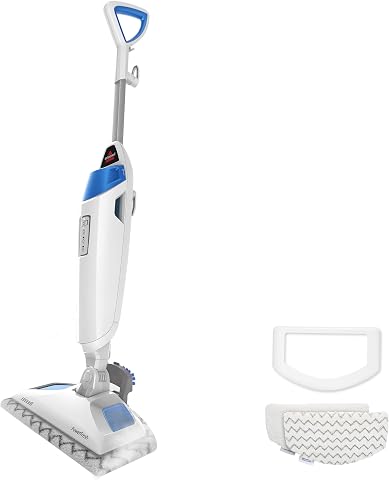
BISSELL Steam Mop 1940A PowerFresh Floor Steam Cleaner for Hard Wood & Tile
- ✔ Model: 1940A
- ✔ Steam settings: Three
- ✔ Power cord: 23 feet

Shark Steam Pocket Mop with 2 Washable Double-sided Pads – Purple (S3501)
- ✔ Model: S3501
- ✔ Weight: Under 5 pounds
- ✔ Heat-up time: About 30 seconds
This comparison treats Option A as a steam mop used only on manufacturer-approved, fully sealed hardwood, and Option B as a microfiber or spray mop used with minimal moisture. If your flooring is unsealed, waxed, damaged, or of uncertain construction, neither option should be used until you check the flooring maker’s care instructions. For most hardwood owners, the damp mop is the safer buy; steam makes sense only when the floor maker explicitly permits it and convenience matters more than the added risk.
At a Glance
| Criteria | Steam mop on sealed hardwood | Hardwood-safe damp mop | Winner |
|---|---|---|---|
| Compatibility with hardwood | Only for floors whose manufacturer explicitly approves steam; never assume sealed means steam-safe. | Usually the safer approach when the floor maker permits damp cleaning and the mop is used with little moisture. | B |
| Moisture and heat control | Steam adds heat and moisture; settings and passes affect exposure, but control is limited compared with a wrung-out mop. | User controls water more directly; avoid leaving puddles or wet streaks. | B |
| Everyday cleaning | Effective on certain stuck-on marks and grime when used as directed. | Good for dust, footprints, and routine soil; stubborn residue may need repeated passes or approved cleaner. | A |
| Sanitizing and chemical use | Uses heat and often only water, but do not assume household steam mops disinfect to a verified standard. | No steam sanitizing effect; cleaner use depends on flooring guidance. | A |
| Effort and convenience | Heats up and cleans without a bucket; mop pads need washing and water tanks refilling. | Simple setup, though a spray mop needs refilling and pads need laundering. | A |
| Flooring warranty risk | Potentially high if steam use conflicts with floor-care or warranty instructions. | Lower when used according to the floor maker’s care instructions. | B |
| Cost and value | Worth the extra outlay only when steam is approved and its convenience will be used regularly. | Typically less costly and a lower-risk purchase for routine hardwood care. | B |
Shark Steam & Scrub Steam Mop – All-in-One Hard Floor Cleaner (Grey, S8001)
The Shark Steam & Scrub S8001 earns our top spot because its rotating Dirt-Grip microfiber pads add active scrubbing to steam cleaning. That makes it the most task-focused choice here for sealed floors with stubborn marks; neither the BISSELL PowerFresh nor the Shark S3501 has this rotating-pad system. It offers three modes—Light, Normal, and Deep—so we can choose a lower-intensity setting for routine passes rather than defaulting to the deepest clean.Its LED headlights are a practical bonus when dust or crumbs disappear beneath furniture, and the removable tank is described as large enough to support longer cleaning sessions. Four washable pads are included, which gives us spares while another set is in the wash. The tradeoff is that this mop has more moving parts and its pads need machine washing after use. That is a different kind of upkeep from the BISSELL’s refill concern or the S3501’s lightweight, simpler format.For hardwood, the extra scrubbing power is not automatically a reason to use a more aggressive mode. We should first confirm steam cleaning is allowed for our specific sealed finish, then use the least intensive suitable setting and avoid lingering in one spot. This model is best for buyers who value stain-removal capability and accept pad maintenance; it is a poor fit for anyone seeking a low-effort, lightweight mop or whose wood-floor instructions prohibit steam.
Pros:
- Rotating microfiber pads add scrubbing action for stuck-on soil.
- Three steam modes allow a choice between lighter and deeper cleaning.
- LED headlights help reveal debris under furniture.
- Includes four machine-washable Dirt-Grip pads and a removable tank.
Cons:
- Washable pads need laundering and drying as part of regular upkeep.
- The rotating scrub action may be more capability than routine, delicate-floor care requires.
Best for: Households with approved sealed hard floors and recurring stuck-on messes that want rotating-pad scrubbing, multiple steam modes, and spare washable pads.
Not ideal for: Owners of unsealed, waxed, or steam-sensitive hardwood, or anyone who wants the lightest possible mop and minimal pad washing.
Bottom line: Choose the S8001 when approved sealed floors need more active scrubbing than the PowerFresh or S3501 provides, and you are comfortable maintaining its washable pads.
“Choose the S8001 when approved sealed floors need more active scrubbing than the PowerFresh or S3501 provides, and you are comfortable maintaining its washable pads.”
BISSELL Steam Mop 1940A PowerFresh Floor Steam Cleaner for Hard Wood & Tile
The BISSELL PowerFresh 1940A is our control-focused pick: three steam settings let us adapt the mop to the task, while its built-in Easy Scrubber provides a way to work at dried-on grime without relying on rotating pads. Compared with the Shark S8001, it has a simpler cleaning mechanism; compared with the Shark S3501, it offers more specified control options and a dedicated scrubber. That combination suits households that want a versatile routine tool rather than the lineup’s most mechanically active mop.A 23-foot power cord can reduce outlet changes across a room, and the 12-inch cleaning path gives a clear sense of its coverage width. Its XL removable tank is convenient to fill, but the supplied drawback is important: the tank may still need frequent refills during larger cleaning sessions. The S8001 is described as having a large removable tank for longer sessions, while the S3501 also may need refilling in very large areas; none should be assumed to run indefinitely.The PowerFresh is listed for sealed hardwood and several other hard surfaces. Its chemical-free sanitizing claim may appeal to households avoiding cleaning solutions, but it does not override the need to protect wood finishes. We should verify that our flooring manufacturer allows steam and use an appropriate setting. Choose this model for cord reach and manual spot-scrubbing; skip it if a lighter design is the priority or if you want rotating pads to do the scrubbing for you.
Pros:
- Three adjustable steam settings support different cleaning needs.
- Built-in Easy Scrubber helps address dried-on grime.
- The 23-foot cord can reduce outlet changes.
- Removable XL tank and reusable microfiber pads support repeat use.
Cons:
- The tank may need frequent refills during larger cleaning sessions.
- Optional scent discs are separate accessories, not a necessary hardwood-cleaning feature.
Best for: Buyers with steam-approved sealed floors who want three steam settings, a built-in scrubber for dried-on spots, and a long specified cord.
Not ideal for: People cleaning very large areas without wanting refill pauses, or shoppers who specifically want rotating-pad scrubbing or an under-5-pound design.
Bottom line: The PowerFresh is the balanced choice for adjustable steam and hands-on spot scrubbing, provided its refill needs and your flooring’s steam rules suit your routine.
“The PowerFresh is the balanced choice for adjustable steam and hands-on spot scrubbing, provided its refill needs and your flooring’s steam rules suit your routine.”
Shark Steam Pocket Mop with 2 Washable Double-sided Pads – Purple (S3501)
The Shark Steam Pocket S3501 makes the most sense when comfort and maneuverability matter more than specialized stain removal. At under five pounds, it is the lightest option with a stated weight in this group, and swivel steering helps us turn around furniture and negotiate tight spaces. It is ready to steam in about 30 seconds, a useful advantage for quick, small-area jobs. Compared with the S8001, it leaves out rotating scrubbing pads and headlights; compared with the PowerFresh, it does not specify a long cord or three adjustable steam settings.Its double-sided washable microfiber pads provide two usable sides before laundering, which can stretch a cleaning session. The included information describes an XL water capacity but also cautions that refills may be needed in very large areas. That makes the S3501 a more compelling fit for apartments, smaller rooms, and spot cleaning than for a long, uninterrupted whole-home session. Like the other two picks, pad washing remains part of ownership.The mop is listed for sealed hard surfaces including hardwood, but its broad surface list is not a substitute for checking the rules for a particular wood floor. Steam sanitizing claims do not guarantee that a finish can tolerate heat or moisture. We recommend this model to buyers who put low weight and easy steering first and whose floor-care instructions permit steam. Those seeking deep, active scrubbing should look instead to the Shark S8001; buyers wanting more explicit steam adjustment may prefer the BISSELL.
Pros:
- Under-5-pound design is easier to carry and maneuver.
- Swivel steering helps in tighter spaces and around furniture.
- Heats up in about 30 seconds for quick cleanups.
- Double-sided washable pads provide two cleaning sides before washing.
Cons:
- Does not offer the rotating scrub pads found on the Shark S8001.
- The tank may need refilling when cleaning very large areas.
- Pads require regular machine washing.
Best for: People with steam-approved sealed floors who value a lightweight mop, easy steering, quick startup, and double-sided reusable pads.
Not ideal for: Buyers who need rotating-pad stain removal, a specified adjustable steam system, or long cleaning sessions with fewer refill interruptions.
Bottom line: Pick the S3501 for lightweight handling and quick jobs, but choose the S8001 for active scrubbing or the PowerFresh for more specified steam control.
“Pick the S3501 for lightweight handling and quick jobs, but choose the S8001 for active scrubbing or the PowerFresh for more specified steam control.”
As an Amazon Associate we earn from qualifying purchases.
Key Differences
The defining difference is exposure, not just cleaning power. Steam mops heat water and deliver vapor through a pad; hardwood-safe damp mops rely on a lightly moistened pad. Wood can react to both heat and moisture, and a surface finish that looks intact does not prove the floor maker permits steam. Moisture may affect seams, edges, or worn areas even when the surface appears sealed. That makes Option B the stronger default for preserving hardwood.
Steam can be more convenient for some sticky messes and may reduce reliance on cleaning products, but those benefits do not cancel out compatibility limits. A steam mop’s lowest setting is not automatically safe: the floor maker’s instructions govern. Damp mopping requires more attention to pad cleanliness and approved products, but it offers a more forgiving way to handle routine dust and spills. The practical decision is clear: choose a steam mop only with explicit approval for your exact floor; otherwise, use a barely damp mop or the care method the manufacturer specifies.
Detailed Comparison
Compatibility with hardwood (Hardwood-safe damp mop wins — major)
Option B wins by a major margin. A damp microfiber or spray mop is a common care method for many finished hardwood floors when the maker allows damp cleaning and the pad is not wet enough to leave standing water. Steam is different: approval for ordinary cleaning does not imply approval for steam. Some wood-floor makers prohibit steam because heat and vapor can affect finish, seams, or the wood beneath. Check the flooring documentation before buying a steam mop. If the floor is engineered, old, waxed, unsealed, or its care history is unclear, do not infer that it is steam-safe.
Moisture and heat control (Hardwood-safe damp mop wins — major)
Option B wins by a moderate-to-major margin. With a damp mop, you can wring out the pad or spray a small amount of approved cleaner and stop if the floor remains wet. Steam mops deliver heat and moisture during each pass, and choosing a low setting does not remove the exposure. Both methods require prompt cleanup of spills and no puddles, but damp mopping gives the user more direct control. For boards with gaps, worn finish, or vulnerable edges, that control matters.
Everyday cleaning (moderate difference)
Option A has a modest advantage on certain stuck-on messes; the overall winner depends on the floor’s approval. Steam and a pad can loosen dried marks without a separate cleaning solution, which may cut down on scrubbing. A damp microfiber pad handles dust, footprints, and routine soil well, but stubborn residue can take extra passes. That cleaning advantage is not worth risking a floor that cannot tolerate steam. On an approved floor, it is useful; on an unapproved one, Option B wins in practical terms because it is the usable method.
Sanitizing and chemical use (Steam mop on sealed hardwood wins — minor)
Option A wins narrowly for avoiding routine cleaner, but claims need restraint. Many steam mops use water and heat rather than a floor-cleaning solution. However, a household steam mop should not be treated as a guaranteed disinfectant unless its instructions and test conditions support that claim. Option B may use only water for light cleaning, or a flooring-maker-approved cleaner for heavier soil. Neither method should involve an unapproved chemical, and chemical-free cleaning is not a reason to steam a floor that forbids it.
Effort and convenience (Steam mop on sealed hardwood wins — minor)
Option A wins by a minor-to-moderate margin when approved. It avoids a bucket and can make short cleaning sessions straightforward, though you still need to wait for heating, refill the tank, and wash or replace pads. A spray mop is also quick to set up, while a traditional damp mop may involve more wringing. Neither is effortless: dirty pads can spread grit, so change or rinse them as needed. If the steam mop is not approved for the floor, its convenience has no practical value.
Flooring warranty risk (Hardwood-safe damp mop wins — major)
Option B wins by a major margin. Floor-care rules vary, and steam use may conflict with the instructions or warranty terms for a specific product. A damp mop can also cause problems if it leaves excess water, but it is easier to use within standard low-moisture care guidance. Read the floor maker’s care instructions rather than relying on a mop brand’s broad claim that a model is safe for hardwood. When the documents disagree or are unclear, contact the flooring maker and avoid steam until you have a clear answer.
Cost and value (Hardwood-safe damp mop wins — moderate)
Option B is better value for most hardwood owners. Damp or spray mops are often less costly, and their lower-risk routine use makes them a sensible purchase even if they need an approved cleaner or more effort on stubborn spots. Paying more for steam is worthwhile only if the flooring maker explicitly allows it, you have other compatible surfaces to clean, and you value heat-based convenience enough to use the extra features. A discounted steam mop is still poor value if it cannot safely be used on the floor that prompted the purchase.
Steam mop on sealed hardwood: Pros and Cons
Pros:
- Can loosen some stuck-on grime with less scrubbing on a floor whose maker approves steam.
- Often cleans with water rather than a separate floor solution.
- Avoids carrying a bucket and can suit quick cleaning sessions.
Cons:
- Heat and moisture can harm some hardwood floors or finishes.
- Manufacturer approval must be checked for the exact flooring, not assumed from the word “sealed.”
- Higher cost and upkeep for a tool that may not be appropriate for the floor.
- Steam cleaning does not automatically mean verified disinfection.
Hardwood-safe damp mop: Pros and Cons
Pros:
- More direct control over moisture and a safer default for many hardwood floors.
- Often costs less and is easy to use for dust, footprints, and routine soil.
- Can be paired with a cleaner approved by the flooring maker when needed.
Cons:
- May require extra passes on dried or sticky residue.
- Pads need regular washing or replacement to avoid spreading dirt.
- A traditional mop can take more setup than a ready-to-use steam mop.
Who Should Choose What
Choose Steam mop on sealed hardwood if:
- Your flooring manufacturer explicitly approves steam cleaning for your specific floor and finish.
- You regularly clean other steam-compatible surfaces and will use the mop often enough to justify its cost.
- Convenience and tackling occasional stuck-on marks matter more to you than the lower-risk routine of damp mopping.
Choose Hardwood-safe damp mop if:
- You want a lower-risk routine method for finished hardwood and the floor maker permits damp cleaning.
- You are unsure whether the boards are sealed, have worn areas or gaps, or cannot confirm that steam is allowed.
- You mainly need to remove dust, footprints, and everyday soil without paying extra for steam.
Skip both if: Your flooring instructions prohibit both steam and damp mopping, or you cannot identify the floor-care requirements. Use the manufacturer’s specified method or contact the flooring maker before cleaning.
Value for Money
For most hardwood households, the damp mop is the better value because it costs less and suits routine cleaning with fewer compatibility concerns. Choose a spray mop or microfiber system with washable pads, and use only the amount of moisture and cleaner allowed by the floor maker. The savings are not just the purchase price: they also reduce the chance of buying a machine you later cannot use on the floor.
Pay more for a steam mop only when the flooring manufacturer explicitly permits steam, you are comfortable following its operating instructions, and the convenience will see regular use. Steam may offer useful cleaning on approved surfaces and can help with certain dried marks, but it is not an upgrade for hardwood by default. If you also have tile or other compatible flooring, the extra versatility may make the purchase worthwhile; if hardwood is the main reason you are shopping, a steam mop is usually not worth the added cost or uncertainty.
Final Verdict
For most people with hardwood floors, choose a hardwood-safe damp mop. It gives you better moisture control, typically costs less, and is the sensible choice when steam compatibility is uncertain. Use a clean microfiber pad, avoid leaving water behind, and follow the flooring maker’s approved care method.
Choose a steam mop only if the manufacturer of your exact flooring explicitly approves steam. In that narrower case, it can be a convenient way to clean certain grime and reduce reliance on cleaning products. The biggest deciding factor is not a mop’s advertised hardwood setting; it is what your floor maker permits. If you cannot confirm that steam is allowed, do not risk it—buy the damp mop instead.
Frequently Asked Questions
Can you use a steam mop on sealed hardwood?
Not automatically. A sealed surface is not proof that the floor can tolerate steam, and heat or vapor may affect finishes, seams, or areas where the surface is worn. Check the flooring manufacturer’s instructions for your exact product. If steam is not explicitly approved, choose the specified low-moisture cleaning method instead.
Is a steam mop better than a damp mop for hardwood?
For most hardwood owners, a damp mop is the safer and better-value default. Steam can loosen some dried grime and reduce the need for a separate cleaner, but it is appropriate only when the floor maker allows it. For routine dust and footprints, a clean, barely damp microfiber pad is usually enough.
Can a steam mop damage engineered hardwood?
It can, depending on the product and its finish. Engineered construction does not by itself make flooring steam-safe; heat and moisture may still affect the surface, joints, or layers. Follow the floor manufacturer’s care instructions and do not rely on a general claim from the mop maker.
What should you use if you are unsure whether steam is allowed?
Do not use steam until you confirm the flooring requirements. Look up the floor brand and product documentation or contact the manufacturer. If the instructions permit damp cleaning, use a clean pad with very little moisture and an approved cleaner only when needed; if the care rules remain unclear, ask the manufacturer for the recommended method.
Fall Picks
fall essentials
As an affiliate, we earn on qualifying purchases.