TL;DR
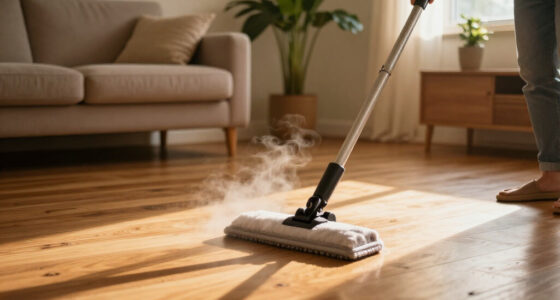
A hard floor steam mop heats water to produce steam and sends it through a pad to loosen and collect dirt. It may suit some sealed surfaces, but heat and moisture can damage unsealed, waxed, or sensitive flooring, so check both manufacturers’ guidance and test a hidden spot first. Sweep or vacuum before use, follow the mop’s instructions for water and care, and keep people and pets away from hot steam.
Check both the flooring and steam mop manuals; use steam only when the floor maker permits it.
Test a hidden spot, let it dry, and inspect for changes before cleaning the full area.
Sweep or vacuum grit first, then use a clean pad and follow the mop’s operating instructions.
Use only the water and additives allowed by the mop maker; change dirty pads and follow its care steps.
Keep children and pets clear of hot steam and wet floors, and let the appliance cool before handling its pad.

Get cleaning gear delivered free with Prime
- Fast, free delivery on millions of items
- Prime Video, Amazon Music and more included
- Member-only deals all year
Know what steam can—and cannot—clean
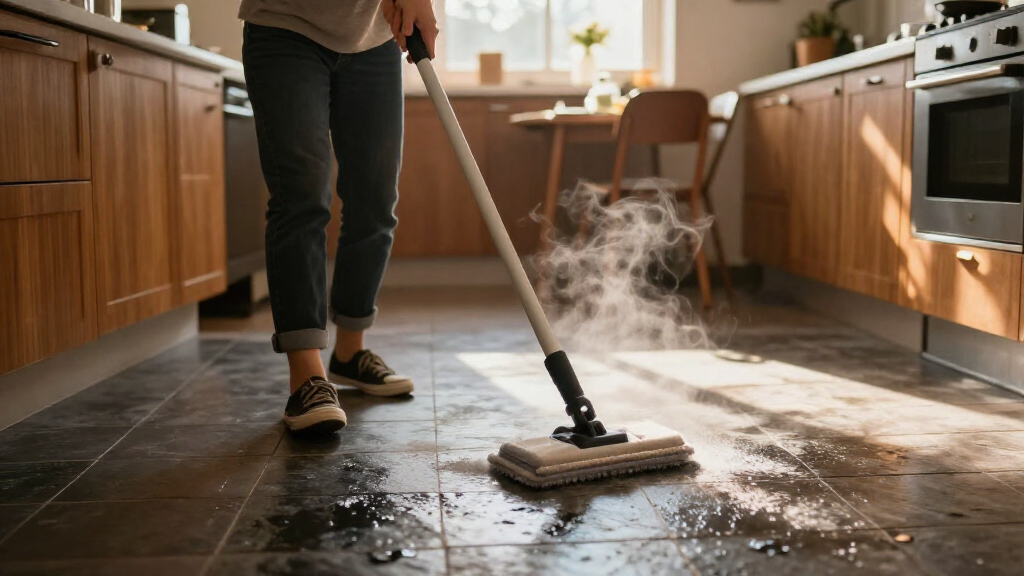
A hard floor steam mop heats water to produce steam and pushes it through a pad that loosens and collects dirt on compatible floors. The steam can soften dried spills, while the pad does the physical work of lifting them away. That distinction matters: the mop does not make dirt vanish, and a dirty pad can redeposit what it has picked up. It also cannot replace sweeping or vacuuming first, because loose grit can be dragged across the finish under a damp pad. Imagine muddy shoe prints across a tiled entry. If you steam over loose sand, the pad can push the grains around and potentially scratch a delicate finish. Sweep or vacuum first, then use a clean pad and follow the manufacturer’s directions for steam output and movement. If the pad turns gray or becomes saturated, change it; continuing may spread grime and leave more moisture behind. A fresh pad takes a little more preparation, but it gives the mop a better chance to collect dirt instead of smearing it. Some steam mops make sanitizing claims, but cleaning and sanitizing are different jobs. A reduction in certain microbes depends on conditions such as temperature, contact time, surface, and correct operation. A quick pass may not provide the exposure used in product testing, so the claim is useful only when you can follow the tested directions on the surface in question. Sanitizing also does not mean sterilizing. If you need a particular hygiene result, check the product label and test details rather than treating any steam pass as proof of disinfection. Results depend on the mop model, pad condition, technique, and floor. Slow, even passes may give steam more time to loosen a dried spill, but lingering too long or using more steam than directed can increase heat and moisture exposure. That creates a practical tradeoff: controlled passes can improve cleaning, while excess exposure may put the finish at risk. Treat the mop as a cleaning tool for approved surfaces, not a shortcut around loose-dirt removal or floor care.Products Worth Considering

Levoit Vital 200S-P Smart Air Purifier for Large Rooms (up to 1875 ft²)

Roborock Qrevo S Pro Robot Vacuum and Mop with 18,500 Pa Suction

Philips Hue Festavia Permanent Outdoor String Lights, 80 Lights, 150 ft
As an affiliate, we earn on qualifying purchases.
Check your floor before you bring in heat and moisture
Steam is suitable only when your flooring manufacturer explicitly allows it and the mop maker lists the surface as compatible. Heat and moisture can weaken finishes, get into seams, or cause swelling and warping; “hard floor” does not mean “steam safe.” A surface may resist water across its face but still be vulnerable where boards meet, at worn patches, or around an edge. Those weak points help explain why a floor can look intact yet react badly to repeated steam cleaning. Take a busy kitchen as an example: its ceramic tile may tolerate steam according to the tile instructions, while the grout or a nearby stone threshold may need a different approach. Checking only the broad floor category misses the parts that may absorb moisture or have a different finish. Both manuals matter because the floor maker knows the material and its installation, while the appliance maker sets limits for the mop’s heat and moisture output. Approval from just one does not establish that the combination is suitable. | Surface | What to check before use | |—|—| | Tile | Tile, grout, sealant, and mop instructions | | Hardwood | Floor maker’s explicit approval; finish and condition | | Laminate | Permission for steam; intact joints and edges | | Vinyl or LVP | Product guidance on heat, moisture, and steam | | Stone | Stone type, sealant, and both manufacturers’ guidance | If both makers allow steam, test a hidden area first and inspect it after it dries. Drying matters because moisture-related changes may not be obvious while the floor is still wet. Stop if the finish changes, a seam darkens, an edge lifts, or the surface feels different. Waxed, unsealed, damaged, or heat-sensitive floors are poor candidates unless their maker says otherwise. When instructions are unclear, use the flooring maker’s recommended cleaning method; uncertainty is a reason to avoid exposing the whole floor to heat and moisture.Follow these steps for a safer cleaning pass
To use a steam mop more safely, confirm the surface is approved, remove grit, prepare the mop as its manual directs, and work with a clean pad. Each step addresses a different risk: approval reduces the chance of floor damage, removing debris avoids dragging grit, and a clean pad helps collect loosened dirt rather than spreading it. Start with the flooring and appliance instructions every time you change rooms or surfaces, since two floors that look alike may have different finishes or care limits.- Check the rules. Read the floor and mop manuals, including any limits on steam settings or passes. These limits determine how much heat and moisture the surface is expected to tolerate.
- Test a hidden spot. Let the area dry and look for a change in color, sheen, texture, seams, or edges. A test can reveal a problem before it affects a visible, larger area.
- Pick up loose debris. Sweep or vacuum before the damp pad touches the floor. Removing grit first helps prevent scratches and keeps the pad focused on stuck-on dirt.
- Prepare the mop. Fill it only as directed, fit a clean pad, and give it the listed heat-up time. The specified water and setup protect the appliance and make its steam output more predictable.
- Clean steadily. Keep the mop moving as instructed; don’t park a hot head on one spot. Concentrated heat and moisture can expose one patch to more than the floor maker permits.
- Cool and clean up. Unplug or switch off as directed, let the mop cool, then remove and wash the pad according to its care label. This protects you from hot parts and helps prevent built-up dirt from carrying into the next cleaning session.
Choose features that match your home and routine
Choose a steam mop by matching its everyday features to your rooms, rather than assuming more settings make it better. Heat-up time, tank size, weight, reach, steam controls, and pad changes affect how the job feels from one room to the next. Each feature involves a tradeoff: a larger tank can reduce refill stops but add weight, while a lighter mop is easier to carry but may need refilling more often. The right balance depends on where you clean and how much floor you cover in one session. Picture a small apartment with a narrow galley kitchen: a bulky mop with a short cord may feel awkward around chair legs and cabinets. In a larger home, cord length and how easily the pad attaches may matter more than a few minutes of heat-up time. If you’re looking at a cordless model, check its stated runtime against the area you plan to clean. Battery convenience only helps if the charge lasts through the job; otherwise, interruptions can erase the time saved by skipping a cord. Recent product lines often advertise adjustable steam, faster heating, removable or larger tanks, washable microfiber pads, and attachments for above-floor cleaning. Some combine vacuuming and steam or offer different floor modes. These features can change the routine—for example, a removable tank may be easier to fill, while washable pads avoid buying disposables but require laundering. They do not make an incompatible floor safe to steam. Product specifications and availability change, so check current manuals and independent testing before choosing a named model. Ask yourself what you clean most often. If you regularly tackle dried splashes on approved tile, a reliable pad system and simple steam controls may matter most because they affect the main task each time you use the mop. If your home has several floor types, clear surface instructions and an easy way to switch to a non-steam cleaning method may be more useful than extra accessories. Keep the flooring maker’s approval at the top of your shopping list: features can improve convenience, but they cannot expand what the floor can safely tolerate.Keep water, upkeep, and waste in view
Many steam mop makers recommend plain water, and some recommend distilled or demineralized water where tap water contains more minerals. Follow the manual for your specific model: minerals may build up inside the appliance, while the wrong liquid can damage it. Do not add floor cleaner, fragrance, essential oils, or disinfectant unless the mop instructions explicitly permit that product. The tank is part of a heated appliance, so an additive that works in a bucket may not be suitable when heated or passed through the mop’s internal parts. For instance, adding a citrus-scented cleaner to the tank may seem like an easy way to freshen a room, but the appliance may not be built to heat that mixture. It could damage parts or produce unwanted vapors. If you want fragrance or a specific cleaning agent, use only a method allowed by both the floor and appliance makers; don’t assume an additive is safe because it smells pleasant. Washable pads can reduce disposable waste, but they still need laundering and eventually wear out. Change a pad when it becomes dirty or saturated, and wash it according to its care instructions; otherwise, a gray pad can carry yesterday’s grime into the next room. Reusable pads trade ongoing laundering for fewer single-use replacements, so their environmental benefit depends partly on how long they last and whether you maintain them. Follow the manufacturer’s descaling or maintenance steps when needed, since mineral buildup can affect how the mop works. A steam mop may use less water than a bucket-and-mop routine and may let you avoid routine detergent, but the full environmental picture also includes electricity, pad lifespan, and how long the appliance lasts. A washable pad used for years tells a different story from one that wears out quickly. Choose a durable model you can maintain, and use it only on floors whose makers allow steam.Compare steam with a regular mop before deciding
A steam mop can be convenient for certain approved floors and stuck-on dirt, while a regular mop gives you more flexibility to follow a floor’s specific cleaning directions. Neither method suits every surface or every household. The choice depends on the floor’s limits and the work you are willing to do: steam offers a ready-to-use approach on compatible surfaces, while a regular mop lets you select a floor-approved cleaner or a gentler amount of moisture when the instructions call for it. Say your hallway has approved tile, but the adjoining living room has laminate whose maker advises against steam. A steam mop may serve the hallway, while a barely damp method recommended by the laminate maker serves the living room. This means you may need two methods even in connected rooms. That takes more planning, but it respects the different materials instead of letting convenience in one area dictate care for the whole house. | Consideration | Steam mop | Regular mop | |—|—|—| | Water use | Often less than a bucket routine; depends on use | Varies with bucket size and technique | | Cleaning agent | Often plain water only, per manual | Use only a floor-approved product | | Floor compatibility | Limited to maker-approved surfaces | Still depends on flooring instructions | | Upkeep | Pads, tank, and possible descaling | Mop head and bucket care | | Hot-surface risk | Hot steam can burn | No steam outlet, though wet floors can slip | For a household with small children or pets, the steam outlet and warm mop head call for extra care; a damp mop may suit the same room better if the floor’s instructions recommend it. A regular mop avoids the hot equipment but still requires control of moisture and drying time. For someone who dislikes wringing out a mop, a steam model may save effort on a compatible surface, though washable pads and appliance maintenance add their own tasks. Compare the whole routine: prep, cleaning, drying, washing pads, storing the appliance, and maintaining it. Convenience is real, but it only counts when the floor can safely take the method.Frequently Asked Questions
Can I use a steam mop on hardwood or laminate?
Only when the flooring maker explicitly allows steam cleaning. Sealed wood and laminate can still be vulnerable at joints, edges, or damaged spots, so check both manuals and test a hidden area first.
Can I steam clean vinyl, tile, or stone?
Check the flooring and mop instructions for the exact product. Tile may be approved, but grout, sealants, adhesives, vinyl, and some stone can be sensitive to heat or moisture.
Does a steam mop disinfect floors?
It may reduce certain microbes under tested conditions, but results depend on temperature, contact time, surface, and correct use. Follow the product’s tested directions; a general cleaning pass does not prove disinfection.
Do I need to sweep or vacuum first?
Yes. Pick up grit, dust, and loose debris before steaming so the damp pad does not spread it or scratch the surface. Start with a clean pad and change it when it becomes dirty or saturated.
Can I put floor cleaner or essential oils in the water tank?
Usually not. Use an additive only if the mop manual explicitly allows it, since other liquids can damage the appliance or produce unwanted vapors.
Should I use tap water or distilled water?
Follow your model’s manual. Some makers recommend distilled or demineralized water in hard-water areas to help reduce mineral buildup.
Are steam mops safe around children and pets?
Keep children and pets away while the mop is operating. Steam and the mop head can burn, and the wet floor can be slippery until it dries.