TL;DR

Get cleaning gear delivered free with Prime
- Fast, free delivery on millions of items
- Prime Video, Amazon Music and more included
- Member-only deals all year
Steam mopping can kill about 99% of bacteria on sealed floors, but it may not eliminate all viruses or spores. Effectiveness depends on temperature, contact time, and surface type. Combining it with disinfectants offers better hygiene.
Imagine walking into your home after a long day. You see the shiny, streak-free floor, and you wonder: does this steam-cleaned surface really kill the germs lurking there? Many turn to steam mops for their quick, chemical-free clean—yet questions swirl about whether they truly disinfect.
If you’re serious about hygiene, understanding what steam mops can and can’t do is essential. This guide breaks down the science, shows you how to maximize their power, and explains where they fit in your cleaning routine. Because, in the end, a clean floor isn’t just shiny—it’s safe.
Steam mops can kill about 99% of bacteria if used properly at 212°F with enough contact time.
Not all viruses or spores are fully eliminated by heat alone; chemical disinfectants are more reliable for complete disinfection.
Always test your flooring first and avoid using steam on unsealed or porous surfaces to prevent damage.
Proper technique—slower movement and thorough coverage—increases the germ-killing power of your steam mop.
Combine steam cleaning with EPA-registered disinfectants during flu season or pandemics for the best hygiene.
Does Steam Mopping Truly Disinfect Your Floors?
TL;DR: Steam mopping can kill about 99% of bacteria on sealed floors when heat, contact time, and coverage are right. It is a powerful cleaning tool, but it may not eliminate all viruses, spores, or high-risk pathogens without an EPA-registered disinfectant.
Possible on sealed hard floors when steam reaches roughly 212°F and stays in contact long enough.
High heat disrupts many bacteria and some viruses, but resistant spores can survive heat alone.
Steam cleans deeply; disinfectants complete the high-risk hygiene layer.
Tile, vinyl, laminate, and sealed hardwood tolerate steam best.
Slow passes give heat enough time to affect microbes.
Steam can reduce bacteria without added cleaning chemicals.
Unsealed wood, cracked floors, and absorbent stone can warp or stain.
Heat is the disinfecting engine, but time is the steering wheel.
Steam mops heat water into vapor that loosens grime and transfers heat to microbes. The hotter the steam and the longer it touches the floor, the more likely bacteria such as E. coli and Salmonella are reduced.
212°F is the useful benchmark
At boiling-level heat, many common bacteria become vulnerable. Weak output, mineral buildup, or rushing the mop can lower real-world impact.
Slow passes beat quick swipes
Disinfection depends on dwell time. Moving steadily over each area for 15-20 seconds helps heat penetrate instead of just polishing the surface.
Not every germ reacts equally
Many bacteria and some enveloped viruses are heat-sensitive. Spores and certain non-enveloped viruses can be tougher to neutralize.
The five-step routine that gives steam a fair shot.
Steam works best after loose dirt is removed. Dirt, grit, and residue can insulate germs from heat and cause streaks, so the prep matters almost as much as the mop.
Sweep first
Remove grit and crumbs so steam reaches the surface directly.
Use clean water
Distilled or filtered water helps prevent mineral clogs.
Wait for heat
Begin only after the mop signals full steam readiness.
Move slowly
Overlap passes and pause long enough for heat transfer.
Layer when needed
Add disinfectant in flu season or after illness exposure.
What steam is strong at, and where it gets less certain.
Steam mopping is excellent for reducing ordinary bacterial load on compatible floors. Its certainty drops when the target shifts to spores, resistant viruses, or irregular surfaces with gaps and texture.
Disinfection confidence spectrum
Cleaning power and disinfection power are related, not identical.
Steam is fast, low-residue, and chemical-free. EPA-registered disinfectants are more reliable when you need broader pathogen claims, especially during illness, flu season, or pandemic-level caution.
| Aspect | Steam mopping | EPA-registered disinfectants | Best practical choice |
|---|---|---|---|
| Bacteria reduction | ✓Up to about 99% when used correctly | ✓Broad claims when label directions are followed | Steam for routine sealed-floor hygiene |
| Viruses and spores | ~Limited for some viruses and spores | ✓More reliable for specified pathogens | Use disinfectant for high-risk situations |
| Surface safety | ~Safe on sealed hard floors only | ~Depends on product chemistry and floor finish | Test a hidden spot first |
| Chemical exposure | ✓No added chemicals required | ✗Requires storage, dilution, or label precautions | Steam for low-chemical cleaning |
| Complete disinfection | ✗Not guaranteed for every pathogen | ✓Designed for targeted disinfection claims | Layer both when hygiene stakes rise |
Steam is safe only when the floor can handle heat and moisture.
A glossy floor is not always a sealed floor. Cracks, worn finish, unsealed wood, porous stone, and damaged laminate can absorb moisture and turn a hygiene upgrade into a repair bill.
Usually suitable
- Sealed ceramic or porcelain tile with intact grout.
- Vinyl floors rated for steam or damp mopping.
- Laminate only when the manufacturer allows steam use.
- Sealed hardwood with no cracks, gaps, or worn finish.
Use caution or avoid
- Unsealed hardwood, worn finish, or visible cracks.
- Natural stone that has not been properly sealed.
- Porous surfaces that absorb moisture quickly.
- Any floor that warps, dulls, stains, or discolors in a 24-hour spot test.
From shiny floor to safer floor: the logic path.
The cleanest routine connects surface choice, heat, dwell time, coverage, and risk level. Miss one link and the disinfecting claim gets weaker.
Steam mopping truly helps disinfect floors, but it is not a universal kill switch.
Use steam as a strong routine hygiene tool for sealed hard floors. For illness cleanup, vulnerable households, or high-risk pathogens, pair it with an appropriate disinfectant and follow the disinfectant label for dwell time.
Great for frequent, chemical-free bacterial reduction on compatible floors.
Heat alone may not fully eliminate the most resistant pathogens.
Steam first, disinfect high-risk areas second, then allow proper dwell time.
How Does Steam Mopping Kill Germs? It’s All About the Heat
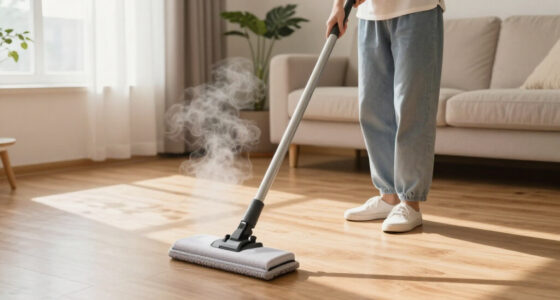
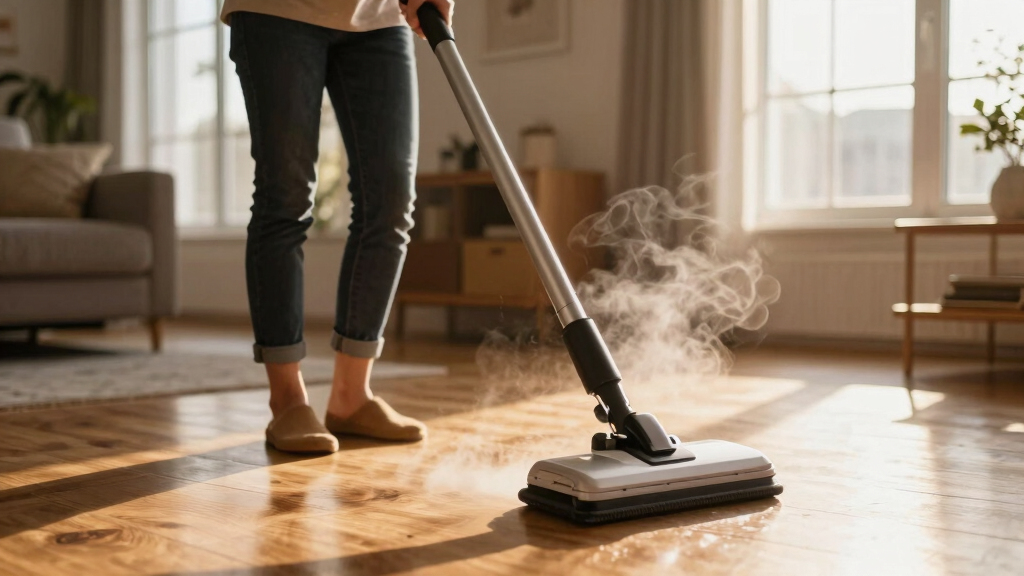
Steam mops heat water to at least 212°F (100°C), releasing a burst of high-temperature steam that loosens dirt and kills many germs. This heat disrupts the cell walls of bacteria and some viruses, making them unable to survive.
For example, bacteria like E. coli and Salmonella are highly susceptible to heat. When steam is applied properly, these germs are reduced by up to 99%. But not all pathogens react the same.
Think of it like baking: the right temperature and enough time matter. If the steam isn’t hot enough or doesn’t stay in contact long enough, some germs can survive. That’s why proper technique is key.
Understanding these nuances is crucial because it highlights why steam alone, without proper contact time and technique, might not fully disinfect surfaces. The heat’s effectiveness depends on maintaining consistent high temperature and ensuring the steam directly contacts all contaminated areas, which can be challenging in irregular or textured surfaces.
As an affiliate, we earn on qualifying purchases.
What Germs Can Steam Mopping Actually Kill? The Facts You Need
Steam mopping can kill most bacteria and some viruses when used correctly. Research shows that at 212°F, many common germs—like E. coli and Salmonella—are effectively neutralized.
However, not all pathogens are equally vulnerable. Some viruses, especially enveloped viruses like the flu or coronaviruses, are more heat-sensitive. But spores and certain non-enveloped viruses can resist heat alone.
For example, during the COVID-19 pandemic, health agencies acknowledged that while steam can reduce viral load, it might not fully eliminate all traces without chemical disinfectants.
In practical terms, if you’re cleaning after a sick person or during flu season, steam helps cut down the germs but isn’t a guaranteed shield against everything. The key implication is that relying solely on heat may leave some resilient pathogens behind, especially spores or certain viruses that require higher temperatures or longer contact times to be inactivated.
Therefore, understanding which germs are affected helps you decide when steam is sufficient and when additional disinfectants are necessary to ensure comprehensive sanitation, particularly in environments with vulnerable populations or known contamination risks.
EPA-registered disinfectant for floors
As an affiliate, we earn on qualifying purchases.
As an affiliate, we earn on qualifying purchases.
Surface Compatibility: When Is Steam Mopping Safe and When Is It a Risk?
Steam mops are best suited for sealed, hard surfaces like ceramic tiles, vinyl, laminate, and sealed hardwood. They’re not recommended for unsealed or porous floors, which can absorb moisture or warp.
Picture your cozy kitchen tiled floor—perfect for steam cleaning. But if your unsealed hardwood has cracks or worn spots, steam can seep in, causing swelling or damage.
Always test a hidden area first. Apply a small amount of steam and wait 24 hours. If no warping or discoloration occurs, it’s likely safe to proceed.
Understanding the material properties of your flooring is essential because some surfaces, despite appearing durable, can be damaged by the high heat and moisture of steam cleaning. For example, unsealed wood or natural stone can absorb moisture, leading to warping, cracking, or discoloration, which can be costly to repair.
Knowing the risks and conducting spot tests help prevent accidental damage. The tradeoff is that using steam on incompatible surfaces can cause irreversible harm, so choosing the right surfaces and testing beforehand are critical steps for safe and effective cleaning.
As an affiliate, we earn on qualifying purchases.
How to Maximize Disinfecting Power with Your Steam Mop
- Ensure your floors are swept or vacuumed to remove loose dirt.
- Fill your steam mop with distilled or filtered water—minerals in tap water can clog the device.
- Set the steam mop to the highest safe setting for your surface. Wait for the indicator light to signal readiness.
- Slowly move the mop over the floor, maintaining steady contact for at least 15-20 seconds per spot to allow heat to work.
- Repeat the process, especially in high-touch areas like entryways and kitchens.
For example, during flu season, dedicating an extra 10 minutes to thorough steaming in the kitchen and bathroom can help reduce bacterial presence without harsh chemicals.
To truly maximize disinfecting potential, focus on technique: moving slowly ensures sufficient heat transfer, and overlapping passes prevent missed spots. Proper maintenance, such as descaling the device regularly, ensures consistent steam quality, which is vital because mineral buildup or wear can reduce temperature and effectiveness. Remember, even with perfect technique, steam’s disinfecting power is limited by contact time and temperature; combining it with other cleaning methods can enhance hygiene outcomes.
best steam mop for bacteria removal
As an affiliate, we earn on qualifying purchases.
As an affiliate, we earn on qualifying purchases.
Steam Mopping vs. Chemical Disinfectants: Which Cleans Better?
| Aspect | Steam Mopping |
|---|---|
| Pathogen Kill Rate | Up to 99% for bacteria; limited for some viruses/spores |
| Surface Damage | Safe on sealed, hard floors; risky on unsealed surfaces |
| Chemical Use | None; eco-friendly and chemical-free |
| Ease of Use | Quick, no mixing or storage of chemicals |
| Limitations | Cannot fully kill all viruses or spores without disinfectants |
While steam cleaning offers a chemical-free way to reduce bacteria, it’s important to recognize the tradeoffs. Chemical disinfectants, especially EPA-registered ones, contain specific agents designed to inactivate a broad spectrum of pathogens, including spores and non-enveloped viruses that are resistant to heat. This means that relying solely on steam may leave some pathogens intact, especially in high-risk environments.
The tradeoff involves balancing safety, convenience, and thoroughness. Combining steam cleaning with chemical disinfectants provides a layered approach—using steam for initial reduction of dirt and bacteria, then applying disinfectants on high-touch surfaces ensures comprehensive sanitation. Understanding these tradeoffs helps you make informed choices based on your specific needs, risks, and safety considerations.
Safety Tips for Using Your Steam Mop Without Worry
- Always read the manufacturer’s instructions before use.
- Test a small, hidden area first to check surface compatibility.
- Keep the mop moving steadily to avoid excessive moisture in one spot.
- Wear shoes and avoid steam contact with skin or eyes—steam is hot!
- Regularly descale or clean your device to maintain steam quality.
If you follow these steps, you can enjoy a safe, effective clean without damaging your floors or risking burns. Proper usage not only prevents damage but also ensures you get the most disinfecting benefit from each session, as inconsistent technique can leave germs behind or damage delicate surfaces.
Can Steam Mopping Replace Disinfectants During Flu Season? Yes… and No
Steam mopping can significantly reduce germs, but it doesn’t fully replace disinfectants, especially during flu or COVID-19 outbreaks. While it kills many bacteria and some viruses, it might not eliminate all traces of deadly pathogens.
Think of steam as a first line of defense—like cleaning your house before locking the door. For complete peace of mind, use EPA-registered disinfectants on high-touch surfaces after steaming.
The key implication is that relying solely on steam during high-risk periods could leave some pathogens behind, which can be critical for vulnerable populations. Combining steaming with chemical disinfectants creates a layered defense—reducing the initial microbial load with heat, then ensuring complete eradication with proven disinfectants. This approach minimizes the risk of transmission and enhances overall hygiene, especially in settings like healthcare or homes with immunocompromised individuals.
Frequently Asked Questions
Does steam mopping kill all germs and viruses on my floors?
Steam mopping can kill most bacteria and some viruses when used at the right temperature and contact time. However, it may not fully eliminate all viruses or spores without additional disinfectants, especially during outbreaks.How effective is steam cleaning compared to chemical disinfectants?
Steam cleaning effectively reduces bacteria by up to 99%, but chemical disinfectants are more reliable for complete pathogen elimination, especially for viruses and spores. Combining both offers the best hygiene.Can I use a steam mop on all types of flooring?
No. Steam mops are safe on sealed, hard surfaces like tile, vinyl, and sealed hardwood. Avoid using them on unsealed or porous floors, which can absorb moisture and warp.Are there health or safety concerns with steam mops?
Yes. Always follow the manufacturer’s instructions, test surfaces first, and avoid direct steam contact with skin or eyes. Proper maintenance and cautious use make steam mopping safe.How often should I steam mop for hygiene?
For general cleaning, once a week is enough. During flu season or outbreaks, increase frequency in high-touch areas, but remember it’s best combined with disinfectants for full protection.Conclusion
Your floors might look spotless after a steam mop pass, but remember—heat alone isn’t a guarantee of complete disinfection. Think of steam as a powerful ally that reduces germs, not a magic wand. Pair it with good practices and disinfectants when needed for real peace of mind.
Next time you steam, focus on thoroughness, surface safety, and knowing its limits. A clean floor is a healthy floor—so use your tools wisely.
Halloween Picks
halloween
As an affiliate, we earn on qualifying purchases.