TL;DR
Steam mops are generally not recommended for hardwood floors because heat and moisture can harm the finish or seep into seams, even when little water remains visible. Check both the flooring maker’s care guide and warranty; if they do not explicitly approve steam, remove grit and clean with a lightly damp microfiber mop and a compatible cleaner.
Your floor can look dry after a steam mop passes over it and still have taken a dose of heat and moisture. That combination can dull a finish or work into seams, where damage may show up later as swelling, cupping, or boards that no longer sit flat.

Get cleaning gear delivered free with Prime
- Fast, free delivery on millions of items
- Prime Video, Amazon Music and more included
- Member-only deals all year
So, are steam mops for hardwood floors a safe shortcut? Sometimes a floor maker permits steam under specific conditions, but many do not. You’ll learn what to check before switching on the mop, why “sealed” does not automatically mean “steam-safe,” and how to clean wood with a lightly damp microfiber mop when the guidance is unclear.
Use steam on hardwood only when the flooring manufacturer explicitly approves it for your specific floor and finish.
A sealed surface can still be vulnerable; worn finish, gaps, wax, or damage raise the risk.
A hidden-area test cannot predict damage from repeated heat and moisture exposure.
For routine cleaning, remove grit first, then use a well-wrung microfiber mop and a floor-approved cleaner.
Check both product instructions and the warranty before adding steam, vinegar, oils, or cleaner to a mop.
Know why steam can harm a wood floor
Steam mops are generally not recommended for hardwood floors because they expose the finish and joints to heat plus moisture. Even if the pad looks almost dry, hot vapor can reach seams, worn spots, and edges, where it may dull the finish or affect the wood underneath.
The trouble may not appear during the first cleaning. Imagine steaming the kitchen once a week: the floor looks clean after each pass, but over time a cloudy patch may develop near the sink, or a board edge may begin to lift. Repeated exposure can add up, and a quick visual check after mopping cannot rule out gradual wear.
Damage can include clouding, swelling, cupping, warping, or separation. A floor with cracks, worn finish, or gaps between boards has more vulnerable places for moisture to enter. That makes steam especially risky on damaged or poorly sealed surfaces.
A nearly dry-looking floor is not proof that hot vapor stayed out of its seams.
For example, if a dog’s muddy paw prints dry into a thin film, it may seem tempting to use steam for a fast reset. On hardwood, sweep away grit first, then use a floor-approved cleaner and a well-wrung microfiber pad. You get a controlled clean without adding high heat.
Products Worth Considering

Sonos Era 100 SL Compact Microphone-Free Speaker, Black

Philips Hue Play Gradient Light Tube, Large, Black

Hisense 85U6SF Pro 85-Inch U6 Pro Mini-LED 4K UHD Smart Fire TV
As an affiliate, we earn on qualifying purchases.
Check the floor maker’s rules before you use steam
Use a steam mop on hardwood only when the flooring manufacturer explicitly approves steam for your specific floor and its care instructions describe the conditions. A mop’s label alone cannot establish that the floor is compatible; the flooring maker’s guidance should take priority.
Start with the floor’s care guide and warranty. Look for direct language about steam cleaning, not just general phrases such as “sealed floor” or “hard-surface compatible.” If you rent, ask the landlord or property manager for the flooring information. If you cannot identify the floor or find clear instructions, choose a lightly damp microfiber mop instead.
Marketing often highlights adjustable steam, quick heating, washable pads, and use on multiple hard-floor surfaces. Those features describe the appliance; they do not confirm that it suits your boards. “Hard floor” may include tile or resilient flooring, which has different care needs from hardwood.
A test in a hidden corner may help you spot an immediate problem, but it cannot replace manufacturer approval. Nor can one pass show whether repeated use will affect seams or finish over months. For instance, a spotless patch behind the sofa does not predict how steam will affect a worn doorway that gets cleaned every few days.
If both makers permit steam, follow their exact instructions for the mop setting, pad, and frequency. When those directions conflict or remain vague, skip the steam and use the floor maker’s recommended cleaning method.
Tell sealed, unfinished, and engineered wood apart
Sealed hardwood is not automatically steam-safe; the finish, its condition, and the product instructions still matter. Unfinished, waxed, oil-finished, cracked, or worn floors are particularly poor candidates because moisture and heat can reach or disrupt the surface more easily.
The word “wood” covers different floors. Solid hardwood is made from wood throughout, while engineered hardwood has a wood surface over layered material. That layered construction does not make engineered flooring universally safe for steam: the top finish and the manufacturer’s instructions still determine the care method.
Laminate that looks like oak is not hardwood. Its printed wood-look surface sits over a core, and moisture can enter at the joints and damage that core. Wood-look tile is another material altogether; it has different cleaning rules from either wood or laminate.
Picture a hallway with older boards that have a few fine gaps near the radiator. A newer engineered floor in the next room may look smoother, but neither appearance tells you what the maker permits. Check the product paperwork or contact the flooring maker; for older or refinished floors, an installer or flooring professional may help identify the finish.
Pay attention to condition as well as floor type. A sound, intact finish is different from one with peeling edges or cloudy patches. If you see damage, clean gently while you seek guidance rather than using steam to test the surface.
Clean hardwood with a simple, low-moisture routine
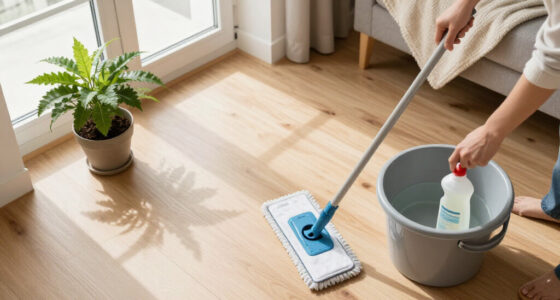
The cautious routine for most hardwood is simple: remove grit, then use a well-wrung microfiber mop and a cleaner approved for that floor. This keeps excess water off the boards and avoids exposing the finish to high heat.
- Pick up grit first. Sweep or vacuum with a floor-safe attachment so sand and crumbs do not scratch the finish under the mop.
- Check the cleaner label. Choose a product the floor maker approves; apply it as directed rather than guessing at the amount.
- Dampen the pad lightly. Wring it until it feels damp, not wet. The floor should not have puddles or a trail of standing water.
- Work in small sections. For sticky marks, pause with the damp pad and wipe gently instead of soaking the spot.
- Dry any excess promptly. If you see moisture left behind, wipe it up with a clean, dry cloth.
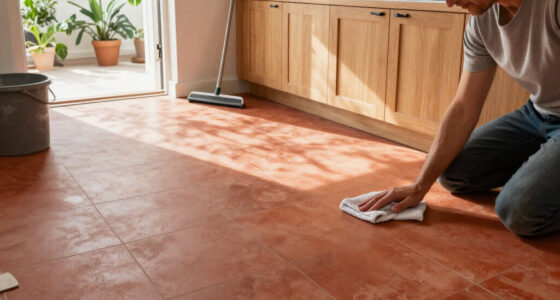
For example, after breakfast, a few crumbs and a sticky juice drop near the table do not call for a steaming whole-room treatment. Vacuum the crumbs, spot-clean the mark with an approved product, and pass a damp pad over the affected area. That is often enough to leave the floor tidy without a wet sheen.
Avoid standing water, abrasive cleaners, and vinegar unless the flooring maker specifically permits a product. Some finishes can be harmed by harsh ingredients, and residue can leave a dull or tacky film that seems like dirt returning quickly.
Avoid shortcuts that can cost you a finish or warranty
A product claim such as “safe for all hard floors” is not proof that a steam mop suits your particular hardwood and finish. Check the floor instructions and warranty before using steam; some makers exclude damage from steam cleaning.
It is easy to mistake broad compatibility language for specific approval. For instance, a mop package may list tile, vinyl, and sealed surfaces. That does not tell you whether your oil-finished boards, older varnish, or engineered floor can handle the appliance’s heat and moisture.
Also check the mop maker’s directions before adding anything to the tank. Vinegar, essential oils, and floor cleaner may harm the appliance or leave residue unless the mop manufacturer explicitly allows them. A pleasant citrus scent is not a sign that the mix is safe for the machine or the floor.
Keep the care guide and warranty details handy, especially if you have just moved in and do not know the flooring brand. A photo of a label or a quick message to the installer can save you from treating an unknown finish as a test surface. If you cannot confirm approval, use the low-moisture routine instead.
That choice also suits people who want to limit cleaning chemicals. A microfiber pad and an approved cleaner can meet that goal without steam. The best tool is the one that cleans the floor while following its care instructions, not the one with the most settings.
Use this decision rule when you are still unsure
If you do not have explicit approval from the flooring maker, do not use steam on the floor. A lightly damp microfiber mop is the more cautious choice while you look for the care guide or ask the installer.
Here is a practical example: you find a “wood-look” label on a steam-mop box, but your living room boards came with the house and you cannot tell whether they are solid or engineered. That label does not answer the question. Find the product or warranty information first; if it is missing, clean gently and keep excess water off the floor.
- Approval is clear and the floor is in good condition: follow both manufacturers’ instructions exactly.
- The instructions are silent or hard to find: skip steam and use an approved cleaner with a well-wrung pad.
- The finish looks worn, waxed, cracked, or unfinished: avoid steam and seek floor-specific advice.
- The surface is laminate or wood-look tile: check its own maker’s care instructions; do not assume hardwood rules apply.
This rule leaves room for exceptions: some sealed hardwood products may have manufacturer-approved steam methods. But a seal, a mop setting, or a successful one-time pass alone does not establish that permission. The care guide is the useful evidence.
When in doubt, make the gentler choice today. A few extra minutes with a damp microfiber pad cost less than repairing a finish that has turned cloudy or boards that have started to swell.
Frequently Asked Questions
Can you use a steam mop on hardwood floors?
Only if the flooring manufacturer explicitly permits steam for your specific floor and its condition. Otherwise, use a lightly damp microfiber mop with an approved cleaner.
Is steam safe for sealed hardwood?
Not automatically. The finish, its condition, and the mop’s heat and moisture output all matter, so check the floor maker’s care guide.
Can steam mops damage wood floors?
Yes. Heat and moisture can dull or cloud a finish and may affect the wood at seams, especially on worn or damaged floors.
What about engineered hardwood or laminate?
Follow each product’s own instructions. Engineered construction does not guarantee steam safety, and laminate is a separate material whose core may be vulnerable to moisture at its joints.
What is the safest way to clean hardwood?
Remove grit with a floor-safe vacuum or broom, then use a well-wrung microfiber mop and a cleaner approved for the floor. Wipe up any excess moisture promptly.
Will a steam mop void my floor warranty?
It may if the warranty or care guide prohibits steam cleaning. Read those documents before using the mop, and contact the flooring maker if the wording is unclear.
Conclusion
Remember one rule: if your floor maker does not explicitly approve steam, leave the steam mop in the closet. Sweep or vacuum first, then use a lightly damp microfiber pad and a cleaner approved for your floor.
Wood can look sturdy and still react badly at a tiny seam. Keep the mop damp, the finish protected, and the boards looking like wood—not a repair project.