TL;DR

Get cleaning gear delivered free with Prime
- Fast, free delivery on millions of items
- Prime Video, Amazon Music and more included
- Member-only deals all year
Steam at normal atmospheric pressure is about 100°C (212°F), and it can inactivate many bacteria and viruses when the contaminated spot gets hot enough for long enough. There is no universal germ-killing temperature: contact time, soil, surface access, the organism, and the appliance all matter, while household steam cleaners should not be treated as sterilizers.
Steam near 100°C (212°F) at normal pressure can inactivate many bacteria and viruses, but only with sufficient direct exposure.
No universal temperature guarantees germ control; the temperature at the contaminated spot, contact time, soil, and organism all matter.
Typical household steam cleaners should not be relied on to destroy bacterial spores or sterilize medical equipment.
Check the flooring and appliance instructions, then test a hidden spot before steaming an approved hard surface.
Steam can scald and leave damaging moisture; dry treated materials as directed and address the source of recurring mold.
The Temperature Steam Needs to Kill Germs
Steam can inactivate many germs, but the nozzle temperature alone cannot prove a surface is safe. Heat must reach the contaminated spot and stay there long enough.
What steam can reach
Results depend on the germ and whether heat reaches the treated material.
Can be inactivated
Moist heat may work when it reaches the contaminated spot for long enough.
Surface access matters
Steam may affect exposed growth but miss mold in porous materials; leftover moisture can encourage regrowth.
Harder to destroy
Typical household steaming should not be relied on to eliminate spores.
Why a quick pass can fall short
The target temperature and exposure time work together.
Dirt, grease, fabric layers, gaps, and trapped air can shield germs or slow heating.
Nozzle temperature does not tell you how hot the contaminated surface gets.
Use the appliance’s specified method; a brief burst is not the same as sustained exposure.
Cleaning, disinfection, sterilization
These terms describe different goals.
| Process | Goal | Household steam cleaner |
|---|---|---|
| Cleaning | Remove soil and residue | Can help, following directions |
| Disinfection | Inactivate many disease-causing microbes | Depends on tested conditions |
| Sterilization | Eliminate all microbial life, including spores | Do not assume it can |
Before steaming at home
Protect people and surfaces while choosing a suitable method.
- Check both the appliance manual and the surface care instructions.
- Test a hidden spot on an approved hard surface.
- Do not steam materials or medical items unless their instructions allow it.
- Dry treated materials as directed and address the source of recurring dampness.
- Keep steam away from skin; it can cause serious scalds.
Why 100°C steam can help but cannot promise a germ-free surface
The temperature steam needs to reach to kill germs depends on the **germ, contact time, and treated spot**; there is no single number that guarantees every surface is safe. At normal atmospheric pressure, steam is about **100°C (212°F)**, hot enough to inactivate many common bacteria and viruses when moist heat reaches them long enough. A brief puff and a sustained, controlled exposure are different treatments. For instance, imagine wiping a kitchen counter after raw chicken touched one smooth patch. Steam that directly contacts that patch may heat it effectively, but a pass that barely skims the edge or leaves a wet cloth between the nozzle and the surface may deliver a different dose of heat. The temperature at the appliance outlet is not a reading of the counter itself. The phrase “to kill germs” also hides several different goals. **Cleaning** lifts soil and residue; **disinfection** inactivates many disease-causing microbes; **sterilization** aims to eliminate all microbial life, including resistant spores. Household steam appliances vary in temperature, pressure, coverage, and contact time. Treat their performance claims as tied to the test conditions and organisms tested, not as a blanket promise for every room and every germ.Products Worth Considering

Levoit Eleva 300X Air Purifier with Sealed HEPA Filtration

Dreame G10 Pro Wet and Dry Vacuum Mop

Dyson Big Ball Multi Floor Canister Vacuum, Yellow
As an affiliate, we earn on qualifying purchases.
Why heat needs time and direct contact to do its job
Steam can inactivate many germs through heat only when enough heat reaches the contaminated area for long enough. **Temperature and exposure time work together**: a momentary burst at a high temperature does not equal holding the target at that temperature for several minutes. The appliance’s instructions and the conditions used for any performance claim matter more than a generic rule such as “steam for a few seconds.” Think of heat as a visitor that needs a clear path and time to settle in. Dust, grease, dried food, fabric layers, narrow seams, and trapped air can shield germs or slow warming. For instance, steam directed at a greasy line beside a stove may heat the outside of the residue first, while material tucked underneath remains cooler. Cleaning away visible soil first can help expose the surface for the next step. A floor pass also has moving parts: how quickly you push the mop, whether the pad stays in contact, and how quickly the floor cools. A slow pass might sound more thorough, but lingering can harm a surface that does not tolerate heat or moisture. Follow the machine’s directions and the flooring maker’s care guidance; do not extend contact time beyond what those instructions allow.What steam can do to bacteria, viruses, mold, and spores
Steam at about **100°C at normal pressure** can inactivate many bacteria and viruses with sufficient direct exposure, but different germs have different heat resistance. **Bacterial spores are much harder to kill** and typical household steaming should not be assumed to destroy them. Mold adds another wrinkle: heat may affect growth on an exposed surface, yet steam may miss material inside porous items and can leave moisture behind.| Target | What household steam may do | What to keep in mind |
|---|---|---|
| Many bacteria and viruses | May inactivate them when the contaminated area gets enough direct moist heat for long enough | Results vary by organism, soil, coverage, and exposure time |
| Mold on an exposed surface | Heat may damage or kill growth where steam reaches | Porous material, residue, and lingering dampness can remain problems |
| Bacterial spores | May survive ordinary household steaming | Use a validated sterilization process where sterilization is required |
How household steaming differs from medical sterilization
A household steam cleaner should not be treated as a **sterilizer**. Sterilization has a stricter goal than routine cleaning or disinfection: it aims to eliminate all forms of microbial life, including bacterial spores, through a validated process. Consumer appliances are not designed or monitored as medical sterilizers, even if their steam is hot. Healthcare autoclaves commonly use saturated steam around **121°C (250°F)** or **132°C (270°F)** under pressure, with a specified holding time and a monitored cycle. Exact settings depend on the load and equipment; the temperature alone does not describe a complete cycle. A medical instrument has to receive the required treatment throughout the load, not just encounter a hot nozzle at one point. That distinction matters if you are tempted to steam a reusable medical item at home. For example, a household garment steamer might warm the outside of a tool while leaving hinges, joints, or a packed container untreated. Follow the device maker’s cleaning and sterilization directions, and use a validated process when the item requires one. A clean-looking item is not proof of sterility, just as a warm surface is not proof that spores have been destroyed.How to use a steam cleaner without guessing about germ control
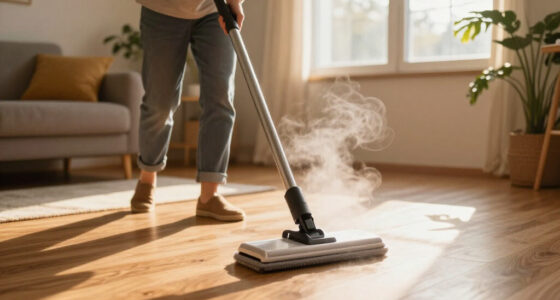
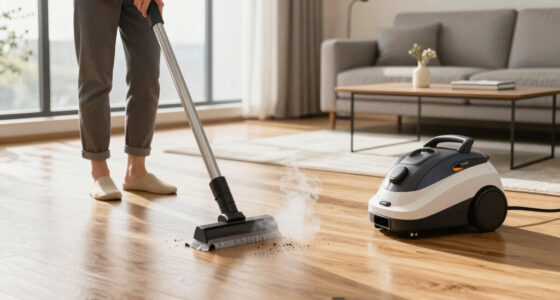
To use a steam cleaner responsibly, **check both sets of instructions, clear away soil, and follow the appliance’s tested method**. A temperature figure alone cannot show whether the treated area received enough heat. Start with the surface maker’s care guide and the cleaner manual, especially for wood, laminate, vinyl, and luxury vinyl plank (LVP), where heat and moisture can affect finishes, seams, or adhesives.- Check whether the surface allows steam. If either the floor or appliance maker says not to steam it, choose another cleaning method. A sealed tile floor and an unsealed wood plank do not respond the same way.
- Remove loose dirt and residue first. Sweep or clean the area as directed so crumbs, grease, or dried soil do not shield the target.
- Test a hidden spot. Use the exact method you plan to use, then check for dulling, swelling, color change, or loosened seams after the area dries.
- Follow the specified pad, setting, and movement. Don’t invent a slower pass or longer dwell time; extra heat and moisture can damage the material.
- Let the surface dry and review it. If water collects at a seam or the finish changes, stop and follow the flooring maker’s advice.