
TL;DR

Get cleaning gear delivered free with Prime
- Fast, free delivery on millions of items
- Prime Video, Amazon Music and more included
- Member-only deals all year
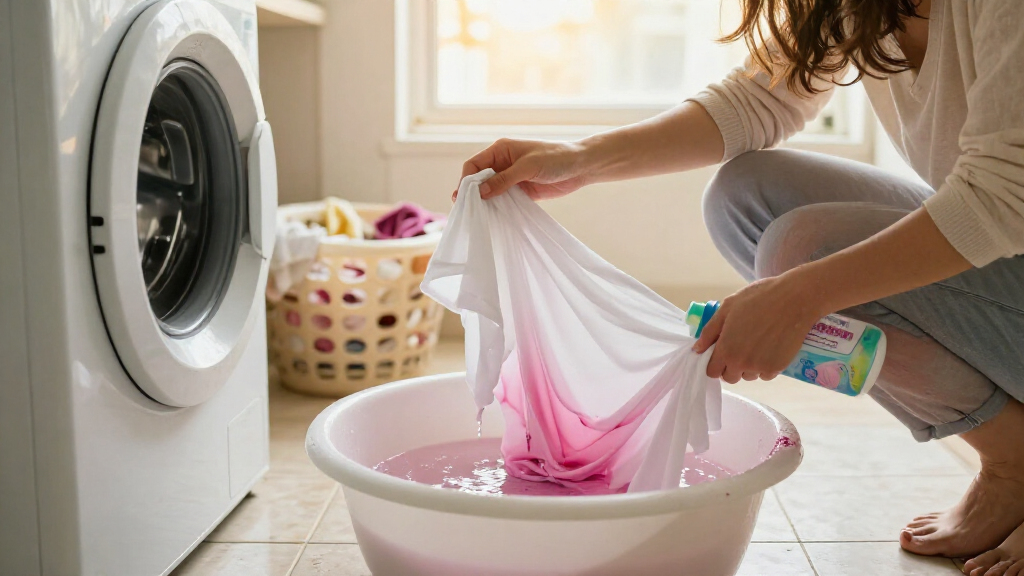
Apartment Therapy reporter Jennifer Billock describes how a maroon sweatshirt turned her husband’s white shirts pink and shares a removal method from cleaning expert Scott Schrader of CottageCare. The advice is to rinse with cold water, soak in an appropriate dye-removal solution, then wash separately at the hottest temperature the care label allows; repeat if needed and do not use a dryer until the color is gone.
Apartment Therapy reporter Jennifer Billock has published a cleaning guide describing how she treated pink dye transfer on her husband’s white shirts, with advice from Scott Schrader of CottageCare. The method calls for a cold-water rinse, a fabric-appropriate soak and a separate wash, while warning that putting stained clothes in a dryer can set the color.
Billock says the transfer happened when she washed a maroon sweatshirt with her husband’s new white patterned shirts. She had expected cold water to prevent the sweatshirt’s color from running; afterward, the shirts had turned a pastel pink-maroon shade. She reports that her own attempts did not remove the color before she sought advice from Schrader.
Schrader’s procedure begins with rinsing the stained fabric in cold water to remove loose dye. For a soak, the guide gives two options: mix one cup of oxygen-based, color-safe bleach per gallon of water, or use one sachet of dye remover in 1.5 gallons of water. The water should be as hot as the garment’s care label permits. Soak for six to eight hours, or overnight for heavier stains.
After soaking, wash the item by itself with heavy-duty detergent, using the hottest setting allowed by its care label. If dye remains, Schrader recommends repeating the soak-and-wash process. The report also advises against scrubbing, which it says can spread the stain deeper, and says not to dry the garment until the transfer is gone. It does not report a controlled test or establish that the method works on every fabric or dye.
Why Dryer Heat Can Set Dye
Dye transfer can turn an ordinary mixed load into a problem that is harder to correct if the stained clothes are dried too soon. The practical point in Schrader’s advice is to keep the garment out of the dryer while color remains, and to check the care label before using a warm soak or wash. That may help readers avoid adding heat before they know whether the stain has lifted.
The guide also offers a staged approach rather than promising a quick fix: rinse, soak, wash separately and repeat if necessary. Its limits matter. Results may depend on the fabric, the dye and the cleaning product, and the article does not say that all dye-transfer stains can be removed.
Products Worth Considering

Ring Wired Doorbell Plus (2nd Gen) and Chime (3rd Gen), Nickel Silver and White

Bose TV Speaker Compact Soundbar with Bluetooth and HDMI-ARC, Black

Bose TV Speaker (2nd Gen) Compact Soundbar with Bluetooth and HDMI
As an affiliate, we earn on qualifying purchases.
A Mixed Load Turned Pink
Billock’s account is the basis for the report: after she and her husband moved in together, she combined his new white shirts with her maroon sweatshirt in their first laundry load. She believed the cold-water setting would prevent color from running, but the shirts came out pink. The story describes her experience as a cautionary example, not as a laboratory demonstration.
Apartment Therapy identifies Schrader as a cleaning expert at CottageCare and attributes the treatment steps to him. The article names OxiClean White Revive and Dr. Beckmann Colour Run Remover as examples of products, but its instructions also refer to product categories: oxygen-based color-safe bleach or dye remover. It says prices were accurate when published and notes that the publisher may earn a commission from purchases through product links.
““Don’t dry the clothing until the stain is completely gone.””
— Scott Schrader, cleaning expert at CottageCare, as quoted by Apartment Therapy
Results Depend on the Garment
The report does not specify the shirts’ fabric, the care-label instructions, or whether Billock’s particular garments were restored using Schrader’s method. It also provides no test data comparing oxygen-based bleach with dye remover, and no guaranteed success rate. The source advises repeating treatment if color remains but does not state how many cycles are safe for a given garment.
Readers should follow the clothing label and the cleaning product’s directions. The source does not discuss how the method performs on delicate fabrics, garments that cannot be soaked, or stains that have already been heat-dried. Those situations may require different care, and the article does not resolve them.
Check the Stain Before Drying
The next step in the method is to inspect the garment after its separate wash. If dye remains, the report recommends repeating the soak and wash, while keeping the clothing out of the dryer until the stain is gone. If the label limits water temperature or soaking, those restrictions take priority over the guide’s general recipe.
For future loads, Schrader advises using color-catcher sheets if colors and whites are washed together. That is a preventive suggestion in the article, not a guarantee that color will not run. Apartment Therapy does not announce further testing or follow-up on Billock’s shirts, so their final condition is not established in the source.
Key Questions
What should I do first if dye transfers onto clothing?
Rinse the stained fabric with cold water to remove loose dye, then follow care-label and product directions for any treatment. Avoid drying it while the color remains.
How long does the suggested soak take?
The guide recommends six to eight hours, or overnight for heavier stains. Use water no hotter than the garment’s care label allows.
Can I put the garment in the dryer after the first wash?
Apartment Therapy’s guide says not to dry it until the stain is completely gone, because dryer heat can set the dye. Check the garment after washing and repeat treatment if color remains.
Does this method work on every fabric?
The report does not establish that it works on every fabric or dye. Follow the garment’s care label and the cleaning product’s directions; the article provides no specific guidance for delicate or non-soakable items.
Source: apartmenttherapy.com