
TL;DR

Get cleaning gear delivered free with Prime
- Fast, free delivery on millions of items
- Prime Video, Amazon Music and more included
- Member-only deals all year
A swivel head lets a tool’s head pivot relative to its handle, making it easier to reach around obstacles and change direction without moving your whole body. It can improve access and comfort, but it does not guarantee less strain or better results: check its range, stability, durability, and compatibility with the task and surface.
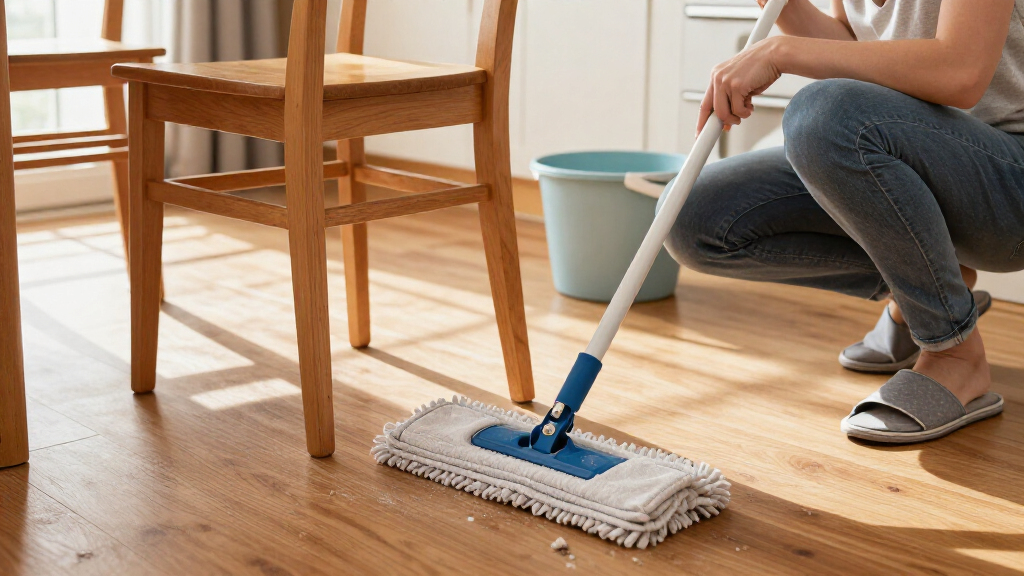
You’re halfway through cleaning beneath a kitchen table when the mop head catches on a chair leg. You twist the handle, shuffle the chairs, and try again. A swivel head can make that small, annoying dance easier by letting the head change direction without forcing your hand and body to follow every turn.
That sounds like a minor feature. It can make a real difference to access, steering, and comfort, especially around furniture and along room edges. But “swivel” doesn’t mean every head moves the same way, stays put equally well, or suits every floor.
This guide explains how the joint works, where it helps, where it can get in your way, and what to check before you buy. You’ll also find practical cautions for steam mops and hard floors: always follow the floor and appliance manufacturers’ care instructions, and test a hidden area before cleaning a surface you’re unsure about.
A swivel head changes the angle of the working head; it does not automatically add power, precision, or cleaning effectiveness.
Check movement range and stability against your actual spaces, such as chair legs, baseboards, or the gap beneath a sofa.
A secure, controlled joint may improve maneuvering, while a fixed or lockable head may suit tasks that need firm alignment.
A swivel does not make steam compatible with laminate, hardwood, vinyl, or LVP; follow both manufacturers’ directions and test a hidden area when appropriate.
Stop and inspect a head that becomes loose, stiff, noisy, or damaged, and maintain it only as the manufacturer directs.
What a swivel head lets you do without moving your whole body
A swivel head connects a tool’s head to its handle with a joint that lets the head pivot or rotate. That movement lets you approach a surface from an angle instead of lining up the whole tool straight on, which can make tight or awkward spots easier to reach.
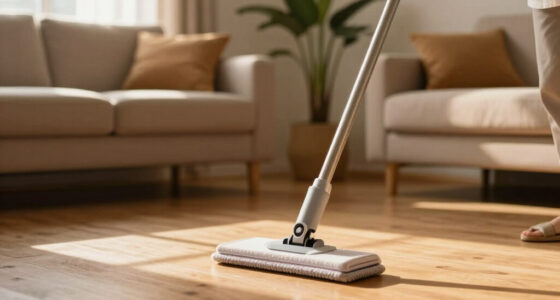
Think of it like turning a shopping cart: the wheels change direction while the handle stays in your hands. A cleaning mop’s head can similarly angle around chair legs, follow a baseboard, or slip beneath a cabinet overhang. The joint changes positioning; it does not automatically add cleaning power or make the tool more accurate.
Not every swivel moves in the same way. Some pivot in one plane, while others articulate in multiple directions or rotate around the handle. So a head that tilts neatly side to side may still struggle to lie flat beneath a low sofa.
For example, imagine wiping a narrow strip beside a refrigerator. A pivoting head may let you keep the handle in a comfortable position while guiding the pad along the edge. A fixed head could require you to turn your shoulders or pull the appliance away—if the space and appliance setup allow it.
Products Worth Considering

LEVOIT Vital 100S-P Smart Air Purifier with Washable Pre-Filter

Roborock Robot Vacuum and Mop with LiDAR Navigation and 10,000 Pa Suction

LG C2 Series 65-Inch OLED evo 4K Smart TV (OLED65C2PUA, 2022)
As an affiliate, we earn on qualifying purchases.
Why a swivel head matters more when you clean around furniture
Why a swivel head matters more becomes clear when the floor is crowded: its main advantage is access, because the head can change direction around obstacles without requiring you to shift the entire handle and your stance each time. That can make a cleaning path feel smoother, especially in small rooms with table legs, bins, or bathroom fixtures.
With a fixed head, cleaning under a dining table can feel like steering a stiff tray through a forest of chair legs. You may need to lift and reposition the mop repeatedly. A swivel can let you approach one leg from the side, then redirect the pad toward the next gap with less fuss.
The same feature can help you clean a room perimeter. You can guide the head along a baseboard while holding the handle at a modest angle, rather than repeatedly stopping to line up the tool. Fewer awkward adjustments may help you keep a steady pace, though the benefit depends on the head’s range and clearance.
More motion is not always more useful. If the head is too wide to fit beneath a cabinet, or the joint cannot tilt far enough to let the mop lie flat, a swivel won’t solve the problem. Check the product’s dimensions and movement description against the spaces you actually clean.
How a swivel can improve comfort without promising pain-free cleaning
A swivel can improve comfort by letting you adjust the tool’s angle instead of forcing your wrist and arm to hold one awkward position. It may reduce some twisting and reaching during a task, but it does not guarantee less strain or prevent injury; technique, tool weight, task length, and your own body all matter.
Consider mopping a narrow bathroom beside a toilet. With a rigid head, you might bend your wrist sharply to reach behind the pedestal. A well-positioned swivel can let the pad angle into the gap while your hand stays closer to a neutral position. That is a useful adjustment, not a medical promise.
The feel of the joint matters, too. A head that swings freely may make steering feel unpredictable, while one that takes too much force to move can frustrate you and invite extra wrist effort. The helpful middle ground is smooth, controlled movement that responds when you guide it and stays stable when you release it.
If a cleaning session makes your arm tired, take a break, use a comfortable grip, and avoid forcing the tool into a space it cannot reach. A swivel is one design feature, not a substitute for sensible pacing or an appropriately sized tool.
When a fixed head gives you better control than a swivel
A fixed head can be a better choice when you need rigid alignment or firm control, because a moving joint adds play that may make the tool feel less steady. Swivel designs are built for easier repositioning, but that convenience can come at the cost of stiffness, especially if the joint is loose or does not lock.
Picture scrubbing a stubborn mark with a hand tool. If the head shifts as you apply pressure, you may find it harder to keep the working edge exactly where you want it. In that situation, a fixed connection—or a swivel that locks securely—can feel more predictable.
For routine mopping, you usually guide rather than bear down heavily, so a swivel may be useful for maneuvering. But a loose joint can still make the head wobble or drift, which makes each pass harder to direct. A moving head also adds a joint that can wear, collect dirt, or need attention over time.
That does not mean every swivel is fragile or every fixed head is durable. Build quality, materials, use, and care all matter. Think about the job’s demands: if you mostly steer around furniture, movement may help; if you need a rigid, precise connection, stability may matter more.
Use this checklist to choose a swivel that suits the job
Choose a swivel head by checking whether it moves through the angles you need, holds its position, and feels controlled in your hand. The word “swivel” alone does not tell you how much movement a head offers or whether the joint can handle the demands of your task.
- Match the movement to the space. Check whether the head pivots one way or in several directions. If you want to mop beneath a low sofa, verify that it can tilt far enough to keep the pad flat.
- Check how it holds its angle. Look for a firm, stable feel or an adjustment that lets you set the tension. A lock can help when you need a repeatable position, but it may slow down frequent direction changes.
- Think about use and durability. A joint for a damp cleaning tool faces different conditions from one used on a dry hand tool. Read the manufacturer’s care instructions and check whether replacement parts are available.
- Test the handling if you can. Move the head through its range. It should feel smooth, not floppy or stubborn. For an online purchase, look for clear specifications rather than assuming a product image proves the range.
- Confirm floor and appliance guidance. A swivel does not make steam safe for every surface. Check both manufacturers’ instructions and test a hidden area first.
For example, if you mainly clean open tile, a simple joint may be enough. If you need to steer around a packed kitchen, smooth movement and a head that stays aligned may matter more than a wide, loose range.
Steam-mop swivels still need careful floor checks
A swivel head can help you steer a steam mop around obstacles, but it does not make steam suitable for every hard floor. Heat and moisture can damage some finishes and flooring materials, and a maneuverable head cannot change what the floor manufacturer permits.
Before using a steam mop, read the instructions for both the appliance and the floor. Be especially cautious with laminate, hardwood, vinyl, and luxury vinyl plank (LVP), because product construction, seams, finish, and installation can affect whether steam is allowed. If either manufacturer advises against steam, use a different cleaning method.
If guidance permits steam but you still have doubts, test a hidden spot first and check for changes after it dries. Keep the mop moving as directed, use only approved pads and settings, and avoid lingering in one place. A swivel can make it easier to guide the head along a kitchen island, but it does not make prolonged heat exposure harmless.
For example, an LVP floor may look sturdy while its care instructions specifically rule out steam. In that case, the sensible choice is to follow the flooring guidance and use an approved method instead. Surface compatibility comes before convenience.
Keep the joint smooth, stable, and ready to use
A swivel joint stays useful when you keep it clean, check for looseness, and follow the maker’s maintenance instructions. The joint handles repeated movement, so a change in feel—such as new wobble, grinding, or stiffness—can be a sign to stop and inspect rather than force it.
After cleaning, let a mop cool as directed before handling or storing it, then remove the pad and deal with any visible debris around the head. A thread, hair, or dried residue caught at a joint can make movement rough. Do not pour water into a mechanism or apply lubricant unless the manufacturer says that product and method are suitable.
For instance, if a mop head begins to swing loosely while you steer along a wall, pause and check whether a fastener or connection needs attention. If the instructions allow tightening, follow them carefully. If the joint appears cracked or damaged, stop using the appliance and contact the manufacturer about repair or replacement.
Maintenance is a trade-off built into moving parts: they offer flexibility, but they also need attention. A joint that is easy to inspect or replace may be more practical over time than one you cannot service, especially if you use the tool often.
Frequently Asked Questions
What is a swivel head?
A swivel head is a tool head attached by a joint that lets it pivot or rotate relative to the handle or body. Its movement can help you change direction without moving the whole tool, though the range depends on the design.
Does a swivel head make a steam mop easier to use?
It can make a steam mop easier to steer around furniture, chair legs, and edges. How much it helps depends on the head’s range, stability, and the layout of your room.
Can a swivel head reduce wrist strain?
It may let you avoid some awkward wrist angles by changing the head’s position instead. It cannot guarantee less strain or prevent injury, so use a comfortable grip, take breaks, and avoid forcing the tool.
Is a swivel head less durable than a fixed head?
Not always, but a swivel adds a moving joint that can wear, loosen, or collect debris. Check its build and care instructions; a fixed head may suit work that needs maximum rigidity.
Does a swivel head make steam safe for laminate or hardwood?
No. A swivel changes how the mop moves, not how heat and moisture affect flooring. Follow the steam-mop and flooring manufacturers’ instructions, and test a hidden area when the guidance allows steam but you remain uncertain.
Conclusion
Choose a swivel for the angles you actually need, not for the word on the box. Check that the head reaches your awkward spots, moves smoothly, and stays steady enough for the work. For steam mops, check surface guidance before you ever switch on the heat.
A good joint should make the mop feel easier to steer, not make you wrestle the handle. Let the head do the turning—and let the floor maker’s instructions set the limits.