TL;DR

Get cleaning gear delivered free with Prime
- Fast, free delivery on millions of items
- Prime Video, Amazon Music and more included
- Member-only deals all year
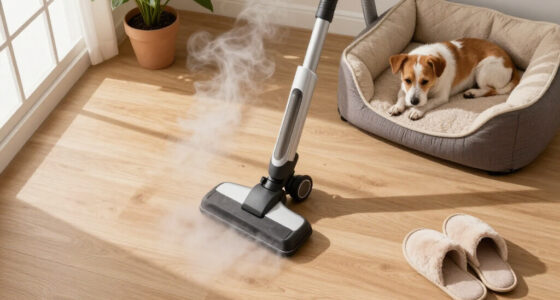
For most healthy adults, briefly breathing the vapor from a properly used, water-only steam mop in a ventilated room is generally low risk. Do not inhale the plume directly: hot moisture can irritate or burn airways, while cleaning additives, dirty pads, and heated floor residues can release substances you do not want to breathe.
That soft white cloud may resemble the harmless mist above a cup of tea, but a steam mop produces much hotter moisture close to its outlet. The bigger concern is rarely poisoned water vapor. It is heat, airway irritation, chemical residue, and surface compatibility.
You will learn when incidental exposure is usually low risk, why a scented tank changes the answer, and what to do if your eyes burn or your chest feels tight. You will also get a practical routine that protects your breathing, your household, and your flooring.
For most healthy adults, brief exposure from a properly used, water-only steam mop in a ventilated room is generally low risk.
Keep your face away from the plume because hot moisture can irritate or burn your eyes, skin, nose, throat, and airways.
Never add bleach, mixed cleaners, fragrance, essential oil, vinegar, or ordinary floor cleaner unless the appliance manual explicitly permits that exact liquid.
Check the flooring maker’s guidance and test a hidden area before using steam on hardwood, laminate, vinyl, LVP, adhesive-backed tile, or an unfamiliar finish.
Stop immediately and seek fresh air if you develop coughing, wheezing, chest tightness, dizziness, or burning eyes; urgent symptoms need medical help.
Is Breathing Steam Mop Vapor Safe?
For most healthy adults, brief incidental exposure from a properly used, water-only steam mop in a ventilated room is generally low risk. The real concerns are heat, airway irritation, chemical additives, dirty equipment, and residues lifted from the floor.
What turns a faint floor-level mist into a breathing concern?
Normal incidental exposure is very different from deliberately inhaling the plume, filling a confined room with mist, or heating a liquid the appliance was never designed to use.
Brief and ventilated
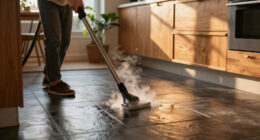
A healthy adult stands upright, uses approved water, keeps the mop moving, and cleans with a window open or an exhaust fan running.
Confined or sensitive
A small closed bathroom, a lingering odor, asthma, COPD, recent respiratory illness, children, or pets can make the same exposure more significant.
Direct or contaminated
Your face is near the outlet, the mop spits hot water, or heat reaches bleach, fragrance, solvents, pesticide residue, pet urine, or unknown floor treatments.
Typical position: brief water-only use with ventilation. Risk moves right with direct inhalation, poor airflow, vulnerable occupants, chemical additives, contaminated surfaces, or malfunctioning equipment.
Plain water and scented vapor are not the same exposure
Pure water vapor is invisible. The soft white plume is mostly condensed droplets, which may collect traces of additives, floor residues, dirty-pad material, or internal components.
| Tank input | Main concern | Safer decision | Rating |
|---|---|---|---|
| Manufacturer-approved water | Heat, moisture, and residue already present on the floor | Ventilate, stay upright, and avoid the plume | ✓Preferred |
| Fragrance or essential oil | Airway irritation, headache, pet exposure, and appliance damage | Use only if the manual permits that exact product | ~Caution |
| Ordinary floor cleaner or vinegar | Heated scents, solvents, foam, residue, or damaged seals | Keep it out unless specifically approved | ✗Avoid |
| Bleach, ammonia, or mixed products | Potentially dangerous gases and serious eye or airway irritation | Never add or mix cleaning chemicals | ✗Never |
“Natural” does not mean safe to inhale. Essential oils and fragrances can trigger asthma, headaches, or reactions in scent-sensitive people and animals.
Use your steam mop more safely
One calm sequence protects your breathing, nearby people and animals, the appliance, and the floor finish.
Confirm approved liquids, water type, and permitted flooring in the manual.
Check for spills, solvents, pesticides, pet urine, loose seams, and unknown coatings.
Open a window, run an exhaust fan, or leave the door open in a compact room.
Use only approved water. Distilled water may reduce scale if the manual permits it.
Keep children, pets, and people with reactive airways away during cleaning.
Keep your face back and move at the recommended pace without parking the hot head.
Unplug, cool, empty if directed, wash the pad, and allow every part to dry fully.
Never test steam with your hand or face. If the nozzle blocks or the mop spits boiling water, unplug it and allow it to cool before checking the head, tank, or pad.
Symptoms decide the next move
Heat and humid air can irritate without causing a severe burn. People with asthma or other respiratory conditions may experience airway narrowing sooner.
Stop, unplug, and get fresh air
- New coughing or throat irritation
- Burning, watering, or irritated eyes
- Headache, nausea, or dizziness
- An acrid, smoky, strong chemical, or electrical odor
Seek urgent medical help
- Trouble breathing or worsening wheezing
- Chest tightness that does not ease in fresh air
- Confusion, fainting, blue lips, or severe weakness
- Suspected exposure to mixed bleach, ammonia, or acids
Clean air does not guarantee a safe floor
Steam performance and surface compatibility are separate questions. A quick pass may clean without disinfecting, while excess heat or moisture can damage certain finishes.
Check the flooring guide
Use extra caution with unsealed wood, waxed floors, laminate, vinyl, LVP, adhesive-backed tile, and unfamiliar or heat-sensitive finishes.
Steam is not automatic sterilization
Microbial reduction depends on surface temperature, contact time, mop speed, pad condition, and the organism involved.
Keep the system clean
Wash reusable pads, dry them fully, avoid stagnant tank water, manage mineral buildup, and stop using damaged equipment.
When Steam-Mop Vapor Is Usually Low Risk
Is breathing steam mop vapor safe? For most healthy adults, a brief whiff from a water-only machine in a ventilated room is generally low risk. Normal incidental exposure differs sharply from placing your face near the outlet, filling a tiny room with mist, or heating chemicals that the manufacturer never approved [1].
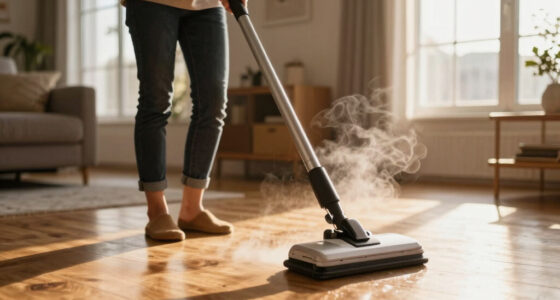
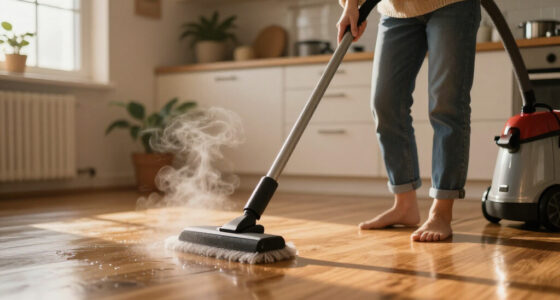
Think of mopping a tiled kitchen with the window cracked open. You stand upright, push the mop ahead of you, and notice a faint cloud near the floor. That is a much lower-risk situation than kneeling beside the head to inspect a blocked nozzle while hot vapor rises toward your nose and eyes.
Plain water does not make the process harmless. Steam near the outlet can scald skin, irritate your throat, and trigger coughing before it causes an obvious injury. Hot, damp air can also narrow sensitive airways, especially if you have asthma or recently had a respiratory infection.
Do not test steam with your hand or face. Keep your body away from the outlet, and unplug the appliance before checking a blockage or changing a hot pad.
Serious inhalation injury during ordinary household use is uncommon. Risk rises when the plume is inhaled deliberately, the room has little airflow, the appliance spits boiling water, or the tank contains something besides approved liquid.
As an affiliate, we earn on qualifying purchases.
What That White Cloud Can Carry Into the Air
Is breathing steam mop vapor safe? The answer depends partly on what travels with the moisture. Pure water vapor is invisible; the white plume you see is mostly tiny droplets formed as hot vapor cools. Those droplets can pick up traces of tank additives, dirty-pad residue, floor treatments, or internal material [1].
A clean mop filled with approved water may release little beyond heat and moisture. A different scene unfolds when the pad smells sour, the tank has sat full for a week, and the floor still carries a glossy cleaner. Heat can lift old fragrance, grime, and chemical residue into the warm cloud around you.
Recent indoor-air research has drawn attention to volatile compounds, aerosols, fragrances, and very small particles created during household cleaning [2]. Much of that work examines sprays or scented products, so you should not treat every finding as proof that plain steam behaves the same way. Evidence specific to water-only steam mops remains limited.
Odor gives you a useful warning, though not a laboratory reading. A mild warm-plastic smell can appear during early use of some appliances, but strong, acrid, smoky, or electrical odors call for an immediate stop. Unplug the mop, open the room, let the unit cool, and follow the troubleshooting instructions in its manual.
steam mop with adjustable steam control
As an affiliate, we earn on qualifying purchases.
As an affiliate, we earn on qualifying purchases.
Why Plain Water and Scented Vapor Are Different Risks
Is breathing steam mop vapor safe? A water-only steam mop presents a different exposure than a tank containing fragrance, disinfectant, vinegar, bleach, or essential oil. Heating or spraying added products can irritate your eyes and airways, damage seals, leave floor residue, and create hazards that plain water does not [1].
| What enters the mop | Main concern | Safer decision |
|---|---|---|
| Manufacturer-approved water | Heat, moisture, and residues already on the floor | Ventilate and avoid the plume |
| Fragrance or essential oil | Airway irritation, headaches, pet exposure, and equipment damage | Use only if the manual explicitly permits it |
| Ordinary floor cleaner | Heated solvents, scents, foam, residue, or damaged parts | Keep it out unless specifically approved |
| Bleach, ammonia, or mixed products | Potentially dangerous gas and serious irritation | Never add or mix them |
Suppose you add eucalyptus oil because you want the hallway to smell crisp. The machine hisses, the scent thickens, and your child starts coughing in the next room. “Natural” describes the oil’s origin, not how safely someone can inhale its heated compounds; birds and scent-sensitive pets can react strongly too.
If your manual says water is the only steam mop input allowed, treat that as a safety limit, not a bland suggestion. The right liquid protects the appliance and your lungs, while the wrong one can cloud the room and your judgment—a small example of zeugma with a serious point.
Never mix cleaning chemicals. Bleach combined with ammonia or acids can release dangerous gases, even when the amount seems small.
As an affiliate, we earn on qualifying purchases.
Use Your Steam Mop More Safely in 7 Steps
You can lower steam-mop exposure by using plain approved water, steady airflow, and a clean appliance. The routine takes only a few minutes: check the floor and tank, move sensitive occupants away, keep your face clear of the plume, and stop when your body or the machine gives you a warning.
- Read the manual. Confirm which liquids and floor types the manufacturer allows.
- Check the surface. Look for spills, pesticide residue, pet urine, solvents, loose seams, or an unknown coating.
- Open a window or run an exhaust fan. In a compact bathroom, leave the door open so warm mist does not collect around your face.
- Fill only with approved water. Distilled or demineralized water may reduce scale if the manual permits it, but it does not make direct inhalation safe.
- Keep people and animals back. Let babies, pets, and anyone with reactive airways stay elsewhere during cleaning.
- Move at the recommended pace. Do not park a hot mop head on one spot unless the instructions specifically call for it.
- Let the floor cool and dry. Unplug the mop, handle the pad as directed, empty the tank if required, and store the cord without sharp bends.
For example, before cleaning a small entryway, remove muddy grit with a vacuum, crack the nearby window, and test the mop behind a cabinet. Then make smooth passes rather than holding the head over a stubborn mark. You protect the finish and your breathing with the same patient movement.
Wash reusable pads after use and let them dry fully. A damp pad folded into a cupboard can develop a stale, cellar-like smell; reheating it may spread that odor through the room. Regular descaling, when the manual allows it, also reduces spitting, mineral buildup, and uneven steam flow.
As an affiliate, we earn on qualifying purchases.
Who Should Stay Out of the Room Until the Floor Dries
People with asthma, COPD, reactive airways, fragrance sensitivity, or a recent respiratory illness should take extra care around steam-mop vapor. Infants, some older adults, pregnant people worried about chemical exposure, birds, and other pets also benefit from staying away until the room is aired and the floor is cool.
Children and animals face more than an inhalation issue. They live closer to the floor, where the hot head, damp boards, and trailing cord sit. A toddler can touch a shiny wet patch, while a dog can cross it and lick moisture or loosened residue from its paws.
Imagine someone in your household has asthma. You vacuum first to remove dust, send them into another room, open two windows, and use plain water for a short cleaning session. If the hallway becomes muggy or smells perfumed, you stop rather than waiting for a cough or tight chest to settle the question.
Birds deserve special caution because airborne fumes can affect them quickly. Move the cage well away from the cleaning area, avoid essential oils and fragrances, and restore fresh airflow before bringing the bird back. For a household with a vulnerable person or animal, a damp microfiber mop may sometimes be the simpler choice.
Protect Your Lungs by Checking the Floor First
A steam mop can heat old cleaner, adhesive, finish, pesticide, solvent, pet urine, or mold treatment sitting on or beneath a floor. Before you start, identify spills and recent treatments, confirm the flooring maker permits steam, and test a hidden area. Unknown residue turns a simple water-only job into an uncertain exposure.
Laminate, hardwood, vinyl, and luxury vinyl plank can all have restrictions. Steam may enter seams, soften adhesive, haze a finish, swell a wood-based core, or lift an edge. The first clue may be a sweet chemical odor, a whitening patch, or a raised seam under your sock.
Take a rental apartment with click-lock laminate. You do not know whether the previous occupant used wax, polish, or concentrated pet-odor treatment. Check the floor-care instructions, clean a discreet corner first, and stop if the surface grows tacky or releases a sharp smell. Manufacturer approval beats a generic steam-cleaning claim.
Steam is also a poor shortcut for a serious mold problem. It may affect some organisms on a suitable hard surface, but it does not repair the moisture source or safely clean porous, mold-damaged material. Adding hot moisture can make the problem worse. For widespread mold or hidden water damage, use qualified remediation help.
“Chemical-free” describes what you add to the tank. It does not promise zero exposure from floor residue, dirty pads, plastic parts, finishes, or adhesives.
What to Do If You Cough, Wheeze, or Feel Burning
If steam mopping causes coughing, wheezing, chest tightness, dizziness, burning eyes, or throat irritation, turn off and unplug the mop if you can do so safely. Leave the area, breathe fresh air, and ventilate the room. Persistent breathing trouble or suspected chemical gas exposure needs urgent professional help.
For mild eye irritation, remove contact lenses if they come out easily and rinse your eyes with clean, lukewarm water. For a suspected thermal burn, hold the area under cool running water; do not press ice against the tissue. Facial burns or breathing difficulty need prompt medical care.
Say you accidentally poured a cleaner into the tank, then felt your eyes sting when the mop warmed up. Do not lean over the appliance to sniff the outlet or try to finish the room. Move away, bring others and pets with you, ventilate only if safe, and contact your local poison-control service with the product labels nearby.
Call emergency services for severe shortness of breath, persistent wheezing, chest pain, confusion, fainting, or facial burns. Do the same if bleach may have mixed with ammonia or an acid. A brief cough that clears outdoors is different from symptoms that continue, return, or grow stronger.
Why a Quick Pass Cleans but May Not Disinfect
A steam mop can loosen soil and reduce some microbes, but a quick pass does not automatically disinfect or sterilize a floor. Results depend on the temperature that reaches the surface, contact time, mop speed, pad cleanliness, surface shape, and organism. Marketing language cannot replace a validated disinfection method.
Imagine pushing the mop briskly across a tile in two seconds. The grout may feel warm and look brighter, yet it may not stay at the required temperature long enough for a disinfection claim. Holding the mop still for longer, however, can damage a finish or force moisture into seams.
Use steam as a cleaning tool within the appliance and flooring instructions. If someone has vomited, a pet has tracked waste indoors, or your household needs infection-control cleaning, follow a method approved for that surface and situation. Do not pour disinfectant into the tank unless both the mop maker and product label permit that use.
The practical tradeoff is simple: more heat and contact time may improve microbial reduction, but they can also increase moisture, fumes, and floor damage. Clean visible soil first, choose a surface-safe method, and let the floor dry. Sometimes the gentler microfiber pass does the better job overall.
Frequently Asked Questions
Can a steam mop damage your lungs?
Ordinary incidental exposure is unlikely to damage healthy lungs, but very hot steam can burn airways and heated additives can cause irritation. Leave the room if you develop wheezing, chest tightness, or shortness of breath, and seek medical help if symptoms persist or feel severe.
Is it safe to use a steam mop around babies?
Keep babies out of the immediate area while you mop because they breathe close to the floor and can touch hot equipment or damp surfaces. Use approved water, ventilate the room, and wait until the floor is cool and fully dry before crawling or play resumes.
Can you put essential oils in a steam mop?
Do not add essential oils unless the manufacturer explicitly approves them. Heated oils can irritate airways, bother pets, leave a slick residue, and damage internal parts. A lavender scent may smell gentle while creating a harsher breathing environment.
Why does a steam mop smell like plastic or chemicals?
The smell can come from a new appliance, stagnant water, a dirty pad, mineral scale, floor residue, or an overheating part. Stop using the mop if the odor is strong, acrid, smoky, or paired with unusual heat, sparking, leaking, or noise. Unplug it and follow the maker’s service guidance.
Should you open windows while steam mopping?
Yes, ventilation is a sensible precaution, especially in a small room, around sensitive people, or whenever you notice odor or heavy condensation. Open a window, run an exhaust fan, or keep the door open so warm moisture and airborne residue do not build up around you.
Conclusion
Your safest rule is simple: use only approved water, keep fresh air moving, and keep your face away from the plume. If the mop smells wrong, the floor reacts, or your breathing changes, stop.
A clean floor should leave behind a dry surface and ordinary room air—not a chemical haze, a lifted seam, or a burning throat.
Evergreen bestsellers Picks
bestsellers
As an affiliate, we earn on qualifying purchases.