TL;DR

Get cleaning gear delivered free with Prime
- Fast, free delivery on millions of items
- Prime Video, Amazon Music and more included
- Member-only deals all year
Steam mopping can be safe if you match your mop to your floor type, use gentle microfiber pads, and keep the mop moving. Regular maintenance and proper technique prevent scratches and damage, making cleaning effective and safe.
Imagine the fresh, clean scent filling your home after a quick steam mop session. It’s a powerful, chemical-free way to sanitize and brighten your floors. But if you’ve ever worried about scratches or damage, you’re not alone. Many homeowners hesitate, fearing steam might harm their delicate surfaces.
This guide shows you how to steam mop safely, with practical tips you can trust. Whether your floors are hardwood, laminate, or vinyl, understanding the nuances can save you from costly repairs. Ready to clean smarter, not harder? Let’s get started.
How to Steam Mop Without Scratching Your Floor
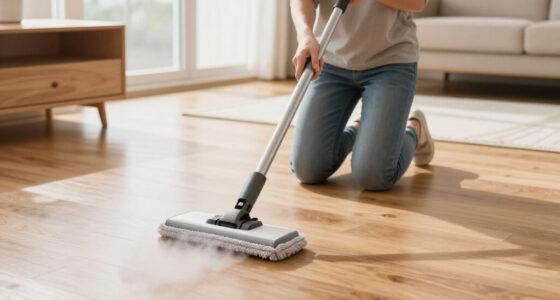
Steam can sanitize and brighten a floor without harsh chemicals—but only when heat, moisture, friction, and floor type are kept in balance. Match the setting to the surface, remove grit first, use a clean microfiber pad, and keep the mop moving.
One mop, four different risk profiles
Floor construction determines how much steam and moisture it can tolerate. Confirm the manufacturer’s care instructions before use; “water-resistant” does not necessarily mean “steam-safe.”
Hardwood
Use only if the flooring maker permits steam. Choose the lowest setting, a plush pad, and quick passes. Gaps or worn sealant allow vapor to reach the wood.
Risk: finish + moistureLaminate
Moisture can enter seams and cause swelling or delamination. Use minimal vapor only when explicitly approved, and never allow dampness to pool.
Risk: seams + swellingVinyl
Often durable, but high heat may affect adhesive or finish. Select low steam, avoid rough pads, and pay special attention to plank edges.
Risk: heat + abrasionTile & stone
Usually the most tolerant option. Still avoid abrasive attachments, damaged grout, and stone finishes that require specialist cleaning.
Risk: grout + coatingChoose the safest starting point
The correct setting is the lowest one that cleans effectively. If the floor manufacturer prohibits steam—or the surface is unsealed—choose another cleaning method.
| Floor type | Steam suitability | Safest setting | Essential protection | Main warning |
|---|---|---|---|---|
| Sealed hardwood | ~ Conditional | Low / mist | Plush clean pad | Do not pause over boards |
| Unsealed wood | ✗ Avoid | Do not steam | Use approved dry method | Moisture may penetrate wood |
| Laminate | ~ Check maker | Lowest approved | Fast, light passes | Protect seams from moisture |
| Vinyl | ~ Conditional | Low | Soft non-abrasive pad | Avoid excess heat |
| Ceramic tile | ✓ Usually suitable | Low to medium | Inspect grout first | Avoid damaged grout lines |
| Natural stone | ~ Finish-specific | Maker-approved only | Neutral, soft pad | Sealants vary widely |
Five moves to a scratch-free clean
Scratches usually begin before steam is released: loose grit gets trapped beneath the pad, then pressure and repeated passes drag it across the finish.
Check
Confirm the floor is sealed and steam-approved. Test a discreet area first.
Clear
Vacuum or sweep every grain of sand, pet litter, and loose debris.
Pad
Fit a clean, soft microfiber pad with no hardened residue or trapped grit.
Glide
Use gentle overlapping strokes, light pressure, and continuous motion.
Dry
Let the surface dry quickly. Stop if you see pooling, haze, or raised seams.
Never leave the heated mop stationary. Concentrated heat and moisture can soften finishes, create dull spots, penetrate seams, or warp moisture-sensitive flooring.
Reduce what actually causes micro-scratches
A gentle pad is only safe while it stays clean. The most protective routine controls debris, pressure, heat, and pad condition together.
Relative scratch-risk controls
Illustrative priority index based on the practical controls in this guide—not a laboratory damage scale.
Priority rises where one mistake can combine friction with heat or moisture damage.
The floor-safe mop kit
Look for control and finesse—not maximum steam output.
Protect the pad, protect the floor
Wash microfiber with mild detergent, skip fabric softener, and replace pads that become stiff, thin, stained with residue, or permanently rough.
Is steam mopping safe for hardwood?
Only when the wood is sealed, the flooring manufacturer permits steam, and you use low output with quick, light passes.
Which microfiber pad is best?
Choose a soft, plush pad made for delicate floors. Inspect it before every use and remove any embedded debris.
Can laminate or vinyl be steamed?
Sometimes, but approval varies. Use the lowest permitted setting and avoid excessive heat or moisture near seams and edges.
What if a scratch appears?
Stop cleaning and inspect the pad and mop base for grit or rough edges. Follow the flooring maker’s repair guidance before polishing.
Know Your Floor Type: The First Step to Scratch-Free Cleaning
Before you turn on the steam, identify what kind of flooring you have. Hardwood, laminate, vinyl, and tile all respond differently to moisture and heat. For example, sealed hardwood can handle gentle steam if you set the right level, but unsealed wood risks water damage and scratches. Understanding these differences is crucial because each surface’s response to steam impacts how you should clean it.
Knowing your floor type helps you avoid common mistakes—like using too much steam on unsealed wood, which can cause swelling or warping, or abrasive pads on sensitive surfaces that might scratch the finish. This knowledge allows you to tailor your cleaning approach, balancing effective sanitization with preservation of your surfaces’ integrity.
For instance, laminate flooring is often manufactured with a protective overlay, but excessive moisture can cause it to swell or delaminate. Vinyl floors are generally resilient but can be scratched by rough pads or high heat. Each material’s unique properties mean that a one-size-fits-all approach can lead to damage or diminished appearance over time. Therefore, understanding these nuances isn’t just about avoiding damage; it’s about maintaining the beauty and longevity of your floors.
microfiber steam mop pads for hardwood floors
As an affiliate, we earn on qualifying purchases.
As an affiliate, we earn on qualifying purchases.
Pick the Perfect Steam Mop: Features That Protect Your Floors
Not all steam mops are created equal, and choosing the right features can make a significant difference in preventing scratches. An adjustable steam control allows you to tailor the amount of heat and moisture to your specific floor type, reducing the risk of warping, discoloration, or surface damage. A model with a low or mist setting is especially valuable for delicate surfaces like hardwood or laminate.
Imagine a sleek, ergonomic mop with a swivel head that glides effortlessly across your floors. This design minimizes the need for excessive pressure, which can cause scratches or gouges, especially on uneven surfaces or edges. The microfiber pads should be plush and gentle, similar to a soft cloth, because they trap dirt effectively while being soft enough to prevent abrasions.
Some models come with antimicrobial or specially designed sensitive-surface pads that further reduce the risk of scratching. Features like quick heat-up times and easy-to-replace pads streamline your cleaning routine, ensuring you can maintain safety and efficiency. Remember, a good steam mop isn’t just about power; it’s about control, finesse, and the ability to adapt to different floor types without causing harm.
gentle steam mop for laminate floors
As an affiliate, we earn on qualifying purchases.
As an affiliate, we earn on qualifying purchases.
How to Prepare Your Floor for a Gentle, Scratch-Free Clean
Before steaming, removing loose dirt and debris is essential because grit and small particles can act like tiny abrasives when agitated by the mop’s movement. This is especially important for delicate floors—tiny particles can scratch or dull the surface if left unattended. A thorough sweep or vacuum clears these particles, reducing the chance of micro-scratches during mopping.
Think of this step as preparing a canvas for painting; the cleaner and smoother the surface, the better the final result. Using a microfiber cloth or soft brush attachment on your vacuum can gently lift dust without scratching. This preparation is a critical step because even the most careful mopping can cause damage if debris is present, especially on surfaces with a sensitive finish.
Removing dirt isn’t just about cleanliness; it’s about protecting your investment. Grit and tiny particles, if left on the floor, can embed into the microfiber pad or be pushed around by the mop, creating micro-scratches that accumulate over time. Properly preparing your floor ensures that your steam cleaning doesn’t inadvertently cause damage—particularly important for hardwood and delicate laminate surfaces where scratches are more visible and harder to repair.
As an affiliate, we earn on qualifying purchases.
Master the Technique: Move Smoothly and Safely
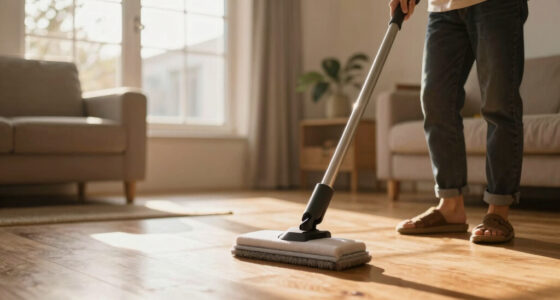
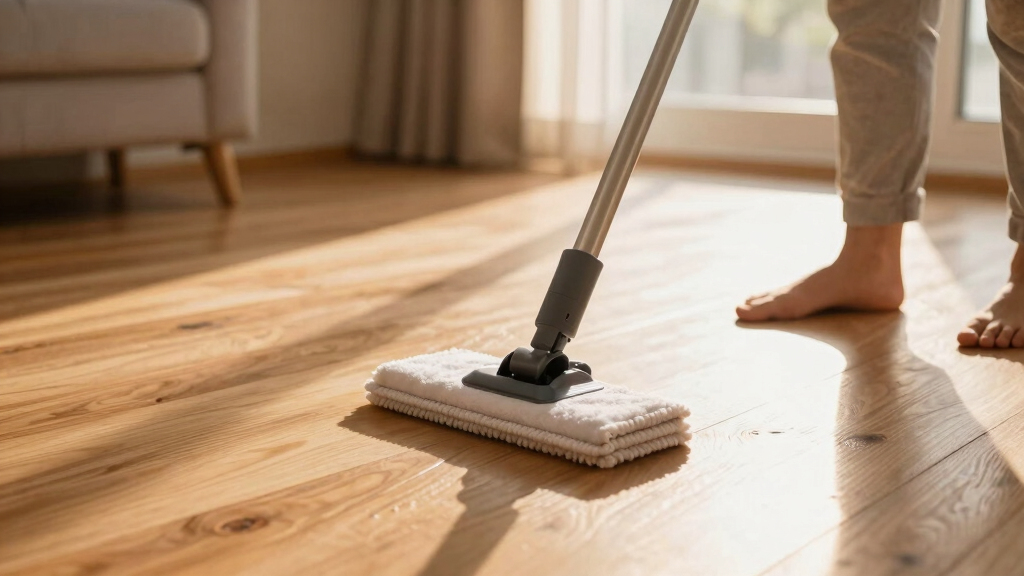
Using your steam mop with the correct technique is vital for avoiding scratches. Keep the mop moving steadily and overlapping each stroke slightly to distribute heat and moisture evenly. Staying in one spot or pressing down hard can lead to moisture pooling, which may cause warping or discoloration, especially on sensitive floors.
Think of this as painting with gentle, controlled strokes—consistency is key. On delicate surfaces, use a light touch, almost as if you’re petting the floor, to prevent excessive pressure that could scratch or damage the finish. Moving the mop smoothly reduces friction and prevents micro-marks that can become visible over time.
For example, when cleaning hardwood or laminate, glide the mop in slow, deliberate motions, avoiding excessive pressing. This technique ensures even coverage and minimizes the risk of micro-scratches or water spots. Remember, the goal is to keep moisture and friction at a minimum—concentrated heat or pressure can create tiny scratches or dull spots that diminish the surface’s appearance and durability.
floor protection steam mop accessories
As an affiliate, we earn on qualifying purchases.
As an affiliate, we earn on qualifying purchases.
Maintenance Matters: Keep Your Microfiber Pads and Mop in Top Shape
Microfiber pads are effective at trapping dirt and debris, but their performance depends on proper maintenance. Regularly cleaning your pads with mild detergent and avoiding fabric softeners helps retain their softness and effectiveness. Soft, clean pads reduce the chance of abrasive fibers or residues that could scratch your floors.
Think of your microfiber pad as a delicate sponge—if it becomes stiff, clogged, or worn, it can act like a rough brush during cleaning, risking scratches. Replacing pads every few months or when they show signs of wear ensures your cleaning remains gentle and effective. Using distilled water in your mop can also prevent mineral deposits from forming on the pads, which could create rough patches that scratch your floors over time. Regular upkeep of your equipment not only prolongs its lifespan but also ensures each cleaning session maintains a gentle, scratch-free finish on your surfaces.
Frequently Asked Questions
Is steam mopping safe for hardwood floors?
Yes, if your hardwood is sealed and you use a steam mop with adjustable steam levels. Always follow manufacturer instructions and test a small hidden area first to avoid damage.
How can I prevent scratches when steam mopping?
Use microfiber pads, keep the mop moving, avoid pressing down hard, and set the steam to the lowest safe level. Regularly check your pads for wear.
What type of microfiber pads are best?
Soft, plush microfiber pads designed for delicate surfaces are ideal. They trap dirt effectively without scratching or abrading your floors.
Can I use steam mops on laminate or vinyl floors?
Yes, but ensure your model has adjustable steam settings and avoid excessive moisture. Always check your flooring’s manufacturer guidelines first.
What should I do if my floor gets scratched?
Inspect the mop and pads for debris or abrasives. For minor scratches, a floor polish or protective coating can help. If damage is extensive, consult a flooring professional.
Conclusion
Proper technique and the right tools turn steam mopping into a safe, effective way to keep your floors spotless. Treat your surfaces with gentle care, and they’ll reward you with years of beauty and resilience.
Remember: a soft touch, correct settings, and regular maintenance make all the difference. Your floors will thank you with a gleaming, scratch-free shine—ready for years of happy living.
Evergreen bestsellers Picks
bestsellers
As an affiliate, we earn on qualifying purchases.