TL;DR
Steam mops heat water and release vapor onto floors, and that heat and moisture can damage hardwood, including sealed and engineered wood. Use steam only if your flooring manufacturer explicitly allows it; otherwise, remove grit and clean with a barely damp mop and an approved cleaner.
Use a steam mop on hardwood only when the flooring manufacturer explicitly allows it.
A sealed finish offers some protection but does not guarantee safety at seams, worn spots, or damaged areas.
Engineered wood, laminate, and vinyl plank need their own product-specific care instructions.
For routine hardwood cleaning, remove grit, use a barely damp mop and approved cleaner, and dry spills promptly.
If steam leaves haze, discoloration, raised edges, or swelling, stop and contact the flooring maker or a flooring professional.

Get cleaning gear delivered free with Prime
- Fast, free delivery on millions of items
- Prime Video, Amazon Music and more included
- Member-only deals all year
Check your floor’s instructions before steaming
For hardwood, use a steam mop only when the flooring manufacturer explicitly permits it. A mop’s “hardwood safe” claim does not confirm that your floor’s finish, seams, or warranty can handle steam. If your flooring paperwork says to avoid steam—or you cannot find a clear answer—choose a barely damp mop instead. Look for the care guide or warranty for the exact floor product, not a general article about wood. A homeowner with a sealed oak floor, for example, might see a steam-mop package list “hardwood” as compatible, while the floor maker says to avoid steam cleaning. The floor’s own care instructions should settle that conflict. The same caution applies when you know only the previous owner’s description of the floor. “Hardwood” might mean solid wood, engineered wood, or wood-look laminate. Check purchase records, labels, or ask the flooring retailer or manufacturer if you can identify the product. A little detective work now can save you from chasing a repair later.Before you begin, check the warranty’s cleaning and maintenance terms. If you find explicit approval for steam, follow the floor maker’s directions along with the steam-mop manual. If the instructions conflict or leave you uncertain, contact the flooring manufacturer before cleaning.Let the flooring manufacturer’s instructions decide. If they do not clearly allow steam, do not assume a sealed surface or a product label makes it safe.
Products Worth Considering

Levoit Vital 200S-P Smart Air Purifier for Large Rooms (up to 1875 ft²)

Roborock Q7 M5+ Robot Vacuum and Mop with Self-Emptying Dock

Roborock Q10 S5+ Robot Vacuum and Mop with Self-Emptying Station
As an affiliate, we earn on qualifying purchases.
Learn how steam can leave marks behind
Steam mops heat water and release vapor onto a surface. That can make them useful on some sealed hard floors, but hardwood can be damaged by the combination of heat and moisture—especially if water reaches seams or worn, cracked, or unsealed spots. Possible signs include a dull finish, haze, discoloration, swelling, or warping. Wood is made of fibers that respond to moisture. Picture a kitchen floor beside the sink: a slow leak can darken the seam between boards, even while the boards’ upper surfaces look finished. Steam adds heat and moisture quickly, and repeated passes can give vulnerable areas more exposure than you expect. A sound finish may help protect the wood, but it is not an invisible, permanent shield. A scratched patch near a doorway, a worn strip under a dining chair, or an open seam can behave differently from the smoother floor around it. That makes blanket claims like “sealed hardwood is safe” too broad to rely on. A useful comparison: a barely damp cloth leaves little moisture to dry; a steam mop sends heated vapor across a larger area. If moisture lingers in a joint or reaches a damaged finish, the floor may change even after the surface looks dry. Stop and switch methods if you notice dampness, haze, a color shift, or raised edges.Treat engineered and wood-look floors as separate cases
Solid hardwood, engineered wood, laminate, and vinyl plank have different construction and care rules, so one floor’s cleaning advice does not automatically apply to another. Engineered wood has layers, but its wear surface and seams can still be vulnerable to heat and moisture. Laminate and luxury vinyl plank are wood-look products, not hardwood, and their manufacturers may also prohibit steam. Imagine replacing a small damaged board and discovering the “wood floor” is actually a layered product. A care guide for solid oak would not tell you whether that laminate’s joints or vinyl plank’s surface can handle a steam mop. Identify the exact floor type before choosing a cleaning method.| Floor type | What to check | Practical choice |
|---|---|---|
| Solid hardwood | Finish condition, care guide, and warranty | Skip steam unless the flooring maker explicitly allows it |
| Engineered wood | Wear layer, seams, and product-specific instructions | Do not assume layered construction makes steam safe |
| Laminate | Joint and moisture restrictions in its care guide | Use the maker’s approved method |
| Vinyl plank or LVP | Product-specific rules for heat, steam, and cleaning products | Check the documentation before steaming |
Clean hardwood with a simple, low-moisture routine
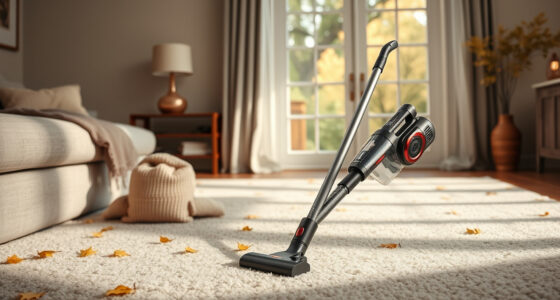
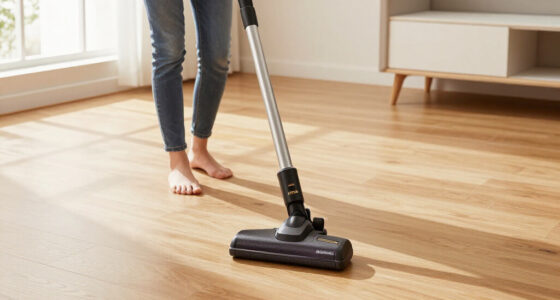
For most hardwood floors, the safer routine is to remove grit first, then mop with minimal moisture and a cleaner approved for that floor. Fine grit can scratch a finish under a mop head, while a soaking pad can leave water where it should not linger. A quick sequence helps you avoid both.- Lift the grit. Use a soft broom or a vacuum suitable for the floor. If your dog tracks in sand after a walk, clear it before mopping so the grains do not drag across the boards.
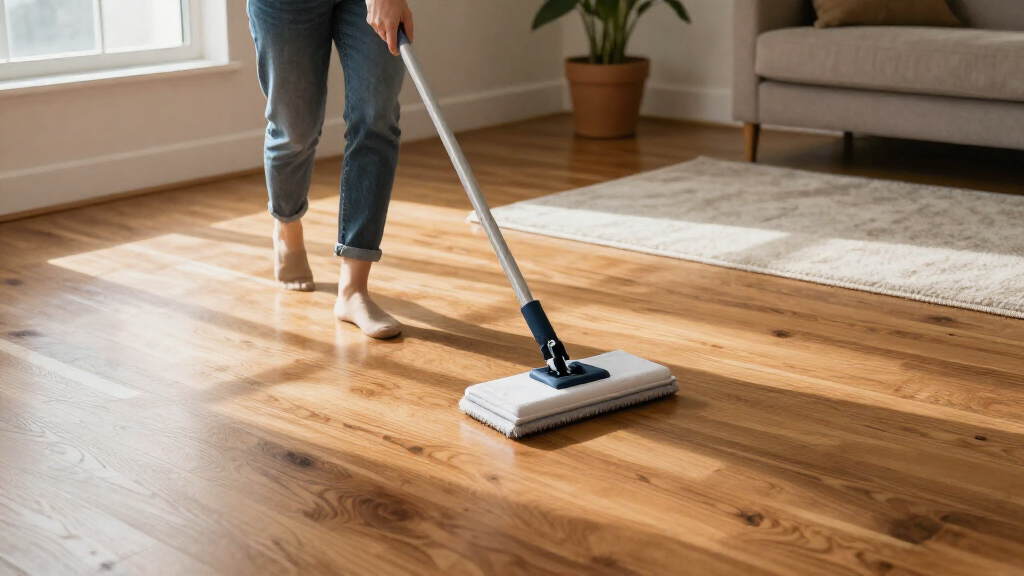
- Prepare a barely damp mop. Follow the floor maker’s directions for the pad and cleaner. The pad should not drip or leave puddles.
- Work in small areas. Mop with the grain when practical, and avoid flooding seams, edges, and worn spots. Re-wet or change the pad only as the product instructions direct.
- Dry any lingering moisture. Pick up spills promptly and check the floor for wet patches. A clean, dry finish should not feel slick or look cloudy.