TL;DR

Get cleaning gear delivered free with Prime
- Fast, free delivery on millions of items
- Prime Video, Amazon Music and more included
- Member-only deals all year
During cold and flu season, cleaning floors at least once a week with EPA-approved disinfectants reduces viral spread. Use proper tools and techniques for safe, effective disinfection, and stay vigilant about high-touch areas.
Imagine stepping into your home after a busy day, knowing that every surface—especially your floors—is a potential battleground against cold and flu viruses. It’s not just about cleanliness; it’s about actively reducing illness risks in your space. During cold and flu season, a strategic cleaning routine becomes your first line of defense.
In this guide, you’ll learn concrete steps to keep your floors germ-free, the best disinfectants to use, and smart tips for different surfaces. No hype, just practical advice that fits into your busy life. Because when you understand what works, you can create a safer home for everyone.
Disinfect floors weekly with EPA-registered solutions containing at least 70% alcohol or diluted bleach.
Always clean loose dirt before mopping to maximize disinfectant contact.
Use microfiber tools and change them regularly to prevent cross-contamination.
Ensure good ventilation and thorough drying after disinfecting to avoid mold and chemical fumes.
Stay updated on new disinfection tools like UV-C lights and electrostatic sprayers for faster, safer cleaning.
Cold + flu season field guide
How to Clean Floors During Cold and Flu Season
Clean first. Disinfect second. Let the product work. A consistent floor-care routine reduces contamination without turning your home into a chemistry lab. Focus on busy zones, use an EPA-registered product suitable for the surface, and follow its label exactly.
Four steps. One reliable rhythm.
Disinfectants work best when dirt and organic material are removed first. Move in a clear sequence so the floor stays visibly wet for the product’s full label contact time.
Sweep or vacuum
Pick up dust, crumbs, hair, and loose soil. This prevents debris from shielding contamination during wet cleaning.
Choose the product
Select an EPA-registered disinfectant approved for the floor material. Read dilution and safety directions before use.
Mop thoroughly
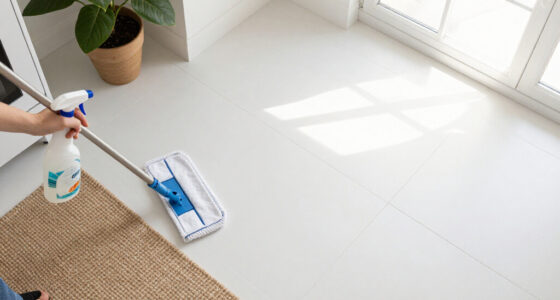
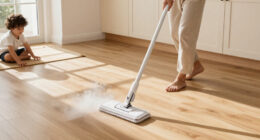
Start at the far corner and move toward the exit. Apply enough solution to meet the product’s required wet contact time.
Ventilate and dry
Open windows or run exhaust fans when appropriate. Keep children and pets away until the floor is fully dry.
Match the schedule to the household.
Traffic, outdoor footwear, spills, pets, and illness all change how frequently a floor needs attention.
Normal household conditions
Sweep or vacuum when debris appears. Wet-clean floors at least weekly, prioritizing entrances, kitchens, and bathrooms.
Someone is sick or traffic is high
Increase attention to busy zones and visible contamination. Clean spills promptly and replace dirty mop pads between areas.
Disinfect selectively, not automatically.
Routine cleaning is often sufficient in healthy households. Disinfection becomes more relevant when someone is ill, contamination is likely, or public-health guidance recommends it.
Use chemistry with precision.
“Natural” does not automatically mean disinfecting, and stronger is not always safer. Confirm that the product targets the relevant virus and is compatible with the flooring.
EPA-registered disinfectant
Look for an EPA registration number and follow the product label for surface suitability, dilution, wet time, rinsing, and ventilation.
Alcohol at 70% or more
Alcohol solutions can inactivate many enveloped viruses, but may damage finishes. Test discreetly and confirm manufacturer guidance.
Diluted household bleach
Use only when the floor and bleach label permit it. Prepare the label-directed dilution with cool or room-temperature water.
Vinegar and mild cleaners
Useful for removing everyday soil on compatible floors, but vinegar is not a reliable substitute for a registered antiviral disinfectant.
Microfiber systems
Fine fibers capture soil efficiently. Use fresh pads by room or zone, then launder according to instructions before reuse.
Keep the surface wet
Apply enough product to maintain visible wetness for the entire label time. Reapply if the floor dries too soon.
Never mix cleaning chemicals
Bleach combined with ammonia, acids, vinegar, or other cleaners can release dangerous gases. Use one product at a time.
Skip improvised “stronger” recipes
Over-concentrated solutions may damage floors and increase exposure. Follow the current product label’s exact directions.
One method does not fit every floor.
Before disinfecting, consult both the flooring manufacturer and the disinfectant label. Always test a hidden area first.
| Floor type | Moisture level | Best approach | Watch for | Fit for stronger products |
|---|---|---|---|---|
| Sealed tile | ✓Moderate | Clean grout lines, then use a compatible registered disinfectant. | Residue, slippery film, porous grout | ✓Often suitable |
| Sheet vinyl | ✓Moderate | Use a well-wrung mop and avoid flooding seams or edges. | Standing liquid and adhesive damage | ✓Check label |
| Linoleum | ~Light | Choose a pH-appropriate product and dry promptly. | High alkalinity, excess water | ~Use caution |
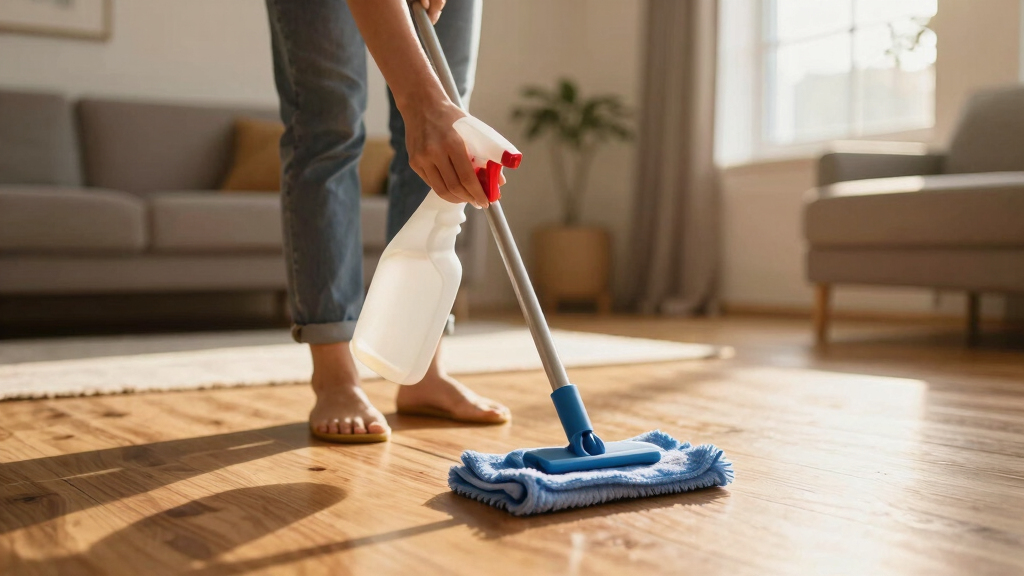
| Sealed hardwood | ~Minimal | Use a barely damp microfiber pad and a finish-safe product. | Swelling, dulling, moisture in joints | ~Limited |
| Laminate | ~Minimal | Mist the pad rather than soaking the floor; dry immediately. | Edge swelling and damaged wear layer | ~Limited |
| Carpet | ~Specialized | Vacuum routinely; use products and equipment specifically labeled for textiles. | Over-wetting, residue, slow drying | ~Special product |
✓ Generally compatible when label-approved ~ Requires extra caution or specialized guidance
Prevent cross-contamination as you clean.
A dirty mop can move contamination from one room to another. Build clean-tool changes into the routine.
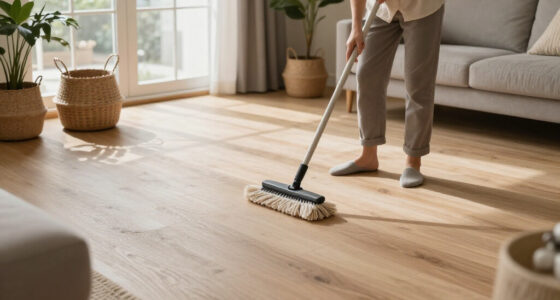
Microfiber mop
Choose washable, color-coded pads and switch pads when they become visibly dirty or after cleaning an illness zone.
Disposable cloths
Useful for small spills and confined contaminated areas. Discard immediately after use and wash hands.
Separate clean and used supplies
Keep fresh pads apart from used ones. Never dip a contaminated cloth back into a clean solution container.
Promising technology still needs guardrails.
New tools can improve speed or coverage, but they do not remove the need for pre-cleaning, correct exposure, surface compatibility, and trained operation.
Eco-conscious formulas
Favor verified efficacy and transparent labels. “Green” claims alone do not prove antiviral performance.
UV-C devices
Can reduce microbes in controlled settings, but direct exposure may harm eyes and skin. Shadows also reduce coverage.
Electrostatic sprayers
May improve coverage over large areas, but require compatible products, training, protective measures, and ventilation.
Smart scheduling
Connected devices can track traffic and cleaning cycles, helping teams focus effort where contamination is most likely.
Your cold-season floor-care checklist
Clean weekly as a baseline; increase frequency in busy or illness-affected zones. Remove debris before wet cleaning. Use fresh microfiber tools. Follow an EPA-registered disinfectant’s exact label and contact time. Ventilate the room and keep everyone off the floor until it is completely dry.
How often should you clean your floors during flu season? Get real about your schedule
During cold and flu season, cleaning floors at least once a week is the minimum. If someone in your household is sick or if you have high-traffic areas—like the entryway or kitchen—consider cleaning every 2-3 days. Regular sweeping or vacuuming helps remove dirt and germs before mopping.
Imagine a busy household: kids come home with muddy shoes, and spills happen daily. In such scenarios, increasing your cleaning frequency actively cuts down virus chances. The key is consistency—think of it as a shield against germs lingering on your floors.
EPA-registered disinfectant for floors
As an affiliate, we earn on qualifying purchases.
As an affiliate, we earn on qualifying purchases.
Which disinfectants kill cold and flu viruses on floors? The science behind the best choices
Effective disinfectants for cold and flu viruses include solutions with at least 70% alcohol, diluted bleach (sodium hypochlorite), or EPA-registered disinfectants. These products are proven to deactivate viruses on hard surfaces, including floors.
For example, a 1:10 bleach solution—about 4.5 tablespoons of bleach in one quart of water—can disinfect large floor areas quickly. Always follow label instructions for contact time; typically, letting the disinfectant sit for 3-5 minutes maximizes virus kill rates.
Using the right disinfectant properly is crucial because it ensures the chemical agents have enough time to disrupt the virus’s protective envelope or genetic material, rendering it inactive. Skipping this step or rushing can leave residual viruses, which is especially risky during flu season. Think of disinfectants as a chemical shield—if not applied correctly, their effectiveness diminishes, risking continued transmission.
As an affiliate, we earn on qualifying purchases.
How to clean floors during cold and flu season in 4 simple steps
- Sweep or vacuum to remove loose dirt and debris. This step prevents dirt from hiding germs and makes mopping more effective.
- Prepare your disinfectant. Use EPA-registered solutions or dilute bleach as recommended. Remember, hotter water enhances cleaning power.
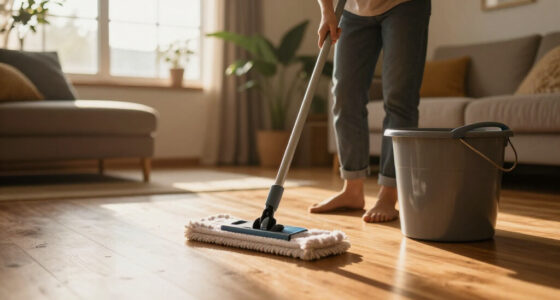
- Mop thoroughly. Work in sections, ensuring the disinfectant stays wet on the surface for at least 3 minutes.
- Dry and ventilate. Open windows or turn on fans to help floors dry faster and reduce chemical fumes. A dry floor prevents slips and mold growth.
Picture yourself working in a rhythm—sweeping, mixing, mopping, drying. This routine turns a chore into a simple, effective defense against illness.
As an affiliate, we earn on qualifying purchases.
What tools make disinfecting floors safer and easier? Choose wisely
- Microfiber mops are excellent at trapping germs and dirt without spreading them around. Their fine fibers can pick up microscopic particles, which traditional mops might miss, making your disinfecting more thorough.
- Disposable cloths for quick, sanitary cleaning of small areas or spills. They reduce cross-contamination risk because you discard them after use, unlike reusable cloths that may harbor germs if not washed properly.
- Change mop heads and cloths regularly to prevent cross-contamination, especially if someone is sick. This practice ensures that germs aren’t transferred from one area to another, maintaining the integrity of your disinfecting efforts.
Imagine switching from a dirty mop to a fresh one after each use—your floors get cleaner, and your home stays healthier. Proper tools make it easier to do the job right, with less fuss and risk. Investing in quality, easy-to-clean tools can make routine disinfection more effective and less burdensome.
electrostatic sprayer for disinfecting floors
As an affiliate, we earn on qualifying purchases.
As an affiliate, we earn on qualifying purchases.
Why ventilation and drying matter when disinfecting floors
Good ventilation helps disinfectants dry faster, reducing chemical fumes and preventing mold. After mopping, open windows or turn on exhaust fans to circulate fresh air. This step is especially important if you’re using strong solutions like bleach.
Think about how a damp, poorly ventilated room can trap moisture and stale air—an environment perfect for mold and bacteria. Proper drying not only keeps your floors safe but also preserves their finish and appearance. Additionally, adequate airflow disperses chemical vapors, minimizing potential respiratory irritation or other health concerns associated with prolonged inhalation of fumes, especially in households with children or respiratory sensitivities.
Recent trends in floor disinfection: what’s new and what works
Eco-friendly disinfectants and UV-C light devices are gaining popularity. UV-C light can kill viruses rapidly without chemicals—useful in commercial settings or for quick touch-ups. Electrostatic sprayers distribute disinfectants evenly, covering large areas with less effort.
Imagine walking into a room where UV-C lights silently disinfect the floors in minutes or pressing a button on a sprayer that coats every corner. These innovations simplify maintaining a germ-free home, especially during flu season, but they also come with considerations. UV-C devices require safety precautions to avoid skin or eye exposure, and their effectiveness depends on proper usage and coverage. Electrostatic sprayers provide uniform coverage, reducing the chances of missed spots, but they need compatible disinfectants and proper handling to ensure safety and efficacy. Staying informed about these tools helps you choose options that fit your home and safety requirements.
Quick facts about disinfecting floors during cold and flu season
| Fact | Details |
|---|---|
| Virus survival time | Can last hours to days on surfaces, depending on material and environment. Porous surfaces may reduce virus survivability, but floors—especially hard, non-porous ones—can harbor viruses longer if not disinfected properly. |
| Disinfection effectiveness | Proper cleaning combined with disinfectants significantly reduces virus presence. Skipping cleaning steps or using inadequate solutions can leave lingering viruses, increasing the risk of infection. |
| CDC recommendation | Clean with soap and water first, then disinfect for best results. This two-step approach removes dirt and organic matter that can shield viruses from disinfectants, ensuring more effective virus inactivation. |
| Regularity | At least once a week in normal times; more during outbreaks or if someone is sick. Consistency is key because viruses can be reintroduced through daily activities, so maintaining a frequent routine minimizes risk. |
Common questions: what you really want to know about floor cleaning during flu season
- How often should I clean my floors? Once a week is minimum; more if high traffic or illness occurs. Increasing frequency during peak flu times helps reduce viral load.
- Are natural cleaners enough? Vinegar and others help with dirt but don’t reliably kill viruses. Use EPA-approved disinfectants for safety and effectiveness. Natural cleaners may remove surface dirt but lack the ability to deactivate viruses, which is essential during flu season to prevent transmission.
- Can I use bleach on hardwood? Yes, but dilute and avoid soaking. Test a hidden area first to prevent damage. Overly strong solutions or excessive moisture can harm the wood’s finish or cause warping, so proper dilution and testing are vital for safety.
- Any safety tips? Wear gloves, ensure good ventilation, and keep kids and pets away until floors dry. Proper handling minimizes chemical exposure, and drying reduces slip hazards and chemical fumes, creating a safer cleaning environment.
Conclusion
Keeping floors disinfected during cold and flu season is about consistency, proper tools, and using proven disinfectants correctly. Think of it as a small daily battle—you’re actively lowering the virus load in your home, protecting loved ones with each sweep and wipe.
Remember, a clean floor isn’t just about appearance; it’s your frontline defense. So, set a routine, stick to it, and breathe easier knowing you’re doing your part to stay healthy.
Columbus Day / Indigenous Peoples' Day Picks
long weekend sales
As an affiliate, we earn on qualifying purchases.