TL;DR

Get cleaning gear delivered free with Prime
- Fast, free delivery on millions of items
- Prime Video, Amazon Music and more included
- Member-only deals all year
There’s no universal time for steam to sanitize. In practice, 10–30 seconds per spot often suffices, but effectiveness hinges on surface temperature, steam delivery, and microorganism type. Always follow manufacturer guidance and test first.
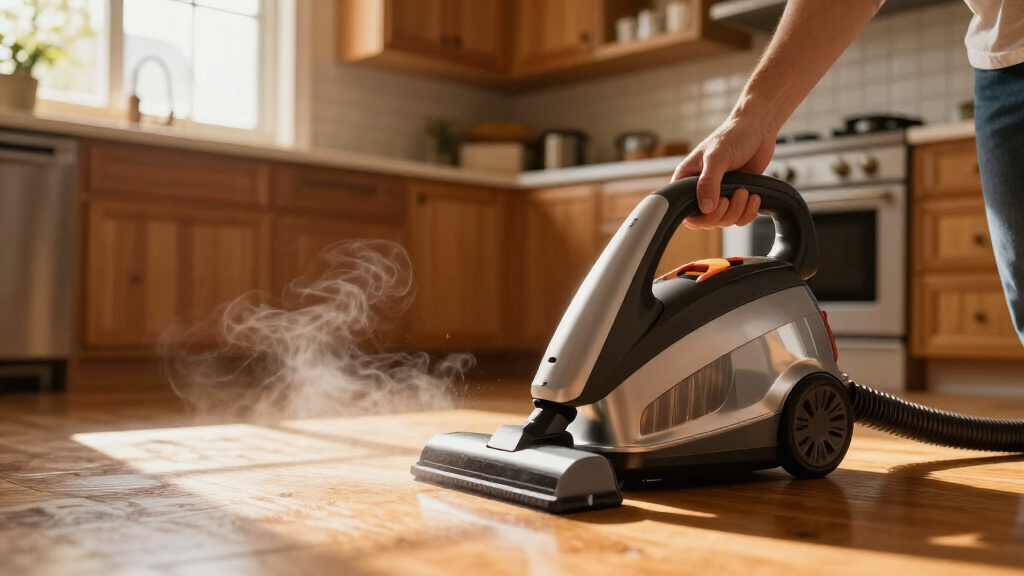
Imagine you’ve just mopped your kitchen floor with steam. You’re wondering: how long should I keep that steam on to actually kill germs? The truth is, there’s no one-size-fits-all answer. Steam’s ability to sanitize depends on more than just the time it’s applied—it’s about whether the surface gets hot enough, for long enough, to wipe out the microbes lurking there.
Knowing how long to hold steam isn’t just curiosity—it’s the key to safer, cleaner spaces. Whether you’re trying to reduce bacteria on countertops or tackle viruses in high-touch areas, understanding the real science behind steam contact time helps you get results without guesswork. Let’s break down what really matters when it comes to steam and sanitation.
Surface temperature, not just steam temperature, determines microbial kill effectiveness.
10–30 seconds of contact per small area is a sensible practical guideline—longer for porous or textured surfaces.
Pre-clean surfaces to remove soil and grease, ensuring steam can reach microbes directly.
Household steam reduces many germs but isn’t sterilization; resistant spores may survive.
Always follow manufacturer instructions and test a hidden area first to prevent damage.
How Long Must Steam Touch a Surface to Sanitize It?
There is no universal contact time. Steam works only when the surface itself becomes hot enough—and stays hot long enough—to reduce the microorganisms present.
Surface heat matters more than the number on the boiler.
A steamer may produce vapor near or above 100°C, but the target surface starts cooler and immediately absorbs and sheds heat. The meaningful exposure period begins only after the contaminated area reaches an effective temperature.
A countertop may reach only 60–70°C during a short pass, even when the outgoing steam is near boiling. Distance, speed, thickness, conductivity, and starting temperature all change the result.
Contact time counts only when effective heat reaches the microbes.
The first seconds may simply warm a cold or thick material. Moving too quickly can end treatment before the useful exposure has begun.
Use time as a guide—not a guarantee.
For ordinary heat-safe household surfaces, 10–30 seconds per small area is a cautious practical range. Manufacturer-validated instructions always take priority.
Use only when the surface heats readily and the appliance maintains steady output.
Move slowly, work in small sections, and overlap passes where coverage may be uneven.
Watch for heat, moisture, finish, adhesive, or warping damage.
Material and soil can protect microbes from steam.
Smooth, sealed materials are usually easier to treat uniformly. Fibers, pores, joints, grease, food residue, and biofilms can interrupt heat transfer or shelter contamination.
Glass & ceramic
Smooth, nonporous surfaces generally allow more even contact and make treated coverage easier to see.
Usually easier to treatSealed counters
Finish, thickness, edge seams, and adhesive tolerance matter. Confirm that the manufacturer permits steam.
Test a hidden areaFabric, grout & wood
Pores and fibers can shelter organisms while absorbed moisture increases the risk of staining, swelling, or mold.
Longer is not always safer| Surface | Heat transfer | Uniform contact | Moisture risk | Practical approach |
|---|---|---|---|---|
| Glazed tile | ✓ Favorable | ✓ High | ✓ Low | Slow, overlapping passes |
| Glass | ✓ Favorable | ✓ High | ✓ Low | Avoid thermal shock |
| Sealed countertop | ~ Variable | ✓ High | ~ Moderate | Check finish and seams |
| Grout | ~ Uneven | ~ Moderate | ~ Moderate | Treat joints separately |
| Unsealed wood | ✗ Difficult | ✗ Low | ✗ High | Use only if approved |
| Upholstery | ✗ Difficult | ✗ Low | ✗ High | Avoid deep saturation |
Not every microorganism responds to moist heat in the same way.
Many common vegetative bacteria and enveloped viruses are comparatively susceptible. Bacterial spores and some non-enveloped viruses demand more rigorous, validated conditions.
Household sanitation is microbial reduction—not absolute elimination.
Brief steam contact may substantially reduce susceptible organisms, but resistant spores can survive. Validated medical sterilization uses controlled pressure, saturated steam, air removal, exposure time, and monitoring—often around 121°C or 132–135°C under specified cycle conditions.
Cleaning
Removes dirt and reduces contamination without requiring a defined microbial kill.
Sanitizing
Lowers microorganisms to a defined acceptable level; it does not remove every organism.
Disinfecting
Achieves a greater reduction of specified pathogens under validated conditions.
Sterilizing
Destroys all viable microorganisms, including highly resistant bacterial spores.
Six linked actions make contact time meaningful.
Effective treatment is a chain. Skipping pre-cleaning, warm-up, consistent distance, or complete coverage can undermine the time spent steaming.
Protect the surface—and yourself.
Steam can cause severe burns within seconds and can damage finishes, adhesives, electronics, porous materials, and moisture-sensitive construction.
Test first. Use a hidden area and allow it to cool and dry before judging damage.
Keep clear. Never direct steam toward skin, people, pets, outlets, or electronics.
Check approval. Confirm the appliance and surface manufacturer permit the method.
Avoid saturation. More moisture can mean swelling, delamination, staining, or mold.
Use clean tools. A dirty cloth can redeposit contamination after steaming.
Use validated methods. High-risk environments require application-specific protocols.
Why Surface Temperature Matters More Than Steam Temperature
Steam leaving your appliance might be near boiling—around 100°C—but that doesn’t mean your surface gets that hot. Once steam hits a surface, it cools rapidly. The critical factor is whether the surface heats enough to kill germs, not the temperature of the steam itself.
For example, a kitchen counter might reach 60–70°C after contact with hot steam for a few seconds. That’s usually enough to inactivate many bacteria and enveloped viruses, but only if the surface stays hot long enough.
Think of it like a hot iron: the iron’s temperature is high, but if you quickly pass it over fabric, the fabric may not get hot enough to press well. The same applies to steam—application speed and surface conductivity matter.
As an affiliate, we earn on qualifying purchases.
How Long Should You Keep Steam on a Surface? The Realistic Time Range
In household settings, holding steam on a surface for about 10 to 30 seconds per small area is a practical guideline. This range balances safety, material tolerance, and microbial reduction. But remember: this isn’t a magic number—effectiveness depends on reaching and maintaining sufficient heat.
For instance, wiping down a bathroom countertop with steam for 15 seconds can significantly lower bacteria, provided the surface heats up enough during that time. Moving too fast or using too little steam reduces the chance of effective sanitization.
Here’s a quick rundown:
- 10 seconds: Good for light contamination on heat-conductive surfaces.
- 15–20 seconds: Recommended for most household surfaces for better microbial kill.
- Up to 30 seconds: Use cautiously on porous or thick surfaces to avoid damage.
As an affiliate, we earn on qualifying purchases.
The Impact of Surface Material and Dirt on Steam Effectiveness
Not all surfaces respond the same way to steam. Smooth, nonporous materials like ceramic tiles or glass are easiest to treat because heat transfers quickly and microbes are less sheltered. Porous materials—like fabric, unsealed wood, or grout—pose more challenges.
Imagine steaming a kitchen tile versus a sponge. The tile heats evenly and quickly, but the sponge’s fibers absorb moisture and insulate bacteria, making it harder for steam to inactivate germs inside.
Before steaming, clear away visible dirt and grease. Residues can form a barrier, shielding microbes from heat and moisture. Think of it like trying to warm a blanket with a coat still on—it blocks heat transfer.
steam mop for disinfecting surfaces
As an affiliate, we earn on qualifying purchases.
As an affiliate, we earn on qualifying purchases.
Microorganisms’ Resistance: What Steam Can and Can’t Kill
Most vegetative bacteria, yeasts, molds, and enveloped viruses are vulnerable to moist heat. They can often be reduced by exposure to steam for 10–30 seconds at temperatures around 70–100°C. But some germs resist even these efforts.
Bacterial spores and non-enveloped viruses are tougher. They can survive higher heat and longer exposure times. For example, Clostridium spores can withstand brief steam contact unless subjected to specialized sterilization conditions.
So, steaming at home isn’t sterilization—it’s more about lowering microbial load. If you’re after complete sterilization, especially in healthcare or food safety, use validated autoclaves or chemical sterilants.
As an affiliate, we earn on qualifying purchases.
Why ‘Sanitize,’ ‘Disinfect,’ and ‘Sterilize’ Mean Different Things
Cleaning, sanitizing, disinfecting, and sterilizing aren’t interchangeable. Each step has a different goal. Cleaning is removing dirt—no microbes required. Sanitizing reduces germs to safe levels, often by 99.9%, but not all. Disinfecting aims for a higher kill rate under validated conditions. Sterilization destroys all life forms, including spores.
For example, in a kitchen, washing dishes removes visible grime, sanitizing reduces bacteria to safe levels, disinfecting might be used on high-touch items with chemical wipes, and sterilizing is reserved for surgical tools—not home surfaces.
Household steam is mainly a sanitizing tool—effective against many germs but not a sterilizer unless specifically validated for that purpose.
Following a Safe, Effective Steam Sanitation Routine
Here’s a simple step-by-step plan for safe, effective steaming:
- Remove visible dirt and debris from the surface.
- Allow your steamer to reach full operating temperature—wait until the indicator confirms it’s ready.
- Hold the steam nozzle at the manufacturer-specified distance, usually a few inches from the surface.
- Move slowly enough to treat each small section for **about 10–30 seconds**. Overlap passes for uneven or textured surfaces.
- Focus on seams, edges, and joints, where germs hide.
- Let the surface dry naturally or wipe with a clean cloth if the instructions recommend it.
For high-risk areas—like kitchens or bathrooms—consider a longer dwell time and a second pass. Always test a hidden spot first to avoid damage.
Why Published Contact Times Vary So Much and What That Means for You
Claims like “kills 99.9% in three seconds” are often tested under ideal lab conditions. Real-world results depend on many factors: starting surface temperature, nozzle distance, steam pressure, and soil levels. These claims are not universal.
In practice, if a manufacturer specifies a contact time, follow it. If not, aim for at least 10–30 seconds of steady contact per spot, ensuring the surface heats enough to kill common germs.
Remember: a quick pass might cool before reaching effective temperatures, and uneven surfaces or organic soils can reduce steam’s effectiveness.
Porous vs. Nonporous: Does Material Make a Difference?
Smooth, sealed surfaces like ceramic tiles, glass, or sealed countertops are easiest to sanitize with steam. They heat quickly and don’t absorb moisture. Porous materials—like unsealed wood, fabrics, or grout—are more challenging.
Imagine steaming a bathroom tile versus a fabric curtain. The tile heats evenly, but fabric fibers can shelter bacteria deep inside, resisting heat transfer. Longer or repeated steaming may help, but it risks water damage or mold growth.
Always check if the material manufacturer approves of steam cleaning. When in doubt, test a small hidden area first.
Safety First: What You Need to Know Before Steam Cleaning
Steam can cause severe burns in seconds. Always prioritize safety. Keep hands and skin away from the jet, and never direct steam toward people, pets, outlets, or electronics.
Allow the appliance to cool and depressurize before opening. Use protective gloves and eye protection if needed. Avoid steaming sealed or painted surfaces, as moisture can cause damage or peeling.
Never mix chemicals inside your steamer unless the manufacturer says it’s safe. Also, steer clear of materials that may release hazardous fumes when heated, like certain plastics or painted surfaces.
The Future of Steam in Home Cleaning
Recent advances focus on sensors, validated protocols, and safer, more effective steam systems. During the COVID-19 pandemic, interest surged in chemical-free decontamination, leading to innovations like temperature sensors and improved nozzle designs.
Research shows that enveloped viruses, including coronaviruses, are generally heat-sensitive. But porous, complex surfaces still challenge steam’s capabilities. The trend is toward combining heat, moisture, and mechanical action for better results without chemicals.
While household steam isn’t a sterilizer, these developments hint at smarter, safer cleaning methods tailored to specific germs and surfaces.
Your Questions Answered: Common Steam Sanitizing Myths and Facts
Is three seconds of steam enough? Usually not. While some lab tests show quick reductions, real-world effectiveness requires enough heat transfer—often 10–30 seconds per spot.
Can one pass sanitize a surface? Only if it delivers the validated temperature uniformly. Speeding through reduces effectiveness.
Does hotter steam work faster? Hotter steam can accelerate microbes’ death, but the surface may not reach those temperatures instantly, especially on thicker or porous materials.
Should I wipe after steaming? It depends—wiping can remove loosened germs but can also recontaminate if the cloth is dirty. Use clean cloths and follow appliance instructions.
Can I steam food-contact surfaces? Only if your device and method are specifically rated for food safety. Otherwise, risk of residue or contamination remains.
Conclusion
Steam can be a powerful ally in your cleaning arsenal, but it’s not a magic wand. The real key lies in making sure your surface heats enough for long enough—not just waving steam around. When you combine careful timing, proper technique, and safety, you turn simple steam into a practical tool for healthier living.
Next time you reach for your steamer, remember: patience and preparation make all the difference. It’s about working smarter, not just faster—getting the surface hot enough to truly clean and protect your space.
Halloween Picks
halloween
As an affiliate, we earn on qualifying purchases.