TL;DR

Get cleaning gear delivered free — and shop member deals
- Fast, free delivery on millions of items
- Access to Prime Big Deal Days deals on October 6–7
- Prime Video, Amazon Music and more included
Most steam mops do **not** come with a built-in vacuum. Combo models that do exist are typically heavier, more expensive, and may not match dedicated vacuums’ performance. Always verify both functions before buying and check your floor’s compatibility with steam cleaning.
Ever wondered if you can get a single device that mops and vacuums at the same time? The answer is usually no. Most steam mops are designed solely for steaming, relying on you to vacuum or sweep first. But there’s a twist—some appliances combine both functions into one machine.
Understanding whether a steam mop has a vacuum built in isn’t just about convenience; it’s about avoiding surprises when you’re in the middle of cleaning. If you’re tired of juggling multiple tools or want a streamlined way to handle dirt and grime, this guide will clarify what’s out there, what works, and what to watch for.
Most steam mops do not have a built-in vacuum; check product specs carefully.
Vacuum-and-steam combo cleaners exist but are less common and often more expensive.
Always verify your flooring’s compatibility with steam to prevent damage.
Combo units can handle quick cleanups but don’t replace a dedicated vacuum for deep cleaning.
Choose a machine with independent controls, larger tanks, and washable parts for best results.
Do Steam Mops Come With a Vacuum Built In?
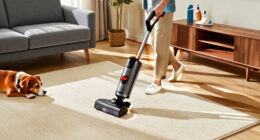
Usually, no. A standard steam mop loosens grime with heat and moisture but cannot collect crumbs, dust, or pet hair. True vacuum-and-steam combinations exist, yet convenience comes with extra weight, cost, and maintenance.
Three machines that are easy to confuse
The product name does not always tell the full story. Look for a suction motor, dry debris chamber, and steam generator in the technical specifications.
Loosens and wipes
Turns water into steam and sends it through a microfiber pad. It handles stuck-on grime but leaves loose particles behind.
- No vacuum suction
- Lighter and simpler
- Requires pre-sweeping
Vacuums and steams
Uses two largely separate systems to collect dry debris and steam-clean compatible flooring.
- May offer independent modes
- Usually heavier and bulkier
- Needs filter, bin, and pad care
Washes without steam
Many floor washers vacuum dirty liquid while scrubbing with water and detergent. No stated steam generator means no steam.
- Often uses a rotating brush
- Collects dirty wash water
- Not automatically a steam mop
Capability comparison
A combo unit can shorten a light-cleaning routine, but a separate vacuum remains the stronger option for whole-home debris collection and carpet work.
| Capability | Standard steam mop | Vacuum + steam combo | Dedicated vacuum |
|---|---|---|---|
| Collects crumbs and hair | ✗ No | ✓ Yes | ✓ Yes |
| Produces actual steam | ✓ Yes | ✓ Yes | ✗ No |
| Handles stuck-on hard-floor grime | ✓ Strong | ✓ Strong | ✗ Limited |
| Deep-cleans carpet | ✗ No | ~ Usually not | ~ Debris only |
| Maneuverability | ✓ Typically high | ~ Moderate | ~ Model dependent |
| Maintenance load | ✓ Lower | ~ Higher | ~ Moderate |
How a true combination cleaner works
The most effective designs keep dry debris away from the water and steam path. That separation reduces clogging and makes each function easier to maintain.
Suction starts
A vacuum motor lifts crumbs, dust, and hair from the floor.
Debris stays dry
Particles enter a dedicated bin instead of the water tank.
Steam is generated
A separate heating element converts clean water into steam.
The pad lifts grime
Steam loosens residue while the washable pad wipes it away.
Convenience rises—so do the compromises
These relative ratings summarize typical category strengths. Exact performance varies by product, floor type, filter condition, and maintenance.
Where it wins
- One machine handles two cleaning stages.
- Useful for kitchens, entryways, crumbs, and pet hair.
- Less tool switching during quick touch-ups.
- Can save storage space.
What you trade
- More weight and reduced maneuverability.
- Smaller debris bins that fill quickly.
- More filters, channels, and washable parts.
- Suction that may trail a dedicated vacuum.
- More components and potential failure points.
Unsealed wood
Moisture can penetrate the grain and cause swelling or distortion.
Waxed floors
Heat may soften, cloud, or strip the protective finish.
Laminate
Steam may enter joints and damage the fiber-based core.
Engineered wood
Construction and finish vary; some products remain moisture-sensitive.
Luxury vinyl
Some manufacturers prohibit steam because heat may affect adhesives.
Loose or damaged planks
Open seams create an easy path for heat and moisture intrusion.
The practical bottom line
Assume a steam mop has no vacuum unless the specifications prove otherwise. A combination cleaner can streamline everyday hard-floor touch-ups, but it is usually heavier, more expensive, and less capable than a dedicated vacuum for deep cleaning. For many homes, vacuuming first and steaming second remains the most effective routine.
Do Most Steam Mops Have a Vacuum Built In? Not Usually.
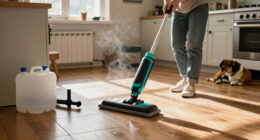
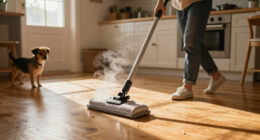
The quick answer: most steam mops do not include a vacuum. They heat water into steam, which loosens dirt and sanitizes your floors, but they don’t suck up crumbs or pet hair. Think of a traditional steam mop as a magic wand for cleaning sealed floors—powerful, but not a vacuum in disguise.
For example, a standard steam mop like those from popular brands heats water in about 30 seconds and uses microfiber pads to wipe away grime. It’s great for ceramic or sealed stone, but it leaves loose debris behind. You still need a broom or vacuum first.
The reason? Combining steam and vacuum isn’t as simple as it sounds. Steam needs a dedicated heating element, while vacuum motors require a different kind of power and design. So, unless a product specifically says it has a vacuum, assume it doesn’t.
Understanding this limitation is important because it affects your cleaning routine. Relying solely on a steam mop means you might be pushing dirt around rather than removing it entirely. This can lead to longer cleaning times or less effective results, especially on floors with loose debris or pet hair. Recognizing that most steam mops lack vacuum function helps set realistic expectations and encourages thorough pre-cleaning, which is essential for optimal results.
As an affiliate, we earn on qualifying purchases.
What Are Vacuum-and-Steam Combination Cleaners? Do They Work?
Vacuum-and-steam combo cleaners do exist, but they’re a small niche. These machines aim to vacuum dry debris and then steam-clean the same surface—sometimes at the same time, sometimes sequentially.
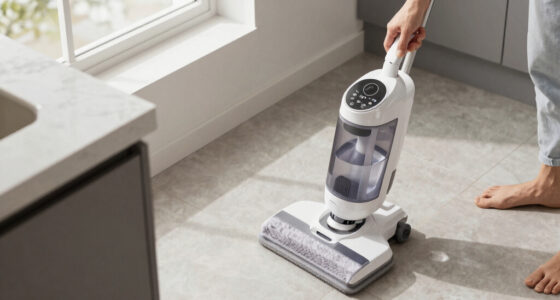
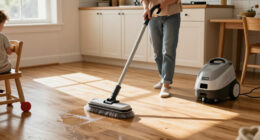
Imagine a machine with a dry debris chamber on one side and a water tank with a heating element on the other. You press a button, and it picks up crumbs, pet hair, or dust, then releases hot steam to loosen stubborn dirt. Some models let you choose vacuum-only, steam-only, or both modes.
They can save space and effort. Instead of switching tools, you handle both tasks with one device. But they’re often bulkier, heavier, and pricier—plus, their suction power might not match a dedicated vacuum. Still, they’re handy for quick touch-ups in kitchens or entryways.
Choosing such a machine involves considering the tradeoff between convenience and performance. While they reduce the number of tools you need, they often compromise on suction strength and cleaning depth, especially on carpets or heavily soiled areas. If you have mostly hard floors and need quick, lightweight solutions, they’re a good fit. But for deep cleaning or large spaces, a dedicated vacuum plus a separate steam mop might still be more effective.
Understanding these tradeoffs helps you decide whether the convenience of a combo machine outweighs the potential compromise in cleaning power, especially for your specific needs.
As an affiliate, we earn on qualifying purchases.
How Do Vacuum-and-Steam Cleaners Actually Work? The Inside Scoop
Here’s a quick rundown: a vacuum-and-steam cleaner combines two systems. One has a motor that sucks up loose dirt, while the other heats water to produce steam. These systems usually operate separately, even if some models let you do both at once.
For example, a typical model might have a small debris bin that fills up quickly, so frequent emptying is needed. Meanwhile, the steam heats up in about a minute and is released through a microfiber pad. As you move the machine, the steam loosens grime, and the vacuum picks up loose particles.
Some models can vacuum first, then switch to steam, while others try to do both simultaneously. The key is that the debris chamber and water tank are separate, reducing clogs and maintenance issues.
Understanding this separation is crucial because it influences how effectively the machine cleans. For instance, if the debris chamber is small, you’ll need to stop frequently to empty it, which can interrupt your workflow. Conversely, a larger tank means longer cleaning sessions without interruption. Recognizing these mechanics helps you choose a model that best fits your cleaning routine and ensures you don’t overestimate its capabilities.
As an affiliate, we earn on qualifying purchases.
Are Built-In Vacuums a Bonus or a Tradeoff? Pros and Cons
Having a vacuum built into your steam mop sounds tempting. It’s like getting two tools in one—saving space and time. For example, in a busy kitchen, you can quickly vacuum up crumbs and then steam the floor without switching devices.
But there’s a catch. These combo units are often heavier and bulkier. Their vacuum performance might fall short of a dedicated vacuum, especially on carpets. Plus, small debris bins mean you’ll be emptying often.
Also, maintenance is more involved—filters need cleaning, and parts may wear out faster. While they’re convenient for quick, light cleaning, they rarely replace a full-sized vacuum for deep cleaning or large areas.
Another consideration is the impact on maneuverability. The added weight and bulk can make handling less comfortable, especially for users with limited strength or mobility. This can lead to quicker fatigue or less thorough cleaning if the device is cumbersome. Therefore, weighing these pros and cons helps you decide whether the convenience justifies the potential compromises in performance and ease of use.
As an affiliate, we earn on qualifying purchases.
Can They Clean Carpets? Not Usually, and Here’s Why
Most vacuum-and-steam machines are designed for hard floors. If you see a model with a carpet glider, it’s usually just for refreshing the surface, not deep cleaning. The vacuuming on carpets is often weak, and the steam isn’t hot enough to sanitize fabric fibers.
For example, pet owners might try to use a combo machine on a rug, but the results won’t match a dedicated carpet cleaner. The brush rolls, if any, are usually not powered, so they can’t agitate fibers properly.
Deep cleaning carpets requires specialized equipment that can extract dirt from deep within fibers, often with powerful agitation and hot water extraction. Using a standard combo machine might only spread surface dirt or, worse, push debris further into the pile. Therefore, understanding these limitations is essential to avoid disappointment and potential damage to your carpets. For regular maintenance, a dedicated carpet cleaner is recommended for thorough results.
In summary, these machines are not substitutes for deep-cleaning carpet machines and are best suited for spot cleaning or refreshing hard floors.
Floor Safety First: Will Steam Damage My Floors?
Steam should only be used on floors approved by the manufacturer. Many surfaces, especially unsealed wood or laminate, can warp, swell, or delaminate when exposed to moisture and heat. If your floors are sealed ceramic or porcelain tile, steam is usually safe—provided the sealant is intact.
For example, using steam on a hardwood floor with a damaged finish might cause swelling or discoloration. Always check the floor’s care instructions and test a small, hidden area first.
Understanding the implications of steam use on different surfaces is vital because improper application can lead to costly repairs or irreversible damage. For instance, even sealed floors can suffer if the steam penetrates seams or if the device is used excessively or at too high a temperature. Recognizing these risks encourages responsible cleaning and prolongs the lifespan of your flooring investments.
Always follow manufacturer instructions and perform spot tests to prevent unintended damage, especially on vulnerable surfaces. This cautious approach helps maintain the integrity and appearance of your floors over time.
Does Steam Really Kill Germs? The Truth About Sanitizing
Steam can reduce many germs and bacteria—if it reaches high enough temperatures and stays in contact long enough. Most cleaning devices generate steam at around 212°F (100°C), but effective sanitization depends on contact time and surface type.
For example, moving the mop quickly over a surface might remove visible dirt but won’t necessarily sanitize. According to an anonymous researcher, sustained contact at proper temperature is needed for true germ reduction, but not all steam mops deliver consistent heat.
Therefore, relying solely on steam for disinfection can be risky. For effective sanitization, you need to ensure adequate contact time and temperature, which many consumer-grade devices may not provide consistently. In critical areas like kitchens or bathrooms, using disinfectants or more specialized equipment might be necessary for peace of mind. Recognizing the limits of steam sanitization helps set realistic expectations and encourages supplemental cleaning methods when needed.
In summary, while steam can help reduce germs, it shouldn’t be your only line of defense against pathogens. Proper technique and supplementary disinfectants are often required for comprehensive sanitizing.
New Features and Trends in Combo Floor Cleaners
Modern combo machines keep evolving. Features like faster warm-up times, adjustable steam levels, anti-tangle pet hair systems, and washable pads make cleaning easier. Some models now offer electronic controls for switching modes, and cordless options are emerging—but true steam-and-vacuum cordless units are still rare.
For example, a recent model boasts a 15-second steam warm-up and a 250ml water tank for quick runs. Anti-tangle features help pet owners keep hair out of filters, and washable pads reduce waste and cost.
These advancements aim to make combo cleaning more effective, convenient, and user-friendly, but always verify that the machine genuinely heats water into steam rather than just water spray or warm water.
Staying informed about these innovations allows consumers to select models that truly enhance cleaning efficiency and convenience, ensuring they invest in technology that aligns with their specific needs and cleaning routines.
By understanding current trends, users can better evaluate whether a new feature genuinely improves performance or simply adds complexity, helping them make smarter purchasing decisions.
Choosing the Right Machine: What Matters Most?
When shopping, focus on whether the appliance truly produces steam and has a reliable vacuum. Check if both functions can operate independently or together. Look for a large water tank if you want longer cleaning sessions and a debris bin that’s easy to empty.
For example, a machine with a 350ml tank and separate debris chamber will give you more continuous cleaning than one with a tiny bin. Also, consider your floors—if you have hardwood, verify that steam is safe for your specific surface.
Don’t forget maintenance—washable filters, easy pad replacement, and clear instructions save headaches later. The right choice depends on your cleaning style and floor type.
Additionally, assess the availability of replacement parts and customer support, as these can influence long-term satisfaction. A machine with a reputable warranty and readily available accessories ensures durability and ease of repair. Understanding these aspects helps you select a versatile, reliable device that fits your cleaning needs now and in the future.
Frequently Asked Questions
Do all steam mops vacuum first?
No. Most standard steam mops don’t have vacuuming capabilities. You need to sweep or vacuum before steaming for best results.
Can I use a steam mop without vacuuming?
You can, but it’s not ideal. Loose debris can be pushed around or trapped in the pad, potentially scratching floors or spreading grime. Vacuum first for best outcomes.
Can a vacuum-and-steam mop do both jobs at once?
Some models can, but many require switching modes. Always check the instructions—simultaneous operation isn’t universal.
Is a steam vacuum the same as a steam cleaner?
Not quite. A steam cleaner might have no suction, just steam, while a steam vacuum combines both functions. Read specs carefully.
Are vacuum mop machines good for pet hair?
They can handle light pet hair on hard floors, but a dedicated vacuum with stronger suction and agitation is better for heavy shedding or carpets.
Conclusion
For most homes, a dedicated vacuum plus a steam mop remains the best combo. But if you want a quick, space-saving solution for sealed floors, a vacuum-and-steam model can be handy—just don’t expect it to replace your full-size vacuum or deep-clean carpets.
Remember: always check manufacturer instructions and test a hidden area first. A well-chosen machine can make your routine easier without risking your floors’ health.
Fall Picks
fall essentials
As an affiliate, we earn on qualifying purchases.