Steam Mops For Hardwood Floors: A Black Friday Guide
AIThis post was created with the assistance of artificial intelligence (AI).

TL;DR

Steam mops heat water and release vapor onto floors, and that heat and moisture can damage hardwood, including sealed and engineered wood. Use steam only if your flooring manufacturer explicitly allows it; otherwise, remove grit and clean with a barely damp mop and an approved cleaner.

A floor can look dry seconds after a steam mop passes over it and still have taken on more heat and moisture than its finish can handle. If you are weighing a quick steam clean against a cloudy finish, raised edges, or a warranty problem, start with the flooring maker’s care instructions—not the mop’s broad “hardwood safe” label. This guide explains why steam can be risky, what to check before using it, and how to clean hardwood with less guesswork. You will also see why sealed, solid, and engineered wood each need care, and why laminate or vinyl plank needs its own instructions. The safest routine is usually simple: lift grit, use a barely damp mop, and dry spills promptly.
At a glance
Steam Mops for Hardwood Floors: What to Know
Key insight
A sealed hardwood finish offers some protection, but it does not guarantee that steam is safe: heat and moisture can still reach seams, worn spots, or damaged areas.
Key takeaways
1

Use a steam mop on hardwood only when the flooring manufacturer explicitly allows it.

2

A sealed finish offers some protection but does not guarantee safety at seams, worn spots, or damaged areas.

3

Engineered wood, laminate, and vinyl plank need their own product-specific care instructions.

4

For routine hardwood cleaning, remove grit, use a barely damp mop and approved cleaner, and dry spills promptly.

5

If steam leaves haze, discoloration, raised edges, or swelling, stop and contact the flooring maker or a flooring professional.

Step by step
1
Clean hardwood with a simple, low-moisture routine
For most hardwood floors, the safer routine is to remove grit first, then mop with minimal moisture and a cleaner approved for that floor.
Before you orderOffer from Amazon

Get cleaning gear delivered free with Prime

  • Fast, free delivery on millions of items
  • Prime Video, Amazon Music and more included
  • Member-only deals all year
Start your free Prime trial Free trial for eligible customers · Cancel anytime
As an affiliate, we earn on qualifying purchases.

Check your floor’s instructions before steaming

For hardwood, use a steam mop only when the flooring manufacturer explicitly permits it. A mop’s “hardwood safe” claim does not confirm that your floor’s finish, seams, or warranty can handle steam. If your flooring paperwork says to avoid steam—or you cannot find a clear answer—choose a barely damp mop instead. Look for the care guide or warranty for the exact floor product, not a general article about wood. A homeowner with a sealed oak floor, for example, might see a steam-mop package list “hardwood” as compatible, while the floor maker says to avoid steam cleaning. The floor’s own care instructions should settle that conflict. The same caution applies when you know only the previous owner’s description of the floor. “Hardwood” might mean solid wood, engineered wood, or wood-look laminate. Check purchase records, labels, or ask the flooring retailer or manufacturer if you can identify the product. A little detective work now can save you from chasing a repair later.

Let the flooring manufacturer’s instructions decide. If they do not clearly allow steam, do not assume a sealed surface or a product label makes it safe.

Before you begin, check the warranty’s cleaning and maintenance terms. If you find explicit approval for steam, follow the floor maker’s directions along with the steam-mop manual. If the instructions conflict or leave you uncertain, contact the flooring manufacturer before cleaning.

Products Worth Considering

Levoit Vital 200S-P Smart Air Purifier for Large Rooms (up to 1875 ft²)

Levoit Vital 200S-P Smart Air Purifier for Large Rooms (up to 1875 ft²)

Roborock Q10 S5+ Robot Vacuum and Mop with Self-Emptying Station

Roborock Q10 S5+ Robot Vacuum and Mop with Self-Emptying Station

As an affiliate, we earn on qualifying purchases.

Learn how steam can leave marks behind

Steam mops heat water and release vapor onto a surface. That can make them useful on some sealed hard floors, but hardwood can be damaged by the combination of heat and moisture—especially if water reaches seams or worn, cracked, or unsealed spots. Possible signs include a dull finish, haze, discoloration, swelling, or warping. Wood is made of fibers that respond to moisture. Picture a kitchen floor beside the sink: a slow leak can darken the seam between boards, even while the boards’ upper surfaces look finished. Steam adds heat and moisture quickly, and repeated passes can give vulnerable areas more exposure than you expect. A sound finish may help protect the wood, but it is not an invisible, permanent shield. A scratched patch near a doorway, a worn strip under a dining chair, or an open seam can behave differently from the smoother floor around it. That makes blanket claims like “sealed hardwood is safe” too broad to rely on. A useful comparison: a barely damp cloth leaves little moisture to dry; a steam mop sends heated vapor across a larger area. If moisture lingers in a joint or reaches a damaged finish, the floor may change even after the surface looks dry. Stop and switch methods if you notice dampness, haze, a color shift, or raised edges.

Treat engineered and wood-look floors as separate cases

Solid hardwood, engineered wood, laminate, and vinyl plank have different construction and care rules, so one floor’s cleaning advice does not automatically apply to another. Engineered wood has layers, but its wear surface and seams can still be vulnerable to heat and moisture. Laminate and luxury vinyl plank are wood-look products, not hardwood, and their manufacturers may also prohibit steam. Imagine replacing a small damaged board and discovering the “wood floor” is actually a layered product. A care guide for solid oak would not tell you whether that laminate’s joints or vinyl plank’s surface can handle a steam mop. Identify the exact floor type before choosing a cleaning method.
Floor typeWhat to checkPractical choice
Solid hardwoodFinish condition, care guide, and warrantySkip steam unless the flooring maker explicitly allows it
Engineered woodWear layer, seams, and product-specific instructionsDo not assume layered construction makes steam safe
LaminateJoint and moisture restrictions in its care guideUse the maker’s approved method
Vinyl plank or LVPProduct-specific rules for heat, steam, and cleaning productsCheck the documentation before steaming
The construction matters because moisture can affect each floor in a different place. Solid boards can swell as they absorb moisture; engineered boards still have a real wood wear layer and joints, even though they use multiple layers; laminate can be especially vulnerable where water reaches its joints; and vinyl’s response to heat depends on the product and installation. These differences help explain why a recommendation for one product cannot safely be generalized to another. The table is a starting point for finding the right instructions, not a substitute for them. This is where product marketing can muddy the water. Newer steam mops may offer adjustable steam, washable microfiber pads, quick heat-up, or detachable handheld units. Those features can make a tool more convenient, but they do not prove that any particular floor can safely use it.

Clean hardwood with a simple, low-moisture routine

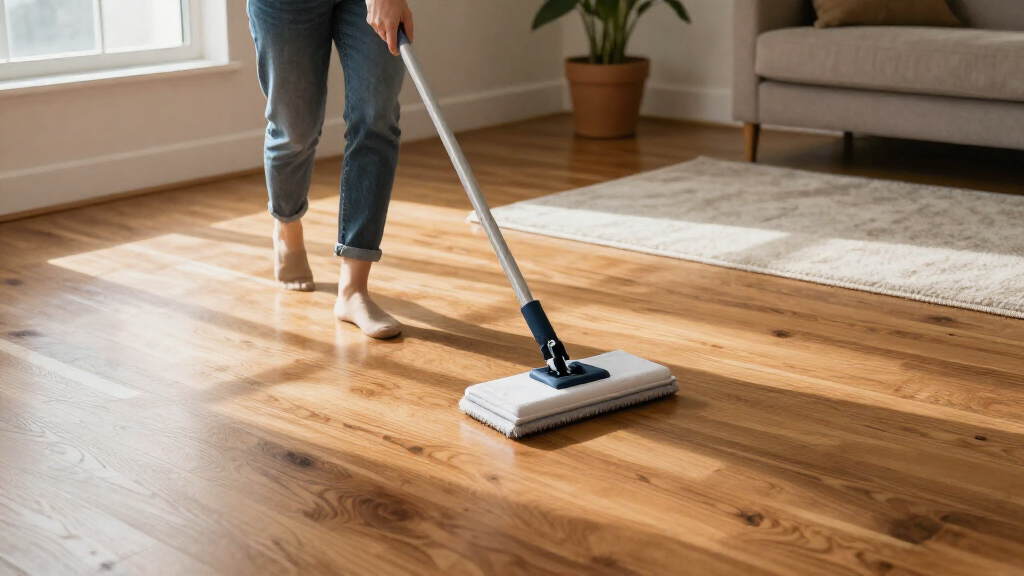
For most hardwood floors, the safer routine is to remove grit first, then mop with minimal moisture and a cleaner approved for that floor. Fine grit can scratch a finish under a mop head, while a soaking pad can leave water where it should not linger. A quick sequence helps you avoid both.
  1. Lift the grit. Use a soft broom or a vacuum suitable for the floor. If your dog tracks in sand after a walk, clear it before mopping so the grains do not drag across the boards.
  2. Prepare a barely damp mop. Follow the floor maker’s directions for the pad and cleaner. The pad should not drip or leave puddles.
  3. Work in small areas. Mop with the grain when practical, and avoid flooding seams, edges, and worn spots. Re-wet or change the pad only as the product instructions direct.
  4. Dry any lingering moisture. Pick up spills promptly and check the floor for wet patches. A clean, dry finish should not feel slick or look cloudy.
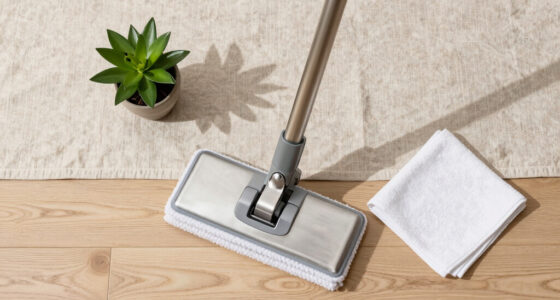
For example, if muddy footprints dry in the entryway, vacuum or sweep first, then spot-clean with the floor-approved method. A quick pass with a dripping mop might feel faster, but puddles can run into joints. Use only cleaners labeled for your specific floor; a homemade vinegar mix or an all-purpose product may not suit its finish.

Use steam only when the floor maker says yes

If your flooring manufacturer explicitly allows steam, follow its settings and technique closely; if it does not, skip the steam mop. Permission for one floor does not apply to every hardwood floor, and a machine’s lowest setting is not a substitute for the floor maker’s approval. Steam-mop features can be handy when you clean a compatible surface. Adjustable steam gives you control over output, and washable microfiber pads can reduce disposable waste. Still, these features do not answer the key question: whether your particular floor’s finish and joints tolerate heat and moisture. If you have clear permission, start with a clean pad and the lowest suitable steam setting specified by the flooring maker and appliance instructions. Keep the mop moving. Do not pause over seams, edges, worn patches, or damaged boards, and stop if the floor becomes visibly wet or changes in appearance. A real-world example: your neighbor may steam their engineered floor without seeing a problem, while your product’s warranty prohibits it. Differences in finish, age, wear, or installation can change the outcome. Even when steam is allowed, it may not disinfect more reliably than a suitable regular cleaning routine; results depend on temperature, contact time, and technique.

Respond quickly if you already steamed the floor

If you have already steamed hardwood, dry any visible moisture and check for changes rather than assuming the floor is damaged or undamaged at a glance. Look for haze, discoloration, raised board edges, swelling, or a finish that feels different. Make a note of where and when you used the mop. For instance, if a short pass leaves the floor looking normal, switch to the floor maker’s approved routine and review its care guidance before cleaning again. If you spot a cloudy patch near a board seam, do not steam over it in an attempt to “even out” the finish. Further heat and moisture could make the problem worse. Contact the flooring manufacturer or a flooring professional if the floor changes in appearance, feels raised, or remains damp. Photos can help you describe the affected area, but they cannot establish how far moisture traveled beneath the surface. If the warranty may apply, check its terms and ask the manufacturer how to proceed before trying a repair product. Keep the appliance packaging and flooring documents handy when you make that call. A model number, product name, and clear description—such as “haze along two seams beside the kitchen sink”—will be more useful than saying only that the floor looks wrong.

Frequently Asked Questions

Can I use a steam mop on hardwood floors?

Only if the flooring manufacturer explicitly allows it for your exact product. If its care instructions do not permit steam or you cannot confirm the guidance, use a barely damp mop and approved cleaner instead.

Are steam mops safe for sealed hardwood?

A sound seal offers some protection, but it does not guarantee that steam is safe. Heat and moisture may still affect seams, worn spots, or damaged finish, so check the floor maker’s instructions.

Can steam damage hardwood or affect my warranty?

Yes. Steam may contribute to dulling, discoloration, swelling, warping, or finish damage, and an unapproved cleaning method may affect warranty coverage. Check the warranty terms for your floor.

Can I steam-clean engineered hardwood?

Do not assume engineered construction makes a floor safe for steam. Its surface and seams can still be vulnerable; follow the product’s care instructions.

What is the safest way to clean hardwood?

Remove grit with a soft broom or suitable vacuum, then use a barely damp mop and a cleaner approved for that floor. Dry spills promptly and do not leave standing water.

Does steam disinfect hardwood better than a regular mop?

Steam may reduce some microbes under suitable conditions, but results depend on temperature, contact time, and technique. It is not a guarantee of disinfection or a universal replacement for an appropriate floor cleaner.

What should I do if I already steamed my hardwood floor?

Dry any visible moisture and check for haze, discoloration, raised edges, or swelling. If you see a change, stop steaming and contact the flooring manufacturer or a flooring professional.

Conclusion

Follow the care instructions for your exact floor, and treat a steam mop as off-limits unless the flooring manufacturer clearly approves it. Most hardwood stays cleaner with less risk when you lift the grit, use a barely damp mop, and wipe spills before they can settle into the seams. Keep the floor’s warranty close by—and let its written guidance lead the way, board by board.
You May Also Like

Is a Steam Mop Worth It in a Small Apartment?

Thinking of a steam mop for your small apartment? Discover if it’s the right choice for your floors, space, and cleaning needs with practical insights.

Oreck Commercial XL: A Late-Fall Floor-Cleaning Review

A practical review of the lightweight Oreck Commercial XL, with its strengths, trade-offs and fit for late-fall carpet and hard-floor cleanup.

Late Fall Clean-up Made Easy with the eufy E25 Robot Vacuum and Mop Combo

A practical review of the eufy E25 Robot Vacuum and Mop Combo — perfect for late fall cleaning and maintaining spotless floors with minimal effort.

90S Countertops Look Completely Different After A Kitchen Got A Paint Redo

A Colorado couple refreshed oak cabinets, lighting and island details for about $500, keeping their existing countertops and avoiding a larger renovation.