TL;DR

Get cleaning gear delivered free with Prime
- Fast, free delivery on millions of items
- Prime Video, Amazon Music and more included
- Member-only deals all year
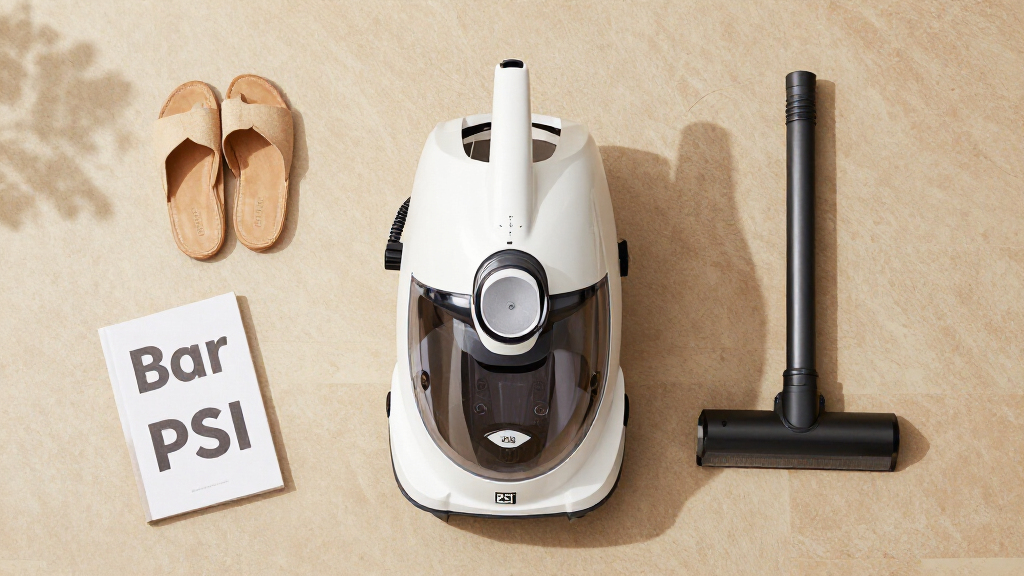
Bar and PSI both measure pressure, with 1 bar equaling approximately 14.5 PSI. They are not separate features but different units for the same metric. Higher pressure doesn’t guarantee better cleaning, as temperature, steam flow, and attachments matter just as much.
You’re standing in the appliance aisle, staring at two steam mops. One box screams “4 BAR POWER!” in bold red letters. The other whispers “58 PSI Max Pressure.” You feel a familiar knot of confusion tighten in your stomach. Are these different technologies? Is one inherently stronger than the other? Should you be worried that 4 looks smaller than 58?
Here is the secret the marketing departments don’t want you to overthink: they are measuring the exact same thing. Bar and PSI are simply two different languages for describing pressure. One is metric, the other is imperial. That’s it.
But knowing the conversion is only half the battle. The real question isn’t which unit is bigger, but whether that pressure number actually translates to a cleaner floor. This guide breaks down what these numbers mean, how to convert them in your head, and why chasing the highest bar rating might actually lead you to the wrong machine for your home.
Bar and PSI are different units for the same measurement: pressure. 1 bar equals approximately 14.5 PSI.
Higher pressure does not guarantee better cleaning; steam temperature, flow rate, and nozzle design are equally important.
Excessive pressure can damage delicate surfaces like laminate and LVP by forcing moisture into seams.
Always convert pressure units to compare machines accurately, and check for steam flow rate (g/min) and heat-up time.
Consult your flooring manufacturer’s guidelines before using high-pressure steam, and always test on a hidden area first.
Why Your Brain Gets Confused by Bar vs. PSI
Bar and PSI both measure pressure. They are two different units for describing the same physical force—not separate steam cleaner features or technologies. The confusion stems from the fact that we live in a world that mixes metric and imperial systems. If you grew up using pounds to weigh your groceries, PSI feels intuitive. If you learned science in school, bar might feel more standard.
Think of it like temperature. Saying it’s 100°C or 212°F describes the same heat level, just using different scales. When a manufacturer prints “3 Bar” on a box, they aren’t hiding a secret metric advantage. They are just using the unit preferred by their engineering team or target market.
This linguistic mismatch creates a false hierarchy in our minds. We see “50 PSI” and think it’s massive compared to “3 Bar,” because 50 is a bigger number than 3. But 3 Bar is actually about 43.5 PSI. The numbers are closer than they look. Understanding this simple translation stops you from being dazzled by big, meaningless digits on a spec sheet.
Products Worth Considering

Dreame L50 Ultra Robot Vacuum and Mop

Dreame L40 Ultra Gen 2 Robot Vacuum and Mop

Dreame H15 Pro Wet-Dry Vacuum and Mop
As an affiliate, we earn on qualifying purchases.
The Simple Math: Converting Bar to PSI in Your Head
You don’t need a calculator to compare specs. The conversion factor is straightforward: 1 bar equals approximately 14.5 PSI. To go the other way, 1 PSI equals about 0.069 bar. This ratio is consistent across all consumer steam cleaners.
Let’s look at a real-world example. You’re comparing a mid-range mop rated at 4 bar against a premium model rated at 58 PSI. At first glance, 58 looks way higher. But do the math: 4 bar × 14.5 = 58 PSI. They are identical. The premium model isn’t stronger; it’s just using a different unit.
Here is a quick reference table for common steam cleaner ratings so you can spot these matches instantly:
| Bar Rating | Approximate PSI | Common Use Case |
|---|---|---|
| 2 Bar | ~29 PSI | Light duty, quick touch-ups |
| 3 Bar | ~43.5 PSI | Standard household cleaning |
| 4 Bar | ~58 PSI | Heavy grime, stubborn spots |
| 5 Bar | ~72.5 PSI | Industrial or commercial grade |
Notice how the jumps aren’t linear in perceived power. Going from 2 bar to 3 bar is a significant increase in force, but going from 4 to 5 bar yields diminishing returns for typical home floors. Always convert to the same unit before comparing.
Why Higher Pressure Doesn’t Mean a Cleaner Floor
Higher pressure does not automatically mean better cleaning. While pressure helps force steam into crevices, it is only one variable in a complex equation. Imagine trying to clean a muddy boot with a pressure washer versus a garden hose. The pressure washer wins because of force. But now imagine cleaning a delicate silk shirt. High pressure would destroy it. The tool must match the task.
In steam cleaning, temperature and steam flow rate are often more critical than raw pressure. A machine might boast a high 5-bar rating, but if it produces a weak, lukewarm mist, it won’t sanitize or dissolve grease effectively. Conversely, a 3-bar unit with a robust boiler that delivers a steady, hot jet of steam can outperform a “powerful” machine that sputters and cools down.
Consider the nozzle design. A high-pressure machine with a wide, diffuse nozzle spreads that force over a large area, reducing the impact per square inch. A lower-pressure machine with a focused, narrow nozzle concentrates the energy. You might find that a 3-bar unit with a precision nozzle cleans grout lines better than a 4.5-bar unit with a broad head. Don’t let the big number distract you from the engineering details.
The Hidden Specs That Actually Matter More
When you ignore the pressure hype, you can focus on the specs that determine real-world performance. Steam temperature is paramount. For effective sanitization, steam needs to reach at least 212°F (100°C) at the nozzle. If the boiler pressure is high but the steam cools down before hitting the floor, you’re just wiping with hot water, not sanitizing.
Next, look for steam flow rate, often measured in grams per minute (g/min). This tells you how much steam the machine produces over time. A high-pressure machine that runs out of steam after 10 minutes is frustrating to use. A moderate-pressure machine with a large tank and consistent 30g/min flow lets you clean your entire kitchen without stopping to refill or reheat.
Finally, consider the heat-up time. A 4-bar machine that takes 15 minutes to heat up is less practical for quick spills than a 3-bar machine ready in 3 minutes. According to Steam Mop List, user satisfaction often correlates more with convenience and consistency than with peak pressure ratings. You want a tool that is ready when you need it, not one that flexes its power specs while you wait.
Safety First: When Too Much Pressure Hurts Your Floors
More pressure isn’t just unnecessary; it can be dangerous for certain surfaces. Delicate materials like laminate, engineered hardwood, and luxury vinyl plank (LVP) have tight seams and protective coatings. Excessive steam pressure can force moisture deep into these seams, causing swelling, warping, or delamination.
Imagine a laminate floor as a sandwich. The top layer is the wear layer, the middle is the core, and the bottom is the backing. If high-pressure steam gets trapped between these layers, it can’t escape. The result? Bubbles and permanent damage. Manufacturers often specify a maximum pressure or recommend specific “gentle” modes for these floors.
Always defer to the floor manufacturer’s guidance. If they say “no steam,” they mean it. If they allow steam, they often specify a pressure limit or require a microfiber pad to diffuse the force.
Before you buy, check your flooring warranty. Some warranties are voided by the use of high-pressure steam cleaners. Test any new machine on a hidden area, like inside a closet, for 24 hours before rolling it across your living room. Safety beats power every time.
How to Compare Steam Cleaners Like a Pro
Stop looking at the biggest number on the box. Start building a comparison chart based on your actual needs. You need to compare like with like. If one brand lists pressure in bar and another in PSI, convert them first. Then, look at the other critical specs.
Follow this step-by-step process to evaluate a machine:
- Convert Pressure: Normalize all pressure ratings to PSI or Bar using the 1:14.5 rule.
- Check Temperature: Verify the steam temperature at the nozzle. Aim for 212°F+ for sanitization.
- Find Flow Rate: Look for grams per minute (g/min) to gauge steam volume.
- Assess Run Time: Check the tank size and estimated continuous cleaning time.
- Review Attachments: Ensure the nozzle types match your cleaning tasks (grout, windows, floors).
For example, if you have mostly tile floors with deep grout lines, a 3.5-bar machine with a high flow rate and a specialized grout brush is a better buy than a 5-bar machine with a generic pad. The attachment does the work; the pressure just assists it.
Frequently Asked Questions
Is 4 bar better than 50 PSI?
No, they are nearly identical. 4 bar is approximately 58 PSI. The higher number on the box doesn’t mean it’s stronger; it just means the manufacturer used a different unit of measurement.Does higher pressure mean hotter steam?
Not necessarily. While pressure and temperature are related in a boiler, the temperature of the steam at the nozzle depends on the machine’s design and heat retention. Always check the specific temperature rating if available.Can high pressure damage my laminate floors?
Yes. High-pressure steam can force moisture into the seams of laminate and engineered wood, causing swelling or warping. Always check your floor manufacturer’s warranty and test on a hidden area first.What is a good PSI rating for home use?
For most home hard floors, a range of 30 to 50 PSI (approx. 2 to 3.5 bar) is sufficient. Higher pressures are often overkill for residential tasks and can increase the risk of surface damage.Why do two machines with the same PSI clean differently?
Pressure is only one factor. Cleaning performance also depends on steam flow rate (g/min), temperature consistency, nozzle design, and the type of cleaning pad or attachment used.Conclusion
Don’t let marketing jargon intimidate you. Bar and PSI are just two sides of the same coin. The next time you see a steam cleaner advertised as “4 Bar” versus “58 PSI,” you’ll know they are identical in force. The real winner isn’t the machine with the biggest number, but the one that balances pressure with temperature, flow, and safety for your specific floors.
Put down the spec sheet and pick up the manual. Check your flooring warranty, measure your room, and choose a machine that fits your life, not just your ego. Clean smarter, not harder.