TL;DR

Get cleaning gear delivered free with Prime
- Fast, free delivery on millions of items
- Prime Video, Amazon Music and more included
- Member-only deals all year
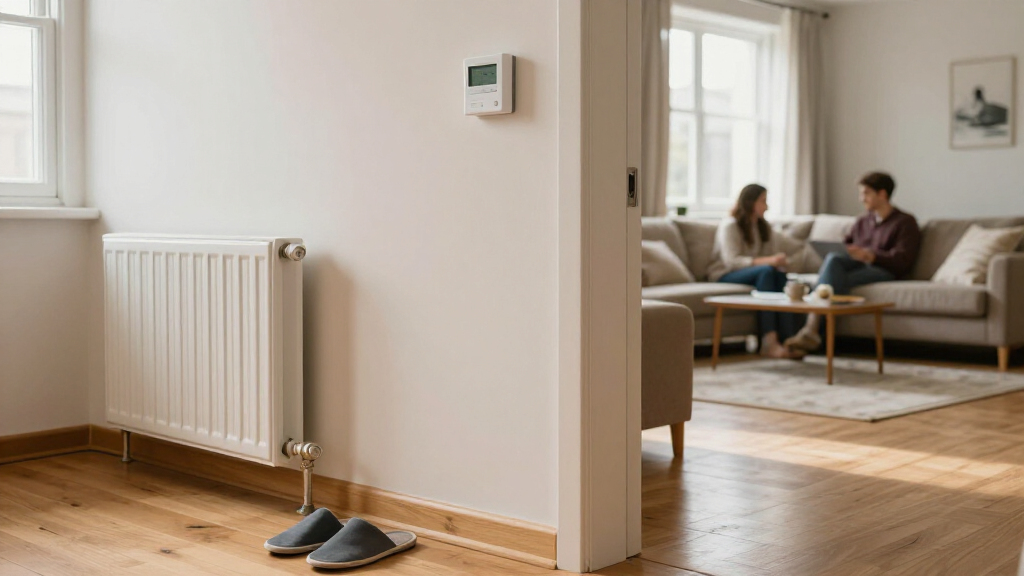
An Ideal Home report says there is no single central heating schedule that suits every household. Experts recommend matching heating times to daily routines and adjusting them after observing how rooms warm up and cool down.
An Ideal Home report says households should work out a central heating schedule around their own routines and how quickly their homes lose heat, rather than rely on a single set of recommended times. The advice matters as people prepare to turn heating back on for colder weather and try to balance comfort with energy use.
The report says a familiar pattern—heating for a few hours in the morning, briefly around midday and again in the evening—may suit some homes but not others. Patrick Garner, a Gas Safe registered engineer at Heatable, said there is no schedule that works for every property. Martin Garbutt, head of technical governance at Ding, likewise advised trial and observation instead of following a generic timetable.
Experts quoted in the report suggest starting with the hours when people use particular rooms. Tom Houlker, director of Houlkair, said households should allow enough time for rooms to feel comfortable when they arrive or begin using them. Martyn Fowler, founder of Elite Renewables, recommended that people who work from home get the house comfortable for the start of the workday, then try lowering the thermostat during the day and observe the result.
The article’s writer plans to test a schedule of 5:30 to 9 a.m., noon to 2 p.m. and 5 to 8 p.m. The proposed hours reflect an early school run, working from home and the period when children return from school. The writer says a log burner and open fire may provide additional heat downstairs in winter. This is a personal plan, not a schedule presented as suitable for other households.
A Schedule Built Around Daily Routines
A heating timetable affects when a home is comfortable, but the report’s advice is that the answer depends on when people are in the house and how the building responds. A household that is empty during office hours may need different heating periods from one where someone works from home. Room size, windows and external walls can also affect how long a space takes to warm.
Testing a schedule can help people avoid treating a published timetable as a guarantee. The experts recommend watching whether rooms stay comfortable after heating switches off, and changing the timings if a home cools quickly or takes a long time to warm again. The report does not provide measured energy savings or a specific temperature target, so it does not establish that one schedule will reduce bills by a particular amount.
programmable central heating timer
As an affiliate, we earn on qualifying purchases.
As an affiliate, we earn on qualifying purchases.
Why Heating Times Vary by Home
The report is framed around the seasonal return of central heating after warmer months. Its writer describes a home that does not retain heat well and says they are unsure how many hours the heating should run. The article uses that question to seek guidance from engineers and heating specialists.
The experts’ responses focus on household use and property characteristics rather than a fixed rule. Fowler advises checking how quickly a home cools, while Houlker notes that rooms differ according to their size, windows and external walls. Houlker also cautions against assuming that the same warm-up time will apply throughout winter or that each drop in outdoor temperature corresponds to a predictable extra number of heating minutes.
“There isn’t one perfect heating schedule because every house is different.”
— Patrick Garner, Gas Safe registered engineer at Heatable
As an affiliate, we earn on qualifying purchases.
What the Suggested Timetable Cannot Show
The source does not provide a tested comparison of heating schedules, quantified bill savings or a measured ideal indoor temperature. The writer’s proposed timetable is a plan to try in one home, not evidence that those hours will work elsewhere. The report also does not say how the home’s heating controls, insulation, boiler or other system features might affect the results.
How much a household can adjust its schedule will depend on its own property and routines. The source advises observation but does not set out a formal testing period or a standard method for deciding when a schedule is working.
As an affiliate, we earn on qualifying purchases.
Observe, Then Adjust the Timings
The report’s writer plans to try the proposed morning, midday and evening periods, then use experience of the home to decide whether changes are needed. The experts’ advice is to pay attention to comfort when rooms are in use and to how quickly the home cools after heating stops. Colder days may require different start times, Houlker said, and households should use their own observations rather than assume a fixed warm-up adjustment applies.
No further testing results or follow-up timetable are included in the source material. For readers, the practical next step described in the report is to start with the household’s routine and revise the hours as the home’s response becomes clearer.
As an affiliate, we earn on qualifying purchases.
Key Questions
Is there one ideal central heating schedule?
No. The experts quoted by Ideal Home say the right schedule depends on the property, how quickly it loses heat and when rooms are used.
What schedule does the report’s writer plan to try?
The writer plans heating from 5:30 to 9 a.m., noon to 2 p.m. and 5 to 8 p.m. The hours reflect that household’s school and work routines and are not presented as a universal recommendation.
How should someone begin setting heating times?
The experts suggest starting with daily routines and when each room is used, then observing how long the home takes to warm and how quickly it cools.
Should the same heating schedule work all winter?
Not necessarily. Tom Houlker says warm-up times can vary with room features and colder weather, and advises adjusting timings based on observation rather than using a fixed rule.
Source: rss
Halloween Picks
halloween
As an affiliate, we earn on qualifying purchases.