TL;DR

Get cleaning gear delivered free — and shop member deals
- Fast, free delivery on millions of items
- Access to Prime Big Deal Days deals on October 6–7
- Prime Video, Amazon Music and more included
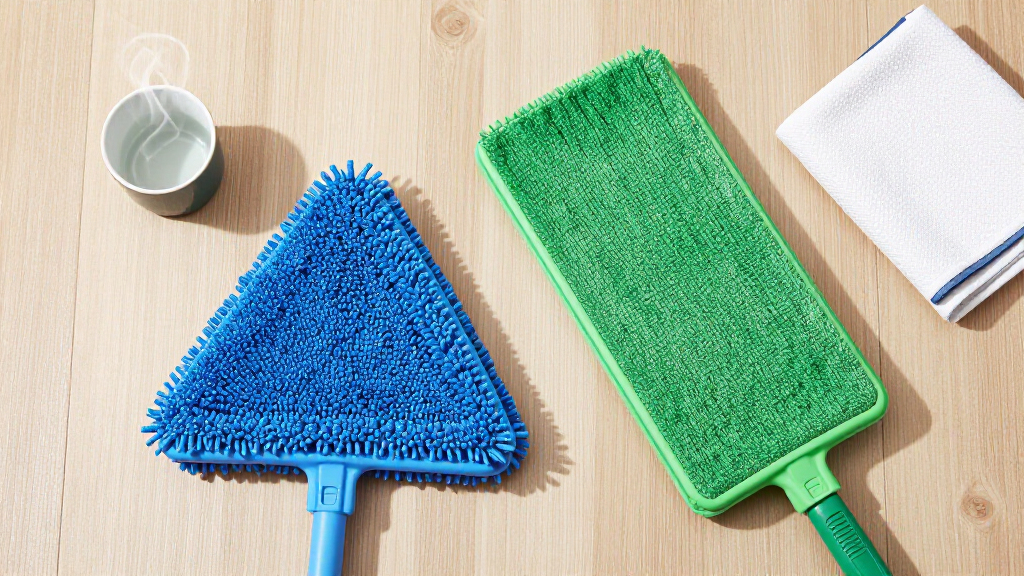
Neither shape is universally better. Triangle mop heads excel at corners and tight spots, while rectangle heads clean large, open floors faster. Your choice depends on your space and cleaning priorities.
When it’s time to clean floors, the shape of your mop head matters more than most realize. A common debate: triangle versus rectangle — which actually cleans better? The answer isn’t black and white. It depends on your space, your floor type, and how you like to clean.
Think about a busy kitchen, with tight corners and furniture legs, versus an expansive hallway with long, straight walls. Your choice of mop head shape can turn a chore into a breeze—or a frustrating puzzle. In this guide, you’ll learn the real strengths of each shape, backed by practical insights and real-world scenarios.
Choose a triangle head for tight corners, obstacles, and precise scrubbing in small spaces.
Opt for a rectangle head when covering large, open floors quickly and efficiently.
Swivel joints and handle ergonomics significantly affect maneuverability and user comfort.
Pad quality and compatibility matter more than head shape—invest in washable microfiber for durability.
Floor type and layout should guide your mop head selection for optimal cleaning.
Floor-care field guide / shape study
Triangle vs Rectangle Mop Heads: Which Cleans Better?
Neither shape wins everywhere. Triangle heads bring pointed precision to corners, fixtures, and cluttered rooms. Rectangle heads turn wide, open floors into fast, orderly passes. The right choice starts with your room—not the silhouette on the box.
Precision winner
Triangle
Best for compact bathrooms, tight kitchens, furniture legs, corners, and targeted scrubbing.
Coverage winner
Rectangle
Best for hallways, open-plan rooms, long walls, predictable overlaps, and rapid floor coverage.
Real tie-breaker
Joint + pad
A smooth swivel and well-fitted microfiber pad can matter more than head geometry alone.
01 / Start with the room
Layout decides the winner
A mop is only efficient when its head can stay flat, move freely, and reach the surfaces that collect dirt. Open floor rewards width; obstacles reward control.
Tight + obstacle-heavy
Bathroom
The pointed front slips beside toilets, behind sinks, and into corners with less repositioning or follow-up work.
Best fit: TriangleWide + uninterrupted
Hallway
A broad leading edge follows walls naturally and creates fast, overlapping passes with predictable coverage.
Best fit: RectangleMixed + furnished
Kitchen
Choose by layout: triangle for chair legs and narrow gaps; rectangle for open-plan zones and long cabinet runs.
Best fit: It depends02 / Coverage versus control
Effective width—not stated width—sets the pace
Nominal dimensions can mislead. Pad overhang, swivel range, head thickness, and full-floor contact determine how much clean surface each stroke actually delivers.
Relative performance index
How each shape uses a pass
Interpretation: A rectangle may cover up to 20% more floor per pass in open space, but repeated turns around obstacles can erase that advantage. Indices are practical comparison guides, not laboratory ratings.
The efficiency equation
Four factors shape real coverage
03 / Head-to-head
The practical comparison
Corners and edges are different jobs. Triangle heads target the inside of a corner; rectangle heads keep a long side aligned with walls and baseboards.
| Cleaning factor | Triangle head | Rectangle head |
|---|---|---|
| Corners | ✓Excellent pointed reach | ~Good if pad corners stay square |
| Open-floor speed | ~Moderate; more passes | ✓Usually faster and wider |
| Walls + baseboards | ~Good, less consistent | ✓Long edge tracks straight walls |
| Furniture + fixtures | ✓Compact and highly agile | ~Can feel bulky without a good pivot |
| Under low furniture | ~Depends on thickness and recline | ✓Often better when slim and wide |
| Scrubbing pressure | ✓Concentrated for small marks | ✓Even across larger dirt patches |
| Cleaning pattern | ✓Flexible, multidirectional | ✓Efficient straight overlaps |
| Replacement pads | ✗Often model-specific | ✓Usually easier to source |
| Storage | ✓Compact footprint | ✓Flat and stackable |
✓ Strong fit ~ Conditional fit ✗ Common limitation
04 / Shape is only half the story
The joint and pad can overturn the result
A well-designed rectangle can outmaneuver a stiff triangle. A poor, saturated, or worn pad will underperform on either shape.
Movement system
Swivel checklist
Good steering reduces fatigue, protects floor contact, and minimizes repeated repositioning.
Cleaning interface
Pad checklist
Microfiber quality, fit, and texture often influence soil removal more than geometry.
Buying priority: Choose the shape for your room, then judge the joint, pad fit, pad availability, and handle comfort before committing.
05 / Pressure + floor care
Match the contact pattern to the soil
Rectangle heads spread force over a broad surface. Triangle heads can focus pressure near a point or center. For dried grime, pad texture and cleaning solution still matter more.
Focused force
Triangle: targeted scrubbing
Useful for grout marks, compact sticky spots, and precise pressure near corners or fixtures.
Distributed force
Rectangle: uniform lifting
Useful for routine cleaning, spreading solution evenly, and lifting broad patches of surface soil.
Trace the right choice
Choose triangle when…
Precision saves time
Your space is compact, cluttered, or corner-heavy; you frequently clean around fixtures; or you want focused control for stubborn spots.
Choose rectangle when…
Coverage saves time
Your floors are open and expansive; long walls dominate the layout; or you prefer straight, overlapping passes with even pressure.
Why Room Layout Decides Which Mop Head Wins
Room shape and furniture placement tip the scales. Triangle mop heads are stars in tight spots, fitting into corners and around obstacles with pointed precision. Picture a small bathroom: the pointed tip can slip into corners behind the toilet or sink, reaching places a big rectangle might miss.
In contrast, rectangle heads shine in open spaces. They sweep large areas quickly, especially when you’re pushing back and forth along long hallways or wide kitchen floors. Think of a spacious living room—covering ground rapidly becomes a matter of efficient, straight passes.
For example, a homeowner with a narrow, cluttered bathroom found that a triangle head navigated corners better, while her open-plan kitchen was a breeze with a rectangle mop—saving time and effort.
Why this matters: understanding your room layouts helps you choose a mop shape that minimizes cleaning time and effort. Using a triangle in an open space can lead to missed spots or longer cleaning sessions, while a rectangle in tight corners can cause frustration or incomplete coverage. Recognizing these implications helps you optimize your cleaning strategy, making the process more effective and less tiring.
As an affiliate, we earn on qualifying purchases.
How Width and Shape Affect Your Cleaning Speed
The width of your mop head impacts how fast you clean. A wider rectangle head can wipe more floor per pass—think of it as sweeping a wider swath with each stroke. But beware—wider isn’t always better in tight spaces.
In rooms with obstacles—like chair legs or appliances—a narrow triangle head can weave through more easily. The effective cleaning width depends on the pad size, swivel joint, and how well the entire head stays in contact with the floor.
For example, a large rectangular microfiber pad might cover 3 feet in a single pass, speeding up your task. But if you need to turn around a table or navigate a cluttered kitchen, a smaller triangle head might work better despite a smaller width.
Why this matters: choosing the right width and shape involves balancing coverage efficiency with maneuverability. A wider head saves time on open floors but can get stuck or be less agile in tight or obstacle-laden spaces. Conversely, a narrow triangle offers better control but may require more passes, affecting overall cleaning time. Making this tradeoff consciously can lead to more effective cleaning routines tailored to your specific environment.
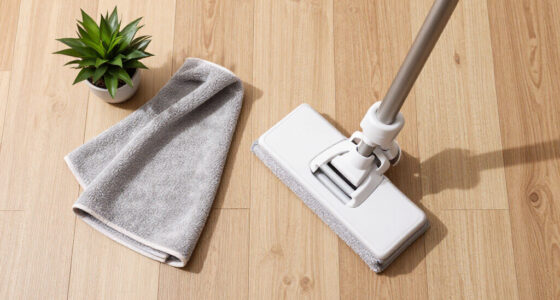
rectangular floor mop for large areas
As an affiliate, we earn on qualifying purchases.
As an affiliate, we earn on qualifying purchases.
Corners and Edges: Which Shape Reaches Them Better?
Corners are often the most overlooked areas during cleaning, yet they play a crucial role in overall hygiene. Triangle mop heads excel here because their pointed shape acts like a needle, allowing the mop to slip into narrow gaps and tight corners that are difficult for broader shapes to reach. This precision reduces the need for additional tools and ensures that dirt, dust, and bacteria are effectively removed from these high-risk zones.
Rectangle heads tend to clean broad surfaces more evenly, but their larger profile can leave small patches of dirt or grime untouched in corners or along edges if the pad doesn’t extend fully. This can lead to incomplete cleaning, especially in spaces where corners are prone to collecting debris.
Imagine cleaning along a long wall: a rectangle mop can cover the surface efficiently but might miss the very inside corner where a triangle head would reach effortlessly. Conversely, in a bathroom, a triangle mop can quickly reach behind fixtures and into tight corners, ensuring thorough sanitation. The tradeoff is that triangle heads may require more effort to cover large, open areas, which could slow down overall cleaning if not managed properly.
Why this matters: effective corner and edge cleaning is vital for preventing dirt buildup, mold, and bacteria growth. Choosing a shape that can reach into these areas without extra tools saves time and ensures comprehensive cleanliness, ultimately supporting healthier living environments.
triangular mop head for tight spaces
As an affiliate, we earn on qualifying purchases.
As an affiliate, we earn on qualifying purchases.
Maneuverability: Does Swivel Make the Difference?
How easily your mop moves around obstacles depends heavily on the swivel joint. A well-designed rectangular mop with a 180-degree swivel can dart around furniture, under tables, and along baseboards more smoothly than a stiff triangle head.
However, a sturdy, flexible triangle head with a good joint can be highly maneuverable in tight spots. The key is how the joint responds—smooth rotation, minimal resistance, and flat contact with the floor matter.
For example, a homeowner found that her rectangular mop’s swivel allowed her to clean under her sofa effortlessly, while her triangle mop required more frequent repositioning, though it reached corners better.
Why this matters: maneuverability directly impacts how efficiently you can clean. A mop that’s easy to steer reduces fatigue and speeds up the process, especially in cluttered or complex spaces. Conversely, a poor swivel or stiff head can cause frustration and uneven cleaning. Investing in a mop with good movement capabilities can make a noticeable difference in your cleaning routine, saving time and reducing physical strain.
As an affiliate, we earn on qualifying purchases.
Pressure and Scrubbing Power: Shape Isn’t Everything
The shape of the mop head influences where pressure is concentrated. Rectangles distribute force evenly across their surface, making them good for general cleaning. Targeted scrubbing, however, can benefit from the pointed tip of a triangle head, which allows you to press down on small stubborn spots.
For example, a tile grout stain might respond better when you press a triangle mop’s point onto the grime, focusing your effort precisely where it’s needed. But for larger dirt patches, a broad rectangle pad provides more uniform pressure, lifting soil faster.
Why this matters: understanding the tradeoffs in pressure distribution helps you decide when to use each shape. A rectangle’s even pressure is ideal for spreading cleaning solutions and lifting surface dirt, while a triangle’s pointed tip excels at targeting specific stubborn spots or heavily soiled areas. Recognizing these nuances enables you to adapt your cleaning technique, applying the right shape for the right task, ultimately leading to more effective and efficient cleaning outcomes.
Floor Types and How They Suit Each Shape
Different floors respond uniquely to mop shapes. Hardwood and laminate floors prefer microfiber pads with minimal water, regardless of shape. Tile and textured surfaces benefit from either shape—triangle for corners, rectangle for large areas.
Vinyl, sealed stone, and low-moisture floors need gentle cleaning. In such cases, a lightweight mop with soft microfiber and controlled moisture is best.
For grout lines or textured tiles, a mop that presses evenly and reaches into irregularities is key. Neither shape replaces a dedicated grout brush, but a rectangle’s broad coverage speeds up large tiled areas, while a triangle’s precision helps corners and edges.
Why this matters: selecting the right shape for your floor type ensures you don’t damage delicate surfaces or leave behind dirt in textured areas. For instance, using a rough or overly wet mop on hardwood can cause warping or damage, whereas a gentle microfiber rectangle can clean effectively without harm. Conversely, textured tile floors benefit from shapes that can penetrate crevices, preventing dirt accumulation and ensuring thorough cleanliness. Making an informed choice based on your floor material helps maintain its appearance and longevity.
Ergonomics and Practical Handling—Which Shape Wins?
Comfort depends on handle length, weight, and how the head attaches. A rectangle head often favors long, push-pull strokes, reducing wrist strain on large, open floors. Its wider surface can be easier to control for steady, straight passes.
A triangle head, with its pointed front and often more flexible joint, can be more maneuverable in tight spaces but may require more wrist movement. Repeated directional changes can tire you out faster.
For example, a user with wrist issues found her rectangular mop with a lightweight head less tiring during long cleaning sessions, especially in hallways and large rooms.
Why this matters: choosing a comfortable mop reduces fatigue and injury risk. Ergonomic design considerations, such as handle length and weight distribution, directly influence your ability to clean effectively without strain. A poorly balanced or heavy mop can lead to discomfort, reducing your cleaning efficiency over time. Prioritizing ergonomic features ensures that your cleaning routine remains sustainable and less physically taxing, enabling you to maintain consistent cleaning quality and avoid injury.
Pad Compatibility and Maintenance—Don’t Overlook This
Replacement pad availability can make or break your mop choice. Rectangular pads are often more standardized, fitting many brands and models. Triangle pads may be proprietary, limiting options and increasing costs over time.
Look for washable microfiber pads—these are economical and eco-friendly. Check how securely they attach, whether they stay flat after washing, and the recommended cleaning temperature.
For example, a homeowner switched to a microfiber microfiber pad that fit her rectangular mop perfectly, saving money on replacements and reducing waste. Meanwhile, triangle-pad owners often found their options limited and more expensive.
Why this matters: choosing pads that are easy to replace, wash, and maintain extends the life of your mop and ensures consistent cleaning performance. A well-maintained pad not only improves cleaning efficiency but also prevents bacterial buildup and prolongs the tool’s usability. Investing in compatible, washable pads simplifies your routine and reduces ongoing costs, making your cleaning setup both effective and economical.
When to Pick a Triangle and When to Go Rectangle
A triangle mop head excels when cleaning in tight spots, narrow corners, or cluttered bathrooms. Its pointed tip allows precise, focused scrubbing and easy maneuverability around obstacles.
A rectangle mop head is ideal for large, open spaces where speed and uniform coverage matter most. It’s excellent for hallways, kitchens, and broad living areas.
For example, a homeowner with a mix of small bathrooms and a large living room found that keeping both shapes in her cleaning arsenal made her chores easier and faster—using each where it shines.
Why this matters: matching your mop shape to the room type ensures maximum efficiency and thoroughness. Using a triangle in tight, cluttered spaces ensures no corner is missed, while a rectangle in open areas speeds up the job. Recognizing these tradeoffs helps you develop a versatile cleaning toolkit tailored to your home’s unique layout, saving time and effort while achieving optimal cleanliness.
Frequently Asked Questions
Do triangle mop heads really clean corners better?
Yes. Their pointed design allows them to slip into tight corners and narrow gaps more easily than rectangular heads. This makes them especially useful in bathrooms and around furniture legs.
Are rectangle mop heads faster for large floors?
Generally, yes. Their wide, straight edge supports efficient parallel passes, covering more ground in less time—ideal for open spaces like hallways and kitchens.
Which shape is better for bathrooms?
Triangle heads usually have the edge here, reaching into corners and around fixtures. However, a slim rectangle with a good swivel can also work well, especially in larger bathrooms.
Which mop shape works best on hardwood floors?
Both shapes can be effective, provided you use microfiber pads and avoid excess water. The key is gentle, consistent pressure and using floor-safe cleaners.
Does a triangle head scrub better?
It can target small spots more precisely, but pad texture and rigidity are more important for scrubbing power than shape alone.
Conclusion
Picking between a triangle and rectangle mop head boils down to your space and cleaning style. For cramped bathrooms and tricky corners, a triangle head shines. For wide-open floors, a rectangle head speeds up the job.
Remember: the best cleaning tool is the one that fits your floors, your home, and your habits. Pair the right shape with quality pads and good technique, and you’ll turn a chore into a quick, effective routine.
Fall Picks
fall essentials
As an affiliate, we earn on qualifying purchases.